Team No Comments

Giving Voice to The Quiet Revolution: Asset Management, The Environment and Popular Perceptions

Please see the below piece from Invesco received late yesterday afternoon:

Key Points

  1. As demonstrated by environmental protests against asset managers accused of “funding destruction”, the investment industry remains broadly perceived as uninterested in the existential challenges facing humanity.
  2. Contrary to such perceptions, asset managers have taken a lead in promoting sustainable policies and practices – especially through active ownership of and engagement with the companies in which they invest.
  3. It is vital that this “quiet revolution”, as the University of Cambridge has described it, builds wider recognition and that stakeholders of all kinds appreciate that their interests may be aligned with those of asset managers.

More than a decade on from the global financial crisis, the investment industry is still popularly perceived as a self-serving entity with little or no regard for the greater good. Before the COVID-19 pandemic curtailed mass gatherings, environmental activists’ demonstrations – including several against financial services companies said to have “funded destruction” – provided a clear reminder of how negatively this sphere is viewed by many of those outside it.

Former President of Ireland Mary Robinson, now a UN Special Envoy on El Niño and Climate, even suggested that Extinction Rebellion protesters should specifically target asset management firms. This tactic, she said, would lessen the likelihood of the group alienating members of the public.

Such a sentiment underscores the degree to which asset managers, routinely cast as essential cogs in the machinery of “big business”, are deemed complicit in many of the world’s ills. Yet it also implies that they can bring about positive change; and what appears to be consistently overlooked, at least in the mainstream narrative, is that this is exactly what they are doing.

The first decade of the 21st century exposed the limits of capitalism as we long knew it. There is no disputing this, just as there is no disputing that the resulting backlash against sections of the investment industry was deserved. Yet capitalism always has been and still is a work in progress: it has evolved substantively in seeking to avoid the errors of the past, and asset managers have been at the heart of the unfolding shift.

This is because responsibility, sustainability and long-term thinking are becoming norms for the sector. Asset managers are spearheading what the University of Cambridge has described as a “quiet revolution”, and the reality – unlikely though it might seem to some critics – is that many investment professionals have a deep and even long-held commitment to the future of the planet and its inhabitants.

A passion for the environment is not some sort of obligatory extension of work for such individuals. Quite the opposite: work is a potent augmentation of their passion for the environment. This should be acknowledged far beyond the industry – not because asset managers yearn to be loved or are tired of being harangued by climate campaigners but because stakeholders of every kind need to comprehend that there is a massively important alignment of interests here.

Contrary to widespread assumptions, asset managers are not fiercely determined to thwart efforts to make the world a better place. In fact, many want to be central to such endeavours. In this paper, drawing both on our own experiences and on insights from leading researchers, we seek to show that the quiet revolution is well under way; we attempt to highlight a more “human” side to the people behind it; and we try to explain why it merits much broader recognition.

Along with the investment industry in general, asset managers have attracted considerable criticism in recent years. With past sins still largely informing mainstream opinion, the scorn of the broader public – from environmental protesters to media commentators to the proverbial man and woman in the street – seemingly remains as strong as ever. Overturning such firmly entrenched disdain and distrust will not be straightforward. The investment industry as a whole has often made headlines for the wrong reasons, and the popular realisation that it has a much more admirable side will unquestionably take time to emerge.

The quiet revolution has been under way for several years. Maybe now is the time to make more noise about it – not for the sake of asset managers’ self-esteem, not because we demand due recognition, but because how we and our efforts are regarded and understood is likely to determine our effectiveness in helping plot a truly responsible course for the future.

This article is another indicator of the direction of travel within the industry. ‘Ethical’ and ‘Socially Responsible’ investment themes have always been there in the background, but over the past two years and especially since the onset of the pandemic, it no longer seems to be in the background.

Almost every fund manager now has to take into account ESG factors within their investments and portfolios whether they are doing so because they believe its right or because they now see that they have to in order to keep up, either way, its still a good push in the right direction.

People are waking up to making the world a better place, be it via social issues or climate issues.

Investors now seem to take comfort in the fact that they can help and ‘do their bit’ to help make the world a better place.

Andrew Lloyd DipPFS

17/06/2021

Team No Comments

Stocks rise as investors take inflation in their stride

Please see below ‘Markets in a Minute’ article received from Brewin Dolphin yesterday evening, which provides a global update on markets and economic recovery as we strive towards a ‘new normal’ in a post-pandemic world. 

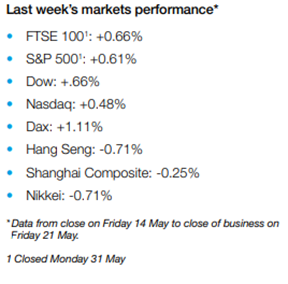
Most major stock markets rose last week despite figures showing US inflation surged in May to its highest level in 13 years.

The S&P 500 gained 0.4% to reach a new record high of 4,247, with healthcare stocks among the strongest performers. The technology-heavy Nasdaq added 1.9% as a sharp decrease in longer-term bond yields supported growth stocks.

The European Central Bank’s announcement that it would increase its pace of asset purchases boosted the pan-European STOXX 600, which ended the week up 1.1%. The UK’s FTSE 100 added 0.9% following encouraging GDP data, whereas Germany’s Dax was flat after figures revealed an unexpected decline in industrial production and factory orders.

Over in Asia, Japan’s Nikkei was largely unchanged after GDP shrank by an annualised 3.9% in the first quarter, better than the preliminary reading of a 5.1% contraction. China’s Shanghai Composite was also flat as investors weighed a fresh outbreak of Covid-19 cases in Guangzhou against renewed talks with the US on trade and investment links.

Investors shrug off lockdown easing delay

UK and European stocks continued to rise yesterday (14 June) despite reports that the UK was due to delay the final phase of lockdown easing. Prime minister Boris Johnson confirmed the reports in a briefing held after the market closed, saying restrictions would now be lifted on 19 July – four weeks later than originally planned.

The FTSE 100 added 0.2% on Monday, with strong oil prices helping the likes of Royal Dutch Shell, while travel and leisure stocks underperformed. The pan-European STOXX 600 also gained 0.2% to trade just off record highs. Most indices remained in the green at Tuesday’s open, with the FTSE 100 adding 0.3% amid a drop in the UK unemployment rate to 4.7%.

Over in the US, investors are turning their attention to the Federal Reserve’s upcoming policy decision and press conference on Wednesday. With inflation rising and the economy improving from its pandemic-era lows, investors will be closely monitoring Fed officials’ comments for any sign that it will begin easing its monetary and fiscal stimulus.

US inflation highest since 2008

Last week’s news was dominated by the latest US inflation figures, which revealed the headline consumer prices index (CPI) accelerated to an annual rate of 5.0% in May. This was higher than the 4.7% reading expected by economists and above April’s 4.2% figure. It marked the highest reading since August 2008 and partly reflected low base effects from last year when the coronavirus pandemic was at its peak.

Core inflation, which excludes volatile items like food and energy, leaped to 3.8% year-on-year, the highest level since 1992. On a monthly basis, consumer prices rose by 0.7% in May – well above the consensus forecast of 0.4%.

US stocks rallied despite the rise, suggesting investors agreed with the Federal Reserve’s stance that the current inflationary spike is transitory in nature. Indeed, the University of Michigan’s survey of consumer sentiment revealed Americans expect prices to rise by 4.0% in 2021, down from 4.6% in the previous month’s survey. The five-toten-year inflation outlook also fell to 2.8% from 3.0%.

Stock prices were also supported by an increase in the preliminary consumer sentiment index to 86.4 in the first half of June from a final reading of 82.9 in May. The gauge of current economic conditions edged up to 90.6 from 89.4, and the measure of consumer expectations rose to 83.8, the highest since February 2020.

UK GDP rises for third month in a row

Over in the UK, investors were cheered by the latest gross domestic product (GDP) data from the Office for National Statistics. GDP is estimated to have grown by 2.3% in April, marking the fastest monthly growth since July 2020. The service sector grew by 3.4% as consumer-facing services reopened in line with the easing of Covid-19 restrictions.

GDP remains 3.7% below the pre-pandemic levels seen in February 2020, but is now 1.2% above its initial recovery peak in October 2020. Compared with April 2020, the worst month of the pandemic, monthly GDP in April 2021 is estimated to have grown by a huge 27.6%.

ECB hikes inflation forecast

Elsewhere, the European Central Bank (ECB) announced it would increase the pace of its asset purchase programme over the coming weeks, despite calls from some policymakers to start reining in its monetary stimulus. It said bond purchases would continue at a ‘significantly higher’ pace than during the first few months of the year.

“Such a tightening would be premature and would pose a risk to the ongoing economic recovery,” said ECB president Christine Lagarde, adding it was too early to discuss when the emergency programme would end.

At the same time, the central bank increased its forecast for the harmonised index of consumer prices in the eurozone from 1.5% to 1.9% for 2021 but said the index would fall to 1.4% in 2023 as energy price rises evaporated. It also increased its forecast for economic growth in the euro area to 4.6% for 2021 and 4.7% for 2022. This comes amid falling Covid-19 infections, the lifting of lockdown restrictions, and a bounce back in business activity and consumer confidence.

Please check in with us again soon for further updates and relevant content.

Stay safe.

Chloe

16/06/2021

Team No Comments

Invesco Investment Intelligence updates – 14/06/2021

Please see below for one of Invesco’s latest Investment Intelligence Updates, received by us yesterday 14/06/2021:

After April’s US CPI upside surprise, last week’s May reading was eagerly anticipated, albeit with a degree of trepidation. It didn’t disappoint. Headline CPI came in at 0.6%mom and 5%yoy, its highest level since 2008 (inflation peaked at 5.6%yoy then), while Core CPI rose even more at 0.7%mom, leaving it at 3.8%yoy, its highest since 1993. Both were 30bp above consensus expectations on a year-on-year basis. Strength was largely led by what are seen as “transitory” components, such as used cars (7.3%), car and truck rental (12.1%) and airfares (7%), even if there are other elements of consumer prices, such as shelter costs, that show more sustainable price pressures. Notwithstanding that we are probably close or at peak inflation as the impact of the lockdown starts to fall out of the calculation. How quickly and how far it will drop will be a function of whether rising costs, corporate pricing power and rising wages in a stimulus fuelled economy translate into more persistent inflation. For now, the Federal Reserve and increasing numbers of investors, witness a 10yr UST that is at its lowest level since early March, appear unconcerned about this risk. Time will tell whether this complacency is warranted or not, but it clearly remains a significant tail risk for financial markets.

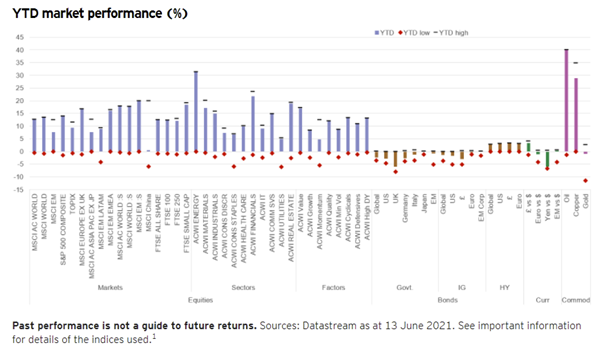
Global equity markets finished the week at a fresh all-time high, with a rise of 0.6% for MSCI ACWI. It is now up 12.7% YTD. DM (0.6%) led EM (flat), with both the US and Europe ex UK hitting new all-time highs, up 13.8% and 16.7% respectively YTD, with the latter the strongest major market of the week (1.2%). Small Caps (1.3%) outperformed again, hitting new all-time highs, with DM (1.3%) ahead of EM (1.1%). It was a rare week of Tech and tech-related sector outperformance, led by IT (1.6%). HealthCare (2.8%) was the best performing sector. Real Estate also had a good week (2.1%) and is now the third best performing sector YTD, up 18.8%, behind Energy and Financials. Lower bond yields weighed on Financial sector performance, while commodity sectors also lagged. Sector performance underpinned a strong relative performance week for Growth (1.4%) versus Value (-0.3%), while Quality (1%) had a good week too. UK equities were slightly ahead (All Share 0.9%) on the back of a good week for large caps (FTSE 100 0.9%) on strength in HealthCare, Telecoms and Energy.

Government bonds had a strong week with yields pushed lower by the belief that US inflationary pressures are transitory and a dovish stance at the latest ECB meeting. 10yr USTs and Gilts fell 10bp and 8bp respectively, taking them to their lowest levels since early March. They are now down 28bp and 18bp below their YTD highs, but are still higher than their starting level, hence the negative returns YTD from the asset class. Bunds and BTPs fell 6bp and 12bp. The better tone in government bond markets supported a good week for credit markets, where IG outperformed HY globally. IG yields fell 5bp with spreads narrowing by 2bp. The latter at 91bp are within touching distance of their post-GFC low (87bp). In HY a decline of 5bp in yields took them to all-time record lows (4.54%), but spreads at 353bp remain somewhat above their post-GFC lows (311bp).

The US$ edged higher over the week with the US Dollar Index up 0.5%, its third weekly gain, leaving it up 0.7% for the year. The Euro and £ were down -0.4% and -0.3% respectively.

Commodities overall were down slightly on the week with a -0.6% loss for the Bloomberg Commodity Spot Index, which is up just under 22% YTD. Brent, up 0.9%, hit its highest level ($73) in two years. In its latest monthly report, the IEA said that OPEC+ would need to boost output to meet demand that is set to recover to pre-pandemic levels by the end of 2022. Copper was up marginally too, 0.4% on the week, after a late rally on Friday as investors bet that China’s sales of strategic reserves would have a muted impact on demand. Gold edged lower (-0.6%) as it continued to consolidate around the $1900 level.

Andy Haldane, the Bank of England’s outgoing Chief Economist, described the UK’s housing market as being “on fire” last week. Recent House Price indices from the Halifax and Nationwide, the two biggest mortgage lenders, showed annual price growth of 9.6%yoy and 10.9%yoy respectively. These were the fastest rates of growth since 2007 and 2014 respectively and a lot faster than the rates of growth (3% and 3.5% CAGR respectively) seen in the decade leading up to the pandemic, described by another senior BoE official as housing’s “Quiet Decade”. And last Thursday’s RICS House Price Net Balance reading, which measures the breadth rather than magnitude of price falls or rises over the previous 3 months, hit +83% – its highest level since the housing boom of the late 1980s. Regionally it hit +100% in the N, NW and SW of England and Wales, while London was the standout laggard at just +46%.

All in all, a very uncharacteristic housing market, which typically fall and only recover slowly in severe economic contractions. This time around a combination of factors have delivered a very different market outturn: easing of lockdown restrictions have released pent-up demand. The government has supported the market through the Stamp Duty holiday (due to finish at the end of September), although it may not be as big a motivator for moving as some think. A recent survey by Rightmove shows that it is not the biggest motivation, with only 4% saying that they would abandon purchase plans if they missed the Stamp Duty deadline. Mortgage availability has improved, particularly for first-time buyers. Borrowing costs are low. Excess savings built up during the pandemic have provided cash for larger deposits. Finally, lifestyle factors (more space, relocating from large metropolitan areas) are at play. This has created an excess of demand over supply (the gap between new buyer enquiries and new instructions in the RICS survey was the widest since 2013) and, as with any commodity, when these imbalances occur prices tend to rise.

So, will the market remain “on fire”? In the RICS survey a national net balance of +45% envisage higher prices in the short-term (3m), while a greater +64% see them higher over 12m, although prices are only seen rising between 2-3%. Halifax and Nationwide also see the potential for further price rises in the coming months as most of the current demand drivers remain in place against a backdrop of a continued shortage of properties for sale. So, the fire may rage for a bit longer. Longer-term the RICS survey sees house prices appreciating by between 4-5% over the next 5 years. A still robust market, but certainly not to the same degree that we’re seeing currently. That would be a positive outturn for the economy. 

Key economic data in the week ahead

The Federal Reserve and Bank of Japan meet this week to set their respective policy rates. Inflation data is a feature in both Japan and the UK this week, with the UK also publishing its latest employment report. In China economic activity for May is also released. Finally, there will be a number of post-G7 meetings in Europe next week, which may stir some interest, particularly those between the US and EU and Biden’s meeting with Putin.

In the US Retail Sales data for May is released on Tuesday. A decline of -0.6%mom is expected after no growth the previous month as the impact of pandemic-relief cheques faded. On Wednesday the Federal Reserve’s FOMC meets. While no change in policy is expected, market focus will be on its update of its economic projections, particularly any changes to the rates dot plot, employment and inflation projections (after two strong prints recently), as well as any clues on the future tapering of QE. Last week’s Initial Jobless Claims fell to a new pandemic low of 376k as the number of job openings has surged. On Thursday a further decline to 360k is expected.

There are a number of important data points this week in the UK. April’s Unemployment figures are published on Tuesday. A small decline to 4.7% from 4.8% is forecast. This compares to a recent high of 5.1% and 3.8% before the pandemic struck. On Wednesday May’s CPI will come out. Headline inflation is estimated to have increased 0.3%mom to 1.8%yoy mainly due to higher fuel prices. This will take inflation back to the levels seen immediately pre-pandemic. Core is also expected higher at 1.5%yoy from 1.3%yoy. So, both measures remain below the Bank of England’s 2% target. Retail Sales for May are released on Friday. After the non-essential shops re-opening bounce last month, a more sedate 1.6%mom is expected this month for sales ex Auto Fuel.

In Japan the Bank of Japan meets on Friday and is expected to keep its policy unchanged. CPI on the same day is forecast to have increased in May, but the Headline rate is still expected to be negative at -0.2%yoy, while Core is seen as flat, having fallen 0.1%yoy in April.

Chinese activity data for May is released on Wednesday. Industrial Production is forecast to have risen 9.2%yoy, slightly lower than 9.8%yoy in April. Retail Sales are also expected lower, but still strong at 14%yoy compared to 17.7%yoy in April. Fixed Asset Investment is seen up 17%yoy from 19.9%yoy last month.

There is no significant data coming from the EZ this week.

Please continue to utilise these blogs and expert insights to keep your own holistic view of the market up to date.

Keep safe and well.

Paul Green DipFA

14/06/2021

Team No Comments

What new floats say about the market’s future direction

Please see the below article from AJ Bell received over the weekend:

Fresh market listings raise questions about the risks of a downturn for equities.

The plunge into bankruptcy of the Softbank-backed, self-styled ‘construction industry disruptor’ Katerra spares investors in US equities the decision over whether to buy into what would have doubtless been an eventual IPO (initial public offering).

Katerra had been given ‘Unicorn’ status – a valuation in excess of $1 billion – before it ran out of cash, so investors may have ducked one there, although another Softbank firm, WeWork, is still seeking a US listing, albeit via a deal with a SPAC (special purpose acquisition company), rather than the more traditional flotation route.

This stuff really matters. As John Brooks wrote in his book The Go-Go Years: The Drama and Crashing Finale of Wall Street’s Bullish 60s: ‘If one fact is glaringly obvious in stock market history, it is that a new issues craze is the last stage of a dangerous boom.’

This is because sellers see their chance to cash out at inflated prices as buyers are lured in by rising markets and prevailing bullish sentiment.

The way in which multi-billion-dollar valuations at both WeWork and Katerra just melted away is perhaps confirmation of that warning and investors in UK equities might like to therefore keep a close eye on trends in the new listings market in London.

Hot and cold

The bad press surrounding the initial poor performance of both the Deliveroo (ROO) and Alphawave IP (AWE) flotations may suggest that the London market is far from overheating when it comes to new issues and that, as a result, such concerns may not be warranted.

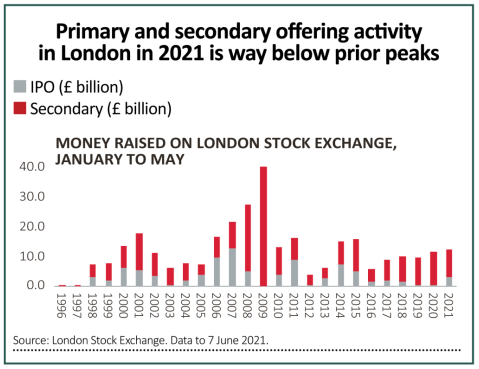
If anything, the 43 IPOs to have taken place on the London Stock Exchange so far in 2021 appear to have struck a good balance. The average gain provided to those who were able to buy at the listing price is 24, although this column accepts the difficulties that private investors face in accessing IPOs is a major bugbear of many portfolio builders.

Nor does the amount of capital raised seem excessive, at £3.3 billion, according to data from the London Stock Exchange. This is the highest figure since 2015 but it pales compared to the £10 billion and £13 billion raised in the first five months of 2006 and 2007 respectively, after which trouble arrived in no uncertain terms, to again back up Brooks’ analysis of how the US equity boom of the 1960s came unstuck in the early 1970s.

The first five-month tally for 2021 also lags the boom of 2000 and 2001 as tech, media and telecom (TMT) companies rushed to list and sell stock to the unwary enthusiast.

Round two

Better still, the flow of secondary deals so far seems digestible, as companies whose shares are already listed have raised £9.5 billion in the year to date. It may be the highest figure since 2015 but again it lags the peaks of 2008-09 and 2000-02.

Even though share prices and valuations were collapsing, backers of technology firms were still willing sellers on the latter occasion because they knew the game was up. Perhaps therefore the real warning sign is not so much a rush of (potentially) dud IPOs but a string of secondary offerings that come regardless of how well – or badly – the IPO went.

Investors in Deliveroo and Alphawave IP should take particular note in this case, although this column was intrigued by commodities broker Marex Spectron’s decision to list on the London Stock Exchange. This could have been a good test of the current surge in commodity prices.

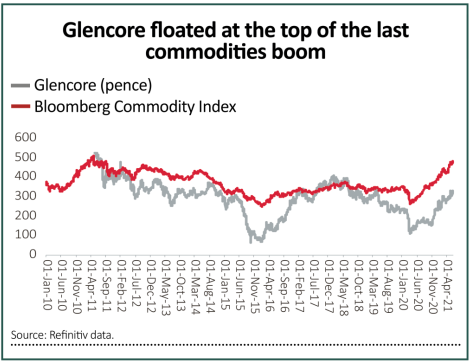
If anyone should know a good time to buy – or sell – it is surely a broker who is an expert in their field, so Marex’s move to give existing investors a chance to liquidate some of their investment now did look intriguing, given that the Bloomberg Commodity index is trading very close to its all-time highs of 2008 and 2011.

Smart money

Investors – and thus would-be buyers of the stock – could have be forgiven for asking themselves whether the sellers may know anything they do not and, as Shares went to press, the IPO was quietly pulled.

The last big commodity trader who came to market in London was Glencore (GLEN). It did so in 2011 – barely a month after the Bloomberg Commodity index peaked that April at 513, a level to which it is yet to return.

The aggregate amount of money raised by IPOs and secondary placings in 2021 to date is £12.8 billion. Investors have received over £8 billion from share buybacks and some £30 billion in dividends. Bull markets tend to wither when the money runs out and it does not look like we are reaching that stage, at least just yet.

Please continue to check back for further updates.

Andrew Lloyd DipPFS

14/06/2021

Team No Comments

Invesco – Meet biodiversity: the next big thing?

Please see article below from Invesco received late on Wednesday afternoon – 09/06/2021

Meet biodiversity: the next big thing?

Last week, on the 30th of May, the global conference on Biological Diversity (known as “COP15”) concluded in Kunming, China, with the aspiration to set global targets that would have become the “Net Zero for Nature”. Despite the postponement of the conference due to COVID, the urgency regarding the need to halt and reverse biodiversity loss is growing more acute.

The destruction of natural habitats, shrinking animal populations and even species extinctions are now widely regarded as part of a global crisis. The World Economic Forum’s Global Risks Report 2021 placed the loss of biodiversity in its top five existential risks, alongside global pandemics, climate change and weapons of mass destruction.

Inevitably, and rightly, the issue of biodiversity is set to play an important role in finance and investment, as regulation and public awareness require investment funds to take account of this vital issue in investment decisions.

Statistics on biodiversity tell their own story. The World Wildlife Fund’s (WWF) Living Planet Report 2020 catalogued the scale of the issue. Between 1970 and 2016 the planet experienced:

  • A 68% average decline in global vertebrate species populations.
  • An 84% decline in freshwater wildlife populations.
  • 17% of the Amazon rainforest has been lost to deforestation.

Biodiversity is vital for the stability of the environment. Agricultural production and food security depend upon the wider ecology of plant and animal life. Biodiversity also plays a role in resisting disease and 25% of medicines are derived from rainforest plants.

Loss of biodiversity may force animals to live in closer proximity to both each other and humans, enabling the emergence and spread of disease. Water supplies, soil fertility and countless livelihoods depend upon biodiversity – there is a lot riding on its protection.

The clock is ticking on disclosure

While biodiversity is an issue across all business and industry, certain sectors and activities are on the front line. The United Nations’ 2019 Global Resources Outlook concluded the extraction and processing of natural resources – largely mining and farming – are responsible for 90% of global biodiversity loss. The deforestation of the Amazon to make way for beef farming is the most notorious example.

Within the broad issue of environmental protection, biodiversity is increasingly recognised as a key issue alongside climate change. For that reason, the role of the financial services sector  in protecting and financing biodiversity is coming under the spotlight. Regulators are increasingly including biodiversity as a topic for financial firms to disclose on. For example, the European Union’s Sustainable Finance Directive Regulations (SFDR) specifically identifies biodiversity as one of the Principle Adverse Impacts (PAIs) the financial sector must address. Beyond disclosure, the issue increasingly being raised by regulators as a potential financial stability risk, with the Network for Greening the Financial System, comprised of global central banks and financial regulators, recently announced a work programme to study the financial stability risks arising from biodiversity.

How can investment be measured for biodiversity?

The effect of business activities on biodiversity is a complex matter to assess and hard data is in short supply.  Numerous initiatives are currently underway to try to bridge this gap, by identifying appropriate metrics for measure biodiversity and natural capital. This includes the Taskforce on Nature-related Disclosures (TNFD), which, it is hoped will do for biodiversity what the Taskforce on Climate-related Disclosures (TCFD) did for climate change.

One pioneering organisation has been the FAIRR (Farm Animal Investment Risk & Return) Initiative that carries out research into environmental impacts and provides best practice tools for investors. The initiative is backed by a network of investment groups including Invesco.

FAIRR’s Protein Producer Index assesses the effect of industrial scale farming on the environment and biodiversity. Its latest report, in November last year, assessed 60 of the world’s largest food producers and found that more than 80% of land-based food producers posed a high risk of deforestation and loss of biodiversity1.

Its report also identified the links between major food producers and those companies closer to the consumer, such as McDonald’s and a range of supermarkets including Tesco, Sainsbury and Walmart.

As formal regulations and disclosures become part of the investment landscape over the coming years, assessments on biodiversity, such as those by FAIRR, TNFD, CDP (formerly the Carbon Disclosure Project) and others, are likely to become crucial in shaping investment strategies. Consumer awareness is also likely to rise, particularly as the links between production and consumer brands are made more transparent.

As governments and industry increasingly agree, the loss of biodiversity poses a grave risk to the global ecology and to the global economy. Consumer concern and rigorous regulation on impacts and disclosures are set to make biodiversity an important factor in sustainability and in company valuations. They will also become an essential theme for the investment strategies of the future.

The interconnectedness of existential threats means that the ripple effects can encompass concerns including deforestation, biodiversity loss, waste pollution, climate change and our own health.

Please continue to check back for more on ESG and socially responsible investing along with our latest blog posts and market updates.

Charlotte Ennis

11/06/2021

Team No Comments

Stocks rise as oil prices hit highest level in two years

Please see below ‘Markets in a Minute’ article received from Brewin Dolphin yesterday evening, which provides an overview of current market behaviour in reaction to global economic developments.

Most global stock markets edged higher last week as oil prices surged and data pointed to strong economic growth in the months ahead.

In the US, the S&P 500 ended its four-day week up 0.6% after crude oil prices climbed to their highest level for more than two years, boosting energy stocks. Share prices were also lifted by Friday’s weaker-than-expected US nonfarm payrolls report, which helped to alleviate fears of a shift in the Federal Reserve’s policy stance.

Over in Europe, the STOXX 600 added 0.8%, Germany’s Dax rose 1.1% and France’s CAC 40 gained 0.5% after the final purchasing managers’ survey for the eurozone suggested GDP would rise strongly in the second and third quarters. The UK’s FTSE 100, which was closed last Monday for the spring bank holiday, rose 0.7% despite concerns that the Delta variant of Covid-19 would delay the final lifting of lockdown restrictions.

The extension of the Covid-19 state of emergency in several prefectures in Japan weighed on the Nikkei 225, which declined 0.7%. China’s Shanghai Composite slipped 0.2%, ending a three-week run of gains.

Investors shrug off weak Chinese data

Most indices managed to hold on to gains yesterday (Monday 7 June) despite weaker-than-expected Chinese trade data. China’s imports grew by 51.1% in May from a year earlier, below the 54.5% growth predicted by analysts in a Bloomberg poll. Exports slowed to 27.9% in May from 32.3% in April, missing analysts’ forecasts of 32.1% growth.

Nevertheless, Asian markets closed in the black on Monday, with the Shanghai Composite and Nikkei 225 advancing 0.2% and 0.3%, respectively. The panEuropean STOXX 600 also erased earlier losses to close up 0.2%. News that UK house prices rose to a new peak in May boosted housebuilders, helping the FTSE 100 finish Monday’s session 0.1% higher.

UK and European shares were broadly higher at Tuesday’s open, although a fall in German factory output knocked 0.1% off the Dax.

US adds fewer jobs than expected

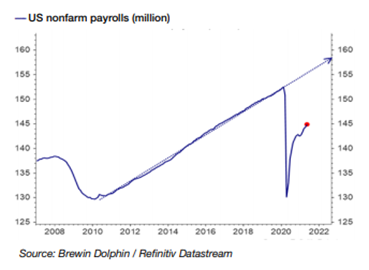
Last week saw the release of the closely watched US nonfarm payrolls report, which revealed the US added 559,000 jobs in May – fewer than the 675,000 extra jobs that economists were expecting. Economists had already lowered their forecasts following the huge miss in April when 278,000 jobs were added versus an expected one million jobs.

Labour participation in May was also lower than expected at 61.6%, below the pre-pandemic level of 63.4%. The number of unemployed stood at 9.3m, far higher than the pre-pandemic level of 5.7m.

However, the report wasn’t all doom and gloom. Job growth in May was driven by the services sector, with leisure and hospitality adding 292,000 new jobs, which is a further sign that the economy is normalising as vaccines are rolled out. In addition, the unemployment rate fell from 6.1% to 5.8%, and the number of permanent and temporary layoffs declined.

Overall, the report showed that while the US jobs market is improving it isn’t ‘overheating’, which would likely be the trigger for the Fed to tighten its monetary policy.

Eurozone services sector growth surges

Growth in the eurozone’s services sector hit a three-year high in May as lockdown restrictions eased. IHS Markit’s eurozone services PMI rose to 55.2 from 50.5 in April, marking the third successive month of expansion. Ireland and Spain saw the fastest growth, while Germany saw the slowest.

The composite PMI, which also includes manufacturing, surged to 57.1 in May from 53.8 in April, while business optimism for the year ahead hit the highest level for more than 17 years.

Chris Williamson, chief business economist at IHS Markit, said: “The service sector revival accompanies a booming manufacturing sector, meaning GDP should rise strongly in the second quarter. With a survey record build-up of work-in-hand to be followed by the further loosening of Covid restrictions in the coming months, growth is likely to be even more impressive in the third quarter.”

UK house price growth hits double digits UK annual house price growth rose to 10.9% in May – the highest level in nearly seven years. On a monthly basis, prices rose by 1.8% following a 2.3% rise in April. The average house price is now £242,832, an increase of £23,930 over the past 12 months, according to Nationwide.

The lender said the UK’s housing market has achieved a complete turnaround over the past 12 months. A year ago, activity collapsed in the wake of the first lockdown with housing transactions falling to a record low of 42,000 in April 2020. Activity surged towards the end of last year and into 2021, reaching a record high of 183,000 in March.

Robert Gardner, Nationwide’s chief economist, said the extension to the stamp duty holiday isn’t the key factor behind the spike in transactions, although it is impacting the timing.

“Amongst homeowners surveyed at the end of April that were either moving home or considering a move, three quarters (68%) said this would have been the case even if the stamp duty holiday had not been extended,” he stated. “It is shifting housing preferences which is continuing to drive activity, with people reassessing their needs in the wake of the pandemic.”

We will continue to publish relevant content and news as the vaccination drive in the UK is extended to include those aged 25 or over. 

Stay safe.

Chloe

09/06/2021

Team No Comments

Weekly Market Commentary | US Consumer Price Index data release to be closely watched by markets

Please see below for Brooks MacDonald’s latest market update, received by us yesterday evening 07/06/2021:

  • Last Friday’s US jobs report missed expectations but the figures were welcomed by markets
  • With the EU vaccination programme progressing well, this week’s European Central Bank (ECB) meeting will be closely watched
  • US Consumer Price Index (CPI) on Thursday is arguably the most important data release so far in 2021

Last Friday’s US jobs report missed expectations but the figures were welcomed by markets

Equities ended the week strongly, despite the US jobs report coming in behind expectations. Growth equities were a particular beneficiary after the non-farm payroll report was released on Friday.

The May US employment report missed expectations but only mildly compared to the miss in April’s figures. May saw c.559,000 new jobs created on a headline basis and c.496,000 of those within the private sector1. Describing the gain, Federal Reserve Bank of Cleveland President Mester said that while the figures were positive, they fell short of substantial further progress which is the bar set by the Federal Reserve to consider tapering2. Beneath the numbers, the labour force participation rate fell, which may suggest that there is some hesitancy to return to workplaces or that stimulus measures have reduced the need to return to the workforce short term. The jobs report saw US 10-year Treasury yields fall as market participants priced in a slightly slower than expected recovery, which is showing fewer signs of acute labour shortages. It is those labour shortages that are particularly relevant given their role in driving supply side inflation as employers compete for workers.

With the EU vaccination programme progressing well, this week’s European Central Bank (ECB) meeting will be closely watched

This week’s main event is undoubtedly the US CPI number on Thursday, and this arguably represents the most important data release so far in 2021. Consensus estimates point to a 0.4% month-on-month increase in both the headline and core inflation rate, which would mean that core US inflation would move to 3.4% year-on-year3. This would be the highest level of core inflation since 19934. Of course, the massive reduction in economic activity last year skews these figures and this release, alongside June’s, sees a substantial uptick in inflation due to this ‘base effect’ alone. Thursday also sees the ECB’s meeting where the central bank, under less inflation pressure than the US, is likely to continue with its faster pace of asset purchases, for the short term at least. As the EU vaccination drive continues to gain momentum, an exit of this pandemic quantitative easing programme may be on the cards but probably not until the last quarter of this year.

US Consumer Price Index (CPI) on Thursday is arguably the most important data release so far in 2021

The US CPI number will be very closely watched by markets, not only for the core inflation figure but also what is driving the subcomponents. Last month, used cars were an outsized contributor to the figures but investors will be looking for signs of a broader increase in price pressures.

Please continue to utilise these blogs and expert insights to keep your own holistic view of the market up to date.

Keep safe and well

Paul Green DipFA

08/06/2021

Team No Comments

Royal London: ‘How we’re helping tackle the climate crisis’

Please see the below article from Royal London received over the weekend:

The majority of our assets just over 90% – are invested with Royal London Asset Management (RLAM), and their responsible investment team is doing great work to help drive the move to a low carbon economy and leading the way on the Just Transition.

What is the Just Transition?

Just Transition ensures that social issues are taken into account in moving to a low carbon economy. Rapid climate action that limits global warming to below 1.5ºC prevents the worst human and economic costs of climate change. A Just Transition ensures this climate action also supports an inclusive economy and avoids exacerbating existing injustices or creating new ones.

We care about Just Transition in the industry, because without adequate considerations of the social impacts of accelerating the path to Net Zero, there is a risk that people will not be willing to make the hard choices we need in order to limit the impacts of climate change. This can lead to policy delays and uncertainty. Companies that acknowledge this challenge and plan for a Just Transition, will be more likely to deliver on their commitment to low-carbon growth. We believe energy utility companies should develop formal Just Transition strategies to manage social risk and ensure they continue to deliver good value for society and their investors.

A just transition for Scottish and Southern Energy (SSE)

SSE is an energy utility company that helps produce and distribute gas and electricity to our homes. It is one of the largest producers of wind power in the UK and has committed to become ‘net zero by 2050’ – which means that by 2050 the amount of greenhouse gas emissions produced by SSE will be equal to the amount it removes from the atmosphere.

RLAM’s responsible investment team has been champions of SSE’s strategy to move to wind power and reduce its reliance on coal and gas, which will have a big benefit for our climate. However, they’ve also been talking to SSE about the Just Transition – what the company is doing to ensure that its transition to lower carbon energy also considers any negative social consequences like significant job losses or making energy bills unaffordable. Solving the climate crisis is not straightforward, and the responsible investment team is asking companies to take a more holistic view and look at both the social and environmental consequences of taking action.

Please continue to check back for a range of blog content, from ESG focused pieces like this one to market updates and insights from a variety of the worlds’ leading investment houses.

Andrew Lloyd DipPFS

07/06/2021

Team No Comments

Electric vehicle adoption relies on investment into infrastructure

Please see the below article from Tribe Impact Capital received yesterday afternoon:

Driven by changing consumer behaviours, increasing choice and affordability, recent net-zero pledges by governments and the desire to ‘Build Back Better’ after the pandemic, the demand for electric vehicles (EVs) continues to grow. According to Bloomberg New Energy Finance, EV sales will rise to nearly 60% of the global auto market by 2040, a huge shift from almost 0% in 2010. With consumer consciousness on the rise and market forces gaining momentum, EVs are quickly becoming the future of the automotive industry and a target market for investors.

However, before any serious adoption of EVs can take place there needs to be significant investment in the infrastructure that supports EVs. This includes the charging points but also the entire electricity grid.

EV charging points

The issue of sufficient access to electric charging points for those who don’t have the access to off-street parking needs to be addressed if there is to be widespread adoption of EVs. A report by the European Automobiles Manufacturers association in October 2020 showed that while EV sales in Europe had increased over 100% during the last 3 years, the number of public charging points had grown by just 58%. Similarly, in the UK, all-electric cars went from 1.6% of the market in 2019 to 6.6% in 2020. The report found the UK is likely to need around 400,000 public charge points by 2030, a considerable increase from the existing 35,000.  The current installation rate of 7000 a year is not enough to meet requirements if the UK is to be ready for the ban on sales of cars with an internal combustion engine in 2035. Installation will need to occur five times faster at a cost of between £5 billion and £10 billion by 2030.

Providing enough residential on-street charge points and charging facilities in public spaces will be critical in high-density residential areas where it’s simply not feasible for every property to have cables running from their electricity supply to their vehicle. National Grid points out that with 20 million EVs on the road there will be at least 8.6 million vehicles that will not have the facilities for charging at home.

This is not just an issue for the UK though. The quantity of public chargers is growing the fastest in China, followed by Europe and then the US. China still has the largest network of public chargers. They had more than 500,000 chargers by 2019, accounting for more than 50% of the global total. However, a large number of chargers does not mean an ideal vehicle-to-charger ratio. While China’s passenger electric vehicle-to-public charger ratio (8.5 to 1) is lower than that of the United States (17 to 1), some European countries have even lower EV to public charger ratios (France: 7 to 1; Germany: 5 to 1; and the Netherlands: 4 to 1).

Electricity demand

The second major infrastructure to consider is the supply and distribution of the electricity itself. At their current trajectory EVs are set to double domestic electricity demand. At scale, this would present significant challenges to the distribution network. As we see increased adoption of intermittent renewable energy sources we might start seeing large imbalances between supply and demand in terms of power provision. Not only do we need to build out our existing network capacity and reinforcement we need to get better at managing system stability, energy storage and smart charging. 

What does this mean for investors?

The UK government recognises that widespread adoption of EVs is key to achieving their climate goals with the Chancellor announcing in the government’s spring Budget that £500 million will be invested into a rollout for charging hubs. Whilst this investment will help play a role in piecing together the UK’s fragmented infrastructure and easing the pressure on public sector organisations, more capital for wider and faster deployment of a national charging grid is needed. Many supermarkets are now providing electric charging hubs in their car parks in partnership with others. Many supermarkets in the UK have increased their commitments to sustainability and investors are now starting to look at these companies with renewed interest.

Despite the noise and potential in companies like Tesla, Nio and others, for example, Volkswagen, the EV story also represents plenty of opportunities for investors outside the main car manufacturing segments. Charging points are the next logical step but looking at the sector more broadly there are opportunities in smart metering, battery storage, network improvement, smart cities and core technology (for example semiconductors, and artificial intelligence). The shift to EVs will have major implications not just for the way we travel, but the way we build cities and our consumption of electricity itself. With this in mind, the opportunities for investors further increase.

For example, smart meters (electronic devices that accurately monitor electricity use and send this information to the user or the utility company to effectively manage and optimise energy consumption) are key to driving efficiency in energy usage. They can potentially manage the demand on the grid by notifying consumers of the best time to charge, helping reduce consumer costs. Renewable electricity providers are also starting to provide ‘free’ tariffs for EV owners to manage potential cost implications.

The market for smart meters is growing rapidly and in 2019 US electric companies installed over 98 million smart electric meters, covering more than 70% of US households. The global smart meter market size was valued at $21.13 billion in 2019 and is projected to reach $39.20 billion by 2027, an annualised growth rate of 9%. Utility companies are keen to install meters, they enhance the energy grid’s resilience and operations and help provide visibility into the system operations, thereby avoiding outages.

Similarly, the battery storage market is set to double over the next 5 years. Batteries provide a critical role in our future power systems as they provide the flexibility required by the grid to support the variability of power generation from renewables when environmental conditions are not favourable for power generation. Not only is demand going up, but input costs are coming down. By 2030, total installed costs could fall between 50% and 60% (and battery cell costs by even more), driven by optimisation of manufacturing facilities, combined with better combinations and reduced use of materials. Battery lifetimes and performance will also keep improving, helping to reduce the cost of servicing. Improved batteries will help support the grid by providing flexibility to store energy and release it when demand for EV charging is high.

With all investment opportunities, however, comes risk. The widespread adoption of electric vehicles comes with some stings in the tail, most notably the use of rare earth and precious metals used in the battery and technology embedded in the vehicles themselves. Complex supply chains, sometimes in politically unstable geographies and/or where the rule of human rights may be less robust, increase the risk of human rights abuses, as well as environmental degradation. As investors it is essential to be aware of and manage these risks. Doing so can uncover solution opportunities, for example, in businesses dedicated to the recycling of these rare earth minerals at end of life in many rechargeable battery applications.

Global governments have built widespread adoption of EVs into their carbon neutral plans which will have major implications not just for the way we travel but the way we build cities and our consumption of electricity itself. For investors, it’s important to look at the bigger picture and recognise that the opportunity set is much wider than a few automobile names.

This is an interesting look at the investment opportunities within the electric vehicle landscape looking beyond just investing in the vehicles themselves or the big EV companies (i.e. Tesla), but looking at the infrastructure around this, charging points, smart metres, clean energy etc.

The pandemic not only changed the world itself, but how people think about the world, the environment and what the future will look like.

This is a growing investment space and another key indicator that ESG has gone mainstream.

Andrew Lloyd DipPFS

04/06/2021

Team No Comments

Invesco – Global Markets: What to watch in June

Please see below an article which was published yesterday (02/06) by Kristina Hooper, Chief Global Market Strategist at Invesco, which outlines various areas to watch throughout June:

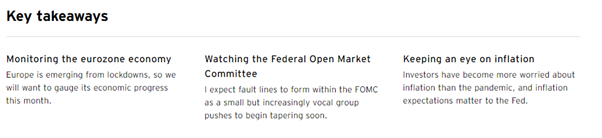
As you can see from the above, the are a lot of moving parts that need to be monitored. Some of the key areas to focus on are:

The unlocking of the Eurozone – hopefully retail sales flow through in line with the easement of restrictions.

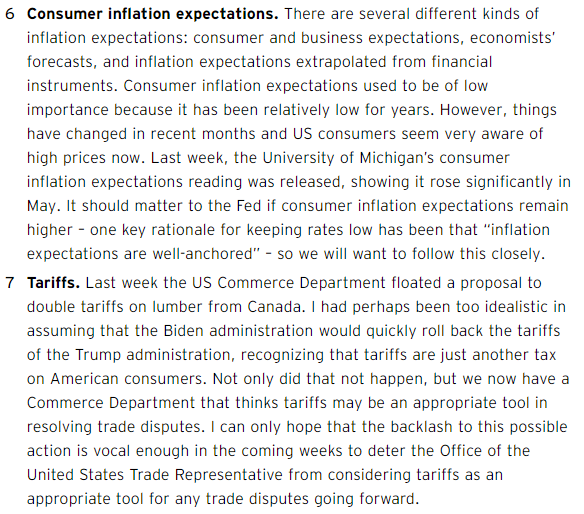
Inflation expectations – Inflation remains a hot topic. We will see just how much pent-up inflation has built up and whether this is long-term trend which will force central banks to act or whether this is a result of an initial supply and demand chain issue resulting from economies opening up.

Covid vs Vaccine rollout – whilst the vaccine rollout in developed economies is ramped up, variants in developing countries could still pose a threat.

Geopolitical tensions – as things slowly start to return to a form of normality, geopolitical tensions are becoming mainstream news again.

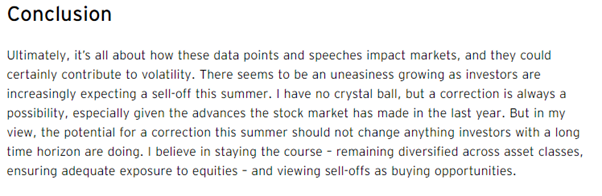
There was also mention of a potential summer sell-off, this should not be ignored or overlooked, but it remains important to note:

  • This is Invesco’s view, other fund managers may have a different opinion on this
  • If a sell-off does happen, this may not necessarily be a bad thing as it can create buying opportunities
  • Investors need to consider their long-term objectives and investment time horizon. Markets will recover from any sell-off, it’s just a matter of time and investors need to be patient.

Please continue to check our Blog content for advice and planning issues and the latest investment, markets and economic updates from leading investment houses.

Please keep safe and healthy.

Carl Mitchell – Dip PFS

IFA and Paraplanner

03/06/2021