This is the final instalment into our 3-part introduction to ESG.
Recap
In part 1, we explained what ESG is. In part 2, we went a little deeper and looked at the 10 ‘UN Global Compact Principles’ and the screening process for firms when selecting ESG compatible investments and companies.
Please check out the first 2 instalments if you haven’t already.
Here in part 3, the final instalment in our ‘What is ESG? – An Introduction’ blog series, we will look at what we at People and Business are doing as a firm to make sure that we are moving in the right direction by selecting firms with good ESG processes.
Due Diligence
We are required to write an annual Due Diligence report as a firm, to demonstrate our processes into making sure all the firms we use, whether it be a platform, product provider or investment solutions, are and remain suitable for our clients.
We measure this in a number of ways including service levels, performance and now, their ESG processes.
Whilst this is an annual requirement, we don’t view this as a once a year ‘tick box’ exercise. Our Due Diligence process is built into everything that we do. We continuously look at the companies we partner with, to ensure they provide the best possible service for our clients. The annual report is just a summary of our findings over the past year.
As our Due Diligence is something we build into our way of working on an ongoing basis and our ESG research is ongoing, this will be added as a permanent section of our annual Due Diligence report which we complete in the last quarter of each year. This month, we wrote an addendum to this report, fully focused on ESG.
Our ESG Focus
Last year, when the ESG investment focus really started getting some momentum, we made the decision to build this into our Due Diligence process and move towards an ESG investment approach where possible, and suitable for our clients.
We have asked our clients (both new clients and as part of our annual review process) for their thoughts on ‘ethical’ investing for years. Traditionally, ‘ethical’ investments haven’t produced the same level of returns as standard investments, but this has been changing. You no longer need to compromise on your investment returns to be a ‘good’ investor.
Just over 2 years ago, we became aware that Blackfinch Asset Management were due to launch a series of ESG approved Managed Portfolio funds. However, with any brand new investment, it’s not practical to go jumping in straight away. We need to see past performance over a real measurable period and how firm’s manage their investments and keep us, as the IFA, updated into the management of their Model Portfolio Services.
We were impressed with what we saw from Blackfinch and their ESG screening process. They use a combination of positive and negative screening, with much more of a focus on positive screening.
Over the past 2 years, we have been monitoring the progress of these portfolios and how they manage them. In September 2019, Steve actually went and visited Blackfinch’s Head Office, meeting key investment personnel and fund managers in Gloucester.
On the 2 year anniversary of the funds, we undertook analysis on the Blackfinch portfolios against their peers in the market which we currently use or have recommended in the past, and not only found they out performed, but had the strongest ESG processes.
Given our research, we have made the decision to introduce these Blackfinch Managed Portfolio Solutions into our investment proposition, where appropriate for our clients.
We are satisfied that they are ahead of the game on their ESG policies and feel that they will only continue to enhance these.
Currently, we are still under way with our ESG project and are looking into the ESG policies of all the investment firms/ solutions we have under our proposition and will continue this throughout the rest of this year, and then monitor this on an ongoing basis.
We are now building ESG into our client review process, highlighting ESG to our clients and getting their views.
Although ESG is still a relatively new concept within the industry, we have been looking at this for a while behind the scenes and will continue to embed this focus through everything we do at People and Business. As the market becomes more ‘ESG aware’ we expect there to be much more of a focus on ESG in this industry and we will monitor this to ensure that we keep up to speed.
Summary
Hopefully this blog series has given you a brief understanding of what ESG is, how this is measured and what we are doing as a firm to ensure we are moving towards more sustainable and socially responsibly investments.
This may be the final instalment into this ‘What is ESG? – An Introduction’ blog series, but this won’t be the last you will hear from us on the subject of ESG (far from it!).
As this blog notes, this is becoming a big theme in this industry, and we want to make sure we are and continue to be ahead of the curve, by selecting investments and firms that, we believe are ‘doing the right thing’.
The current Covid-19 Pandemic has further raised the profile of ESG as people contemplate potentially the next major crisis, global warming.
Along with our regular industry updates, we will continue to source good ESG content to keep you updated, and later this year, we will post an update into how we are getting along with our ESG processes.
As a business, we will also consider how we can move in the right direction too. We are about to invest in new lights in the office that use far less power.
Please see article below from Close Brothers Asset Management received 17/07/2020.
Looking at the path to recovery
SUMMARY
•Covid-19 has already dented global growth in 2020 • Having fallen initially, equity markets have recovered as investors take a long term view • Sovereign bond yields remain at or near historic lows across most developed markets • The efficacy of health policy will be key in determining how long the pandemic lasts – the effects of the pandemic on the economy are likely to be long lasting • The global economy may be less interconnected in years to come, due to changing supply chains, a larger role for fiscal and health policy and geopolitical tensions • Changes already underway have been accelerated by the pandemic – investors must identify the winners and losers in the post-pandemic world
INTRODUCTION
In the first quarter of 2020, the spread of Covid-19 around the world precipitated an unprecedented health emergency, forcing countries worldwide to respond quickly with dramatic measures to limit the spread of the virus. Stock markets initially plunged, as investors reacted to this sudden new threat to the global economy, while bond yields reached new lows, reflecting investor caution and the expectation of central bank monetary stimulus. At one point, the price of a barrel of oil turned negative, as low demand and a supply glut exhausted North American storage capacity. The world had seemingly been turned on its head in a matter of weeks.
In time, markets have recovered much ground, comforted by both governments and central banks stepping in to ease the immediate impact of the pandemic on consumers and businesses. The MSCI World Index, having fallen over 30% in February and March, was less than 10% below the pre-pandemic level at the end of June. Given the backdrop of an immediate global recession, and an uncertain path to recovery in 2021, such strong performance is hard to reconcile. Within bond markets, sovereign yields remain anchored, with the yield on a 10Y US treasury still well below 1%, suggesting a more pessimistic view of growth.
While investors have learned to stomach the immediate economic implications of Covid-19, what lies ahead is still somewhat unclear. Nonetheless, even in a time of such uncertainty, there are some conclusions investors could draw with a degree of confidence, many of which have clear and important implications for businesses.
LASTING SIDE-EFFECTS
The disruption caused by the pandemic may be with us for some time. The pandemic is not yet over. While the initial surge of the pandemic is behind us here in the UK and restrictions are easing, in parts of the US, Russia, India, Latin America and Africa, the spread of the virus is still accelerating (see figure 1). What is more, there are some signs of a “second wave” of the virus in some countries that have eased restrictions, resulting in social distancing being reintroduced.
Epidemiologists and health professions in general know much more about Covid-19 than they did at the start of 2020, but much is still unknown. Research into the virus is focussed on three key areas which will determine how long the pandemic lasts.
1. VACCINE The first focus for research is to find an effective vaccine – until an effective vaccine is found, Covid-19 will remain a health risk. The global health community has already started a coordinated research effort, with a number of potential avenues being explored. There are also funding programmes and agreements in place designed to ensure that access to a vaccine is fair, so as to avoid poorer countries being deprived of important health resources. However, developing, testing and distributing a vaccine will take time. Unlike medication that is given to those who are ill, a vaccine is given to someone who is well. An effective vaccine also needs to protect a person for a reasonably long time, not just a few weeks. All of this means that vaccine testing takes longer than other kinds of medication. With these facts in mind, and despite all the resources being committed, it is unlikely that a vaccine will be available in 2020.
2. TREATMENT A second area of research is that into treatments for people already suffering with Covid-19 symptoms. These treatments either seek to limit the virus’ ability to attack the body, or to limit the complications caused by the body’s own response to the virus. Such therapies may limit the severity of the illness the virus causes, saving lives and reducing strain on health services. So far, only limited progress has been made in this research area, mostly in terms of repurposing existing drugs that have been found to have some positive impact on Covid-19 patients. This means that, for now at least, the disease caused by the virus remains a serious concern.
3. TRANSMISSION The third research area is concerned with the transmission of the virus. What factors determine how easily the virus is spread? Which social distancing measures are most important in order to limit contagion?
How do we know who has the virus? While our understanding of how the virus spreads is improving, research in the area remains nascent. For now, policy makers have limited access to data assessing the effectiveness of various social distancing measures, though over time this will improve. As a result of this, it is possible that governments will have to test different policy measures before they are able to establish which are most effective. On the virus detection front, scientists are making some progress towards quicker and more accurate tests for the virus, which may help policy makers control the spread.
Given that a vaccine is unlikely to be available in 2020, the limited progress made in finding a therapy, and the limited data available to policy makers when evaluating social distancing programmes, it seems likely that the economic disruption caused by the pandemic will be long-lasting.
DESYNCHRONISATION IS COMING
The global economy may become less coordinated as a result of thepandemic The prevailing trend of the global economy over the last two decades has been one of globalisation – increasingly sophisticated and interconnected supply chains have allowed businesses to source materials and labour worldwide, and just-in-time production technology has eliminated the requirement for businesses to hold a large inventory. As a result of this, the global economy also became increasingly synchronised – monetary stimulus in China would ripple across the globe, impacting copper prices in Chile and hotel rates in Cherbourg.
The pandemic may cause a partial desynchronisation in the global economy for a number of reasons. Firstly, the experience of the pandemic has revealed the importance of supply chains being not only efficient, but also resilient. For strategically important goods, this is likely to lead to a partial re-shoring of production, reducing the supply chain’s vulnerability to shocks along the line. For other goods, it seems possible that nations may also shift some off-shore production from distant manufacturing hubs to a neighbouring country with appropriate manufacturing capacity. While this does not signal the end of globalisation, we may see some fragmentation in global trade and a period of disruption while supply chains are re-orientated.
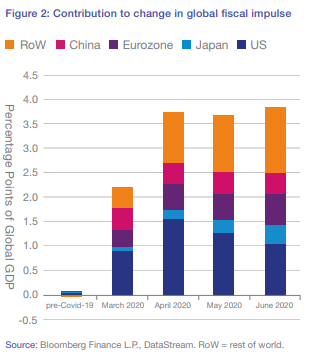
The second driver of desynchronisation is the greater importance of health and fiscal policies versus monetary policies. In the years since the financial crisis, monetary policy has been the dominant policy tool used to control the global economy, with governments in the world’s developed markets unenthusiastic, for the most part, about accommodative fiscal policy in the wake of a crisis. While monetary policy remains an important and powerful policy tool with a strong influence over the global economy, attitudes to fiscal policy have changed and government spending is likely to be higher in those economies that can afford it and those prepared to borrow further to fund it. While monetary policy has mostly washed through the global economy, especially that enacted by the US and China, the effect of fiscal policies may be more localised and heterogeneous, as the results will depend on the efficacy of the measures introduced, the scale of spending, and the sphere of focus (see figure 2 below).
Lastly, the stresses caused by the pandemic appear to have further stroked nationalist feeling in some of the world’s economies, exacerbating geopolitical tensions that were already simmering away. We see this especially in global relations with China, where tensions are rising on a number of fronts.
While we do not expect the age of globalisation to end altogether, it does seem possible that desynchronisation may cause greater dispersion in asset performance across geographical regions.
ACCELERATED CHANGE
The pandemic has accelerated a number of structural changes that were already in train. In the words of Vladimir Lenin, “There are decades where nothing happens; and there are weeks where decades happen.” For many of us, life has changed a lot since the beginning of the pandemic, in both large ways and small. These changes have knock-on implications for the economy and businesses. One such example of a trend accelerated by the pandemic is the wider adoption of working from home. The pandemic has forced many businesses to adjust working practices and put in place the necessary technology and procedures to allow employees to be as productive from home as they would be in the workplace. This makes remote working for some not only possible, but an attractive option. This is supportive for the industries that facilitate this approach to working. However, it is likely to cause disruption to other sectors of the economy – remote working is likely to weigh on the airline sector, especially those carriers more exposed to business travel, if companies do not adjust. Demand for housing may also change – space for a study may be more important than proximity to a railway line. For those sectors where remote working is not an option, the extra costs associated with providing a virus-safe working environment may shift the scales in favour of the wider adoption of automation.
While few of these trends are new, the pace of adoption appears to have been spurred by Covid-19. Businesses themselves may also be transformed for better or worse. New business practices may add costs for some companies, but may provide opportunities to increase efficiency for others. Indeed, some listed firms will emerge from the crisis slimmed down and more profitable than when they went in to lockdown.
POSITIONING PORTFOLIOS
Given what we know about the pandemic, what is the likely impact on asset prices? As we have discussed, we expect global growth to be much lower than usual this year, and this in turn will weigh on corporate earnings growth – with some companies already cutting dividend payments (earnings paid out to investors). Given the pace of research progress into a vaccine, treatments and limiting transmission, some of the effects of the pandemic will be long lasting, making it likely that the economic recovery takes longer.
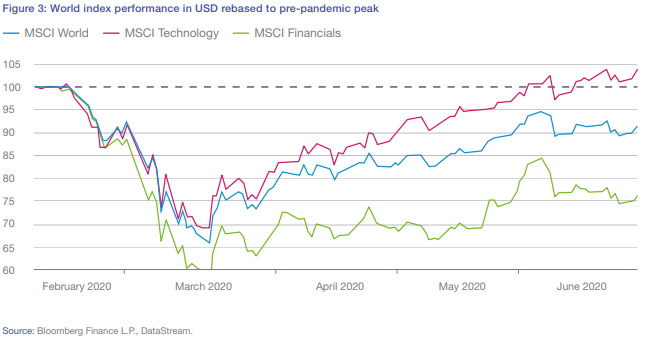
While growth may be depressed near term, shares are long term investments and current prices should theoretically reflect the present value of all future earnings, not just those in the next twelve months. On this basis, it is the structural changes accelerated by the pandemic that will likely have a more meaningful impact on asset prices. Asset prices certainly reflect this in some areas, with the global technology index outpacing the broader global index, and currently sitting above pre-pandemic levels (see figure 3 below).
In this environment, we believe that active management will be even more important. Investors must consider which health and fiscal policies are likely to be more favourable, and as a result, which regions will experience better outcomes. We must also consider which industries are best positioned and which businesses are best adapting to the realities of the post-pandemic world.
Within the bond market, the new outlook for global growth makes it likely that interest rates will remain at new lows for longer, which is generally supportive for bonds. However, the marked increase in government bond issuance is a potential source of concern. While central banks have committed to bond buying programmes, this appetite may not be unlimited. With government bond yields so low, further monetary accommodation may be required in order to eke out further price performance from these richly priced assets. Nonetheless, given the scope for shocks to the economy, bonds play an important role within multi-asset portfolios.
Across shares and corporate bonds, our research focus remains on businesses with ample working capital, as it is these businesses which we believe will be able to survive and thrive once immediate emergency support measures are withdrawn. At some point, social distancing measures will be lifted and growth will recover. Our priority now is establishing the right price for assets that will survive the here and now and will be attractive to hold in the longer term.
CONCLUSION
With the initial turmoil of this unprecedented health and economic emergency behind us, we are focussing on the longer term implications of Covid-19. We continue to closely monitor the evolution of the health data in order to better gauge the likely duration of this period of weak growth, and to analyse individual securities so that we may identify those with the greatest near term resilience and long term prospects.
A good insight from Close Brothers Asset Management.
The disruption cause by COVID-19 could be with us for some time yet. Whilst the initial surge of the pandemic is behind us here in the UK and some restrictions are easing, in parts of the US, Russia, India, Latin American and Africa, the spread of the virus is still accelerating with some signs of a ‘second wave’ of the virus in some of the countries that have eased restrictions. What lies ahead still remains somewhat unclear.
Please keep checking back for regular updates and blog posts.
Please see below that latest articles published by Jupiter Asset Managers yesterday (15/07/2020):
UK recovery pushed further out as GDP growth disappoints
Philosophically, Dan Nickols, Head of Strategy, UK Small & Mid Cap and his team are investors who are happy to range across the Value/Growth spectrum depending on where they can find the most appealing opportunities at a given point in time. In the UK small and mid-cap universe, as elsewhere, Growth has trumped Value for a number of years. The most expensive quintile in the universe trades on about 39x forward P/E, but if you remove the outliers from either end and compared the 30th percentile against the 70th percentile in terms of valuations, the gap there is widening too. This is the most polarised market from a valuation perspective that Dan can remember over his c.20-year career.
It is easy to rationalise why the market is behaving this way, said Dan, with so much uncertainty due to Covid-19 as well as the ongoing geopolitical issues at present. In that environment, with interest rates even lower for even longer, it is understandable that so many investors favour the relative ‘certainty’ of earnings provided by the growth dynamic notwithstanding elevated valuations. UK GDP growth in May was only 1.8% compared to the consensus expectation of 5%, meaning that the recovery feels like it is getting pushed further out. Nevertheless, looking forward it feels to Dan like the cheaper, more economically sensitive parts of the market, have more to gain from economic normalisation – providing, crucially, that one can find stocks that are not structurally challenged.
Everyone is in a holding pattern, for now, said Dan, while we wait to see what path the virus will take over the coming months and into next year. Have governments and central banks done enough to put economies into cold storage so they can be thawed out and resume growth, or will there be widespread balance sheet disruption that will take longer from which to recover? Only time will tell, but some visibility around these issues is what the cheaper parts of the market need to outperform, in Dan’s view. In the meantime, Dan and his team continue to prefer structural growth stocks, but are very conscious to have complementary exposure to well-run, conservatively-financed cyclical stocks that they believe can re-rate when conditions to normalise.
Is China’s domestic market overheating?
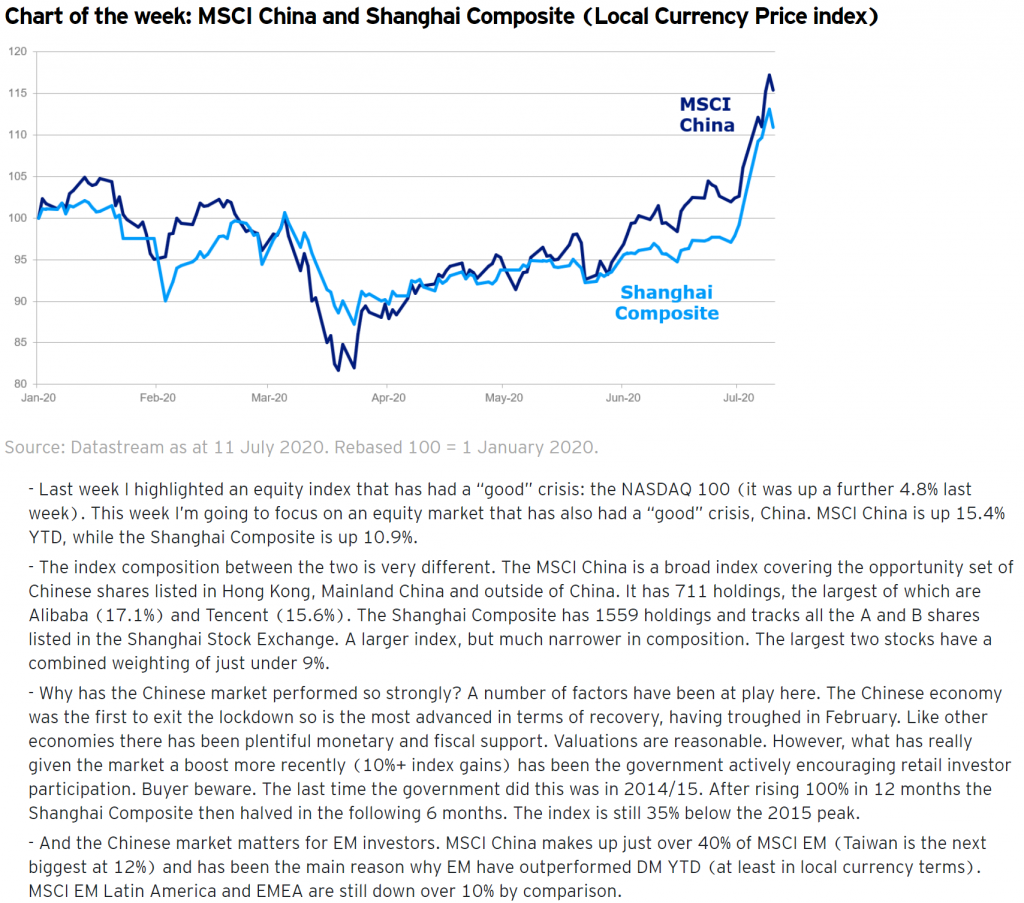
The biggest standout in a sea of red for global equity indices this year is the NASDAQ, which is up about 16%. However, there has, said Ross Teverson, Head of Strategy, Emerging Market, been a similar move in the CSI 300 Index, which consists of the 300 largest domestic A-share companies listed in Shanghai and Shenzhen. Meanwhile, other major emerging markets like Russia, Brazil, India and Mexico are down anywhere from 13% to 34%.
If you look within China, that gain in the CSI 300 Index looks modest to compared to what some other indices have done, for example China’s own equivalent to the NASDAQ is up c.55% YTD. Helping to fuel this rally has been a growing number of retail margin accounts in China.
There are signs, therefore, that the domestic Chinese market is starting to get quite heated. Valuations of Chinese companies with dual listing in Hong Kong began this year on a premium for their domestic listing, and that premium is now even wider.
What has driven this investor optimism? It is certainly true that China has coped relatively well with Covid-19, and there is also a strong narrative about the Chinese government’s support for home grown technology. Ross stressed that we should remember, however, that the Chinese economy has by no means escaped damage from Covid-19. A recent survey found 18% of respondents said their income had fallen by more than 50% during the pandemic, with another 15% saying their income had fallen 25%-50%. As in the West, the full impact of this economic stall has yet to be fully felt.
Ross’s own preference has been to gain exposure to China through Chinese businesses listed in the US, Hong Kong or Taiwan, as often he finds it possible to buy better business on lower valuations that way. Given the strong bull run in China’s domestic market, that clearly has not been the right positioning recently, and Ross won’t try to predict the timing of a correction, but Ross continues to believe that asset price discipline is vital.
What does a 5G world look like?
We don’t yet know exactly what the 5G technological revolution will look like, but it will certainly change how we interact with the world, said Stuart Cox, Fund Manager, Global.
With so many people now working from home, it’s easy to see why very efficient, high performing phones would be in high demand. Theoretically, 5G is dramatically faster than current 4G technology. Initially, coverage may be patchy, of course, until the infrastructure is fully rolled out, but the long-term potential of 5G phones is clear, says Stuart.
With such fast speeds, 5G handsets could render WiFi routers from broadband providers obsolete. We don’t yet know what ‘killer apps’ would replace it – the equivalent to Office 365 kickstarting the cloud revolution – but it’s very likely that 5G phones will become the medium through which we interact with a future 5G world, whether that’s smart cities, autonomous driving, industrial applications, or home offices. It’s a huge opportunity, says Stuart, and one that could unlock a lot of future growth that some of the world’s largest tech companies in particular are well placed to capitalise upon.
Please continue to check our Blog content for the latest investment, markets and economic updates from leading investment houses.
Please see article below from Brewin Dolphin’s ‘Markets in a Minute’ update received 15/07/2020.
China shares rally as state media declares bull market
Global share markets were mixed over the past week, although China has been a standout performer after investors piled in, encouraged by a state-owned newspaper that effectively declared a “healthy” bull market was on the way in Chinese equities.
Investors took the message to heart, and Chinese shares surged by almost 6% at the start of last week on trade volumes roughly double the average.
In the UK, a rally late in the week lifted the FTSE100 comfortably above the 6,000 level but performance in most markets was fairly muted due to the ongoing downbeat news around the coronavirus, worries about tensions between the US and China, and uncertainty around stimulus packages.
Last week’s markets performance*
FTSE100: -1%
Dow Jones: 0.95%**
S&P500: 1.75%**
Dax: 0.84%
Nikkei: -0.07%
Hang Seng: 1.4%
Shanghai Composite: 7.3%
*Performance in the week to Friday 10 July **Performance from close of business on 2 July to Friday 10 July due to Independence Day holiday.
A mixed start to this week…
Share markets largely continued their bullish run on Monday, with the FTSE100 gaining 1.33% and European markets hitting their best levels in almost a month as reports suggested progress on two vaccine candidates in the US. China and other Asian markets continued their strong run.
However, the S&P500 and the Nasdaq in the US both closed down yesterday amid worries about the rolling back of reopening plans in some states due to rising coronavirus cases. That led to Asian markets falling sharply today.
Chinese policymakers have also become uneasy about the rapid rise in Chinese stocks, leading to two state-backed funds to begin offloading equities in a bid to cool the overheating market. The Chinese government has also sought to dissuade investors from accessing unauthorised sources of margin financing. The Shanghai Composite closed down by 0.8% today. In early trading in the UK and Europe, shares were heading down.
Stimulus cliff-edge in US, knife-edge summit in Europe
There can be no doubt that both the US and Europe need more stimulus to maintain their recovery, or at least prevent a sharp deterioration. In the US, a central plank of March’s $2trn stimulus package is being debated; the extra $600-a-week in unemployment benefits, which is paid on top of each state’s existing unemployment benefits, is due to end on July 31. This means a potential cliff-edge income drop for around 20m unemployed Americans that would cause average unemployment payments to fall by about 60%. Also, cash payments to households have already been received, and probably spent.
Fortunately, both the Democrats and Republicans want the extra stimulus to keep flowing, so it is more than likely we will see these benefits extended.
This coming Friday the EU will debate the €750bn coronavirus recovery package at a special summit, and it is far from certain the fund, dubbed Next Generation EU, will pass in its current size or format – the current proposal is that the fund is made up of grants and loans, and more fiscally conservative states, particularly the Netherlands, are objecting to the grants element and also, reportedly, the size of the package.
Virus news
While the headline figures from case growth around the world, and particularly the US, still make dire reading, a glimmer of hope can be seen in the decline in Swedish cases, although this could be for any number of reasons (less testing, some more lockdown measures). Crucially, however, there was an important suggestion that immunity may have spread more widely than believed, which has global implications.
Marcus Buggert of The Centre for Infectious Medicine at Karolinska Institutet, Sweden, said: “Our results indicate that roughly twice as many people have developed T-cell immunity compared with those who we can detect antibodies in.”
Apparently, this could mean herd immunity is achievable with far lower infection rates of, say, 20% rather than the 60% suggested more commonly.
Overall the trends in Covid cases may be improving but it is hard to say due to fluctuations in testing and the distortion of the Independence Day holiday in the US. Even outside Sweden, European cases seem to have been suppressed for now. The case growth rate in Brazil could be peaking but there is little sign of any improvement in Mexico, South Africa or India.
In Asia, after a week in which Tokyo recorded 100 new cases per day, they subsequently jumped more than 200 on Thursday. Hong Kong will close its schools early for the summer holidays after finding 34 new locally transmitted cases on Thursday.
On the vaccine front, research into T-cell immunity is now being incorporated into vaccine development, in addition to the focus on antibodies we have seen so far. If successful, this could significantly boost any vaccination’s efficacy and the duration of immunity, though it is still very early days.
Summer statement boosts housing sector
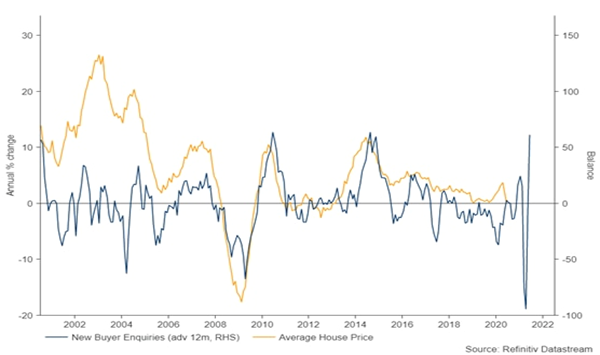
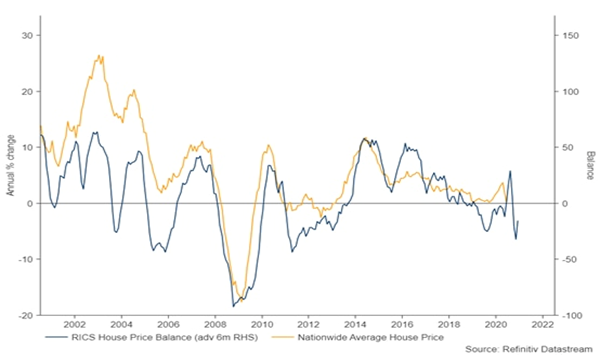
In his summer statement last week, Chancellor Rishi Sunak refused to extend the government’s furlough scheme past October as widely expected, but he announced a stamp duty holiday until next March for properties worth up to £500,000. That boosted shares in housebuilders, and it may prompt an uptick in housing transactions. New buyer enquiries at estate agents were close to record levels in June, according to last week’s survey from the Royal Institution of Chartered Surveyors. Its survey, which questions surveyors around the country, suggested a slight recovery in prices and a big increase in properties being listed for sale. But looking ahead, views were a little more negative, implying price declines of 5% over the remainder of the year.
New buyer enquiries vs Nationwide average house price
RICS House price balance vs Nationwide average house price
Make the most of higher-rate tax relief in your pension while you can
Sunak hinted that efforts to address the dire situation that is the national finances will begin in November’s Budget. This may finally sound the death knell for one of the most attractive tax breaks in the UK, namely higher-rate tax relief on pension contributions.
It’s hard to see any more obvious revenue-raising step that would be so effective, and it has been speculated about for a decade. It would suggest anybody who hasn’t taken advantage of this year’s allowance should seriously consider doing so before the autumn.
One of the main focuses of this update are the views on potential monetary and fiscal policy actions from governments, particularly the UK, EU, China and US. It now seems that market analysts have turned their attention to how governments will act to deal with the financial consequences of this pandemic in the long term and how that will affect the markets as they begin to recover.
Please see article below from J.P.Morgan’s weekly market update – received 13/07/2020.
The US presidential election will take place on 3 November 2020. The result will have important implications for investors, as the combination of policies employed by the next administration could have a significant influence on whether the US stock market can continue the outperformance that it has recorded for much of the last decade. Our regularly updated election insights provide investors with all they need to know as the election story evolves.
US election insight – July 2020
The race for the White House is heating up. Joe Biden and the Democrats have seen a surge in the polls in recent weeks, as the US experiences a wave of Covid-19 cases and against a backdrop of widespread protest against racial inequality and social justice issues. The Democrats are also making strong headway in the battle for the Senate, increasing the odds of a “blue wave” in November. The next key event will be the selection of Joe Biden’s running mate – a decision that takes on more significance this year than in a normal election campaign.
What will be voted on in November?
The race for the White House is the main focus, but a president’s ability to achieve their policy goals is influenced by who controls Congress.
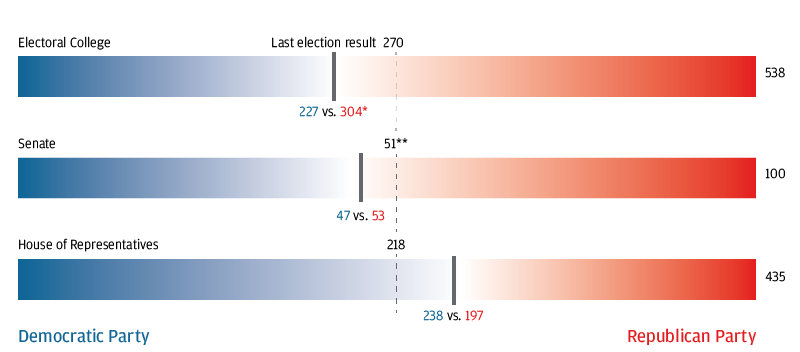
American voters will be asked to make three key decisions on 3 November. The main focus will clearly be on who wins the keys to the White House, but a president’s ability to achieve their policy goals is influenced by which parties control the two arms of Congress: the House of Representatives and the Senate. If Congress remains divided between the Democrats and the Republicans as it is today, the winner of November’s contest will rely heavily on unilateral action taken via executive orders and rulemakings through the federal government via the department and agencies that have significant power. Enacting larger policy proposals requires approval by Congress and the winner of the election will have a much tougher time enacting that part of their agenda. Exhibit 1 shows the numbers needed to win each race.
The electoral college
The presidential candidate that wins the most number of votes (or wins “the popular vote”) does not automatically become president. Instead, the US employs an electoral college system. Votes are tallied at a state level, and the winner in each state earns the “electoral votes” that belong to that state (with the number of electoral votes in each state determined by population size). A candidate needs to win at least 270 of the 538 electoral votes in order to win the presidency.
The Senate
US senators serve six-year terms, which means that roughly a third of the 100 Senate seats are up for grabs at each federal or mid-term election. Currently the Republicans control the Senate. There are 35 seats up for election this year – 23 currently held by Republicans and 12 currently held by Democrats. To win control of the Senate, the Democrats would need to keep all of their existing seats and flip three seats if they win the presidency, or four if they do not, as the vice president casts tie-breaking votes.
The House of Representatives
Each of the 435 seats in the House are up for election in November, with the winners serving a two-year term. Currently the Democrats control the House. For the Republicans to win back control, they would need to win 21 additional seats and hold on to two vacant seats that were previously held by Republicans.
Members of both the House and the Senate serve on a wide range of committees. The Senate has the authority to approve presidential nominations – such as Supreme Court justices and members of the Federal Reserve Board. Betting odds at the start of July put a Democratic sweep of the House and the Senate as the most likely by a significant margin.
Exhibit 1: Votes or seats in the Electoral College, the Senate and the House of Representatives
Source: 270 to Win, The Cook Political Report, J.P. Morgan Asset Management. *In 2016 Trump earned 306 pledged electors, Clinton 232. They lost, respectively, two and five votes to faithless electors in the official tally. **51 seats are needed for a simple majority if the dominant party in the Senate is not represented in the White House. If the president and majority party are the same, only 50 seats are needed for a majority because the vice president casts the tie-breaking vote. 2016 numbers include two independents that vote with the Democrats. Data as of 30 June 2020.
How might Covid-19 change the election timeline?
While Covid-19 has upended the usual schedule, election day itself is unlikely to shift given the need for Congress to approve any change.
The coronavirus outbreak has already had a significant impact on the primary season – the process by which Democratic and Republican presidential candidates are formally nominated. After state lockdowns began in earnest in mid-March, 16 states and one territory either postponed, cancelled or switched their primaries to vote-by-mail with extended deadlines. The Democratic National Convention, at which the Democratic candidate is officially nominated to represent the party in the presidential election, has been delayed by a month to 17-20 August, a week before the Republican National Convention.
While election day may well look very different to any other seen before in the US, the 3 November date is not likely to move. Presidential elections are set in federal law to take place on the Tuesday after the first Monday in November, and for this to be changed, approval from the Democrat-controlled House of Representatives would be required.
It appears that social distancing is highly likely to be required in some form and may threaten voter turnout, which is particularly important for the Democrats’ prospects given the distribution of the electoral college. Non-traditional voting methods have been rising in availability and popularity in recent years (see Exhibit 3), but Democratic proposals for further expansions in 2020 have so far been met with strong opposition by the Republicans.
Exhibit 3: States permitting different methods of alternative voting
Number of states
What are the investment implications?
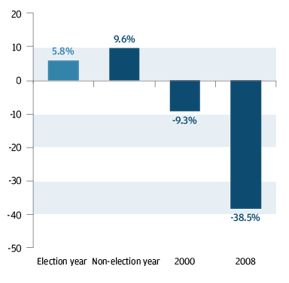
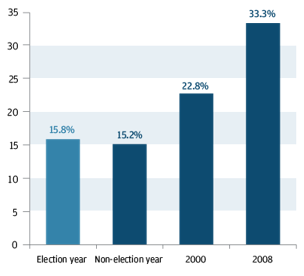
Election years are on average characterised by lower returns and higher volatility, but market dynamics in 2020 will be dominated by the prevailing economic environment
Typically, returns are lower and volatility is higher in election years than in non-election years (see Exhibit 6), although these averages are significantly skewed by major recessions and market events in recent election years. Returns and volatility in 2020 will almost certainly be attributable to Covid-19, not the political campaigns quietly existing alongside it. While the election is still a few months away, there are three areas of focus that could materially impact investor sentiment over the summer.
1. Roadmap for the rebound Top priority for whoever leads the next US administration will be to manage the economy as it restarts in earnest in 2021. Government finances have been stretched by the vast fiscal packages approved so far and tough choices will need to be made about whether to push ahead with further stimulus, or to try to tighten the belt as the recovery gets underway. The Federal Reserve (the Fed) may come under increasing pressure to keep yields low, although if this pressure is so strong as to cause investors to question the Fed’s independence, there is a risk that longer-dated yields could be pushed higher.
2. US-China relations The US-China relationship is now back on a worrying path. The hit to both business confidence and investment intentions across the globe in 2019 highlighted the economic damage that was caused by the trade war. Actions from either country that ratchet up tensions further ahead of the November election are a clear catalyst for market volatility. While so far it has been a Republican administration in charge of the negotiations, further information from the Democrats about how they would propose to manage this relationship may also impact market sentiment.
3. Progressive policy proposals The most progressive policies moved out of the picture as the most progressive Democratic candidates exited the race. Yet it is still evident that Joe Biden’s vision for corporate America is clearly different to President Trump’s. Democratic proposals for the use of anti-trust legislation to clamp down on “Big Tech”, plans for corporate tax changes and how to shore up the healthcare system are all matters that warrant close attention.
The combination of policies employed by the next administration will be an important factor in determining whether the US stock market’s leadership over much of the past decade will continue. An environment of escalating trade tensions has favoured the higher-quality US stock market relative to other regions historically, although we recognise that an increase in regulatory pressure on the tech titans could pose risks to US market leadership given the high weights to technology and communication services sectors in US indices. We will be tracking developments closely as 3 November approaches.
Exhibit 6: S&P 500 price returns Percent, average return from 1932 – 2019
S&P 500 realised volatility Percent, 52-week standard deviation of price returns, 1932-2019
As the US is one of the largest most influential markets globally, what happens next from a political point of view is important to the global economy.
Please keep checking back for regular updates and blog posts.
Please see below the latest market update which was published by Invesco today (13/07/2020):
Although the virus pandemic is in decline in many parts of the world we’ve also seen a resurgence in infections, highlighting that the virus is by no stretch of the imagination under full control. Cases continue to rise in many EM, last week saw Melbourne go into a six-week lockdown, while the US’s most populous states, Florida, Texas and California, reported record jumps in deaths.
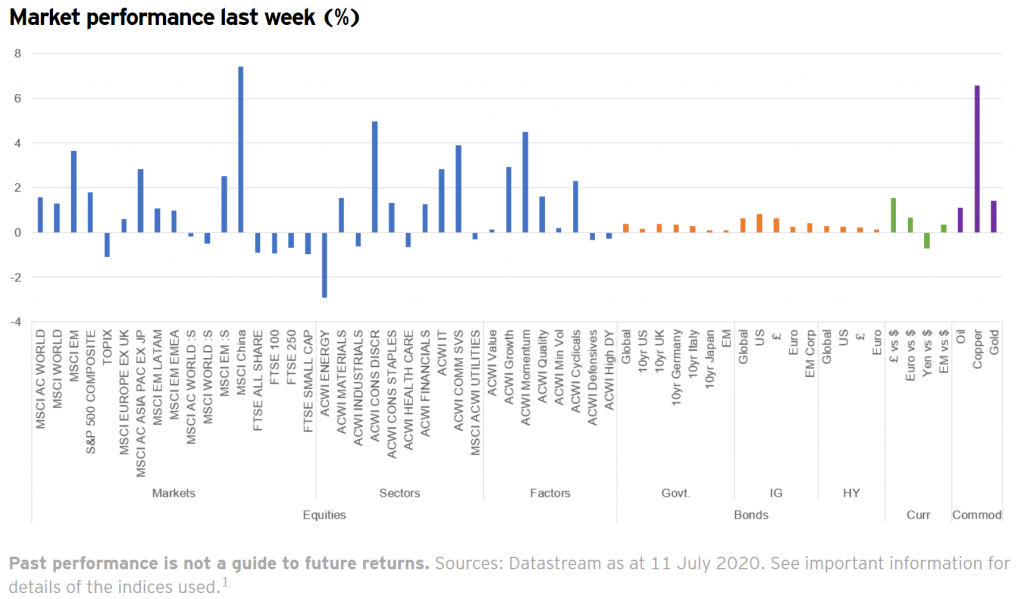
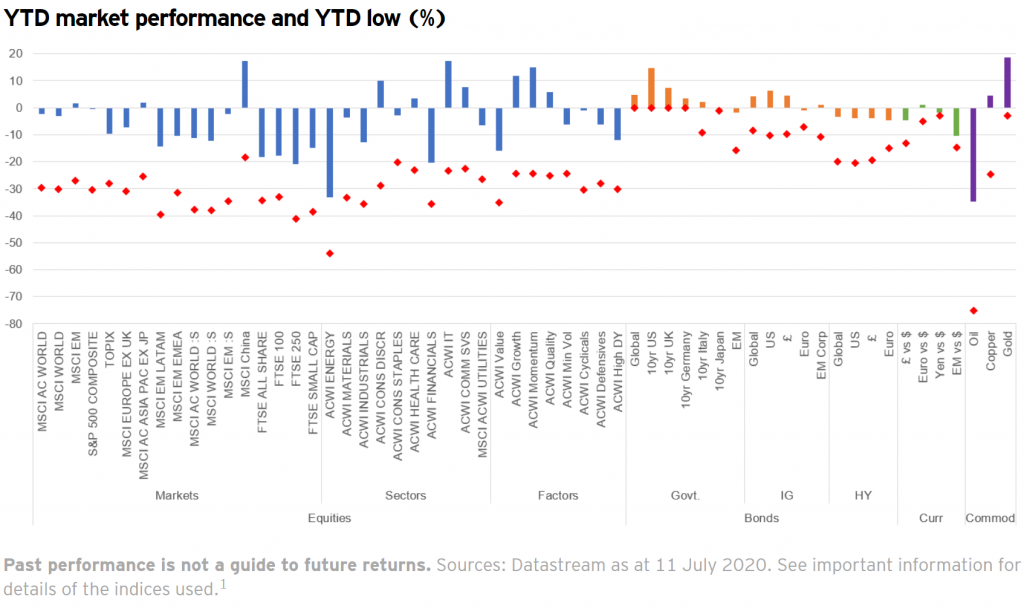
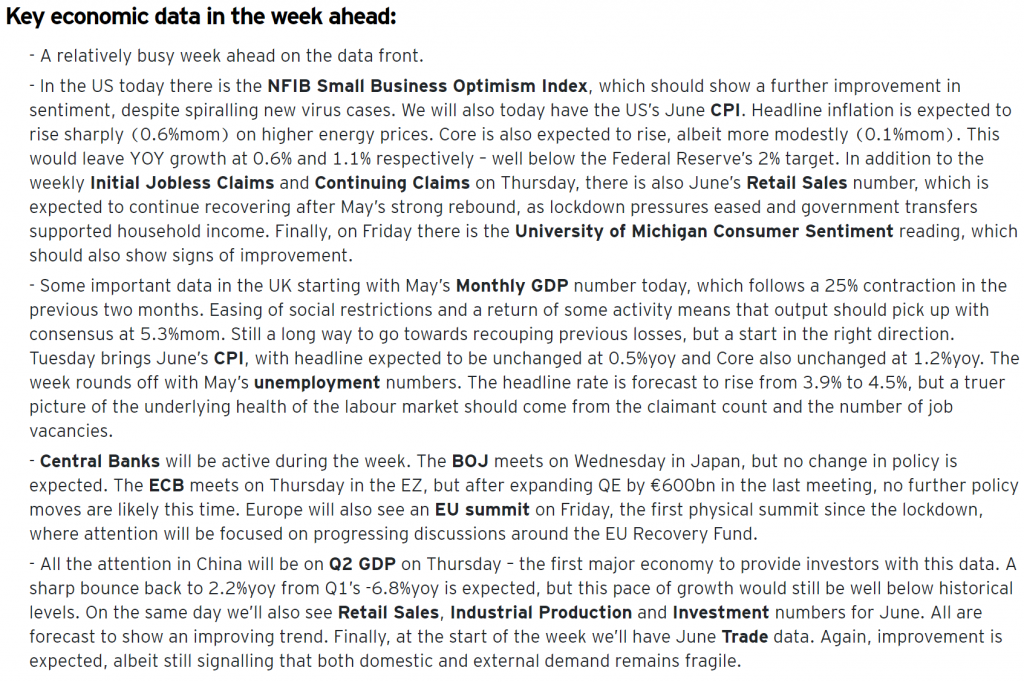
However, that has not been enough to pull the rug from under risk assets, which continued to move higher. More defensive assets, such as government bonds and gold, also gained. Equities led the way with EM at the forefront, helped by a strong rally in Chinese equities (see chart of the week for more background to this). DM, on the other hand, had more mixed fortunes. US leadership continued as index tech and tech-related heavyweights pushed higher, but Japan was lower. Unsurprisingly Momentum and Growth factors dominated from a style perspective. Credit outperformed government bonds, but with IG better than HY. Commodities made further gains, with Gold breaking through $1800 for the first time since 2011 and in touching distance of an all-time high. The US$ weakened further. In the UK, the FTSE All Share declined under 1%. Moves in fixed interest were fairly limited, with IG the best of the pack. £ edged higher against the US$.
Please continue to check our Blog content for the latest investment, markets and economic updates from leading investment houses.
In part 1, we explained what ESG is. Here, in part 2, we dig a little deeper
As we noted last week, a lot of the ESG processes within this industry are built upon the 10 ‘UN Global Compact Principles’.
The United Nations Global Compact is the world’s largest corporate sustainability initiative.
This is a call to companies to align strategies and operations with universal principles on human rights, labour, environment and anti-corruption, and take actions that advance societal goals.
Their mission:
‘At the UN Global Compact, we aim to mobilize a global movement of sustainable companies and stakeholders to create the world we want. That’s our vision.’
To make this happen, the UN Global Compact supports companies to:
Do business responsibly by aligning their strategies and operations with 10 Principles on human rights, labour, environment and anti-corruption; and
Take strategic actions to advance broader societal goals, such as the UN Sustainable Development Goals, with an emphasis on collaboration and innovation.
The 10 UN Global Compact Principles:
Human Rights
Principle 1: Businesses should support and respect the protection of internationally proclaimed human rights; and
Principle 2: make sure that they are not complicit in human rights abuses.
Labour
Principle 3: Businesses should uphold the freedom of association and the effective recognition of the right to collective bargaining;
Principle 4: the elimination of all forms of forced and compulsory labour;
Principle 5: the effective abolition of child labour; and
Principle 6: the elimination of discrimination in respect of employment and occupation.
Environment
Principle 7: Businesses should support a precautionary approach to environmental challenges;
Principle 8: undertake initiatives to promote greater environmental responsibility; and
Principle 9: encourage the development and diffusion of environmentally friendly technologies.
Anti-Corruption
Principle 10: Businesses should work against corruption in all its forms, including extortion and bribery.
The Screening Process
A key strategy of sustainable and responsible investing is incorporating environmental, social and corporate governance (ESG) criteria into investment analysis and portfolio construction across a range of asset classes.
The 10 UN Global Compact Principles are the foundation for investment firms who wish to bring ESG on board within their investments.
Firms use 2 methods of screening whether the companies they choose invest in are considered compatible with the 10 principles.
Positive Screening
Investment in sectors, companies or projects selected for positive ESG performance in comparison to industry peers.
This involves selecting firms that show examples of environmentally friendly and socially responsible business practices. This also includes avoiding companies that do not meet certain ESG performance thresholds.
Negative Screening
The exclusion from a fund or certain sectors or companies involved in activities deemed unacceptable or controversial (e.g. tobacco, arms, gambling etc).
This involves avoiding companies that create negative impacts considered incompatible with the UN Global Compact Principles.
Summary
Positive Screening is our preferred method when we are looking at how firms screen, as this shows a more active approach into looking into firms that are committed to making a difference, rather than just excluding the ones that don’t. However, most companies use a combination of both as in reality, as the UN Global Compact was only started in 2015, most investment firms/sectors still have a long way to go towards meeting their ESG goals, but it’s good to see that the industry is starting to adapt.
Check back for Part 3 of this blog series next week, in which we will look at what we at People and Business are doing as a firm to make sure that we are moving in the right direction by selecting firms with good ESG processes.
Andrew Lloyd
13/07/2020
Data Source: unglobalcompact.org, ussif.org and Blackfinch Asset Management’s ESG Policy July 2020
Please see below an article from Tatton Investment Management regarding their recent portfolio adjustment – received 08/07/2020.
Portfolio strategy
As we head into the second half of 2020, we are making some changes to portfolios.
Since April, we have held a small overweight to equities within the portfolios, focused on emerging markets, mainly as a consequence of a positive view on the economic outlook for China. Its weighting within the MSCI EM equity index, and its economic influence, made the position attractive. Within the equity component, we also moved our UK exposure to underweight.
The equity overweight was balanced by an underweight allocation to bonds. Within bonds, we maintained the overweight to non-UK inflation-linked government debt, a position we have held since October 2019.
Our overweight to equities has benefited all portfolios, meaning that the proportional exposure to equities has increased overall.
We remain positive on the medium-term outlook, wishing to retain the overall appetite for risk, but we are now shifting our focus from emerging markets towards Europe. Throughout the coronavirus crisis, the European Union (EU) has proffered surprisingly strong and supportive economic policies, which contrast heavily with China’s reluctance to fuel liquidity. Europe has also led the way in reopening its respective economies while managing to avoid a rebound in infection rates. Additionally, political risks are falling in Europe and rising in emerging markets and especially China. We remain underweight in the UK and have a neutral weighting in the US, Japan, and developed Asia.
Our bond weightings remain as before: weighted towards higher-grade bond issuers and bonds with inflation protection
How have recent events shaped our thinking?
From February to June, the global economy went through the fastest and deepest recession in history. In the midst of this, a disagreement over strategy between oil-producing countries caused energy supply to be increased just as demand was plummeting. Risk assets, including equities and corporate and emerging market debt, came under heavy selling pressure, with equity markets bottoming on 23 March. The US oil spot price remained under pressure, leading to an extraordinary ‘oil price shock’ on 20 April, when some oil futures traders were stuck with contracts and no storage space available – meaning they had to pay counterparties to take the oil off their hands.
It was clear early on that the spread of the COVID-19 virus would create huge disruption, with very little near-term visibility and with countries experiencing different challenges in getting their economies back ‘open’. However, governments and central banks across the world pledged their support at each point it was needed.
In April, we felt China had dealt with the virus well enough to be in a recovery path ahead of other regions. Its domestic situation was likely to be positive, with strong fiscal and some monetary support. While exports would likely be curtailed by lockdowns elsewhere and continuing political pressure from the US especially, we felt it would provide reasonable demand for other Asian countries and for the wider commodity producers. In terms of the virus impact on emerging nations, we felt that it be difficult for their domestic situations but would probably not greatly affect output.
For Europe, the virus had meant significant lockdowns but also strong monetary support. However, the barriers to effective mutual fiscal support remained high, while it was not clear how long it would take to bring the disease under control.
The same seemed the case for the US, where Federal Reserve Chair Jerome Powell had put in place extraordinary asset purchases, buying unprecedented amounts of US Treasuries well in excess of near-term requirements, and extending this ‘quantitative easing’ into corporate bonds. Meanwhile, Congress gave bipartisan support to large unemployment payments, employment support and, in conjunction with the Fed, providing loan support to businesses.
The UK enacted similar support measures, although economic weakness over the past two years left it marginally less able to sustain long-term support, especially given the process of leaving the EU was still incomplete. We felt this would limit the ability of UK markets to outperform and that sterling would be likely to decline should risks worsen.
Risk markets rebounded in the second quarter, with portfolios recouping much of the losses sustained during the February and March falls. Emerging markets performed well, with China’s economic rebound providing the economic stability we expected.
Government bond markets, having been strong in the first quarter, remained stable. The high level of fiscal deficits created new issuance. Both government and corporate bonds benefitted generally from central bank purchases.
What is the near-term outlook?
As well as claiming the lives of thousands, the coronavirus has altered our day-to-day existence. Without a vaccine, it still poses a threat. Where the disease remains active, life cannot return to normal. China has shown that localised lockdowns can reduce infection rates substantially which, in turn, can allow most people to return to some form of work. However, social distancing rules remain in place, and personal choices about levels of contact mean that life is fundamentally different.
Economic activity is rebounding, helped by relief payments to companies and individuals. In the US, private sector incomes have risen sharply. The effective savings will support activity in the coming months. However, the fall in expenditure still places businesses in a precarious position. Filings for bankruptcy have risen to levels exceeding those of the financial crisis a decade ago.
Monetary policy initiatives have kept liquidity more than adequate and risk asset prices have regained much ground. In the case of the US Nasdaq composite index, prices have even hit new highs. Financial markets have functioned, but the fuel of available economic activity is thinly spread – meaning that current yields – and expected returns – are historically low.
Fiscal support has been more than adequate for this half-year, but more may well be needed through the course of the rest of this year and next. Europe has received a boost in the form of a joint French-German initiative to allow some mutualised debt issuance. Germany has also led the country-specific push for government spending, reversing frugality of previous years.
China’s domestic policies remain fiscally easy, although with less monetary infusion than other developed nations, with the People’s Bank of China still worried about excessive real estate valuations. However, the growing discord between China and the US, and the imposition of draconian new laws in Hong Kong, presents a significant impediment to markets making progress.
Although many aspects remain positive for emerging markets, China’s rising political risks will remain a concern throughout the region, while benefits from its earlier virus actions start to dissipate.
The US outlook remains positive, although risks are still elevated. The Federal Reserve policy framework can continue with significant liquidity injections, but its pace of increase has slowed. As the presidential election approaches, Donald Trump’s appeal to voters has fallen. Joe Biden, the likely Democratic nominee, may well be viewed as less business-friendly, but this is offset by the greater sense of global stability that a Democratic victory offers. Current electoral dynamics are not visibly impacting markets, which are more focused on Congress providing renewed household payments after July, and ahead of businesses being able to resume hiring.
The UK has had the most difficult economic environment of any of the developed nations and a return to normality is proving slow. London has been particularly hard hit, although the financial centre has appeared to function remarkably well given how few people are physically in the City. The Johnson government has announced ambitions for longer-term investment. Much will be needed especially if European trade negotiations are bumpy. The UK remains a concern, with sterling weakness the most likely outcome should risks become reality.
Globally, the most positive improvement has been in Europe’s policy backdrop. In addition to the fiscal stimulus mentioned earlier, the European Central Bank has made substantial injections using a number of tools. The German Constitutional Court’s ruling (that the ECB’s 2015 bond purchases were possibly improper) may yet present problems. However, a sense of discord among EU nations has been quelled – by Chancellor Merkel and other EU leaders – for the time being at least. After experiencing an awful February and March, resilient healthcare systems (particularly in Germany and France) have helped Europe to begin opening up with less personal risk-aversion than in the US, the UK and, to some extent, Asia. All of these factors make us more positive on Eurozone equities and the euro itself.
Portfolio positioning and changes
Given our change in focus, most portfolio activity centres on moving from emerging market equities into European equities.
A small reduction in cash has been deployed in various regions to balance portfolio exposures.
Ethical portfolios reflect this change in positioning through a reduction in emerging markets managers, redeployed in global equity funds.
Income portfolios have been rebalanced, with increased equity weights allocated to existing global equity managers.
We have not made any fund manager changes to the portfolios in this rebalance.
As you can see from the above, Tatton look to remain positive and wish to retain the overall appetite for risk but are now shifting their focus. As Tatton move their focus from emerging markets equities towards European equities it will be interesting to see what effect this has on their portfolio’s.
Please keep checking back for regular up to date blog posts.
Please see below an article published by A.J. Bell yesterday (08/07/2020), which summarises the main housing market points from the Chancellor’s mini budget which he delivered yesterday:
Today’s statement was always likely to focus on ‘good’ news items designed to stir the UK economy from its economic slumber. We got that in the form of a big VAT cut for the hospitality sector, new job creation programmes and a headline-grabbing reduction in stamp duty.
However, the Chancellor was clear stabilising the public finances and paying off the estimated £300 billion bill racked up during the pandemic will be a key priority in his Autumn Budget later this year. And with Boris Johnson ruling out a return to austerity, a tax-grab seems almost inevitable as the Treasury seeks to balance the books.
Stamp duty boost for homebuyers
Homebuyers have been given a potential £15,000 boost in the Chancellor’s move to scrap stamp duty on all homes worth up to £500,000. The almost £4bn giveaway is a massive leap in the stamp-duty-free rate from £125,000 to £500,000, and on the average UK property price* of £231,855 a homebuyer would save £2,137. The tax relief will clearly benefit those in London and the south-east most, where house prices are higher and so the potential tax saving is greater.
The move is also across the board, meaning even those buying a second or third home or buying multi-million pound houses will benefit from the tax break – clearly the intention is to encourage all areas of the market to get buying and stimulate the housing market.
The tax cut should provide a much-needed shot in the arm for the property industry, which saw a complete shutdown during lockdown and is now plagued with worries about falling house prices. The Bank of England’s mortgage approval figures, which are a good indication of the pipeline of new home purchases, have fallen dramatically and are a third lower than their worst point in the financial crisis – showing just how dire the outlook is for the market for the rest of this year.
The fact that the move is temporary will be like a sugar rush for the housing market, with people who were planning to move hurrying to do so before the stamp duty holiday ends at the end of March next year. It means that we’re likely to see transactions fall off a cliff once the tax break is whipped away in 2021.
The Government will hope that the tax giveaway will see some households choose to spend that money somewhere else, on furnishing their home or spending elsewhere – in order to help revive the massive drop-off in consumer spending during lockdown. However, it’s more likely that people will just choose to buy a more expensive property, meaning the additional spending will be focused just on the housing market rather than boosting a range of businesses.
House builders, estate agents and builders’ merchants have something to smile about
Much of the Chancellor’s plan to preserve British jobs and boost the economy had been floated beforehand but house builders, estate agents and builders’ merchants all have something to smile about. Mr Sunak tried to do his bit for hoteliers, restaurateurs and publicans, although his limited room for manoeuvre when it came to spending, owing to the existing national debt, means the benefits here may be more limited.
Estate agents such as Foxtons, Savills and Countrywide will all be hoping for a big step up in business thanks to the stamp duty cuts, especially after May’s disastrous new mortgage applications figure of just 9,273. However, the danger is that demand is all crammed into the next few months and business levels then plunge again come April 2021 when the levy returns. Savills was up 2.5% after the speech, putting it in the top ten performers in the FTSE 250.
House builders did not get an extension to the Help to Buy scheme, though doubtless they will continue to press for it, though they too will be pleased to see the stamp duty cut and the emphasis on helping first-time buyers. Shares in Barratt, Taylor Wimpey, Persimmon and others responded strongly to the rumours of this policy initiative on Monday and so are doing relatively little now the facts are known.
Builders’ merchants may benefit too, which could help Grafton and Travis Perkins, while providers of insulation such as SIG and Kingspan will be looking forward to increased demand as a result of the Chancellor’s commitment to more energy efficient homes and public sector premises. Shares in bathroom equipment and accessories supplier Norcros and Topps Tiles are rising in response to the prospect of higher volumes ahead.
The hospitality sector will welcome attempts to boost spending in pubs, hotels and restaurants though Mr Sunak did not venture down the voucher path. Disappointing as this will be for leisure firms, such a giveaway would potentially have had long-term consequences and set a bad precedent – once free money is offered once it is very hard to stop handing it over.
As such, the policy is more nuanced and therefore less dramatic. The VAT cut may entice some visitors but the Monday-Wednesday time frame and £10 limit for the month of August on dining out may not move the dial much – and nor are any of those incentives likely to persuade those who are too frightened or too vulnerable to venture to such public places, or indeed those who have lost their job or are on furlough, for whom cash could be tight and eating out a luxury anyway.
Nevertheless, Wagamama-owner Restaurant Group is taking some comfort from the plan as the shares are up 6%, to put it in the top ten gainers in the FTSE All-Share and InterContinental Hotels is up 2.3% to place it second-best in the FTSE 100 today.
Please continue to check our Blog content for the latest investment, markets and economic updates from leading investment houses.
Hector Kilpatrick, Senior Investment Director and Head of Risk Managed Funds at Cornelian Asset Management, summarises the previous month and gives the Investment Outlook for July:
The MSCI UK All Cap NR index returned +9.4% during the three months to the end of June, whilst the MSCI World ex UK (£) NR index returned +20.4% in Sterling terms. Equity markets recovered a significant amount of the ground lost during the precipitous decline in asset prices observed during the first quarter of the year. The collapse was triggered by a sudden realisation that the economic impacts of the policies enacted to restrain the COVID-19 virus outbreak would result in a deep recession, the scale of which could challenge the debt-based capitalist economic system. However, policy makers were swift to announce enormous economic support packages, both fiscal and monetary. These, alongside the easing of lockdown restrictions in many jurisdictions and positive incremental news concerning the extraordinary effort being applied to develop possible vaccines, helped improve investor confidence during the period under review.
In Sterling terms, most major regional equity markets returned between +17% and +22%, the exceptions being the UK (see above) and Japanese markets (MSCI Japan NR (£) Index, +12.0%). The American equity market provided the strongest return (MSCI USA NR (£) Index, +22.0%), aided by the index’s significant exposure to technology and pharmaceutical stocks.
The UK equity market return was impacted by the index’s significant exposure to energy and financial stocks (which, in share price terms, have lagged the recovery seen in other sectors), the persistence of COVID-19 within the population and concerns regarding the outcome of Brexit negotiations.
“Gilts continued to perform well producing a positive return as investors anticipated further policy announcements which would support government bond prices.”
Despite the more positive investment environment, Gilts continued to perform well producing a positive return (iShares Core UK Gilts ETF, +2.4%) as investors anticipated further policy announcements which would support government bond prices. Investment grade debt rebounded strongly as credit spreads narrowed following the announcement that the Federal Reserve would support corporate debt markets (iShares Core £ Corporate Bond ETF, +9.6%). ‘Riskier’ high yield debt also produced a strong positive return but interestingly, given the seemingly more ‘risk on’ environment, marginally underperformed investment grade debt (iShares Global High Yield GBP Hedged ETF, +9.4%).
The Brent crude oil price ended the quarter at $41.2/barrel, an increase of 80.1% since the end of March. The hard stop to global economic activity has seen a collapse in demand for oil products, however production cuts and an incremental relaxation of economic lockdowns has helped the oil price recover somewhat.
In the three months to the end of June, the gold price rose 12.9% to $1781/oz. Sterling weakness versus the US Dollar boosted returns marginally such that the value of gold held by UK based investors rose by 13.5% (to £1,443/oz).
Investment Outlook
During the second quarter of the year asset prices rallied strongly following the sharp COVID-19 related declines witnessed during the first quarter. Policy makers have been impressively swift to announce innovative measures to support economies which have experienced a hard stop. Measures range from the fiscal (furlough schemes, top ups to unemployment benefits, emergency lending/grants to corporates, business rate reductions and the like) to the monetary (interest rate cuts, printing of money to finance the purchase of government debt and, to a lesser extent, corporate debt).
These measures (which have driven down the cost of government and corporate debt financing) allied with tangible successes in suppressing the spread of the virus in developed economies have, in aggregate, improved the confidence of company management teams concerning the outlook for economic growth. They have also galvanised investors’ risk-taking appetite and have led to a strong bounce in regional equity market indices. News concerning the unprecedented drive to find successful treatments and vaccines has also helped improve sentiment.
However, looking a little more deeply into the components of the market rally calls into question the improving confidence expressed by rising asset prices in general. Those companies most exposed to the economic cycle have lagged index returns appreciably. Some sectors (such as banks, energy and travel) remain close to their lows relative to index returns. The companies that have driven index levels higher include those which have seen a sharp acceleration in demand due to their web-based propositions and those which have little sensitivity to the economic cycle.
The question that needs to be answered therefore, is whether the sugar rush of extraordinary policy measures, both fiscal and monetary, will give way to a more sober assessment of the outlook for economies, and thereby profits. We believe this is likely, albeit with caveats.
“The real scale of ‘post COVID-19’ unemployment has yet to reveal itself.”
The first thing to note that the real scale of ‘post COVID-19’ unemployment has yet to reveal itself. With companies embracing higher debt levels to remain in business in the short term, the hangover could be material, particularly as the unfettered release from lockdown will only be assured after a successful vaccine is found and manufactured at scale. Unfortunately, it doesn’t appear that this condition will be satisfied in 2020. In a realistic best-case scenario, we may receive increasingly positive news concerning the development of a vaccine through the rest of the year, however populations will still have to suppress the spread of the infection until vaccines can be deployed in early 2021.
Barring the possibilities that the virus may lose some of its potency, or that specific populations are able to eliminate the virus completely from their midst, one has to assume that the rate of virus spread will correlate with the pace that economies open up (notwithstanding any seasonal effects). If correct, this means that the ‘V’ shaped recovery that is hoped for may well disappoint as rolling localised lockdowns are introduced which will ensure heightened public awareness of the need to continue to socially distance, etc. This may well sustain higher levels of unemployment, and therefore result in consumers hoarding cash after the first flush of spending driven by pent up demand.
“Companies are likely to continue to operate in an environment of reduced demand and increased costs for the rest of 2020.”
This means that companies are likely to continue to operate in an environment of reduced demand and increased costs for the rest of 2020. Given these dynamics we expect the rate of company bankruptcies to accelerate, which may undermine banks’ confidence to lend to corporates. The withdrawal of this financial lubricant from the engine of economic activity will further exacerbate the issues described.
It is also worth noting that over the past month or so the Federal Reserve has stopped the net printing of money and this slowdown in the rate of monetary stimulus could become a headwind to further asset price appreciation.
Nonetheless, central banks around the world have continued to demonstrate a desire to manipulate asset prices higher during times of economic crisis which reduces the perception of downside risk. This doctrine has not only resulted in all-time low interest rates, but also threatens the adoption more widely of negative interest rates. Given the enormous amount of cash currently sitting on the side-lines waiting to be deployed in this low (or no) interest rate environment, the pressure to put this money ‘to work’ is high and only small incrementally positive developments could be enough to see this happen. Therefore, given these factors, it is prudent not to be positioned too defensively.
The view from this update is that although signs of a recovery are apparent with market indices rising and lockdown gradually easing, this could be temporary relief before the real economic effects of the Coronavirus Pandemic begin to reveal themselves down the road.
The global coordinated policy response needs to be maintained and strengthened.