Team No Comments

Invesco – Why investors both love and fear the Fed

Please see article below from Invesco received this morning – 31/03/2021

Why investors both love and fear the Fed

Kristina Hooper – Chief Global Market Strategist, Invesco Ltd

Key takeaways

Investors fear the Fed
Stocks have been volatile due to fears about what the Fed would do if inflation rises.

But they also love its policies
While stock market investors fear the Fed, they also love its easy money policies.

If you had to quickly describe the relationship status between investors and the Federal Reserve, your best bet might simply be: “It’s complicated.”

Stocks are moving up and down, and leadership in the stock market is rotating, based on market fears of inflation — or, to put it more accurately, fears about what the Fed will do if inflation does rise. But while stock market investors fear the Fed, they also love all the good things it has done for them. After all, the great stock market rally that began in March 2009 can be largely attributed to the Fed’s extraordinarily accommodative monetary policy — especially its quantitative easing. And the year-long rally that began in March 2020 has the Fed’s easy money fingerprints all over it. In other words, investors have developed a powerful bond — some might say a dependency — with the central bank.

The Fed’s reassurances have fallen flat

Now the good news is that the Fed is trying to be sensitive to investors’ wariness about what it might do next. Fed Chair Jay Powell doesn’t want stock market investors to worry. At every turn, he has tried to reassure them that the Fed will maintain its easy money policies for some time to come and that any rise in inflation will be transitory. Last week, for example, Powell was on Capitol Hill, providing comfort and reassurance. He made it clear that he wasn’t concerned about the rise in long-term bond yields, suggesting that they reflect growing optimism: “It seems that rates have responded to news about vaccination and ultimately about growth.” 1 Powell stressed that it has been orderly and that the Fed would only react if it is disorderly.

Powell reiterated that he doesn’t believe long-term price trends will be changed by the most recent fiscal stimulus package, supply-chain bottlenecks, or a surge in consumer demand, which is widely expected to come later this year as the economy re-opens. Powell said that while the Fed expects upward pressure on prices, he expects it will be transitory. He was emphatic: “Long term, we think that the inflation dynamics that we’ve seen around the world for a quarter of a century are essentially intact. We’ve got a world that’s short of demand with very low inflation … and we think that those dynamics haven’t gone away overnight and won’t.” 1. But investors didn’t believe him, based on the stock market reaction that day — they’re still wary that inflation will go up and the Fed will be forced to tighten.

It seems that market participants want to believe the worst of the Fed. They don’t believe Powell when he utters dovish words, but they latch onto any comments that can be perceived as hawkish. On Thursday, Powell gave an interview to NPR. He reiterated many of the reassurances he provided on Capitol Hill earlier in the week. He also shared his optimistic economic outlook for 2021. However, he also tried to be honest and transparent by stating the obvious: “… as we make substantial further progress toward our goals, we will gradually roll back the amount of Treasuries and mortgage-backed securities we’re buying.”2 He talked about raising interest rates in the longer run, but said that such tightening would be very gradual and transparent. However, that sent stock market investors into a panic. The NASDAQ Composite Index, S&P 500 Index, and Dow Jones Industrial Average all dropped significantly in just a few hours before investors regained their senses and started buying.

Investors have to wait and see how the Fed would respond to inflation

My best advice is that investors shouldn’t let the Fed — or any central bank — overly influence their long-term investment strategy. I believe the Fed will honor Powell’s pledges, but many market participants are clearly skeptical. These participants must come to terms with the fact that they won’t know if Powell will follow through on his assurances until inflation actually spikes and the Fed has the opportunity to insist it is transitory and sit on its hands. They won’t know if the Fed has really abandoned pre-emptive tightening until it proves to us that it has.

The silver lining of this environment — in which so many investors have allowed themselves to be dependent on the Fed — is that other investors can take advantage of “Fedspeak”-related sell-offs, which can create tactical buying opportunities for investors with a longer time horizon. And if markets actually become disorderly, I believe Powell will likely step in.

Is the Fed the only source of concern for investors? No, there are others. But the lesson is the same: Instead of parsing — and panicking about — every utterance from Powell and others, I believe investors’ time would be better spent focusing on fundamentals and long-term goals.

Looking ahead

In the coming week, I’ll be paying close attention to COVID-19 infections in Europe. The region is in the throes of a third wave of infections, which threatens to be the worst of the waves. This is not dissimilar to the third wave that the US experienced several months ago, which was its worst wave. Unfortunately, Europe’s vaccine rollout has been disappointing to say the least, and more infectious strains of the virus are spreading quickly. Lockdowns are being extended and could become more stringent as government officials warn that hospitals are being overwhelmed. This could further delay the eurozone’s economic recovery, which has already been delayed by the slow vaccine rollout. The ability to control infections in the eurozone is critical.

I’ll also be paying attention to China’s economy, with the government’s manufacturing and non-manufacturing Purchasing Managers’ Indexes (PMI) and the Caixin manufacturing PMI being released this week. China’s economic recovery has been strong thus far this year, and I want to make sure there are no negative surprises in the offing.

I’ll also be following the volatility in stocks created by the fallout from the Archegos hedge fund unwinding. I think this is not dissimilar to the volatility created by Reddit-related stocks such as GameStop that we experienced earlier this year: I don’t see this as a source of widespread contagion, although it will likely weigh down some specific stocks over the shorter term. 

And finally, I will be paying attention to Friday’s US jobs report. I suspect non-farm payrolls will be very strong for the month of March, beating expectations, but could trigger a rise in the 10-year yield and concerns about inflation — and therefore stock market jitters — as investors are likely to worry again about whether the Fed will really sit on its hands …  

Please continue to check back for our regular blog posts including market updates and insights like this article.

Charlotte Ennis

31/03/2021
Team No Comments

Small caps can tell us a lot about the market mood

Please see below for one of AJ Bell’s latest Investment Insight articles, received by us yesterday 28/03/2021:

Small cap stocks are perceived to be riskier than their large cap counterparts and with good reason. As such, they can be used to judge wider market risk appetite – if small caps are rolling higher, we are likely to be in a bull market. If they are falling, we could be shifting to a bear market.

In general, small caps tend to be younger firms that are still developing. They are potentially more dependent upon certain key products or services, a narrower range of clients and even key executives.

Their finances might not be as robust as large caps and they are more exposed to an economic downturn, especially as they are less likely to have a global presence and be more reliant on domestic markets.

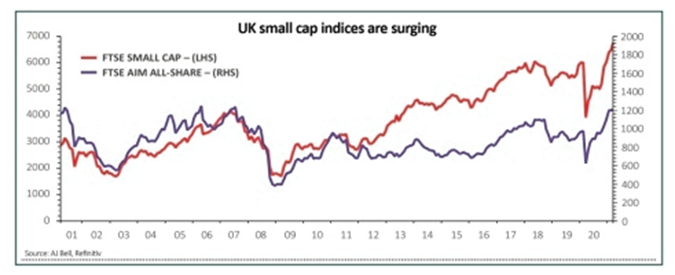
The UK’s FTSE Small Cap index currently trades at record highs, while the FTSE AIM All-Share stands near 20-year peaks. The latter is still well below its technology-crazed highs of 1999-2000. Equally, they are more geared into any local economic upturn.

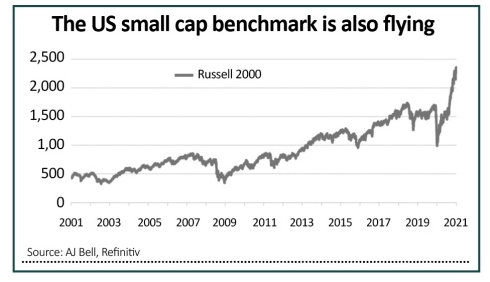
America’s Russell 2000 index, the main small cap benchmark in the US, is up 16% this year and by 116% over the past 12 months. That beats the Dow Jones Industrials, S&P 500 and NASDAQ Composite hands down on both counts.

In fact, the Russell 2000 now trades near its all-time highs, having gone bananas since last March’s low. Such a strong performance suggests that investors are in ‘risk-on’ mode and pricing in a strong economic recovery for good measure.

Rising Prices

One data point which does not sit so easily with the US small cap surge is the slight pullback in America’s monthly NFIB smaller businesses sentiment survey, which still stands 12 percentage points below its peak of summer 2018.

This indicator must be watched in case it does not pick up speed as America’s vaccination programme continues and lockdowns are eased. Further weakness could suggest the recovery might not be everything markets currently expect.

Equally, inflation-watchers will be intrigued by the NFIB’s sub-indices on prices. In particular, the balance between firms that are reporting higher rather than lower prices for their goods and services, and especially the shift in mix towards smaller companies that are planning price rises rather than price cuts.

If both trends continue, then bond markets could just be right in fearing that an inflationary boom is upon us.

Interest rates on the move

The number of interest rate rises continues to gather pace on a global basis. Last month there had already been five hikes this year in borrowing costs, in Zambia, Venezuela, Mozambique, Tajikistan and Armenia. There have now been six more – Kyrgyzstan, Georgia, Ukraine, Brazil, Russia and Turkey.

The 11 rate increases we’ve seen year to date is already two more than in the whole of 2020.

In contrast, the US Federal Reserve is content to sit on its hands despite what is happening elsewhere. Chair Jerome Powell continues to reaffirm the American central bank’s commitment to running its quantitative easing scheme at $120 billion a month, while any plans to increase interest rates from their record lows seem to be on hold until 2024.

Powell does not seem concerned about inflation and is seemingly willing to risk its resurgence to ensure that the economy gets back on track in the wake of the pandemic.

Yet financial markets are still taking the view that a strong upturn is coming, because US government bond prices are currently going down, and yields are going up, regardless of what the Fed says. That is a huge change from the last decade or so, when bond and stock markets have been happy to slavishly take their lead from central bank policy announcements.

Please continue to utilise these blogs and expert insights to keep your own holistic view of the market up to date.

Keep safe and well.

Paul Green DipFA

29/03/2021

Team No Comments

Why it’s a good idea to have an emergency fund

Please see the below article published by Royal London, then our closing comments in blue:

Setting aside money for a rainy day can help tide you over in difficult times and provide some financial security when you need it most.

What is an emergency fund?

This is money you save to pay for the unexpected, whether that’s a bill you hadn’t planned for or a change in your circumstances such as if you lose your job or are unable to work due to illness. This cash is often called rainy day money.

Why you should have an emergency fund

If you have money set aside for emergencies, you’re far less likely to experience financial difficulties or have to borrow at a high interest rate if things go wrong or your circumstances change. Knowing you’ve got some money tucked away might help you sleep better at night too.

Deciding how much you need

This depends on several things such as your circumstances, the sorts of emergencies you might face and how much insurance protection you already have.

For example, someone with a family, mortgage and loans is likely to need a larger emergency fund than a single person with no children who lives in rented accommodation and has no debts. This is because they have more financial responsibilities and dependants to look after. That’s not to say that if you’re single with no dependants you don’t need an emergency fund. Everyone should keep some spare money available – it’s just a question of how much.

If you have insurance to cover certain losses or expenses, this might affect how much you need in your emergency fund. For example, you may have house, car or dental insurance which would cover you for some emergencies and expensive bills. Or you may have insurance which would provide you with an income or pay some of your bills if you lost your job or were unable to work due to illness. In these cases you might only need enough in your emergency fund to tide you over until these payments kicked in.

But the general advice is to have enough money in your emergency fund to cover your expenses for at least three months. So, if your monthly expenses are £2,000 you might want an emergency fund of £6,000. If this seems like a daunting amount to aim for, don’t be put off. Remember that having some savings, however small, is better than having nothing. Why not try setting your own goal to save a set amount by the end of year? Aim for a challenging but achievable amount.

How to build an emergency fund

Saving regularly is a good way to build up an emergency fund. You’ll find that if you get into the habit of saving each month your savings will soon mount up. See our tips below to help you save.

Some people like to have more than one emergency fund. For example, one fund might be to replace income if you’re unable to work and another to cover any unexpected one-off or larger-than-expected bills. There’s no right or wrong way of doing this, just choose the method that suits you best.

Tips to help you save

Make it simple: Set up a monthly transfer so that money is automatically taken from your current account and put into a savings account.

Time it right: Set the transfer so it goes out of your bank account straight after you get paid or get your pension or benefits.

Keep your savings separate: By keeping your savings in a separate account from your everyday spending you’ll be less tempted to spend them.

Check your spending: If you don’t think you can afford to save, try closely monitoring your spending for a month or two. You may find areas you can cut back on. If you haven’t reviewed your bills like your house and car insurance or your energy or mobile phone deal recently, you may be able to free-up money by switching to a cheaper deal.

Save first: If you get a pay rise, think about saving some of it before you get used to having the extra cash.

Where to keep your rainy day money

Regardless of how many emergency funds you choose to have, the money should always be easily accessible such as in an easy access savings account or instant-access cash ISA. Avoid accounts where you have to give a long period of notice to take your money out.

If you are on certain benefits, you will qualify for the government’s Help to Save account which pays a generous tax-free bonus to help boost your savings. You’ll get 50p for each £1 you save over four years, although there are limits on the maximum bonus you can get. For example, you can only save up to £50 a month into the account. To find out if you’re eligible and for details of the bonus, go to Gov.uk.

What if I’ve got debts, should I still save?

It depends on what kind of debts you have. If your debts are manageable and low cost, this shouldn’t hold you back from starting a rainy day fund. Having some savings set aside will mean you won’t have to fall back on expensive borrowing if you do have an unexpected expense.

If you’ve got expensive debts such as credit card or overdraft debt, arrears on your mortgage or a payday loan, you might want to think about using any spare money you have to pay off these first. The Money and Pensions Service has some useful guidance on whether to save or pay off debts first.

This is a really good article from Royal London and highlights the importance of a rainy day fund.

Last year was the ultimate rainy day for some people who perhaps lost their jobs, were furloughed or the self employed whose income may have dropped.

Having money set aside in easily accessible accounts is key for emergencies and unforeseen circumstances.

Royal London suggest in this article having at least 3 months expenditure set aside however this should be your starting point, we would recommend aiming to have a years expenditure as your emergency fund, especially in the run up to retirement for example.

Look at what the past year taught us, nobody expected it and nobody was prepared so if you haven’t already got an emergency fund, start building one now, that rainy day could be just around the corner!

Andrew Lloyd

25/03/2021

Team No Comments

Are Cash ISA savers holding too much cash?

Please see below for one of AJ Bell Youinvest’s latest Investment Insight articles, received by us yesterday 21/03/2021:

New consumer research* by Opinium for AJ Bell shows Cash ISA savers are holding high levels of cash, and aren’t switching accounts looking for better rates, partly because they think they’re getting more interest than they probably are.

We know that since the start of the pandemic, many savers have been all cashed up with nowhere to go. But our research shows that cash hoarding isn’t just a recent phenomenon, it’s been happening for some time, and reflects a natural aversion to taking risk with money that has been hard-earned.

It’s definitely prudent to build up a cash buffer to deal with any unexpected costs, particularly in uncertain times. But Cash ISA savers may well be doing themselves a disservice by holding too much money in cash, opening themselves up to inflation risk, and missing out on the potentially higher returns available from investments. As stock market investors need to avoid irrational exuberance, so cash savers should be wary of excessive prudence.

Over the last ten years, the average Cash ISA has turned £10,000 into £9,770 after factoring in inflation, while in contrast, an investment in the global stock market has turned £10,000 into £20,760 in real terms.** Looking at returns from 1899, Barclays found that over ten years, UK equities have beaten cash 91% of the time. Given that today cash interest rates are at record lows, it would have to be an extremely anomalous decade for the next ten years to buck that trend.

Cash ISA savers aren’t shopping around for the best rate a great deal either. Much of their apathy can be attributed to ultra-low interest rates, but part of it may simply be that they haven’t checked the rate they’re getting. Our survey found that on average Cash ISA holders hadn’t reviewed their rate for two and a half years, over which time the average Cash ISA interest rate has more than halved, from 0.9% to 0.4%.

Not all rates move in step though, and individual savers can suffer as a result of their provider slashing rates more aggressively than the rest of the market, hence why it continues to make sense to shop around. For instance, last November, savers in NS&I’s Direct ISA saw their interest rate cut from 0.9% to 0.1%, while the best rates on the market are around 0.5%.

Even the top rates on offer aren’t exactly going to set pulses racing, but switching can mean hundreds of pounds extra for those with large amounts held in Cash ISAs. At the very least Cash ISA savers should find out what rate they’re getting right now, to make an informed decision on whether it’s worth moving on.

All cashed up and nowhere to go

Our survey shows Cash ISA savers reported holding on average £27,727 in their accounts. That’s enough to pay for 11 months of household expenses, which come in at £2,538 on average according to the ONS.*** When you consider that many households will contain two Cash ISA holders, and may also own other cash products like savings accounts and Premium Bonds, that suggests that savers have enough built up to deal with any emergency spending, and then some. On top of that, 6 out of 10 (59%) or respondents said they intended to add more to their Cash ISA in this tax year or next, no doubt in part thanks to the pandemic savings turbo-charging cash balances, as spending options have dried up.

While this is encouraging from the point of view of short term financial security, it does mean savers are sitting on cash for the long run, missing out on potential returns from other assets, and seeing the buying power of their cash eroded by inflation. Clearly there is a balance to be struck here between having a robust safety net, and seeking higher returns by investing in the stock market, which can lead to a loss of capital in the short term. Typically, savers should seek to have 3 to 6 months of expenses in cash to deal with any emergencies, beyond that they should seek to tilt the balance between security and return more towards the latter.

Three to six months of expenses equates to £7,613 to £15,226 for the average household, which may well have two Cash ISA savers in it. This broadly ties in with the view expressed by the FCA in December, that those with more than £10,000 held solely in cash were missing out on the historically higher returns from investing their money, and opening themselves up to inflation risk.****

There are some reasons why you might want to hold more than six months of expenses in an ISA, namely if you are saving for a specific goal, for instance a house deposit. This probably explains a surprising kink in the data, which shows that younger savers actually have more held in Cash ISAs than older generations.

Broadly speaking, if you think you may need access to your money within five years, then cash might be the best option. If you’re putting money away for five to ten years, then you should start to think about putting at least some of it in the stock market. If you’re putting cash away for more than ten years, then an approach that invests more heavily in the stock market is likely to yield significantly better results.

Cash ISA inertia

Cash ISA savers aren’t paying a great deal of attention to the rate they’re getting, and who can blame them, seeing as picking cash products right now is about selecting the least worst option. Our survey found that on average Cash ISA holders hadn’t reviewed their rate for two and a half years, over which time the average Cash ISA interest rate has more than halved, from 0.9% to 0.4%, according to Bank of England data. Worryingly, almost a quarter of Cash ISA savers (23%) said they hadn’t reviewed their cash ISA rate for 5 years or more. This goes some way to explaining why 25% of Cash ISA savers reported getting over 1% interest, which looks unrealistically high in today’s market.

Despite holding a Cash ISA for an average of 8.5 years, 45% of Cash ISA savers said they have never switched provider. Half of these savers said it was because rates were so low, it didn’t seem worth it. That’s perfectly understandable, though for those with large sums in Cash ISAs offering poor rates, the difference can still be significant.

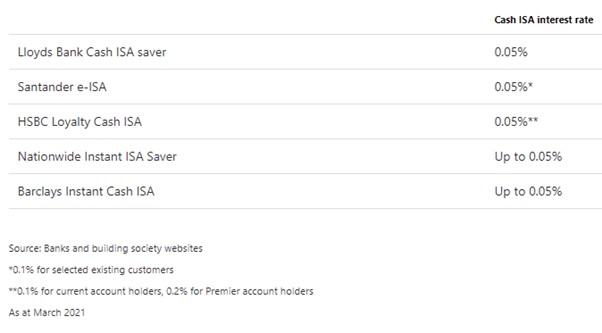
20% of Cash ISA savers said they held £50,000 or more in their Cash ISA. If they were picking up a high street rate of 0.1% (see table below) on £50,000, simply by moving to an account providing the average rate of 0.4% they could make an extra £150 a year. Not a king’s ransom, but worth having in your pocket rather than the bank’s. Particularly when you consider that at a rate of 0.1%, the total interest you are receiving is £50, and by moving to an account paying 0.4%, you would be quadrupling that amount to £200.

Selected high street instant access Cash ISA rates

Switching to a Stocks & Shares ISA

Half of Cash ISA savers surveyed (51%) said they had considered switching to a Stocks & Shares ISA. It used to be the case that you couldn’t cross the streams, but since 2014 you have been allowed transfer money from a Stocks and Shares ISA to a Cash ISA, and vice versa.

Doing so may be worthwhile if you feel you’ve got too much sitting in cash, earning next to nothing, and you’re willing to keep your money invested for the long term. You must be willing to tolerate falls in the value of your capital however, but the reward should be higher returns in the long run.

It’s important to always maintain a cash buffer for emergencies, three to six months of expenditure is the rough rule of thumb, but beyond this, you can start to think about investing in the market. Instead of transferring you might consider funnelling some of your new savings into a Stocks and Shares ISA, thereby gradually reducing your reliance on cash. Investing in the stock market bit by bit also helps to take the edge off the inevitable bumps in the road.

Please continue to utilise these blogs and expert insights to keep your own holistic view of the market up to date and for advice and planning tips.

Keep safe and well.

Paul Green DipFA

22/03/2021

Team No Comments

Brewin Dolphin – Markets in a Minute

Please see below for this week’s Markets in a Minute update from Brewin Dolphin:

Equities mixed as inflation offsets vaccine optimism

Global stock markets gave a mixed performance last week, as encouraging quarterly earnings and vaccine optimism were offset by concerns about rising inflation.

Most major US indices ended the week lower, with the Nasdaq down 1.57% amid an increase in longer-term interest rates. The S&P 500 also fell by 0.71%, as inflation fears returned and the yield on the benchmark ten-year Treasury note increased to its highest level in almost a year.

In Europe, the benchmark STOXX 600 ended the week up 0.21%, following news that the UK and Switzerland are set to ease lockdowns and the European Commission has signed a deal for a further 200 million vaccine doses. Gains were held back by concerns that higher inflation could result in central banks tightening monetary policy. The FTSE 100 added 0.52%, whereas Germany’s Dax declined by 0.4%.

In Asia, Japan’s Nikkei 225 topped the 30,000 milestone for the first time in more than 30 years, ending the week up 1.69% after the country started its vaccination roll out. In China, where trading reopened on Thursday following the Lunar New Year holiday, the Shanghai Composite gained 1.12% whereas the large-cap CSI 300 slipped 0.5% after the People’s Bank of China drained RMB260bn ($40.2bn) of liquidity from the financial system.

Last week’s markets performance*

  • FTSE 100: +0.52%
  • S&P 500: -0.71%
  • Dow: +0.11%
  • Nasdaq: -1.57%
  • Dax: -0.40%
  • Hang Seng: 1.56%
  • Shanghai Composite: +1.12%
  • Nikkei: +1.69%

*Data from close on Friday 12 February to close of business on Friday 19 February.

FTSE boosted by UK reopening plans

The FTSE 100 recovered from Monday’s early heavy losses to end the day up 0.18% after details of the UK’s reopening plan were revealed.

The first step will see all pupils in England return to school from 8 March, with some outdoor gatherings allowed from 29 March. Outdoor hospitality could open from 12 April, and indoor hospitality and hotels may open from 17 May. Stocks across hospitality, retail and travel all rallied on Monday, with JD Wetherspoon gaining 8.7%, Mitchells & Butlers adding 4.5% and WHSmith rising 6%.

In the US, a sell-off in technology shares led to the Nasdaq posted its biggest drop in a month, down 2.46%. The S&P 500 declined 0.77%, marking its fifth consecutive day of losses and the longest losing streak in a year, amid expectations of higher inflation.

In Hong Kong, technology stocks suffered their biggest sell-off since mid-November, dragging the Hang Seng down 1.1% on Monday. The Shanghai Composite also slipped 1.5% in its worst day since 28 January.

UK stocks opened higher on Tuesday despite figures revealing a rise in unemployment to 5.1% in the three months through December. InterContinental Hotels added 3.9%, whereas HSBC declined 1.9% after reporting a 34% drop in annual profit.

UK retail sales slump in third lockdown

The latest retail sales figures laid bare the impact the UK’s third national lockdown is having on the economy. Data released on Friday showed spending in stores and online fell by 8.2% between December and January, with all sectors other than food and online outlets affected by Covid-19 restrictions. The decline was 3% worse than analysts’ forecasts.

Separate figures from the Office for National Statistics revealed public borrowing reached £8.8bn last month – the highest January figure since modern records began.

A small increase in tax receipts was outweighed by the £20bn annual rise in spending, which included £5.1bn of expenditure on coronavirus job support schemes.

The UK’s retail sales figures are in stark contrast with those of the US, which saw sales increase by 5.3% between December and January – the highest jump in seven months and far higher than economists’ predictions. It is thought the government’s second round of stimulus cheques played a big part in boosting consumer spending.

US consumer spending to stay firm The US coronavirus relief package, which was signed in December, also restarted enhanced weekly unemployment benefits, which means household spending could stay relatively firm until the next Covid-19 recovery bill becomes law.

Once the next package is passed, there could be another boost to growth from fiscal stimulus, which is likely to coincide with more of the US economy reopening, enabling households to deploy the roughly $1.5trn in ‘excess savings’ they have built up since April last year. Indeed, the preliminary service sector PMI for February, which was released on Friday, recorded its highest readings since 2014.

PMIs beat forecasts

Last week saw positive PMIs in the UK and Europe, suggesting businesses are becoming more optimistic about a pick-up in activity over the coming months.

In the UK, the IHS Markit/CIPS flash composite PMI jumped to 49.8 in February from 41.2 in January – a bigger improvement than anticipated. Hotels, restaurants and travel companies reported steep falls in activity, but at a slower pace than in January. Financial and business services firms enjoyed modest growth.

“Although the data hint at a renewed contraction of the economy in the first quarter, business expectations for the year ahead improved to the highest for almost seven years, suggesting the economy is poised for recovery.” said Chris Williamson, IHS Markit’s Chief Business Economist.

Meanwhile, the IHS Markit flash German manufacturing PMI rose to a three-year high of 66.6, up from 57.1 in January, while the corresponding index in France gained 3.4 points to 55. A figure above 50 indicates most businesses reported growth in activity from the previous month. However, the German and French services PMIs both declined to 45.9 and 43.6, respectively.

The eurozone’s manufacturing sector is benefiting from demand from Asian countries, whereas many services businesses have been closed in an effort to control the spread of Covid-19. The pan-eurozone manufacturing PMI rose to 57.7, whereas the services PMI fell to 44.7, its lowest reading in three months.

This weekly update from Brewin Dolphin is a useful short look at the Global markets for the past week.

Articles like these help us stay informed as to what is happening within the markets.

Please continue to check back for further blog content from us.

Andrew Lloyd

24/02/2021

Team No Comments

Brooks MacDonald Weekly Market Commentary | Vaccine distribution continues to be key focus for investors

Please see below for the latest Brooks MacDonald Weekly Investment Bulletin received by us yesterday 01/02/2021:

Vaccine nationalism raises its head as competing contracts and supply issues collide

A bout of risk off sentiment hit equities, bringing most European and US indices slightly negative for the first month of 2021. The risk of a vaccine trade war, less positive data from Johnson & Johnson’s vaccine and the risk of further COVID-19 restrictions all dampened the mood. Friday saw a bubbling over of increasingly hostile words between the EU and AstraZeneca. In short, the EU imposed the right to ban vaccine exports outside of the EU (and select countries) and effectively imposed a hard border between Northern Ireland and the Republic of Ireland. This proved only temporary, with the hard border reversed and the prospect of export bans to the UK played down as Friday and the weekend progressed. So called ‘vaccine nationalism’ has been a threat for several months as issues over regional supply chains combine with the sequencing of competing contracts and an increasingly frustrated populace. On Sunday, the UK announced that it had provided almost 600,000 vaccinations in one day (over 1% of adults), which may suggest that as supply increases, countries will be able to work quickly to inoculate their populations.

Markets look ahead to Friday’s US employment data after last month’s disappointment

This Friday sees the important non-farm payroll US employment figures released. Last month saw a decline of 140,000 jobs1 , the first decline since the first wave of the pandemic. This month economists are expecting a 50,000 increase and therefore for the headline 6.7% unemployment rate to remain stable2 . US economic data has shown resilience in the face of the current COVID-19 wave but there is still a large amount of spare capacity in the labour market, something that may curb any bubbling inflationary pressures. With employment a major item on President Biden’s agenda, it seems likely that the US Stimulus Package will move through Congress under the Budget Reconciliation rules. The downside of using this process is that there is a limit on the scope of the legislation and a limit on the number of times the process can be used.

US stimulus may progress using the budget reconciliation process but this has limits

The prospect of using the budget reconciliation process has dampened expectations of a bipartisan agreement that could leave the door open for further stimulus over the coming months. The reconciliation process means that the bill can pass with a simple majority in the Senate rather than being held up by the filibuster. The reconciliation process has historically only been used once per calendar year due to its inbuilt limitations, so there will be additional scrutiny on the proposed package if it is expected to be the only US stimulus in 2021.

Weekly investment bulletins like these are a good way to get regular input from market experts. 

The mass rollout of the vaccine is set to cause gradual change to the market outlook, hopefully life and economies will improve.

Please keep up to date with our blogs.

Keep safe and well.

Paul Green 02/02/2021

Team No Comments

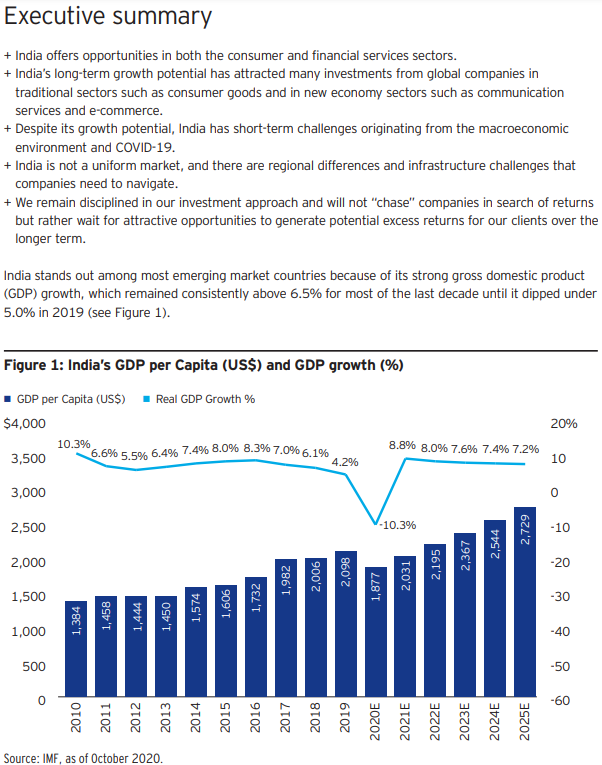
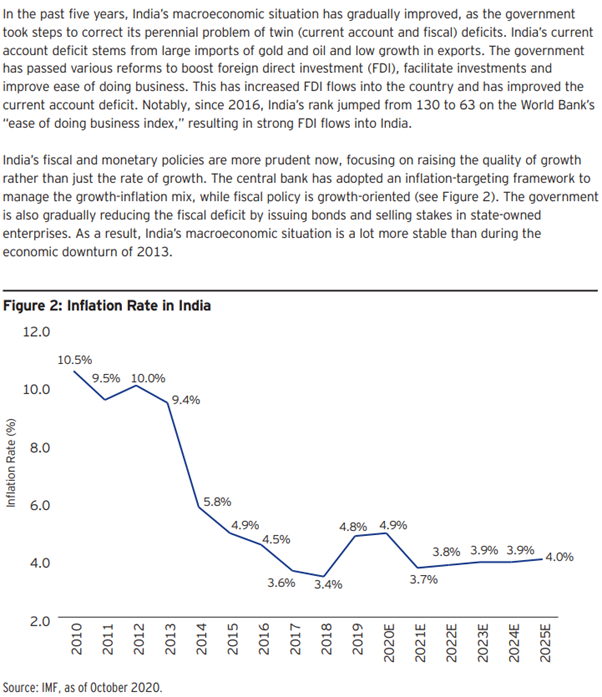
Invesco – India offers tremendous growth potential

Please see below an article published by Invesco on 8th January and received today, which outlines the long-term growth potential of investing in India:

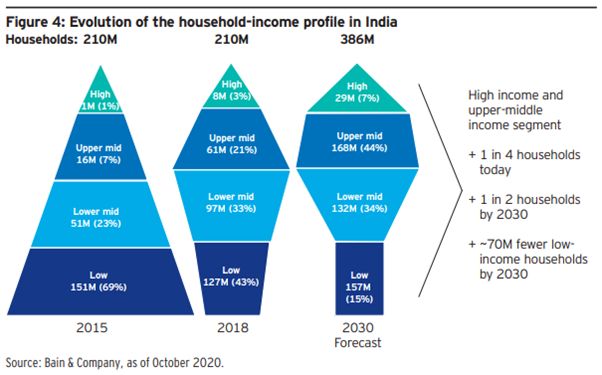
As you can see from the above, India has faced its issues recently, but the long-term growth prospects for this emerging market remains positive.

Please continue to check our Blog content for advice and planning issues and the latest investment, markets and economic updates from leading investment houses.

Please keep safe and healthy.

Carl Mitchell – Dip PFS

IFA and Paraplanner

15/01/2021

Team No Comments

Brooks Macdonald: Weekly Market Commentary | A strong start to the new year for markets

Please see the below weekly market commentary from Brooks Macdonald received yesterday evening:

In Summary

  • Markets start 2021 strongly as expectations of US fiscal stimulus buoy risk assets
  • US jobs market weakness could be good news for risk assets as it ensures the Federal Reserve will remain cautious
  • The US House of Representatives may launch impeachment proceedings against President Trump despite him only being in office for nine more days

Markets start 2021 strongly as expectations of US fiscal stimulus buoy risk assets

Markets had a strong start to 2021 with equities welcoming the prospect of higher US fiscal stimulus. Outside of equities, bond markets saw substantial moves as the US 10-year treasury, which has remained stubbornly below a 1% yield over the last nine months, pushed to 1.12% as investors priced in less monetary stimulus. One of the principle beneficiaries of this move was the banking sector which outperformed in the US and Europe and was a significant factor in the large upswing in the bank-dominated UK large cap index.

US jobs market weakness could be good news for risk assets as it ensures the Federal Reserve will remain cautious

The US payrolls data came in worse than expected with the labour market losing jobs month-on-month for the first time since April 2020. Delving into the detail, the weakness was driven largely by services impacted by COVID-19 restrictions such as restaurants and bars. There was better news in Europe where unemployment continued to fall faster than analyst expectations. With markets already experiencing a sell-off in expectations of central bank assistance, slightly weaker US jobs data could actually be a positive for risk assets as it means the Federal Reserve will be cautious of stepping away too early. Markets were largely unfazed by the miss vs expectations, suggesting this narrative is starting to gain traction.

The US House of Representatives may launch impeachment proceedings against President Trump despite him only being in office for nine more days

House Speaker Pelosi has said that the Democrat-controlled House will seek to impeach President Trump this week unless Vice President Pence invokes the 25th Amendment and removes the President. Given President Trump is in office for just nine more days, the market reaction to a second impeachment hearing has been far less dramatic than the first time around. Given these tight timings it may well be that the Senate hearing (effectively the trial) takes place post President Biden’s inauguration. It is unlikely that the Republican controlled Senate would seek to reconvene before the scheduled date of 19 January to hold an impeachment trial for a Republican President.

Even with a Democrat-controlled Senate, two-thirds of Senators need to vote to impeach President Trump for the proceedings to succeed. The main consequence of impeachment could be a ban on seeking re-election in 2024. This, combined with the social media bans on President Trump’s accounts, would make it far harder for him to achieve a political platform. Markets should largely shrug this off as theatre, however tail risks do remain for the next week.

As you can see from this update, this is a very US focused article, with all that’s going on across the pond at the minute, it’s no surprise that the US is the focus.

Although the UK isn’t having it easy at the moment either with a struggling NHS, high Covid-19 infection rates and lockdowns, it isn’t all doom and gloom. The recent news of the UK approving a 3rd vaccine and the fact that we have already vaccinated more people in the UK than the rest of Europe combined, we may actually now be seeing the end to the nightmare that has been Covid-19.

Please continue to follow the government guidance and keep yourselves safe and well, the next few months will still be difficult, but let’s all remain hopeful that life will return to some normality later in the year.

Keep an eye out for further blog updates from us.

Andrew Lloyd

12/01/2021

Team No Comments

Markets kick off new year with trepidation amid more lockdowns

Please see the below update from Brewin Dolphin received late last night:

Many global markets have fallen over the past week, thanks largely to a sell-off on Monday – the first trading day of the year. While many markets finished 2020 at all-time highs, uncertainty around the new Covid-19 variant, surging case numbers, and new lockdowns have dented optimism.

Hopes are now pinned on the mass vaccination programmes underway around the world.

Despite the pandemic, 2020 ended up being a surprisingly good year for a number of markets. The S&P500 ended the year up by 16.3%, while the Nasdaq gained 44%. In the UK, however, the FTSE100 endured its worst year since the financial crisis, losing 14.3%. The UK’s blue-chip index is heavily weighted towards stocks that were hit hardest by the pandemic, including banks and energy companies. It also has very little exposure to the tech sector, which has had a stellar 12 months. Additionally, the FTSE100 has been hindered by a rising pound; since many companies in the index earn their revenue in US dollars, a strong pound reduces their earnings when converted into sterling.

The performance of other markets varied widely. Germany’s DAX index ended the year up 3.6%, which may not sound much but it did pass its previous record high.

France’s CAC 40 fell by around 7%, while Japan’s Nikkei gained 16%. In China, the CSI300 rose by 27% during 2020.

Last week’s markets performance*

  • FTSE100: -0.46%
  • S&P500: -0.70%
  • Dow: +0.36%
  • Nasdaq: -1.18%
  • Dax: -0.25%
  • Hang Seng: +3.4%
  • Shanghai Composite: +3.66%
  • Nikkei: -1.12%

*Data from close of business on Tuesday 29 December to close of business on Monday 4 January.

Equities in mixed start to new year

Global equity markets saw healthy gains on Monday as continued optimism about the vaccine rollout provided confidence.

However, the mood soured as the day wore on, and markets in Europe and the UK finished off their highs as it became clear that more lockdowns were imminent.

Relatively robust economic data out of China helped most Asian emerging markets at the start of the week.

In the region, the Shanghai Composite closed up by 0.86%, while Hong Kong’s Hang Seng gained 0.89%. South Korea’s KOSPI rose by 2.47% and Taiwan’s TSEC 50 gained 1.15%.

In Japan, however, the Nikkei lost 0.68%, as the government said that vaccinations may not start until February, despite surging cases.

In Europe, markets were up across the board. The German DAX eked out a 0.06% gain, while France’s CAC 40 rose 0.67% and the FTSE Mibtel in Italy rose 0.37%.

But it was the FTSE100 that outperformed on the day, rising by 1.72%, helped by a weak pound. 

In the US, the mood was less upbeat, perhaps caused by news that the Covid-19 variant had arrived in New York, or perhaps the rumblings about more lockdowns in the UK and elsewhere had investors spooked.

Either way, US markets had their worst day since October, with the Dow losing 1.25% to close at 30,223.89, while the S&P500 fell by 1.48% to 3,700.65. The Nasdaq fell by 1.47% to close 12,698.45. It should be remembered the indices are still near their all-time highs.

New lockdowns announced or extended

Boris Johnson’s address to the nation on Monday night, in which he announced a strict national lockdown for England, set to last until at least mid February, has intensified the short-term headwinds now facing the market. Similar lockdowns have been announced around the UK, and also in Germany and Japan, with containment measures increasing in South Korea. Others are certain to follow.

January is traditionally a tough month, and the current market wobble should be set in the context of the recent strong run. November 2020 was the best month for equities in 20 years, and December was also historically strong. It should be no surprise if the markets fall back in the near term. But fundamentals remain solid. There is a lot of money sitting on the sidelines waiting to be invested that has failed to find a home since the sell off last March. Only this time, we are at the beginning of a new business cycle and recovery, as opposed to last March, when we were at the tail end of an old cycle. So on a 12-month view, we remain positive.

Source: Refinitiv Datastream

UK economic data ends year on a high

The last business survey covering the UK’s manufacturing sector shows that factory activity was improving at the fastest rate in three years.

The IHS Markit/CIPS purchasing managers’ index rose to 57.5 in December from November’s 55.6. Any reading above 50 indicates activity is increasing. The rise was due largely to stockpiling by manufacturers ahead of the Brexit deadline, in case a deal was not reached. It may therefore drop back in the near-term as the lockdowns bite and activity reduces.

UK mortgage approvals are also booming, with 105,000 mortgages approved in November – the highest since 2007, before the credit crunch kicked in. Buyers are rushing to take advantage of the stamp-duty holiday announced by Chancellor Rishi Sunak, which expires in March. It is likely that activity will calm down in the summer.

Please continue to check back for more brief market views from a range of different fund managers. This should help you get a handle on the fast changing outlook.

Andrew Lloyd

06/01/2021

Team No Comments

Markets in a Minute: Markets rise over the week, but mood is soured by virus worries and Brexit

Please see below for the latest Markets in a Minute update from Brewin Dolphin, received yesterday evening 22/12/2020:

Global equity markets moved mostly higher over the past week, as the vaccines programme boosted optimism and an agreement on the US stimulus package edged closer. Eternal hope of a Brexit deal helped the more UK-centric shares and European markets. The FTSE100 has been an underperformer, however, as the dollar has been weakening relative to sterling, squeezing the earnings of FTSE’S multinationals, which gather most of their revenue in dollars. The ongoing dollar slide helped push commodity prices higher, and bitcoin briefly hit a record $23,000 amid a flurry of speculation, although nobody can really gauge its true value.

Last week’s markets performance*

• FTSE100: -0.26%

• S&P500: +1.25%

• Dow: +0.44%

• Nasdaq: +3.05%

• Dax: +3.93%

• Hang Seng: -0.02%

• Shanghai Composite: +1.42%

• Nikkei: +0.41%

*Data for week to close of business on Friday 18 December

Equity markets pull back at start of week

News of the virus mutation in the UK, and resulting restrictions on the movement of people and goods to numerous countries led to a sell off in many markets around the world on Monday. The FTSE100 closed down by 1.73% at 6,416.32, and the FTSE250 ended 2.11% lower at 19,962.11. In Europe, the pan-European STOXX 600 index fell 2.3% after the UK announced its tougher restrictions in response to the vaccine, and the EU’s largest market, the German Dax, fell by 2.82%. Reaction was more muted in the US, where the S&P500 lost just 0.4%, while the Nasdaq lost 0.10%. The Dow closed up by 0.12%.

US stimulus bill passed

The long-awaited US stimulus package to extend unemployment benefits and fund a range of other pandemic-related expenditure was passed on Monday night after nearly six months of wrangling. The package, worth $900bn in total, will send one-off cheques worth $600 to households, with extra payments for children. It will also extend unemployment benefit payments worth $300 a week for those who are out of work due to Covid-19. These payments will last until March and give the vaccination programme time to take effect. However, President-elect Joe Biden has signalled he will look to pass a larger bill once he takes office in January.

Markets sensitive to risk

There is a lack of liquidity in the market at the moment, as many traders have started their Christmas breaks and there is less money flowing into shares and bonds. This can make markets quite volatile, and there is no denying that the newsflow right now is quite alarming. We heard of the new strain of Covid-19 emerging from the UK, prompting Tier 4 containment measures in London, the south east and parts of eastern England over the weekend. In Europe, there are concerns surrounding movement of people and goods which has led to travel constraints. This could have an impact on the economy – and our lives – unless some resolution is reached quite quickly.

This bad news linked with a lack of progress on Brexit, with travel restrictions making negotiations harder, led to weakness in UK and European markets at the start of the week. However, the pound has recovered its losses, indicating that investors are perhaps taking stock and realising that this is probably not as frightening as the headlines first seemed. There were hopeful headlines on Tuesday morning about a compromise on fishing quotas, but there is no firm news of progress. We must wait to see how this plays out in the coming days, but markets will be jittery until the end of the year at least; even if a deal is agreed, it needs to be cleared by the EU member states which will not happen until the new year. The US, meanwhile, was far calmer, with the Dow even closing with a small gain, as the US stimulus bill was passed.

Economic resilience Taking a broader view, the global economy is holding up better than expected given such challenging circumstances. Many UK businesses had reported activity improving in December. The IHS/Markit flash composite purchasing managers index, which measures business levels compared to the previous month, rose to 50.7 in December from 49 in November. A reading above 50 indicates business is expanding. The services element of the index, which covers leisure and hospitality, rose to 49.9 in December from 47.6 in the previous month, suggesting business levels are still falling. Yet the data was still better than anticipated and shows the economy holding up relatively well. PMIs in the US were even stronger, with the businesses saying that activity levels were improving, especially in the manufacturing sector.

All in all, there is a sense of confidence that the global economy will get through this very challenging period and emerge to recover next year, as things return to normal. On a 12-month view, we remain optimistic on equities, although it could be a bumpy ride until as sentiment rises and falls along with the headlines.

Brewin Dolphin regularly give us their insight of the markets. Updates in this efficient manner are a quick but well-informed way to update your consensus view of the global markets.

Please keep using these blogs to regularly update your knowledge of current market affairs from around the world.

Keep well and all the best

Paul Green

23/12/2020