Team No Comments

Blackfinch Group Monday Market Update – 19/10/2020

Please see below for the latest Blackfinch Group Monday Market Update:

UK COMMENTARY

  • Boris Johnson unveiled a three-tier lockdown system to help control the spread of a second wave of infections
  • A lack of progress on a Brexit trade agreement saw Johnson suggest that the country should prepare for a ‘no-deal’ outcome
  • The three months to the end of August saw Britain’s unemployment rate rise to 4.5%, the Office for National Statistics (ONS) said, versus expectations of 4.3%
  • After a record low of 343,000 vacancies in April to June, there has been an estimated quarterly increase to 488,000 vacancies in July to September 2020. Vacancies, however, remain below pre-pandemic levels and are 332,000 less than a year ago.
  • The latest grocery market share figures from Kantar for the four weeks to October 4th show that sales growth rose by 10.6%, which is expected to be a result of the threat of another national lockdown. Shoppers spent an additional £261mln on alcohol as the 10pm curfew came into effect and the Eat Out to Help Out scheme concluded.

ONS data suggested that labour productivity, as measured by output per hour, fell 1.8% year-on-year. Output per worker fell by 21.1%, but it is expected that this is a result of the furlough scheme allowing employers to retain workers even though they are working no hours.

US COMMENTARY

  • The market continues to wait patiently for any news on a further government stimulus package. However some solace can be taken in the fact that no matter who wins the presidential election next month, there will likely be a sizeable fiscal stimulus package announced.
  • Third quarter earnings season started, giving investors much to digest, with the main area of focus being the level of recovery that companies have seen since the depths of the economic fallout from the pandemic
  • First time jobless claims increased to 898,000, the consensus forecast had been for a drop to 825,000. Continuing claims fell from 10.98mln to 10.02mln, a greater fall than had been anticipated by the market.

Retail sales rose 1.9%, well ahead of estimates, although industrial production showed a 0.6% decline in September.

ASIA COMMENTARY

  • On Tuesday 13th, Hong Kong’s stock market was unexpectedly closed as a tropical storm prompted authorities to shutter businesses and close schools

GLOBAL COMMENTARY

  • The International Monetary Fund has upgraded its GDP forecasts for this year. In its latest World Economic Outlook it predicts that global output will fall by 4.4% in 2020, better than the 5.2% slump forecast in June.
  • The largest shift was in the prediction for the US, with GDP seen shrinking by 4.3%, not the 8% previously anticipated
  • Improvements are also seen in the forecasts for Europe, the UK and China, with the fund saying that these changes are due to a “somewhat less dire” slump in the April-June quarter, and a stronger than expected recovery in July-September
  • Emerging markets saw their forecast fall, with a prediction for a 5.7% contraction, worse than the previously suggested 5% slump

The report also suggests that as a result of the pandemic 80-90mln more people will be pushed into extreme poverty globally.

COVID-19 COMMENTARY

  • Johnson & Johnson are forced to pause their COVID-19 vaccine trial due to ‘an unexplained illness in a study participant’

Pfizer and BioNTech have indicated that they could file for emergency use authorisation from the US Food and Drug Administration by late November for their jointly developed vaccine.

These articles provide concise well-informed views that cover the whole of the market and are useful to maintain your up to date view of the markets globally.

Please keep reading our blogs regularly to give yourself a holistic and up to date view of the markets.

Keep safe and well,

Paul Green

19/10/2020

Team No Comments

AJ Bell – Reasons Why Cryptocurrencies Are Creeping Higher

Please see below the latest ‘Investment Insight’ from AJ Bell received 18/10/2020.

Reasons why cryptocurrencies are creeping higher

Bitcoin is trading close to a 12-month high

Thursday 15 Oct 2020 Author: Russ Mould

The Federal Reserve Bank of Cleveland’s Loretta Mester has raised the prospect of Americans having an account with the Fed, into which the central bank could directly pump digital dollars, thus bypassing the banks as the main mechanism for quantitative easing (QE).

The European Central Bank has reportedly filed to trademark the term ‘digital euro’ as it assesses the pros and cons of digital currencies.

And the Bank of Japan is openly discussing what it calls central bank digital currency (CBDC), with work beginning in spring 2021 on issues such as resilience, ahead of trials with a limited number
of households.

To prevent a public panic the Bank of Japan continues to stress CBDCs will be used to complement, not supplement, paper money.

Supporters of such experiments will argue they offer another potentially useful tool in the central banker’s kitbox, as the existing policy suite of zero rates, QE, inflation targeting and so on struggles to deliver the growth and inflation the monetary and political authorities crave, to help them escape from their debt burdens.

Sceptics will wonder where this will lead next, with rampant money creation, to fund government debts, interest payments and spending plans, and inflation both possible consequences, unintentional or otherwise.

These doubters may be in the camp that warms to gold in such circumstances or even cryptocurrencies which, rather to this column’s surprise it must be said, refuse to go away.

Bouncing back

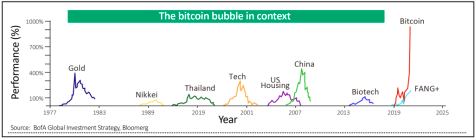
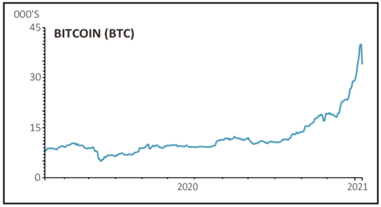
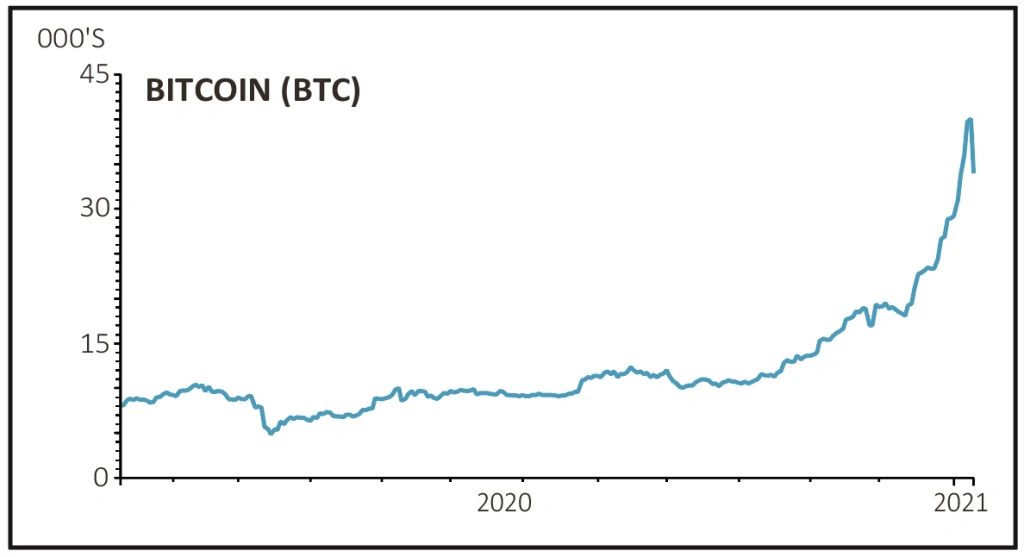
Bitcoin may still be trading well below its 2017 all-time high of $18,941 but it is making plenty of ground.

According to coinmarketcap.com, bitcoin’s total value is $210 billion, a fraction below its high for the calendar year. That figure is also pretty much double the value of the FTSE 100’s largest stock by market cap, AstraZeneca (AZN). The total crypto universe, which now comes to over 3,600 different counters, is currently valued at $361 billion according to the same website.

Some may see this as another reason to view financial markets as worryingly frothy, as a plentiful supply of liquidity from central banks and hopes for fiscal stimulus keep them bubbly.

Others will argue that cryptocurrencies’ return to favour supports the view that central bank policies are debasing existing currencies and merely one step down the path toward a reset of how fiat money works, with CBDC experiments the next logical development.

Perhaps Facebook’s work on its own blockchain-based payment system, Libra, is prompting central banks to get cracking on their own version.

Long arm of the law

Regulators are sceptical. Attempts to launch exchange-traded funds (ETFs) dedicated to tracking cryptocurrencies have foundered in the US and Britain’s Financial Conduct Authority has just banned the sale of derivatives and exchange-traded note trackers related to bitcoin to retail investors, citing ‘the inherent nature of the underlying assets, which means they have no reliable basis for valuation.’

No matter how sceptical many financial market watchdogs or participants may be, it can still be argued that if someone, somewhere thinks that cryptocurrencies have a value, then a value is what they have.

Questions over the cost of the bitcoin mining process, the level of mining and transaction fees and efficiency of cryptocurrencies as a payment system relative to cash, or existing credit and debit networks, will also deter many from using bitcoin, let alone treating it as an investable asset class.

Yet the cap on the supply of bitcoin to 21 million will continue to appeal to some investors as they see government deficits balloon and central banks draw up plans for digital currencies and seek out a place to preserve or even hide wealth.

Gold bugs may argue that bitcoin has no physical backing or practical use but critics of the precious metal will assert it is an inert element that generates no yield and is not in frequent use when investors pay for their weekly groceries, either.

Libertarians may also jump in at this point, citing how central bank-backed digital currencies could be the ultimate surveillance tool in any civilised country, let alone despotic, corrupt ones. As such, the battle lines between true believers and nocoiners (and gold bugs) remain drawn.

The ability to pay tax in cryptocurrency or even buy groceries would be a tectonic shift but that looks a long way away. For the moment, the former is having a better year of it than the latter.

The forced shift from cash to cashless payment during the current pandemic is unlikely to do the cause of digital currencies any harm, as more people become accustomed to using their card or mobile device to make a payment in person, let alone online.

Please continue to check back for our regular blog posts and updates.

Charlotte Ennis

19/10/2020

Team No Comments

Investment Bulletin – 16th October 2020

Please see the below investment bulletin received by Brooks Macdonald today (16/10/2020):

What has happened

Markets have been largely willing to shrug off the increased in coronavirus cases in Europe but a series of tightening restrictions across Europe shook investor confidence yesterday. This had led to contagion in US indices however the early losses there were largely recouped by the end of the session.

European cases go the wrong way as restrictions tighten

Italy has been relatively resilient in the face of the second wave, but it also reported close to 9,000 cases yesterday as it joins the European trend. In recent days we have seen the UK moving London and several other areas under Tier 2 restrictions, France imposing a curfew and increasing restrictions in Germany. The key question for markets is whether governments in Europe will continue with the current policy of squeezing social interactions and hospitality but keeping the majority of the economy and schools open. Encouragingly, Reuters have reported that the NHS is in talks with relevant bodies about the mobilisation of a vaccine programme as early as December. If a vaccine allows investors to focus on a ‘beginning of the end’ of COVID restrictions, they will be increasingly comfortable to look through the next 3/6 months of restrictions. This could also increase the political palatability of tougher measures now if light can be seen at the end of the tunnel.

What next for Brexit?

EU leaders agreed at the EU Council meeting to continue negotiations with the UK but the narrative was very much that the UK’s position needs to come towards the EU rather than the other way around. The UK’s chief negotiator Frost said he was ‘surprised’ and ‘disappointed’ by this and we will hear from UK PM Johnson later today with the UK’s view. Sterling has faltered a bit on this news as it makes continued negotiations less likely, on the margin, than a day ago when reports were pointing to an extension into November.

What does Brooks Macdonald think

US fiscal stimulus remains a hot topic in the market but we have avoided discussing this too much today as regardless of whether a given day looks brighter or darker for stimulus, we retain low expectations that anything will happen before November. Should Biden win the White House but not take the Senate, this may prove challenging for risk appetite so we expect investors to react to shifts in the Senate polling odds more than day to day fiscal rhetoric.

Source: Bloomberg as at 16/10/20

The markets have been volatile this week as Covid-19 restrictions have been tightened in the UK. With rising cases and uncertainty about further restrictions and lockdowns, along with the impending US Election. This volatility is likely to continue.

Please continue to look for further updates and blog content from us.

Andrew Lloyd

16/10/2020

Team No Comments

Jupiter Active Minds Blog

Please see below an article received late yesterday afternoon from Jupiter which provides their latest market views:

Global Emerging Markets

A land where banks can grow

Nick Payne, Fund Manager, Global Emerging Markets, highlighted the strong performance of emerging market equities this year, which are approximately back to their pre-Covid levels from earlier in the year. However, Nick wanted to talk about an area that has so far lagged behind: banks.

In contrast to developed markets, where banks are typically seen as mature, low growth businesses with low return on capital, in emerging markets the picture couldn’t be more different. There are around 2 billion people in the world without a bank account, the bulk of them living in emerging markets. Some of those are gaining access to financial markets through fintech solutions, but in emerging markets the traditional banks still have a big role to play, said Nick.

The ability to grow is the main thing that separates emerging market banks from their developed market peers. Nick used as an example the largest privately owned bank in India, with about 8% market share, that has the opportunity to capitalise upon the situation in rural India where there have been great strides made in building up a deposit base, but where banks are still in the early stages of lending to customers (the loan to deposit ratio is just 30%). Indeed, the bank’s CEO stressed that the potential opportunity is so large that at this stage they don’t need to go down the risk scale in order to achieve growth.

The underlying message for Nick is that there is still an enormous runway for growth for banks in emerging markets, and those that are strong enough to come through this crisis will emerge with their competitive positions enhanced. So while the high profile technology names understandably get a lot of attention at the moment, this is an alternative area that Nick sees as presenting a compelling long-term opportunity for emerging market investors, which the market should recognise as and when economies start to normalise.

Fixed Income

Finding pockets of value in Latin America

Risk sentiment in emerging markets has improved in October, following a volatile September, noted Alejandro di Bernardo, Credit Analyst, Emerging Market Debt. The market has turned more positive on a possible Biden win in the upcoming US election, in the belief that a higher fiscal deficit will translate into a weaker dollar, which would be positive for emerging markets.

In Latin America, Brazil is expected to post the lowest decline in growth – estimated at 5% for 2020 – largely thanks to a huge fiscal stimulus package, of over 15% of GDP. PMI activity, consumer confidence, and other industrial indicators are showing a V-shape recovery. On the other hand, however, the political backdrop remains a concern there. Growth relies on subsidies, which isn’t sustainable; and Brazilian debt to GDP is expected to reach about 95% by the end of the year. Alejandro and the team expect the Brazilian real to remain volatile, and in terms of positioning, they prefer to focus on exporters with US dollar revenues. Alejandro used the example of a Brazilian pulp & paper company, with a significant market share and strong operating margins; as the industry was considered ‘essential’, it never closed during lockdowns. So, Alejandro said it’s possible to get paid a premium to have exposure to strong BB exporters in the region.

It is the opposite scenario for Mexico. The country is expected to post the biggest decline in GDP in the region, falling 9%, largely due to a much more conservative approach to fiscal stimulus from the AMLO administration. Politics there are quite stable, but growth is lacking. In Mexico, the team prefers companies with exposure to the US, and investment grade miners that have exposure to copper and gold, where demand is likely to benefit from a Chinese recovery.

Looking forward to 2021, Alejandro and the team take a positive view on countries like Peru, Paraguay, Chile, Guatemala and Panama, which entered the pandemic with very low levels of debt, and which have room to provide fiscal stimulus. Even in countries with weaker macro, the team can still find pockets of value in the BB space, in companies where fundamentals have recovered.

UK Equity – Small & Mid Cap

How to approach three ‘unloved’ buckets in UK equities

Tim Service, Fund Manager, UK Small & Mid Cap, shared his views on how to approach three of the most “unloved” themes in the UK market: stocks affected by Brexit, Covid-19 and value/cyclical stocks.

He said each of these themes requires investors to be “humble” and accept that taking a strong view on the stocks is difficult as outcomes are unpredictable and heavily impacted by politics.

One way to play Brexit exposure is through a domestic sector that is understandable and has growth potential but is disadvantaged by uncertainty around the UK-EU negotiations, Tim said. Housebuilders fit this description – with a dozen or so companies operating in a land market that is much less competitive than it was in the last cycle. The sector trades on 1 to 1.3 times book value and should generate high-teen to 20-plus percent return on equity in a year’s time with a “good” Brexit, he said. Challenger banks may also benefit as their valuations have been held back by concerns about Brexit.

A way to approach the Covid-19 theme is through travel stocks, which have been sharply impacted by virus restrictions, with the most likely scenario being the eventual control of virus transmission in the western world, Tim noted. He prefers to focus on good businesses with solid balance sheets or companies they would support if a capital raising were needed, and with the ability to come through the next six to nine months in a stronger market position.

Some UK cyclical/value stocks may benefit if after the US election there is an increase in infrastructure spending or if there is a change in the inflation outlook. Industrials and aggregates, for example, would fit this description.

Gold and Silver

M&A in the gold mining sector could double

The gold sector has seen around $20bn of mergers and acquisitions this year and this may well double in the next 3-6 months, said Ned Naylor-Leyland, Head of Gold & Silver.

The crisis in depleting reserves among major gold miners has been apparent for decades, said Ned, but it’s taken firmly rising gold and silver prices to get the market to focus on the need for consolidation. Previously, unreasonably low spot prices prevented gold miners from engaging in the sufficient exploration and development needed to boost reserves.

In Ned’s view, we are now at a tipping point of an incoming wave of M&A in the sector and it is the discounted tier one gold miners that he thinks will benefit the most. Elsewhere, Ned pointed to Q3 reporting from silver miners as one to watch: will silver’s spectacular rise this year translate into company numbers? While the market isn’t yet willing to pay a sustainable $20 per ounce for silver, he thinks that is inevitable at some point in the future given the demand for silver in electronics is only going to increase due to powerful trends like the internet of things and clean energy technologies.

I think one of the key messages to take from the above is that opportunity is still out there for investors, but it remains important to have a diversified portfolio, which is spread across a number of regions and sectors in order to benefit from these opportunities. Having a long-term view when investing is imperative, you should not focus on short-term volatility.

Please continue to check our Blog content for advice and planning issues and the latest investment, markets and economic updates from leading investment houses.

Please keep safe and healthy.

Carl Mitchell – Dip PFS

IFA and Paraplanner

16/10/2020

Team No Comments

Daily Investment Bulletin

Please see below market update received from Brooks Macdonald this morning, which comments on the upcoming US election, the Brexit deadline and the rise of Covid-19 cases across Europe.

What has happened

Whilst we are only a few days into the earnings season it has been reasonably mixed with some idiosyncratic misses such as Bank of America, intertwined with cyclical earnings such as United Airlines which reference a still difficult economic backdrop. Once markets had added in another negative news day for fiscal stimulus, equities struggled and this weakness has followed into today.

The last nail in the fiscal coffin?

Treasury Secretary Mnuchin has been a key figure in the fiscal negotiations leading the White House administration in talks with the House Democrats. Yesterday Mnuchin said that he did not expect a stimulus package to be agreed before the election, this comes after extensive talks with House Speaker Pelosi. The issues appear to not just be the overall dollar number, but the policies included in the bill, suggesting that compromise will not be simple. As we have said before, whilst few investors were holding out hope of a full stimulus package, some were expecting a skinny deal ahead of the 3rd November. The market’s weakness post Mnuchin’s comments reflect the dying flame of a small package pre the election.

Brexit…

Today is the self-imposed deadline by Prime Minister Johnson to reach a trade deal with the EU. As widely expected, all reports are suggesting that Johnson will continue the talks post the EU Council meeting which is taking place today and tomorrow. With the Prime Minister under pressure due to the UK’s coronavirus response, adding the perception that he ‘chose’ a no deal route would just increase opposition. Last night a call took place between the EC President, EU Council President and UK PM which concluded with a comment that a decision on the continuation of talks would be made after the Council ends tomorrow. Sterling has taken this news positively, particularly in light of the progress seemingly made by both sides in recent weeks. Reports suggest an extension until early November could be the more realistic deadline.

What does Brooks Macdonald think

With COVID cases rising across Europe and governments taking increasingly tough measures including local and national lockdowns, a no deal Brexit added to the mix would be highly unwelcome. Our base case remains that a deal will be struck though our level of confidence in this isn’t high, this is the primary reason why we retain our underweight to both UK and European equities.

Source: Bloomberg as at 15/10/20

A succinct and interesting summary of the most relevant market information. Please check in with us again soon for further updates.

Stay safe.

Chloe

15/10/2020

Team No Comments

Brewin Dolphin – Markets in a Minute

Please see below the latest ‘Markets in a Minute’ update from Brewin Dolphin received 13/10/2020.

Markets in a minute: Equity markets rally on Trump recovery, Biden lead, and hopes for stimulus deal

Most global equity markets made solid gains last week on hopes of a US stimulus deal, and following President Trump’s return to the White House after treatment for Covid-19.

Markets were also boosted by the increasing likelihood of a Joe Biden election victory. His lead in the polls is expanding, and although Democrats may raise corporate taxes and regulation, investors are encouraged by the party’s approach to job creation and wage growth. Biden’s lead may also mean there is less chance of a disputed election result.

Last week’s markets performance*

  • FTSE100: +1.94%
  • S&P500: +3.84%
  • Dow: +3.26%
  • Nasdaq: +4.55%
  • Dax: +2.85%
  • Hang Seng: 1.47%
  • Nikkei: -0.75%

*Data for week to close of business on Friday 9 October.

FTSE100 lags as global markets rise at the start of the week

Most equity markets rose on Monday, with US indices powering ahead led by gains in big tech. As hopes faded for a new US stimulus deal ahead of the election, investors returned to the growth stocks that have proved so reliable during the pandemic and lockdowns. The Nasdaq closed up by 2.56% at 11,876.26, having been up by 4.1% at one point in intra-day trading. The Dow gained 0.88% and the S&P500 rose by 1.64%. Markets across Europe closed up by around 0.7%.

In the UK, the FTSE100 lost 0.25%, weighed down by a strengthening pound which rose on hopes of a Brexit deal. The more domestically focused FTSE250 closed up by 0.52%, despite yesterday’s introduction of a tiered system of localised lockdowns.
Those in the highest-risk areas could see a range of measures introduced, from bans on households mixing to closures of pubs, bars and gyms. Liverpool is currently the only city to be placed in the highest-risk tier. However, it appears tougher measures are on the way for a number of areas after Chris Whitty, the chief medical officer, said the basic “Tier 3” measures would not be enough to stop the virus spreading.

More UK stimulus

Rishi Sunak unveiled a watered-down furlough scheme for firms which are forced to close under local lockdowns. The government will pay two-thirds of employees’ salaries to a maximum of £2,100 per month. Companies will still need to pay national insurance and pension contributions. The scheme will begin on 1 November and will run for six months, with a review in January.
The announcement followed a disappointing set of GDP data for August that showed monthly growth of 2.1%, less than half the 4.6% rate expected by economists. High-frequency data, such as restaurant bookings, traffic and retail footfall, shows that activity slowed in September, which makes sense given the end of the ‘eat out to help out’ scheme.

US stimulus talks deadlocked

Talks between Democrats and Republicans in the US still appear at an impasse. Trump has given ground and agreed to a slightly larger stimulus package worth $1.8trn, but faces objections from his own party who want the bill capped at $1trn. It is worth noting, however, that the Democrats have already passed a $2.2trn plan. This could be implemented soon after election day if the Democrats gain control of both the House of Representatives, and the Senate, in a so-called ‘blue sweep’.

Brexit clock ticking

Talks resume today ahead of an EU summit this Thursday, when all member states will begin focusing on Brexit negotiations. Thursday is also the day that Boris Johnson has said he would walk away from talks if a deal was not in sight. It seems unlikely Johnson will turn his back on any prospect for a deal given the pressure he is under to reach a compromise, especially amid such intense criticism of his handling of the coronavirus.

Johnson has been on the phone to Macron and Merkel over the weekend in a bout of last-minute diplomacy. While some reports suggest state aid and dispute resolution are the key negotiation sticking points, others point to fishing rights, a topic on which France is particularly vocal. It may be surprising that fishing is such a deal-breaker, given that it accounts for only around 0.1% of UK GDP. But it is the lifeblood of many coastal communities and has an emblematic value beyond that which can be expressed in economic terms. Despite Johnson’s threat to walk away, Michel Barnier, the EU’s chief negotiator, has said talks will continue after Thursday and that a realistic deadline is in fact 31 October.

A duller dollar

Stephen Roach, former Head of Morgan Stanley’s Asian business, has suggested that the US dollar could decline by 35% as a result of global economic conditions. While we are also bearish on the dollar, we do not foresee such a drastic fall. We suspect the dollar will continue the gradual decline that we have been observing in the market.

Part of our negativity is based on the fact that the greenback has lost the interest-rate support that has held it up in recent years.


Source: Brewin Dolphin, Refinitiv Datastream

A useful article from Brewin Dolphin focusing on the UK, Rishi Sunak’s unveiling of a further UK stimulus package and exploring the reasons why, at the beginning of this week, the FTSE100 has lagged behind global markets.

Please continue to check back for our regular blog posts and updates.

Charlotte Ennis

14/10/2020

Team No Comments

US earnings season gets underway, with Q3 reports to be revealed this week

Please find below a detailed economic and market news update from the research team at Brooks Macdonald, received yesterday afternoon. The article provides an insight into the markets’ response to Brexit developments and the ongoing Covid-19 pandemic.

  • US earnings season begins this week but with few companies guiding analysts ahead of the numbers, we expect surprises
  • The European Council meeting on Thursday and Friday was meant to be the deadline for a Brexit agreement but this is likely to be delayed
  • With a number of US data points being released this week, we will see whether the US economy is coping with its second COVID-19 wave

US earnings season begins this week but with few companies guiding analysts ahead of the numbers, we expect surprises

Risk assets continued their rise at the end of last week as markets looked through the doubtful state of pre-election stimulus and focused on significant aid post.

As is tradition, the US financials sector will kick off the Q3 reporting season and this week we will see earnings reports from JP Morgan, Wells Fargo and Morgan Stanley amongst others. According to Factset’s Earnings Insight, the expected US earnings per share decline is -20.5% year-on-year for Q3, with Energy and Industrials expected to lead the decline1. As with the second quarter, Technology and Healthcare are expected to be considerably more resilient, but all sectors are expected to see a year-on-year fall in earnings. As we know, earnings in aggregate are typically ‘beaten’ as analysts reduce forecasts ahead of the season and management keep something up their sleeve. A point of note is the small number of companies, compared to history, that have issued earnings guidance for Q3. This sets the scene for a surprise either to the upside or the downside. 

The European Council meeting on Thursday and Friday was meant to be the deadline for a Brexit agreement but this is likely to be delayed

The European Council summit takes place on Thursday and Friday of this week and was the previous deadline set by Boris Johnson for a deal to be agreed in principle. The last few weeks have seen improvements in rhetoric but we appear a while away from a comprehensive deal. Over the weekend, Prime Minister Johnson had talks with Macron and Merkel, so conversations are at least happening at a senior level. Given the timelines, we expect this week to end with an announcement of continued talks. Good progress has been made in recent weeks but for fishing rights and state aid remaining the key issues to thrash out. While Sterling (against the Euro) is off its lows, there is still considerable uncertainty baked into the UK’s currency, and foreign exchange traders expect this to continue for several months until the 31st December deadline looms large.

With a number of US data points being released this week, we will see whether the US economy is coping with its second COVID-19 wave

Some of the hard data from the US will be released for September this week, including Consumer Price Inflation, retail sales and industrial production. Markets will be watching these data sets closely to see if the US economy really has been insulated from the economic restrictions of the second COVID-19 wave, as some of the ‘faster’ data has suggested. Over the next few weeks, we will have a far richer US picture from both a corporate and economic perspective.

Please check in again with us soon for interesting market commentary and up to date information on world-wide events.

Please stay safe.

Chloe

13/10/2020

Team No Comments

Blackfinch – Weekly Market Update

Please see below an article published earlier today from Blackfinch Investments, which outlines their latest views on markets across the world:

UK Commentary

US Commentary

Europe Commentary

Asia Commentary

Global Commentary

Based on the above it looks like things are potentially moving in the right direction, however, it is yet to be seen what impact today’s lockdown announcements from Boris will have on markets and the economy. I think it is fair to say that the overall recovery of industries and economies will drag into next year and even possibly the year after.

Please continue to check our Blog content for advice and planning issues and the latest investment, markets and economic updates from leading investment houses.

Please keep safe and healthy.

Carl Mitchell – Dip PFS

IFA and Paraplanner

12/10/2020

Team No Comments

British Land update improves sentiment towards commercial property sector

Please see below for AJ Bell’s latest market updates, published 09/10/2020 and received over the weekend. The daily market update is written by Russ Mould, AJ Bell’s Investment Director and his team. The article highlights the current position with UK real estate:  

British Land

“As an investor in many different types of commercial property British Land is a good bellwether for UK real estate.

“This is why its positive trading update, with rent collection trending in the right direction and the decision to reinstate the dividend, is firing shares in several of the London market’s property stocks on Friday.

“Particularly notable is the recovery in retail – with figures suggesting footfall and sales across its portfolio of shops and shopping centres weren’t too far off pre-Covid levels in September.

“The company has also managed to sell some retail assets above book value – though it looks like these are in more robust areas of retail like large standalone DIY stores.

“So far, the tighter restrictions being brought in don’t appear to be having an undue impact on shopping, though weakening consumer sentiment won’t help.

“And the CVAs dreaded by landlords are a growing menace for British Land as troubled retailers look to reduce their rent bills.

“In a sign the business might face a longer term problem with its offices – occupancy here is way, way down as you might expect given the Government U-turn from ‘return to work’ back to ‘work from home if you can’.

“The question is whether there is a tipping point at which office tenants decide they no longer require a large central hub for their workers.

“We are probably not there yet, but what could happen is a shift away from sites, like those in central London, where there is a reliance on public transport towards locations outside city centres which have plenty of car parking.

“Ultimately there are arguments for businesses retaining their offices in the medium term. After all, working from home isn’t a viable option for everyone, more space might be required to comply with distancing requirements and there are advantages to having people physically on site, particularly new starters.”

Commercial property is a key diversifier for investor’s portfolios. Good bricks and mortar property funds work well over the long term but have liquidity issues hence some peoples’ preference for property shares.

Please keep using these blogs to keep your market views up to date and holistic.

Stay safe and all the best

Paul Green

12/10/2020

Team No Comments

Jupiter Active Minds Blog

Please see below an article received late yesterday afternoon from Jupiter which provides their latest market consensus:

Emerging Markets

Four key themes for emerging market investing 

Salman Siddiqui, Fund Manager, Global Emerging Markets, outlined four investment themes that excite him in emerging market (EM) equities. These include the digital transformation of EM businesses, as companies use technology to improve the overall customer experience, such as through a better website or payment platform – and Covid-19 has obviously accelerated that need. IT consulting companies should be well placed to benefit from that trend, he said.

The second theme is a consumption and lifestyle improvement in EM, just one manifestation of which is in the area of sports participation, said Salman. China has seen a massive increase in the number of marathons, for example, and this trend offers opportunities for sportswear manufacturers. The third theme is the ‘plumbing’ behind the scenes of the technology sector, including chipmakers and chip designers. As the world moves towards greater automation and greater connectivity, Salman sees these companies as becoming more and more critical.

Salman’s fourth theme, financial inclusion, is one he sees as particularly important in EM, where it is not only a financial opportunity but also a social opportunity to help communities. He notes that in South Africa, where 12 million people – a third of the adult population – are classified as ‘unbanked’, there’s a company that offers financial products to help drivers start minibus taxi businesses. 80% of its customers were previously financially excluded and would not have had access to credit. The company has created a tech-savvy business that operates profitably, serves the country’s thriving minibus industry and provides drivers with a potential pathway to avoid poverty, Salman said. This is an example of an investment opportunity that not only stacks up well from an ESG point of view, he said, but is also appealing on fundamentals, combining high return on invested capital, a moat to help it sustain those returns over time and the ability to compound those returns over time.

Value Equities

Addressing disruption and ESG concerns for Value stocks

Value, as a style of investing, continues to experience an historic period of underperformance relative to Growth, said Ben Whitmore, Head of Strategy, Value Equities. The reasons often cited for Value’s continued stay in the doldrums include issues around disruption, ESG and low (or zero) interest rates into perpetuity.

On disruption, Ben highlights that Value investing has coped with disruption on other occasions over the decades. He is keenly aware that at times of disruption some industries do not survive, but believes that Value opportunities remain in sectors that, although they face challenges, are not facing an existential crisis. Ben sees ESG risk as an investment risk and is keen to point out that investors should look beyond simple ESG scorecards, which can reward companies merely for disclosure and describe the past more than they do the present or future. He thinks it is important for investors to look deeper at the specifics of a situation. An example is Japanese equities, which in aggregate are undergoing a positive change in governance culture, historically an area of weakness. Mining is another example. It’s a sector that understandably raises various ESG question marks, but Ben pointed out that base metals will remain a key component of the global economy and that investors should actively engage with mining company management on issues such as staff working conditions and environmental impact, among other topics.

The past few years have been a grim period for the Value style. However, when Ben looks at the extreme levels of low valuation, the strong balance sheets that can be found, and a historical precedent that shows Value has tended to bounce back strongly from periods of extreme underperformance, he feels relatively optimistic about the outlook for Value.

Global Convertibles

Green bonds finally come to convertibles market

Although convertible bonds as an asset class have done well year-to date, this has been driven almost entirely by 100%-150% rises in the share prices of US technology and software services stocks, says Lee Manzi, Fund Manager, Multi-Asset. With their sky-high valuations and often less-than-robust balance sheets, these stocks present a high hurdle to investment for any strategy aiming for superior risk-adjusted returns.

Lee notes the market is waking up to this risk. The latest Bank of America Merrill Lynch survey shows global fund managers have started to trim their tech equity positions and move into cyclical companies such as industrials. This can also be seen in the convertibles new issues market, which for much of 2020 has been dominated by tech firms coming to market, partly because high share prices reduce the probability of the bonds having to convert and dilute equity.

More recently, Lee has observed new issues coming from a much broader range of recovery-oriented companies such as airlines, retail and travel/cruise lines. The quantity of new issues is currently 80% higher than a year ago and the convertibles market is finally seeing the issuance of Green convertibles (e.g. by a giant French utility company), which have accounted for around 5% of new issues year-to-date designated as green bonds. Looking ahead, Lee expects these to make up an even greater proportion of new issues as the green bond market continues to grow and diversify. 

Absolute Return

Earnings momentum won’t guarantee returns

Last week, European equities outperformed global equities, partly driven by re-ratings, but more interestingly also by earnings momentum, said Tommy Kristoffersen, Equities Analyst, Absolute Return. A couple of months ago, Tommy noticed that those sectors with the biggest earnings downgrades were actually outperforming. More recently, however, that relationship has reversed into a more intuitive one, with earnings changes positively correlated with relative sector performance for the majority of sectors

Over time, there’s actually little evidence that picking the stocks with the best earnings momentum beats the market, said Tommy. Research from Liberum showed that a strategy of investing in the top quartile of UK stocks with best earnings momentum, and rebalancing monthly, would have generated the same returns over the last 20 years as investing in the bottom quartile. There’s one important caveat though: the bottom decile for earnings momentum dramatically underperformed other groups, generating a negative return over 20 years. So, in other words, it’s ok to identify stocks that are generating lots of earnings momentum, but the most crucial thing is to avoid the losers.

You might think, perhaps, that the best way to avoid the losers is to stay on top of earnings forecasts from sell-side analysts. However, research in the Review of Quantitative Finance and Accounting showed between 1995 and 2013, following sell-side earning upgrades failed to generate significant returns. Additional research shows that analysts consistently overestimate earnings growth potential, and the higher their forecasts, the less accurately they reflect the subsequent real earnings growth.

Combining these insights, Tommy thinks investors should be selective about the research they consume; and, if we want to improve on unreliable forecasts, we should be more pessimistic. We must acknowledge that, when stock prices are aligned with sell-side earnings expectations, all other things being equal, the market is likely overpaying for expected earnings.

In practice, this means greater scepticism about some of the big market themes like e-commerce, said Tommy. Several stocks playing on this mega trend have the boldest sell-side assumptions when it comes to long-term earnings growth. Given what we know about the inaccuracy of exuberant earnings growth forecasts and just how badly things can turn for these sorts of companies, several of these stocks seem like prime candidates for some investor pessimism.

Please continue to check our Blog content for advice and planning issues and the latest investment, markets and economic updates from leading investment houses.

Please keep safe and healthy.

Carl Mitchell – Dip PFS

IFA and Paraplanner

09/10/2020