Team No Comments

AJ Bell Update: The impact of Covid-19 on the property market

Please see the below article posted by AJ Bell on 11/06/2020.

What the pandemic meant for moving house and what could be in store

The coronavirus crisis has had an unprecedented impact on the UK property market, as viewings and sales ground to a halt and the market stalled during lockdown.

Activity is now starting to resume, but at a slow pace and with a number of big changes that househunters and sellers will have to adapt to. So what does that means if you’re trying to buy a property or sell your pad?

What Happened During Lockdown?

The property market effectively stopped during lockdown. No-one was allowed to carry out viewings of properties as it would have breached lockdown rules. Some estate agents came up with video tours of houses, but who was likely to make the biggest purchase of their life just based on a video?

What’s more, removal companies were not meant to operate, so actually moving house was tricky – although there were some exceptions if you were moving into an empty property.

What’s more, during this time mortgage companies started pulling their products. It meant that only those who had the highest loan-to-value, so the largest deposits, were able to get new mortgages.

Mortgage companies said they were overwhelmed with work and facing staff shortages so needed to reduce new customer numbers, meaning they restricted their new loans to just the highest-quality ones – so those people borrowing relatively less compared to the value of the property.

What About Now?

Viewings can happen in properties now, so long as they stick to strict guidance. Estate agents are advised to offer virtual viewings as a first step, which is either a video tour where the estate agent is live in the house, or a pre-recorded video of a walk-through of the property.

The Government advises that in-person viewings should only be carried out by buyers who are already strongly considering putting an offer in.

In-person viewings will have to follow social distancing guidelines and it’s advised that the homeowners leave the property while the viewing happens. Afterwards the house should be cleaned.

Two big changes are that open houses aren’t allowed and estate agents are not allowed to drive potential buyers to viewings – which could present some problems if you’re searching outside your home area and don’t have your own transport.

If you were ready to move before the crisis struck you can now also move, as removal companies have resumed their work. The advice is to do as much of the packing yourself as possible, and when moving day arrives make sure the movers can wash their hands and open internal doors for them so they don’t have to.

If anyone in the household has coronavirus symptoms or is self-isolating then the move should be delayed.

The mortgage market has also improved, with providers offering more products now. This means if you have a smaller deposit you’ll likely have more options now than you would have done a month or so ago.

What About House Prices?

You’d need a crystal ball to be able to tell what’s going to happen to house prices. The Government has an official measure of house prices, which tracks the direction their moving in.

However, it has suspended the measure as it says there isn’t enough reliable data to generate the figures – this is because so few house moves happened in March and April and the market hasn’t fully resumed yet, so the data would be based on a small sample size.

Nationwide, which has data of its customers (so only includes mortgaged purchases and no cash-buyers), says house prices fell 1.7% in May when compared to April – representing the largest fall in its data in 11 years. However, the sample size of this is likely to be even smaller than usual, so it’s difficult to know if it’s a reliable measure.

Stamp Duty Refund Deadline Extended

People who have paid higher stamp duty after buying a new property before selling their existing one will now have longer to sell their original home in order to claim a stamp duty refund.

Homeowners who buy their next property before offloading their current home pay additional stamp duty, as though they are buying a second property.

This means they’ll pay a three percentage point surcharge on the purchase, which can easily run into the tens of thousands of pounds. Ordinarily if they sell their original property within three years they can reclaim the additional stamp duty from HMRC.

However, the Government has now extended this three-year period if your home sale has been affected by the Covid-19 crisis.

It means anyone who bought their home from 1 January 2017 onwards will have longer than three years to sell it and get the refund, assuming they can prove the coronavirus crisis was the reason for the delay in the sale. Find out more information here

The logic behind house prices falls is that fewer people might move as their income is more precarious and fears about the wider economy mean people are less likely to pay top whack for a property.

In contrast, the property search portal RightMove (RMV) said it had its busiest ever day towards the end of May, with 6m visits to the site – up 18% on the same time the previous year. The site also said there was an increase in calls and emails to estate agents – showing that at least some of the demand isn’t just bored people on lockdown browsing property listings.

There’s some expectation that with people having spent more time in their homes they’ve realised they need to upsize or get a bigger garden, for example, or they want to live in a new area. There may also be some pent-up demand from the market having halted for seven weeks in lockdown.

The Pandemic ground the housing market to an unprecedented halt causing issues for the industry and people looking to buy or sell their property! As the article explains, activity is starting to resume now, albeit socially distant activity. 

If you are looking to move, make sure you keep up to date with developments in the housing market and continue to follow government guidelines.

Andrew Lloyd

12/06/2020

Team No Comments

SEI Strategic Portfolios: May 2020 Monthly Commentary

Please see below the May edition of SEI’s monthly market commentary received today (11/06/2020):

Global equity markets continued to rally in May, based on expectations that the economic impact of the global pandemic will be limited to a few quarters.

Executive Summary

  • Global financial markets continued their sharp rallies in May, albeit short of their remarkable April rebounds. The “risk-on” sentiment came amid a push by local governments to slowly reverse lockdowns of non-essential economic activity; the promising news of progress made in the race to develop COVID-19 vaccines; and the sustained extraordinary support of central banks.
  • Equities around much of the world experienced a choppy first half of May that ultimately gave way to a strong second half for the month. However, mainland Chinese and Hong Kong shares were outliers; both came under pressure as the month progressed, with the latter finishing the period with a steep loss. European and US shares generated solid monthly performance, while UK shares delivered more subdued gains.
  • Government-bond rates followed divergent paths from country to country. They mostly declined for UK gilts, yet increased for those with the longest maturities, while they increased across all maturities for eurozone government-bonds. As for US Treasurys, short- and long-term rates increased as intermediate-term rates declined for the month.
  • Considering the stability-focused Strategic Portfolios, relative returns were boosted by overweights to economically sensitive debt, including corporate bonds, selected emerging markets, as well as peripheral Eurozone debt. Consistent with its design, the Global Managed Volatility Equities fund lagged in a rising equity market but was able to provide meaningful risk reduction.
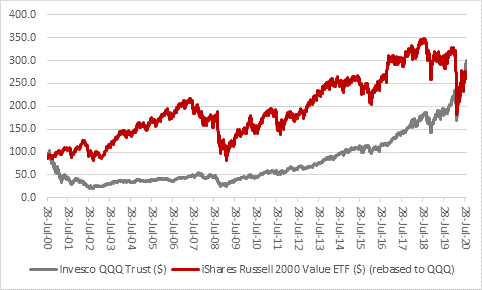
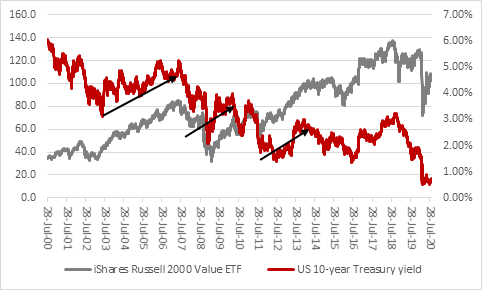
  • For the growth-focused Strategic Portfolios, some of the challenges faced by value managers in recent quarters continued to ease somewhat in May, with several periods of stronger returns potentially indicating a bigger rotation. Our core investment case for SEI’s overweight to this area remains the same: extreme relative valuations between the most expensive and cheapest parts of the market. SEI further believes that the post-crisis environment may provide further support for this positioning, given the huge stimulus being provided.

Market Overview

  • In the UK, the Chancellor of the Exchequer Rishi Sunak announced his intention to extend the government’s mortgage-payment holiday beyond June as its initial three-month timeframe approached. As of mid-May, UK banks had granted these repayment holiday terms to 1.7 million homeowners.
  • The Bank of England’s (BoE) Monetary Policy Committee held course following its 7 May meeting, keeping the Bank Rate at 0.1% and reiterating a commitment to purchase £200 billion in gilts and investment-grade corporate debt. The central bank’s May policy statement cited data that pointed to a significant drop in household consumption and plummeting expectations for sales and business investment during the second quarter.
  • Sharp contractions in manufacturing and services conditions appeared to slow across the UK, eurozone and US during May, but remained far from returning to growth. The UK economy shrank by 5.8% during March, representing the largest monthly decline in more than 20 years of UK gross domestic product (GDP) measurements2. Economic activity contracted by 2% over the first quarter of 2020. The UK claimant count (which measures the number of people claiming unemployment benefits) jumped to 5.8% in April from 3.5% in March. Retail sales in the UK fell in April by 18.1% from the prior month and by 22.6% from a year earlier.
  • In mid-May, the European Commission put forward a proposal for nearly €2 trillion across the EU, with €750 million devoted to recovery efforts and another €1.1 trillion to budgets over the next seven years. The European Central Bank (ECB) did not meet to address monetary policy in May. Germany’s constitutional court ruled during May that the ECB must produce justification for the legality of its bond-buying programme, in order to determine whether the Bundesbank could continue to participate.
  • The eurozone contracted by -3.8% during the first quarter and -3.2% over the one-year period. Construction output dropped -14.2% in March after slipping just -0.5% in February. Loans to nonfinancial corporations climbed by 6.6% in April, following an increase of 5.4% in March, continuing a corporate-credit bounce from February’s ebb.
  • Towards the end of May, the House of Representatives passed an additional $3 trillion in COVID-19 relief funds, but the legislation is held up in the Senate with unclear prospects for approval. Legislation passed the US Congress in early June that would extend the period during which companies can spend loan proceeds and remain eligible for loan forgiveness.
  • The increasingly tense US-China relationship was further stressed in May by a US push for more transparency in the ownership of US-listed Chinese companies and the US government’s barring of certain Chinese holdings from its retirement plans. China, for its part, imposed an 80% tariff on all barley imported from Australia over the next five years in an apparent response to the Australian government’s call for an independent inquiry into the origins of COVID-19.
  • The US Federal Open Market Committee held no meeting in May. As part of its crisis-period response, the Fed began buying corporate bond exchange-traded funds on 12 May to support secondarymarket liquidity. Fed Chair Jerome Powell announced near the end of May that the central bank’s Main Street Lending Program would be operational within days.
  • US consumer spending fell by 13.6% during April, registering the sharpest one-month decline since the data series began in 19593. New jobless claims for US unemployment benefits declined from more than 3 million per week in early May to about 2 million later in the month. Nearly 15 million US credit card bills went unpaid during April, and more than 8% of US mortgages were in forbearance as of mid-May. US GDP declined by an annualised 5% during the first quarter of 2020, the largest quarterly decline since the final three months of 2008.

Selected Asset Class Commentary

  • Global Fixed Income: During the month, the building block benefited from an overweight to peripheral Eurozone countries, overweights to Mexican and Colombian local rates, and off benchmark exposures to corporate credit and US Treasury inflation-protected securities (TIPS). Alliance Bernstein’s overweight to peripheral Europe contributed. Off-benchmark exposure to credit, mortgage credit risk transfers and US TIPS also helped. Wellington struggled on an underweight to the euro and overweight to the yen. A duration overweight in the US further detracted.
  • Global Managed Volatility Equities: The building block achieved meaningful risk reduction in May, but struggled on the back of pronounced style headwinds to low-volatility names and unfavourable overweights to consumer staples, utilities and health care. An underweight to mega-cap stocks was beneficial. Wells Fargo Asset Management fared better against style headwinds during the month, benefiting from greater diversity exposure and its momentum bias. LSV Asset Management’s value bias suffered most. Its exposure to cheaper low-volatility names was amplified by stock-specific disappointments in US biotechnology and insurance.
  • Global Equities: Overall market leadership remained unchanged in May; however a strong rotation in the middle of the month was also in evidence, was not quite enough to change the overall monthly results, but sufficient to challenge investors’ complacency in expensive growth stocks. With low volatility being the biggest laggard over the month, LSV’s results detracted the most at the Fund level. US value manager Poplar struggled with both style headwinds and sector positioning, as well as poor stock specifics in the technology sector. Towle, also a US value manager, was a significant contributor, benefiting from its bias towards smaller and higher risk stocks. Maj Invest, a global value manager, also outperformed due to similar positioning. Momentum managers, both Lazard and Intech, continued benefiting from the established trend favouring profitability and growth and contributed accordingly.

Manager Changes

  • Macquarie Investment Management (Macquarie) was removed from the Emerging Markets Equity building block in May. Macquarie’s strategy does not align with SEI’s alpha-source framework. Alpha refers to returns in excess of a given investment’s benchmark. Active investment managers seek to exploit various factors or sources of alpha in order to add value.

Outlook

  • The sudden and widespread stop in economic activity has never before been experienced on such a scale. The ultimate impact on GDP is truly anybody’s guess. The first quarter of 2020 saw an annualised decline of 5% in the US. The second quarter will likely be one for the record books; as of late May, Wall Street economists forecasted a quarter-to-quarter annualised decline exceeding 30%.
  • National governments have been quick to respond. All central banks are in crisis-fighting mode, having learned valuable lessons during the 2008-to-2009 great financial crisis, re-establishing unconventional bond-buying programmes and creating some new facilities to expand the types of accepted collateral in order to extend cash to companies in need of liquid assets.
  • The Fed and other leading central banks have moved with an alacrity and forcefulness that we find commendable. But central banks cannot single-handedly support this economic shutdown. In our view, fiscal policy—in the form of direct income support, tax deferrals, loan guarantees, and outright bailouts of industries badly damaged by the halt of economic activity—must be the prime tool used to address this crisis.
  • The fiscal response is occurring with a speed and decisiveness seldom seen in history. The US Congress passed a series of COVID-19 relief bills that easily topped 10% of GDP. Other developed countries have pursued a similar strategy of massive income support and liquidity injections. Italy, the European epicentre of the virus, will be particularly hard-pressed to do all that is necessary to stabilise its economy; its government debt-to-GDP ratio is already well above that of other major European countries.
  • In our view, a financial crisis can be averted in Europe if the ECB backs up the debt. This is now-or never time for the EU and eurozone. The stronger countries must come to the aid of the weaker, or else face an intensified popular backlash that could threaten the unity of the economic zone.
  • The onslaught of developments presented by the spread of COVID-19 has forced financial markets to recalibrate prices sharply as expectations about different industries and the overall economy shift quickly. Investors should gain some reassurance, however, from the fact that an earnings recession caused by virus-containment measures is generally only expected to last a couple quarters or so. If market prices are based on a long-term, multi-year expectation, then this fallout should represent a relatively small part of the market’s forward-looking focus.
  • Only time will tell whether markets have sufficiently discounted the pain that lies ahead. Investors should be cognisant of the fact that earnings estimates will likely come down hard over the next two quarters. These waterfall declines in earnings could still drag equities down with them. It all depends on how willing investors are to look beyond the valley. Markets should prove resilient if there is a common belief that fiscal and monetary responses to the crisis thus far will successfully prop up the global economy.
  • Right now, as always, we are focused on trying to deliver as diversified a portfolio as possible to all of our investors, regardless of their risk tolerances. We’re considering the known risks inherent to the capital markets as well as the uncertainty that comes with any long-term investing plan, such as the black swan we’ve encountered in 2020.
  • At SEI, we build and maintain long-term-oriented portfolios by being attuned to evolving relationships between asset classes. SEI views its strategies as robust and built to handle the kinds of challenges presented in today’s environment. At a portfolio level, we encourage investors to stay diversified and avoid short-term trading in these volatile markets.

SEI is a global provider of investment processing, investment management, and investment operations solutions. We believe the best way to keep up to date with the general market consensus in this rapidly changing market is to seek out and take on board the opinions of a diverse and expansive range of high-quality fund managers.

This has always been our approach to views on the market even pre-pandemic. Although the views across the board have generally recurring themes, it is important to see a wide range of views to hear consistent messages and see ‘the bigger picture’. 

Paul Green

11/06/2020

Team No Comments

Brewin Dolphin Update: Markets in a Minute 09/06/2020

Brewin Dolphin emailed a market update on Tuesday evening (09/06/2020) as below:

As a Discretionary Fund Manager Brewin Dolphin offer a range of Managed Portfolio Services in the UK.  We really believe the best way to get a handle on the fast-changing markets at this time, is by taking on a variety of commentary and consensus views from a good variety of different high-quality fund managers.

This has always been our approach even pre-Pandemic. Whilst the themes are all generally similar, its useful to get a wide range of views.

Andrew Lloyd

10/06/2020

Team No Comments

Is now the time to rethink your approach to dividends?

Please see the below market commentary from Brewin Dolphin from the 5th June 2020 regarding the potential role of dividends to investors:

The best laid dividend plans of companies and investors have been disrupted by the coronavirus. For many investors, this could make a significant difference in the short term. Guy Foster, our head of Research, asks whether now might be the right time to rethink the role of dividends in your portfolio.

On 30 April, Shell cut its dividend for the first time since the Second World War. The decision was seen as significant, given Shell’s then-position as the UK market’s largest dividend payer.

With this painful reminder that dividends tend to be an intention, rather than an obligation towards shareholders, some may ask themselves if this may be the time for investors who are seeking to generate an income from their investments to consider new tactics. Assessing the performance of a business on a total return basis – ie looking at any appreciation in the value of the shares, as well as the dividends – is quite a different approach, but may provide more flexibility for the future.

The role of dividends

Over recent months, shareholders around the world have been asking whether, in the face of an unprecedented period of financial stress, such dividend cuts are prescient or prejudicial – and whether companies are still working for their investors?

In the 1980s and 1990s paying a regular dividend was seen as imposing a form of discipline which prevented management from indulging in more wasteful uses of what ultimately is shareholders’ cash. Never was this in greater focus than during the temporary madness of the technology bubble, in which some companies made spectacularly badly judged investments while others, who concentrated on the steady production of a dividend, weathered the subsequent bear market far better.

Perhaps scarred by that experience, investors and companies resolved that returning cash to owners was a priority. In the UK, dividends were the means of doing this and investors have grown used to the regular payments.

However, there is a fine line between a dividend policy which imposes discipline on a company and one which becomes a straitjacket. It would be an exaggeration to see the focus on dividends as the reason for the UK’s relative dearth of fast-growing companies, but such a firm income focus does not come without its costs.

Alignment with shareholders’ long-term interests

Problems arise for businesses when they are not performing sufficiently well for their dividend payments to be for the long-term benefit of the business.

Shell were reported, earlier in the year, to be extending their credit facility in order to be able to meet their upcoming dividend payment. The question for the board would have been whether taking on additional debt to meet this payment was the right thing to do for the long-term benefit of the company. Clearly, they decided it was not and shareholders’ long-term interests were better served by retaining more capital in the business.

When pressure to maintain the dividend prevents companies from investing well, or reducing debt appropriately, then the long-term prognosis worsens for all stakeholders.

The need for financial and strategic flexibility, which a rigid dividend policy can inhibit, is heightened by the change and disruption that has become a common feature of product and service markets. A more pragmatic distribution policy, in contrast, can support that flexibility.

There have also been advances in corporate governance which mean that management are more accountable to shareholders and their compensation is increasingly aligned with factors that drive shareholders’ long-term returns. This reduces the need for a yoke-like dividend policy.

Assessing the quality of the management and their alignment with shareholders is an important part of understanding what kind of return investors can plan for.

Different attitudes to dividends

In my eyes, one of the very best private client investments is shares in Berkshire Hathaway. That is despite the company never having paid a dividend. For most of its history Berkshire has found opportunities to reinvest profits within its businesses, by buying new businesses, by buying company shares or by buying shares in Berkshire itself. Unusually, with such a strong history of excellent capital allocation, Berkshire’s management are afforded the opportunity to retain a lot of cash in the belief that they will make best use of it when opportunities present themselves. That was the case during the financial crisis and may well be the case again during this period of economic stress.

Pragmatic or well-structured policies on distribution can be indicative of a good company with a good business model, strategy and even culture. Sensible capital allocation is also observed among cyclical companies that recognise the risks and uncertainties associated with their industries. Such companies usually employ flexible dividend policies and operate with significant operational and financial buffers. Housebuilder Berkeley Group scores well on that front.

Mining companies have attempted to craft stable and growing dividends from commodity prices which are inherently volatile. They abandoned predictable dividends in favour of policies that pay out a stable percentage of potentially volatile profits. There is no question that this does increase the short-term volatility of income, but it reduces the risk of income appearing stable, only to collapse precipitously due to prevailing economic conditions.

Admiral has been one of the best dividend-paying companies in recent years. It incorporates a variable element to its pay-out. Admiral’s competitive advantage enables it to run the business with very little capital which means it can distribute almost all its profits. It does this through a growing regular dividend and frequent special dividends. The special dividends are, themselves, pretty regular, but its most recent special was delayed in April at the behest of the regulator. The attraction of Admiral to an investor wanting dividends (apart from the quality of the business) is that the interests of investors and the company are aligned. Admiral distributes profits it does not need to reinvest, and the investor provides capital upon which they need an income return.

These are all examples of great managers who inspire trust in their investors.

How best to respond?

With the shock that the global economy is undergoing currently, there will, at the very least, be a temporary pause or reduction in many dividends.

For those shareholders who have the luxury of choice, taking more of a total return approach rather than an income approach may well be in their long-term interests. It may also benefit the companies they invest in, and society at large.

For those reliant upon the returns from their portfolio to meet expenses there are some points worth discussing with your adviser. Neither the capital returns, nor the income returns, from equities are immune to volatility, as this recent period has re-emphasised. Selling stocks at low prices can have lasting implications for a portfolio. Hence, one of the greatest luxuries we can be afforded as an investor is the choice of when to raise money from a portfolio. That can be ensured by keeping a pool of cash to meet expenses should now be a judicious time to draw from the portfolio.

The research team and our investment managers are, as ever, working to establish which companies are managing their distributions sensibly and in the best long-term interests of shareholders.

Should we need to weather other financial shocks, it is likely that companies with the most pragmatic and well-considered approach to managing all aspects of their business will be the ones whose returns can deliver our long-term financial objectives.

These articles from Brewin Dolphin provide their view of the markets and potential investment strategies given the current market climate.

Dividends are an important consideration for both fund managers and investors. Different dividend strategies will need to be applied as markets adapt during and following this crisis

Paul Green

09/06/2020

Team No Comments

AJ Bell Update – Are we through the worst of the crisis?

Please see the below update received by AJ Bell yesterday afternoon (04/05/2020).

Are we through the worst of the crisis?

May’s industrial surveys show a recovery from April’s record lows.

While it’s too early to say the economic recovery is under way, it’s possible we have seen the worst readings in terms of industrial confidence in Europe and Asia.

This week analytics and information firm IHS Markit published its widely-followed industrial purchasing managers index (PMI) surveys for China, Japan, the UK and several European companies, as well as the composite index for the Eurozone.

Mostly Rising

The reading for China, which entered the coronavirus crisis first and after locking down its economy almost overnight has been able to re-start activity faster than most, showed the quickest rate of recovery in manufacturing for nine years.

After a record fall to 40 in February, the manufacturing PMI rose to 50.7 in May, signalling that the sector is once again expanding (a reading above 50 means expansion, below 50 means contraction).

The UK PMI survey registered a rebound from April’s record low of 32.6 to 40.7, still below the key 50 level and the seventh lowest level in the survey’s history, but as IHS Markit Director Ron Dobson observed, ‘the rate of contraction has eased considerably since April, meaning the worst of the production downturn may be behind us’.

Surveys in France and Germany showed a similar recovery, from 31.5 and 34.5 in April to 40.6 and 36.8 respectively, although in France demand continued to decline in May while in Germany employment levels fell further, impacting the overall reading.

Japan was the only major economy to see a continued decline, with May’s reading of 38.4 the lowest since the end of the global financial crisis in March 2009. Meanwhile the preliminary US reading for May was 39.8 against 36.1 in April, although with concerns resurfacing over a trade war with China the reading could struggle in coming months.

An Uphill Battle

As far as the UK goes, while there is scope for optimism we need to be realistic. Output, new orders and employment fall at some of the fastest rates in the survey’s 28 year history. New orders and export orders for consumer, intermediate and investment goods were particularly weak.

Some companies expect output to rise over the next 12 months, and some have seen new orders since clients started to reopen their businesses, but it is patchy. Also inflation is rising due to supply chain disruptions, although part of this was passed on.

Finally the threat of a ‘no deal’ Brexit can’t be dismissed. We may have seen the worst of the indicators for the time being, but it could be a very long, drawn-out recovery.

As you can see from this blog and our other recent posts, the signs are pointing to a recovery, but this recovery may take time, and we are not in the clear yet, the volatility will continue.

Keep your eye out here for our regular market commentary and updates.

Andrew Lloyd

05/06/2020

Team No Comments

Brewin Dolphin: Markets in a Minute ‘Climbing the wall of worry’ 02/06/2020

Please see the below weekly market commentary update from Brewin Dolphin received yesterday (2nd June 2020):

Markets

Share markets had a positive week with most assets rising despite increasing political tensions between the US and China over Beijing’s imposition of security laws in Hong Kong.

There were widespread demonstrations in the city and markets were cautious ahead of President Trump’s speech on Friday in which he would outline his response. However, there was a collective sigh of relief when his speech, which took place after the UK and European markets had closed, lacked any threat of direct action against China or any intention to pull out of Phase 1 of the trade deal.

As a result, US markets closed effectively flat on Friday and UK and global markets rallied on Monday, having lost ground ahead of his speech last Friday. But the best gains were seen in Asia.

• Hong Kong’s Hang Seng closed up by 3.36% yesterday.

• Overall, the MSCI Asia ex-Japan index jumped 2.27% on Monday alone.

• Indices in Europe, the US and UK all finished higher yesterday; the FTSE100 gained 1.5%.

Last week’s gains: *

• FTSE100: 1.4%

• Dow Jones: 3.75%

• S&P500: 3%

• Dax: 4.6%

• Nikkei: 3.7%

• Hang Seng: 1.5%

 • Shanghai Composite: 1.4%

*Data to close on Monday 1 June 2020

“The speed at which the economy is able to open over the next two months will be an important factor determining the trajectory of unemployment thereafter.”

PMIs signal slow improvement

Two surveys over the weekend suggested China’s recovery was continuing, with manufacturing activity expanding.

• China’s National Bureau of Statistics manufacturing PMI hit 50.6 in May, slightly down on April but above the key 50 level that indicates expansion.

• The private Caixin/Markit manufacturing PMI came in at 50.7 for May, above expectations of 49.6. • In the UK, the IHS Markit/CIPS Manufacturing PMI came in at 40.7, still firmly in contraction territory but sharply up from April’s reading of 32.6, suggesting the easing of the lockdown is stemming the decline in activity.

• Eurozone manufacturers appear to have passed their nadir, with the region’s manufacturing PMI rising to 39.4 in May from 33.4 in April.

PMI Data June 2020

Source: Datastream June 2020

Stimulus news

Chancellor Rishi Sunak confirmed on Friday that the furlough scheme will be gradually unwound. Starting from August, firms will have to pay employer national insurance and pension contributions for furloughed staff. In September, they will have to pay 10% of their wages, rising to 20% in October.

This comes despite plenty of lobbying for less burden on business. The Institute of Directors said only around half of firms can afford this. The speed at which the economy is able to open over the next two months will be an important factor determining the trajectory of unemployment thereafter. However, companies will be able to bring back staff on a part-time basis from 1 July, a month ahead of schedule, giving companies some flexibility in adapting to the new levels of demand.

Sunak also extended the Treasury’s self-employment income support scheme, so that those eligible would be able to claim another payment, albeit to a lower level of 70% of average monthly earnings. The first payments had been based on a ratio of 80%. Welcome news nonetheless.

Boost for Europe

The European Commission has proposed a €750bn package, dubbed “Next Generation EU”. The fund would consist of €500bn in grants to hard-hit member states which would not have to be repaid, with a further €250bn in loans. This follows a proposal from France and Germany of €500bn, which the EU’s so-called “Frugal Four” (Austria, Denmark, the Netherlands and Sweden) countered with a proposal of loans only. Since any proposal requires agreement from all 27 member states, we would not be surprised to see them meet somewhere in the middle.

Virus optimism

The general sense within the market seems to be that the worst of the virus is over and the re-opening of the economy will proceed. There are varying degrees of caution over the process which makes it hard to draw conclusions about how well it will go.

Asia is an example of how well the virus can be contained. As we expected, privacy concerns are causing resistance to the track and tracing amongst western populations, and the lack of an effective app means any track and trace programme will be limited in its effectiveness.

As the crisis appears to be ebbing and the UK government is loosening restrictions further, support for containment measures is starting to decline. Indeed, police have said that the lockdown is no longer enforceable, and scenes from parks around the country this past sunny weekend have shown crowds clearly breaching social distancing regulations.

So far, however, there have been very limited instances of cases starting to rise as a result of lifting lockdowns, although it is early days. Denmark remains on a downward trajectory despite lifting its lockdown early, as does Sweden despite much less strict suppression measures. The exceptions are largely in the US where, although the overall trend is lower, several states are seeing an upward trend including California. In Europe it is probably the more general persistence of cases in Italy, where lockdowns are being lifted, that is of greatest concern.

But convincing evidence of a second wave is lacking, which is good news, but there is no room for complacency. 

Vaccine progress

Stories regarding vaccines continue to support investor sentiment despite the challenges of producing these to a scale which would facilitate global herd immunity. However, a variant of these stories relating to GlaxoSmithkline was that the company plans to produce a billion doses of adjuvant. This can boost the effectiveness of a vaccine, reducing the quantity, improving the response and creating longer lasting immunity. With so many vaccines in early trials, we await news of concrete developments.

These weekly updates from Brewin Dolphin provide their view of the markets, the frequency of these reports is particularly useful given the present high levels of volatility.

We try to take on board a wide variety of fund managers’ and investment experts’ opinions such as Brewin Dolphin to give you an informed and overall view of the current climate we are in, the consensus view and any variation in views.

Paul Green

03/06/2020

Team No Comments

Brooks Macdonald Weekly Market Update: All eyes on the European Central Bank

Please see the below weekly market commentary update from Brooks Macdonald received yesterday (1st June 2020):

All eyes on the European Central Bank

  • Donald Trump’s press conference relieved markets by steering clear of a re-escalation of tariffs
  • The European Central Bank (ECB) will consider expanding their quantitative easing programme this week
  • However, this may reduce the perceived urgency of an EU recovery fund

Markets continued their strong run last week as economies reopen, stimulus is on the agenda and economic data picks up from its COVID-19 lows.

Donald Trump’s press conference relieved markets by steering clear of a re-escalation of tariff

On Friday, Donald Trump held a press conference to announce that Hong Kong would lose its special trading rights with the US. He added that Chinese and Hong Kong officials would be subject to sanctions in relation to their actions in eroding Hong Kong’s autonomy. Nonetheless, markets rallied. The view is very much that Donald Trump held back compared to what actions he could have taken with no re-escalation in tariffs or talk of withdrawing from the Phase One deal. Investors have taken this is a hopeful indication that the US President wishes to avoid the financial and economic ramifications of a step up in trade tensions.

The European Central Bank (ECB) will consider expanding their quantitative easing programme this week

The main event this week is likely to be the ECB meeting. Markets will be watching this closely to see whether there is talk of extending the pandemic quantitative easing (QE) programme, or any reference to the German Constitutional Court decision. Given the lack of agreement around an EU recovery fund, ECB officials will be pondering whether they need to step in to keep peripheral bond spreads under control. Italian spreads rallied when the Merkel/Macron plan was unveiled but given that agreement on the EU fiscal package seems unlikely to arrive imminently the central bank will be cautious of a retrenchment.

However, this may reduce the perceived urgency of an EU recovery fund

There has been a significant debate about the efficacy of QE in the post financial crisis world. Critics say that the depression of funding costs tends to raise asset prices more than it helps the real economy. While the markets would undoubtedly appreciate the pandemic programme being expanded in size and duration, the read across to a boost in economic growth is not clear. The EU recovery fund talks continue in the background, but if there is a perception that the ECB has already done ‘enough’ by expanding their purchase programme, talks could falter. Herein lies the risk to the broader economic stability of Europe, a fiscal response could fail to materialise and the ECB covers the cracks by suppressing bond yields. This will simply ensure the divide within Europe just grows below the surface and will pose an even greater risk during the next crisis.

Another useful commentary into the market activity last week. The markets have had a rally over the last week and into this week. We do expect the volatility to continue and further drops could be around the corner as global economies continue to recover and fight against Covid-19. These commentaries from a range of fund managers help add context to the daily market fluctuations.

Andrew Lloyd

02/06/2020

Team No Comments

AJ Bell – Investment Blog

Please see below an investment article from Russ Mould – Investment Director at AJ Bell. This was posted on Friday, 29th May 2020.

What to do as companies dash for cash

April gave equity markets a taste of corporates’ need for cash, as listed firms tapped shareholders for £3.3 billion in March – according to London Stock Exchange data – but Compass and Whitbread moving to raise £3 billion between them in the space of a few days in late May takes the figures to a different level, as firms continue to adjust to what the viral outbreak and lockdown mean for their business. The question now is whether the likely rash of fund raisings is a threat, an opportunity or something in between for the fund managers to whom advisers and clients have entrusted their own money and UK equity exposure.

The London market has been relatively quiet so far in 2020. London Stock Exchange data shows that new flotations had raised barely £500 million by the end of April, the slowest start to a year since 2009, while secondary deals by firms that were already listed had generated some £5.6 billion.

2020 has been very quiet for new listings in the UK

Source: London Stock Exchange

Famous five

“Compass and Whitbread’s fund raisings made them the fourth and fifth FTSE 100 firms respectively to raise fresh equity this year, after Auto Trader, Carnival and Informa, and the scale of their deals suggests that the pace is about to pick up markedly across the UK equity market as a whole.”

Compass and Whitbread’s fund raisings made them the fourth and fifth FTSE 100 firms respectively to raise fresh equity this year, after Auto Trader, Carnival and Informa, and the scale of their deals suggests that the pace is about to pick up markedly across the UK equity market as a whole.

The experiences of the London market after the 2000–03 and 2007–09 recessions and bear markets would suggest that new listing activity may stay quiet, as reduced risk appetite and lower equity valuations deter would-be buyers and would-be sellers alike. The historic data does, however, show much greater activity among firms that were already listed in the wake of the bear markets and recessions, as they focused upon balance sheet repair or raising capital so they could take advantage of investment or acquisitive opportunities that arose during the downturns and emerge all the stronger – financially and strategically.

Secondary listings proliferated during the last economic and market downturn

Source: London Stock Exchange. Shows full-year figures. *2020 to the end of April

“Outside the Big Five banks, FTSE 100 total net debt (excluding pension deficits and lease liabilities) has soared by three quarters since the Global Financial Crisis ended.”

It therefore seems logical to expect that Carnival, Informa, Auto Trader, Compass and Whitbread will be followed by others, especially if the world emerges from lockdown only slowly and the economic upturn proves gradual. Outside the Big Five banks, FTSE 100 total net debt (excluding pension deficits and lease liabilities) has soared by three quarters since the Global Financial Crisis ended.

FTSE 100 aggregate debt has soared since 2009

Source: Bloomberg. *Excludes the Big Five banks.

Dash for cash

Cutting dividend payments by some £24.8 billion for 2019 and 2020 – so far at least – is preserving some cash and cost cuts, and Government support schemes will also be helping, but many firms may be reluctant to take on fresh debt in their attempts to manage their way through the viral outbreak. Even allowing for record-low interest rates and central banks’ efforts to manipulate bond yields and compress credit spreads to make it cheaper for companies to borrow, many management teams may already feel they have enough borrowing on their balance sheet, especially given the uncertainty over future revenues, let alone profits and cash flow.

“The trend toward de-equitisation, as companies worship at the altar of the cash-light, ‘efficient’ balance sheet and buybacks outpace fund raisings, could therefore come to an end.”

The trend toward de-equitisation, as companies worship at the altar of the cash-light, ‘efficient’ balance sheet and buybacks outpace fund raisings, could therefore come to an end. Data from Bloomberg shows how the current crop of FTSE 100 firms has returned more cash to shareholders via buybacks than it has raised from them on eight occasions in the ten years since the end of the financial crises and cash-raising boom of 2009. Firms may therefore begin to favour cash buffers instead.

Buybacks have consistently outpaced fund raisings in the past decade

Source: Bloomberg, based on current crop of FTSE 100 constituents

UK equity fund managers can therefore expect more calls upon them, especially as Compass and Whitbread may well open the floodgates, just as more firms were emboldened to cut their dividends as growing numbers of boards offered the unkindest cut of all.

Selective approach

“Whether any switch from net buybacks to net issuance actually holds back share prices and headline indices is harder to divine but substantial equity issuance did not hold back the FTSE during the economic upturn and bull market of 2003–07 or the early stages of the recovery from the financial crisis.”

Whether any switch from net buybacks to net issuance actually holds back share prices and headline indices is harder to divine. In theory, buybacks have been a big source of support for share valuations over the past few years, especially as companies have frequently been gormlessly price-insensitive buyers.

However, substantial equity issuance did not hold back the FTSE during the economic upturn and bull market of 2003–07 or during the early stages of the recovery from the financial crisis. As central banks pump out Quantitative Easing and interest rates remain anchored near zero, cash is still looking for a home and investors are still seeking out the best risk-adjusted returns that they can find.

As a result, fund managers may view rights issues or placings as a good chance to average down and top-up holdings or build new positions in firms – providing they have some liquidity to hand themselves. Those firms that are blessed with a strong competitive position and management acumen, and which have simply been blindsided by an impossible-to-predict plunge in revenues thanks to the outbreak, may well merit support from money managers. Those trying to patch-fix prior strategic or financial errors may not. But, if nothing else, lower debt means less risk and less risk can mean higher equity valuations over time, all other things being equal.

Russ has a different view on markets given his former experience as Technology Correspondent and Editor of Shares Magazine.

Please continue referring to our blog content for the latest market updates.

Carl Mitchell – Dip PFS

IFA & Paraplanner

01/06/2020

Team No Comments

Prudential PruFund Funds Expected Growth Rate and Unit Price Adjustments Further Information

On 26/05/2020 Prudential announced Expected Growth Rate reductions on their smoothed funds and upward Unit Price Adjustments on some of their PruFund range smoothed funds.

Following these changes, I thought you would like more information and to keep it fairly straight forward I’ll focus on the key smoothed fund, PruFund Growth.

On PruFund Growth Prudential have announced an Expected Growth Rate reduction of 0.20% per annum down from 5.90% to 5.70% on pension, ISA and International Prudence Bond investments.

At the same time, while some of the other smoothed funds have benefited from an upwards Unit Price Adjustment (increase in fund value) PruFund Growth funds did not.

Why is this?

On the Expected Growth Rate (EGR)

  • The EGR is an estimate of the expected investment return over the long-term, at least 15 years
  • Prudential’s in-house stochastic asset model is used to generate a distribution of possible future investment returns (having regard to the current asset mix in each fund) over a 15 year period
  • It is preferable not to make frequent changes due to the long-term perspective

As a business we (P and B IFA) have flagged up for a while now that we expect lower investment returns for longer.  This is not a surprise as some of the key assets are producing far lower returns, cash interest rates and Government Bonds and other Fixed Interest assets.

To counter some of the lower returns Prudential have recently increased their equity content following a Strategic Asset Allocation review as noted in an earlier blog.

On the Unit Price Adjustment (UPA)

Why did the UPA not increase on PruFund Growth?  Timing was a key point.  The UPA down was applied to PruFund Growth on 17/03/2020.  For a few days after this UPA markets continued to fall.  Other ‘smoothed funds’ had their UPA a few days later, nearer the bottom for markets.

As a result, the PruFund Growth fund had further to grow back to hit the target to achieve an upwards UPA now.  The ‘smoothing’ limit for PruFund Growth is 5%, PruFund Cautious (with lower long-term returns) has a ‘smoothing’ limit of 4%.

PruFund Growth as a fund is now in a good position to either benefit from further increases in asset values or a good position should markets fall again.  Near the top of the ‘smoothing’ range without triggering a UPA.

Key Points

  • The smoothing process within PruFund is formulaic and non-discretionary
  • All versions of PruFund are operating as expected given investment market conditions
  • Where a particular version of PruFund has not yet had a positive UPA in 2020, the process should result in the fund being well positioned for any further recovery in markets

Summary

We have hit a bout of short-term volatility and although volatility has subsided a little now there is still plenty of risk in markets.  However, as long-term investors we just need to be patient and remain invested.  Markets will recover given time and so will your invested assets.

It’s also a good time to contribute to pensions and investments as asset prices are low now when compared to recent prices.  Both lump sums and regular monthly contributions will benefit you over the medium to long term.

I’ve been reviewing PruFund Growth since Prudential launched it as an investment fund in 2004.  It was interesting to see how this fund dealt with the Global Financial Crisis, stepped down in value and then stepped back up in value through a series of downwards and then upwards UPAs.  The fund worked and smoothed out a lot of volatility.

It has also delivered good average investment returns over the long term for it’s risk profile, 5/10 ‘Low Medium Risk’.

Steve Speed

28/05/2020

Useful links:

PruFund Blog 26/05/2020:     https://www.pandbifa.co.uk/prudential-prufund-growth-update/

Prudential Guide to Smoothing:                https://www.pruadviser.co.uk/pdf/PRUF1098101.pdf

Team No Comments

Brewin Dolphin – Markets in a Minute Update 26/05/2020

Please see this weeks ‘Markets in a Minute Update’ from Brewin Dolphin:

Markets

Global shares mostly rallied last week on hopes of a vaccine and continued lifting of lockdowns. In the UK, the FTSE100 nudged through the 6,000 mark for the first time in three weeks, before falling back on Friday as tensions between the US and China flared up once again.

Last week’s gains*
• FTSE100: 3.4%
• Dow Jones: 1.7%
• S&P500: 1.44%
• Dax: 3.65%
• Nikkei: 1.44%
• Hang Seng: -3.4%
• Shanghai Composite: -2%

Most markets in Asia closed up yesterday and were heading up today – even Hong Kong where the Hang Seng closed up by 1% on Monday. In early trade on Tuesday, most global markets were making solid gains due to optimism caused by more easing of lockdowns.

*Data to close on Friday May 22

US/China tensions

Last week China proposed the imposition of national security laws from Beijing in the special administrative region of Hong Kong, restricting freedoms of speech and the press. This move has increased worries about threats to democracy in Hong Kong that had formerly only really been subdued by the onset of social distancing. This has caused protests from the US and threats of retaliation, as well as public protests in Hong Kong by pro-democracy demonstrators. The Hang Seng, fell last week as a result. China will vote on the proposed legislation on May 28.

Trump has promised retaliation

President Trump said he would respond very strongly to what he sees as an assault on democracy in Hong Kong. He is most likely to consider tariffs, although he will be mindful of whether that is in his interests ahead of the US election in November. One conciliatory note from Premier Li Keqiang was a continued commitment to the phase one trade deal reached last year, but we are sceptical that China can really abide by its terms.

Even so, most Asian markets rose yesterday, with the best gains in Japan, as expectations increased that the nationwide state of emergency will soon be lifted.

Stimulus news

UK
The Bank of England has raised the prospect of negative interest rates for the first time. It has said the policy is under “active review”.

Bank of England MPC member Sylvana Tenreyro was probably the most outspoken of a number of MPC members, who coalesced around the position that negative interest rates could be considered in the UK. Tenreyro cited Europe’s experience with negative rates as demonstrating that they have a powerful effect on real activity, but nobody outside the MPC seems to agree. However, with Governor Andrew Bailey and Chief Economist Andy Haldane insisting that negative rates could be considered, we have to take them at their word, although market pricing reflects only a slim chance that negative rates could be introduced in 2021.

China
Premier Li Keqiang also suspended China’s growth target to facilitate a shift towards job creation as a priority. China’s GDP target had low credibility anyway, with the eventual GDP report assumed by all to be massaged to fit with the target rather than the other way around.

Europe
Stimulus news in Europe was more positive, albeit only tentatively. Progress on a €500bn aid package crept forwards as Germany reached an agreement with France that the aid could take the form of grants, funded by debt and secured on the EU budget. To finally ratify such an approach will need the consent of all members and it is expected to meet resistance from other northern European states.

Economic activity may have bottomed

Backwards looking data continues to paint a bleak picture. The UK claimant data last Monday showed the number of people claiming unemployment benefit jumped by 856,000 in April, to a total of 2.1m, according to the Office for National Statistics (ONS). This implies a jump to circa 6% unemployment when April’s official rate is released. Friday’s retail sales data indicate a decline of more than 18% in April compared to March, taking us back to activity levels last seen fifteen years ago (over which time the population has grown by about 10% or 6 million people).

However, more current “high frequency” data, such as energy consumption, road traffic etc, shows activity levels are improving. Therefore, we can take heart from the fact that we are at the nadir for economic activity and the path ahead is very likely one towards recovery from here.


Capital and income from it is at risk.
Neither simulated nor actual past performance are reliable indicators of future performance.
Performance is quoted before charges which will reduce illustrated performance.
Investment values may increase or decrease as a result of currency fluctuations.
The information contained in this document is believed to be reliable and accurate, but without further investigation cannot be warranted as to accuracy or completeness.

These updates from Brewin Dolphin provide a good weekly ‘snapshot’ look at the markets which is useful given the current volatility we are currently experiencing.

We try to capture a wide range of fund managers and investment experts opinions such as Brewin Dolphin to give you an overall consensus view of the current climate we are in.

Andrew Lloyd

27/05/2020