Team No Comments

Invesco – Investment Market Update

Please see below the latest market update which was published by Invesco today (06/07/2020):

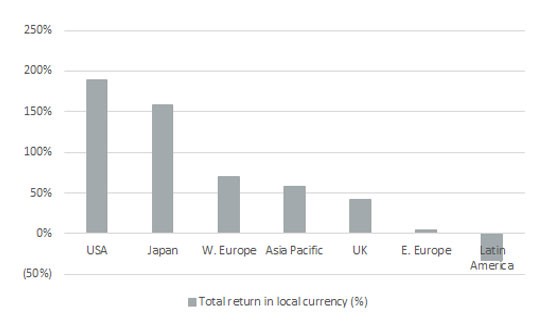
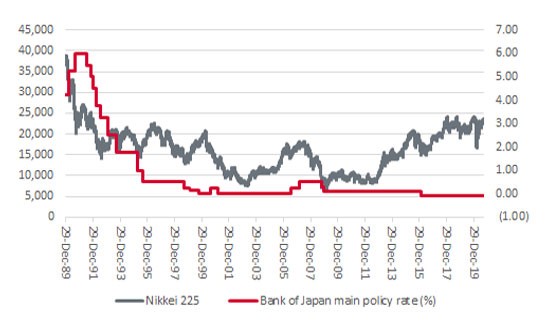
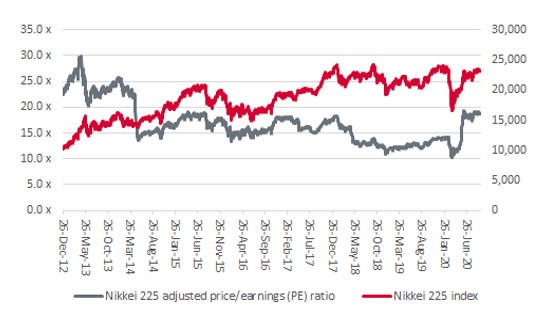
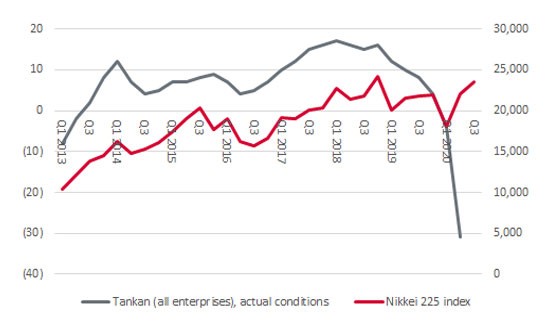
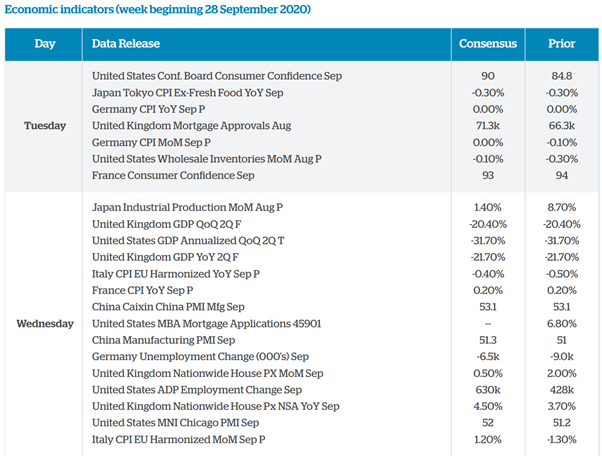
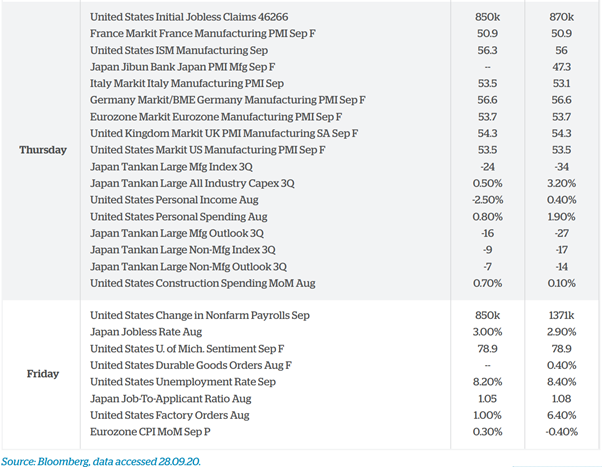
The two-way pull in financial markets between improving economic data and concerns over a re-escalation in new virus cases continued last week. Unlike the previous week it was the former which won out this time, on the back of the ISM Manufacturing and Non-Farm Payrolls comfortably beating expectations in the US and final PMIs elsewhere pointing to a robust recovery. This was despite daily new virus cases hitting their highest level since the start of the pandemic, with the US and Latin America at the forefront of this increase.

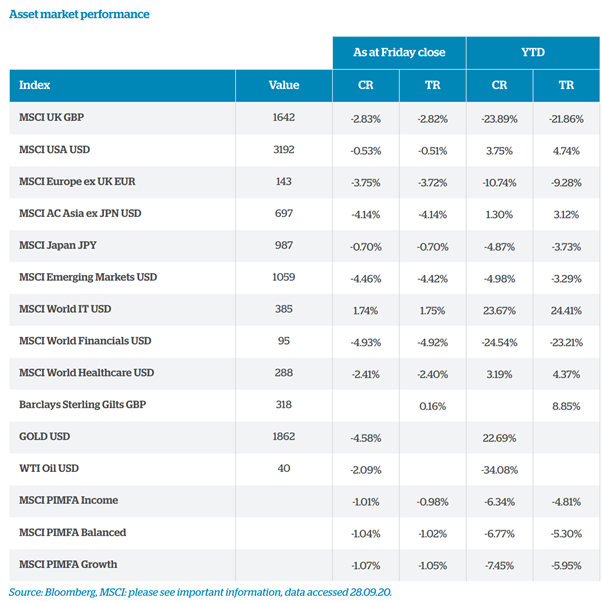
Risk assets rose across the board. Global equity markets had their strongest week since early June, with the US, the Communication Services and Consumer Discretionary sectors, and Growth and Momentum factors leading the way. Japan, the Consumer Staples and Energy sectors and the Value factor were the main laggards. Credit outperformed government bonds, commodities made further gains (Gold hit its highest level since October 2012) and the US$ weakened.

In the UK, FTSE All Share was marginally higher, held back by the FTSE 100, which was unchanged. Mid and small caps performed slightly better. Moves in fixed interest were limited too, with HY ahead of IG and both outperforming Gilts. £ gained against the US$.

Please continue to check our Blog content for the latest investment, markets and economic updates from leading investment houses.

Please keep safe and healthy.

Carl Mitchell – Dip PFS

IFA and Paraplanner

06/07/2020

Team No Comments

What is ESG? – An Introduction – Part 1

What is ESG? – An Introduction – Part 1

ESG. You may have seen this term in the financial press or in our blogs. We recently posted the following blog, which was an update from Jupiter on Sustainable Investment Themes. https://www.pandbifa.co.uk/jupiter-the-acceleration-of-sustainable-investment-themes/

In our closing comments of this blog we said that we were currently developing our own ESG processes and would post more content on this shortly, so here goes.

What does ESG stand for?

ESG stands for Environmental, Social and Governance

But what is it?

Investopedia definition for ESG is;

‘Environmental, social and governance (ESG) criteria are a set of standards for a company’s operations that socially conscious investors use to screen potential investments.’

ESG is more of a theme or a set of principles to follow rather than a single set principle.

Over the last few years, ESG has started being used more to describe how well a business is managed than to explain how sustainable its product or service is.

More recently, the mainstream press has been using ‘ESG’ as a catch-all term for investing with a ‘responsible’ or ‘ethical’ screen.

There are no official industry or regulatory standards for comparing these different approaches. However, with ESG now so important, some key definitions for certain factors have been accepted across the industry.

Breaking it down

(E)nvironmental

Investing with consideration for the environment. This includes working to reduce pollution and climate change, and to source sustainable raw materials using clean energy sources. The focus is on how a firm approaches environmental concerns, the ecological impact of its products and its carbon footprint.

(S)ocial

Investing with consideration for human rights, equality, diversity and data security. The focus is on how companies are incorporating these. It’s also about looking to see if each is actively investing/working towards a healthier and higher quality of life for staff and stakeholders.

(G)overnance

Investing with consideration for positive employment practices, business ethics and diversity. The focus is on how a company builds its management structure and works with all its different stakeholders. How does it approach investor and employee relations? Does the board work with transparency, honesty and integrity? Does this filter down to the rest of the company?

Summary

Renewed efforts to combat global warming, cutting emissions and reducing our carbon footprints has been highlighted by the Covid-19 Pandemic and this has further raised the profile of ESG.

‘Doing the right thing’, ‘socially responsible’ and ‘ethical investing’ has now hit the mainstream press and become one of our regulators, the FCA’s, focuses.

As a firm, we are committed to ensure that we review the ESG policies of all the companies we work with and recommend.

We started looking at ESG over a year ago and discuss this regularly in our weekly team meetings. We decided that we would make this one of our key projects this year to ensure we stay ahead of the game because we believe this is the right approach and we believe that the regulator will issue guidance for firms over the next few years to ensure ESG is incorporated within their propositions.

We can already say that we are starting to incorporate this within our firms service proposition and are committed to driving this forward even further.

This blog is aimed as a gentle introduction to ESG. A lot of the ESG processes within this industry are built upon the 10 ‘UN Global Compact Principles’.

Check back for Part 2 of this blog next week, in which we will look at these 10 principles and the screening process investment firms use to assess whether an investment is compatible with these principles or not.

Andrew Lloyd

06/07/2020

Data Source: Investopedia and Blackfinch Asset Management’s ESG Policy July 2020

Team No Comments

Who’s in charge of the Treasury, Rishi or Tina?

Article written by Michael Collins – Director of Government Affairs – Prudential – Received 03/07/2020

Who’s in charge of the Treasury, Rishi or Tina?

Margaret Thatcher had an acronym that she employed during her premiership: TINA – There Is No Alternative. For Thatcher this was used to face down opposition (including within her own Cabinet) for a programme of labour market reform, financial market deregulation, and privatisation. Even if he didn’t use the phrase explicitly TINA must have been in Rishi Sunak’s mind as he unleashed a set of public spending commitments in late March that has not been seen outside of wartime.

The scale of the public health threat and the economic hibernation the Government imposed to deal with it meant that there probably was ‘no alternative’ to the furlough scheme, to CBILS, or to unlimited Bank of England liquidity.  That governments across the G20 largely ended up doing something broadly similar adds to the feeling that such measures were inevitable.

Forced by Government edict to shut down almost overnight businesses demanded support to tide them over; unable to go to work because of the public health requirement to ‘stay home’ households expected their incomes protected.  But while the Treasury and HMRC performed a Herculean task in getting this set of assistance schemes up and running so quickly, they wereactually politically straightforward.  It’s only now that the political heavy-lifting begins.

Because, contrary to the Iron Lady’s maxim, there now is an alternative. In fact there are now many alternatives open to the Government as it ponders the right balance of tax, spending and debt for an economy that is moving, tentatively, out of this enforced hibernation.  

Sunak has some big decisions to make, whether in the Summer Economic Update he will provide on 8 July or later in the year.

Public finances

Perhaps the biggest relate to the public finances: what level of public debt is he comfortable running with? And over what timescale does he want to get there?

The Prime Minister promised in his ‘Build, Build, Build’ speech – consistent with his December 2019 election pledge to voters in the Red Wall seats – that there will be “no return to austerity”, but that bird has already flown the nest anyway. Three months of lockdown and the support measures that were put in place have deprived the Exchequer of significant revenue and massively increased spending, putting the country on track for debt-to-GDP ratio north of 100%[1].  And as the economy worsens these twin pressures will increase, as a recession brings lower tax receipts (less corporation tax or VAT, for example) and higher spending (a bigger welfare bill as more people become unemployed), what are often referred to as the ‘automatic stabilisers’.

While it would be hard to describe  a situation in which spending has increased by 50% (as happened in April)[2] and the deficit is potentially hitting 15%[3] as ‘austerity’ it’s what Sunak does next that will settle in the mind of most voters whether the Government has genuinely left this theme (which has almost become a term of abuse in British politics) behind.

There was criticism of George Osborne that he applied the brakes to public spending too rapidly and too indiscriminately from mid-2010, hampering the recovery from the global financial crisis by taking demand out of the economy and hitting programmes that most benefited the poorest.

In the short-term TINA is going to stay in charge as the Government will continue to borrow heavily out of simple necessity

[1] https://obr.uk/docs/May-2020-PSF-Commentary.pdf

[2] https://obr.uk/docs/May-2020-PSF-Commentary.pdf

[3] https://www.ey.com/en_uk/news/2020/05/uk-public-finances-in-deficit-by-record-62-billion-in-april

Higher borrowing

But there’s also a good chance that Sunak will consciously choose a policy path that means higher borrowing, seeing it as a lesser evil than an extended recession that brings with it permanent damage.

The combination of, inter alia, ultra-low interest rates (which makes debt servicing comparatively cheap) and the big increases in public debt across the major developed economies (which means the UK doesn’t look like an outlier) provide the Chancellor with this room to choose.

It provides him with the chance to use his tax and spend powers in a way that focuses on boosting short term growth. With millions of jobs now at risk Sunak is likely to make the calculation (which is both political and economic in nature) that a few more percentage points on the debt-to-GDP ratio will now make little difference to the bond markets (‘in for a penny, in for a hundred billion pounds’, you might say) but could, if he selects the right measures at the right time, make a big difference to the scale and duration of the recession (and thus to the Government’s popularity).

The ideas for possible measures are now pouring in from think-tanks and lobby groups and include such perennial suggestions as a temporary VAT cut and a big boost in infrastructure spending.  But even these seemingly self-evident solutions involve tricky choices, not least around timing.

Do you offer an across-the-board cut in VAT rates? Or target it on certain goods and services?  If so, which ones? What’s the right time to do it? Do it too early, when consumers are still wary about their physical and economic health, and it fails to have an impact.  Do it too late and too many retailers or restaurants have already gone bust.

Increased spending on infrastructure is always a popular idea to boost demand and to get people back to work, but here too there are politically difficult decisions to make.  Those infrastructure projects that might be of most strategic importance to the nation aren’t necessarily the ones that are popular in politically important marginal constituencies (HS2 or Heathrow expansion) or that are ‘shovel ready’ and will actually get people back to work quickly. (A favourite example of this is Crossrail – first proposed by the Government when Margaret Thatcher was Prime Minister!).

The risk in crisis times is that marginal projects that have been gathering dust in the files of central government department or local authorities (for good reason) suddenly emerge with a flourish, seeing this as their moment to get financed. Ministers have some difficult choices to make in the coming months between (quite possibly sub-optimal) projects.

Longer term

But at some point the Chancellor’s attention will inevitably have to come back to the longer term state of the public finances, not least because his party – in the country and in Parliament – still contains plenty of deficit ‘hawks’ who will feel instinctively uncomfortable about a seemingly unrelenting rise in debt.

This is where TINA’s influence seems weakest, given that the Government has the freedom to play about with any and every aspect of its tax system and each and every pound of public spending.

In practice though I suspect that even here Sunak will rapidly feel the constraints on his freedom of action.  The Conservative election manifesto, for example, promised not to raise the rate of income tax, VAT, or National Insurance and to keep the ‘triple lock’ on state pensions; the ‘levelling up’ agenda needs to be seen to be delivered through big investment in the Midlands and the North; and it seems inconceivable that there won’t have to be significant additional investment in public health, the NHS and social care as the lessons of coronavirus become apparent.

And around the time that some of these choices have to be made the UK will leave behind the transition arrangements with the EU on a yet-to-be-defined basis, which may generate its own essential tax and spend policies (would you, for example, want to be raising corporation tax just at the point you’re looking to promote the message that ‘Global Britain in open for business’?)

Summary

At this point it’s impossible to predict the tax and spend decisions that the Chancellor will make. Much will depend still on the trajectory of the coronavirus itself and whether there needs to be a second lockdown (either nationally or city-by-city), on how quickly consumers demonstrate that they are comfortable with returning to pre-pandemic spending and consumption patterns, and on the nature of the UK-EU relationship that is in place from 1 January 2021.  All of these are, at this point, ‘known unknowns’ but will be critical context for the decisions the Chancellor has to make over the coming months (and possibly as early as the next couple of months).

And he does have decisions to make. While some issues (perhaps many issues if you were Margaret Thatcher) are in the hands of TINA, most often it’s another political maxim that ends up on Ministers’ minds: ‘to govern is to choose’. And it’s not easy. 

Politically these are challenging times which have obviously been affected by the ongoing Coronavirus Pandemic. It will be interesting to see how the rest of the year pans out.

Please continue to check for our regular blog posts and updates.

Charlotte Ennis

03/07/2020

Team No Comments

Brewin Dolphin – Markets in a Minute

Please see below the latest market update article from Brewin Dolphin, which was published yesterday (30/06/2020):

As you can see from the above, the virus remains present and its impacts are still being felt globally, with high levels of volatility continuing in markets. These levels of high volatility are likely to continue.

It remains important that you remain invested and focus on your long-term goals until markets recover to more normal levels of volatility.

Please continue to check our Blog content for the latest investment, markets and economic updates from leading investment houses.

Please keep safe and healthy.

Carl Mitchell – Dip PFS

IFA and Paraplanner

01/07/2020

Team No Comments

Royal London: Economic and Market View Update

Please see below for Royal London’s latest market update received 29/06/2020. They provide an update on the impact of recent market events:

RLAM Economic Viewpoint

Survey data, high frequency data and now increasingly the hard data too, continue to show that developed economies are in the ‘recovery phase’ of this crisis. Albeit this is the somewhat mechanical bit as economies are allowed to open up and you get a bit of pent-up demand set loose as well. Some of the recent data points have shown much stronger than expected improvements. This, however, doesn’t tell us much about the next stage of the recovery that economists generally expect to be much slower. Social distancing, scarring (including permanent job losses, business closures and balance sheet damage) and residual fear of the virus (including as it relates to job security) will all influence the strength of that recovery and government policy still has a crucial role to play in all of them.

June business surveys improve substantially: Data in the past week or two has included several June business surveys and these have mostly seen solid improvements, with some notable upside surprises in European business surveys and US regional business surveys. However, the headline composite PMI business survey indicators for the US, eurozone, Japan and the UK remain below 50. Taken at face value, remaining below 50.0 would normally signal that these economies are still shrinking. However, mapping PMIs accurately to economic activity levels is somewhat hazardous after such a big shock to GDP (the survey asks whether things are better/worse, rather than by how much). Nevertheless, if you look at the commentary in the PMI surveys – social distancing has eased, helping many firms reopen and firms are more optimistic, but many companies also report weak demand as customers remain cautious. That is – so far – consistent with economies taking time (likely, several quarters) to get back to ‘normal’ levels of activity after a sharp initial recovery phase.

US data continue to suggest a strong start to the early stage recovery, but virus data more worrying: May retail sales, durable goods orders and some housing data have bounced significantly more than expected. However, US COVID-19 numbers have, in the meantime, become more worrying. The increase in virus cases in some states is likely to worry consumers, including the prospects of social distancing being reversed and the impact on job security. Meanwhile, Congress and the White House have still not agreed a package of economic support measures to replace those set to roll off this summer. US government policy interventions have so far done a good job in shielding household balance sheets (and therefore spending power) from the crisis. Reduced/disrupted fiscal support and the progression of the virus both have the potential to curb US recovery momentum.

Here in the UK, data also signal a solid start to the recovery phase but also a weak underlying labour market and an economy still in need of policy support: May retail sales were also an upside surprise, rising 12% in May. They are still 13.1% below February levels, but that’s a solid start to the recovery phase, especially since it was only mid-June that saw ‘non-essential’ retail stores reopen. Just as in the US, however, the UK’s early stage recovery has needed – and still needs – plenty of policy support. Government borrowing was also somewhat higher than expected in May and the levels of government debt as a percent of GDP, on the headline measure, moved above 100% for the first time since 1963. PAYE data meanwhile show the number of paid employees fell by 449K March to April. Early May estimates indicate another drop of 163K. Job vacancies in May fell to a record low. The furlough scheme is set to start unwinding from August, but this is a labour market that is far from out of the woods yet. That was recognised by the Bank of England who extended their asset purchase programme, though reduced the pace. They have become more concerned about long-term damage from the crisis. How the labour market evolves from here will be a key driver of their decisions going forward including, potentially, a decision around negative rates.

Market view from Piers Hillier, CIO, RLAM

The upwards trend in global equity markets was met with some resistance this week, resulting in sideways equity trading and moderate credit spread widening. Investors were perturbed by a sharp increase in Covid-19 cases in the US as the country reported a record number of new cases on Thursday. While the coronavirus appears to be under control in most developed countries at this stage, global new case numbers are at record highs; driven by the US, Brazil and India. In an effort to mitigate the damage of a second wave, US regulators gave in to a long-sought demand for a relaxation of the Volcker Rule as they allowed banks to invest in hedge funds and private equity funds.

Markets have also been rocked by increased global trading tensions. There have been signs of further difficulties in the trade negotiations between the US and China. Meanwhile the US threatened to impose tariffs on $3.1bn of European products, prompting an angry response from the European Commission.

On a more positive note, numerous key economic data releases have been far stronger than anticipated recently. There have been strong improvements in US and UK retail sales and in the European and US business surveys. While activity surveys are still consistent with contractions in many economies, possibly reflecting the elevated corporate debt and unemployment levels, they show that businesses are markedly more upbeat as they emerge from the worst of the lockdowns.

Reflecting a perception that the UK economy is somewhat stronger than expected, the Bank of England surprised investors at its latest meeting. While it announced an additional £100bn of bond buying, as had been expected, it slowed the pace of its purchases. The Bank said it would spend the £100bn by the end of the year, rather than by the end of August as the market had hoped. Of course, the very fact that spending was increased reveals the fragile state that the Bank considers the economy to be in, with serious concerns over the unemployment outlook.

The focus for many in the UK has been on further opening of businesses – both non-essential retail in mid June, and with the prospects of pubs, restaurants and others opening from early July. As investors we are pleased to see this – we are under no illusions that we as a society will return to prior habits in terms of spending; many of us will feel differently about being on a train, plane or in a restaurant for some time. And with other countries seeing flare-ups in the virus, it is clear that this road will have a number of bumps in it. However, it does appear that we are now through the first phase of this crisis, and returning to a more normal cycle of data and market reaction.

Royal London is the UK’s largest mutual life, pensions and investment company. This in-depth market outlook by a market leading financial services organisation adds valuable insight to our consensus view of the markets. It is evident that in recent times these views have been dominated by the Coronavirus Pandemic, but we have also now been offered insight into the socio-political tensions that have recently risen, particularly in the US, and how they in turn are effecting the economy. This is an example of how frequently reviewing these updates gives us a better view of the ‘bigger picture’.

The opinions of market leaders are key to keeping our understanding of the markets up to date. A wide variety of these views from different sources help us paint a more accurate picture on the events of the world and how they are influencing market behaviours.

Paul Green

30/06/2020

Team No Comments

Legal and General: US Update

Please see the below update from Legal and General posted yesterday (29/06/2020) regarding the current situation in the US.

Their Asset Allocation team discuss their thoughts on the presidential election, the market’s likely reaction to what could happen, and the ongoing spread of Covid-19 in some states.

The electoral collage

Momentum is clearly with Joe Biden at the moment. Donald Trump’s handling of the pandemic and protests after the death of George Floyd have eroded his approval rating and have led to him losing ground in poll after poll.

Biden has always held a lead in national polls, but that advantage in poll averages has jumped from 4% in May to 10% now. Arguably even more worrying from Trump’s perspective are polls in swing states also shifting significantly towards Biden, and losses of support among both older voters and even his most reliable base of ‘white, no college’ voters.

Nevertheless, don’t count Trump out (again)! Our baseline remains that it will be a tight race to the end. The heat Trump is taking from the dual crises could calm down and the economy may well look stronger by November. Trump’s strategy again seems to be all about turning out his base. If he can get all of the 35-40% of voters that back him no matter what to turn out to vote, then it will take much more excitement about Biden from the rest of the electorate than is evident so far for him to beat Trump.

It should go without saying that it’s still early in the race and a lot can and will happen. To mention only a few wild cards: What will the economy look like in late October? What if there is a second wave of the virus in the autumn? What if a significant number of people get sick after Trump rallies? What if states need lockdowns on election day? What if targeted lockdowns inadvertently favour Democrats or Republicans? What if COVID-19 influences turnout differently among age cohorts? What if Trump or Biden themselves become ill?

Blue wave versus Trump 2.0

We would not expect a big equity market reaction to any type of divided government. If Trump wins, it would be roughly the status quo; under Biden, it would likely prevent many of the most market-moving policies in either direction.

Yet a Biden victory of any flavour could still bring a few market-related policy changes. America’s China policy would largely remain unchanged in substance, but could become less volatile in style. A multilateral approach to China should make an all-out trade war with the EU less likely. Tech regulation should continue to tighten gradually but, unless personnel choices say otherwise, this has not been a policy area Biden about which has shown particular passion. Generally, expect the policy direction to be more social, more green and more redistributive.

On the other hand, a ‘Blue Wave’ in which Democrats control Washington would be the most market-moving outcome, in our view; this has become the single most likely outcome in betting markets. In short, from a market perspective, this would imply higher corporate taxes and more fiscal spending. Even if these two ultimately balance each other out, the market’s gut reaction seems likely to be negative.

And what would Trump 2.0 look like? The desire to be re-elected has arguably been a moderating force on Trump’s policy choices around issues like the trade war. But in a second term this factor disappears. So what does Trump want to achieve with a second term? Money? Power? Policy? Legacy? Dynasty? We don’t have a clear answer for this question yet. Either way, it is unlikely that Trump 2.0 will be calmer than Trump 1.0.

The only two things we are certain of are that the campaign will get very ugly, and that if Trump loses he will not go quietly into that good night.

Houston, we have a problem

The virus continues to spread at an alarming pace in southern states, with the one-week change approaching Italian peak levels in California, Texas and Florida – a risk James highlighted over a month ago. We don’t think this is due to greater testing (which would dilute the share of positive test results). State governors are becoming concerned, with some Texan cities suspending elective (non-urgent) surgeries to free up hospital capacity.

By and large, the re-opening of the local economy is being ‘paused’ rather than ‘reversed’. But new research from the University of Chicago argues that lockdowns only account for 7% of the loss of economic activity. Instead, it is fear that prevents people going out. The study calculated this by examining economic activity in border towns located between different regulatory regimes.

Apple mobility data also suggest Texans are already cutting back on activity, and there appears to be an inflection point with activity levelling off in the median US state.

From a market perspective, there has been a tug-of-war between economic data continuing to paint a V-shaped recovery picture and deteriorating virus newsflow. We would argue that equities are pricing something at the optimistic end of our Scenario 1, implying there will be little market tolerance of signs the virus is significantly slowing down the economic recovery. But at the same time, the starting point for sentiment is already slightly bearish, so it would not take much of a correction to turn our sentiment signals much greener.

As you can see from this update (and from the news!), the situation in the US looks problematic, with no resolution in sight. The run up to a presidential election is always volatile and this one is likely to no different (if not worse due to the Covid-19 situation).

It will be an interesting few months for the US in the run up to November.

Keep an eye out for further updates here on the US and the impact of their Covid-19 and election struggles, and of course general market updates and other content which we continue to post regularly.

Andrew Lloyd

30/06/2020

Team No Comments

The FCA’s focus for the remainder of 2020

Our regulator is working on the advice market and helping to manage risk in this area.  We recently completed a return for the FCA that focused on how we are dealing with the pandemic and our business and financial resilience.

I am pleased to say this did not pose a problem for us and we are comfortable with our current position with the focus on keeping ‘business as usual’ for our existing clients while keeping our staff safe.

We have extracted the precis of the FCA’s current views from a third-party compliance business’ blog in an email received on Friday 26/06/2020:

In their latest 2020/21 business plan the FCA outlines 5 key areas of concern and risk:

  • there is a good level of operational resilience 
  • understand firms’ financial resilience so that firms can fail in an orderly manner
  • markets can function enabling price formation and orderly trading activity
  • customers are treated fairly
  • customers are aware of the risk of, and protected from, scams

In her speech earlier this month, The FCAs Executive Director of Supervision, Megan Butler outlined the regulators response to COVID19 and expectations for the rest of 2020.

The speech Highlights:

  • In operational terms, advisers and wealth managers responded well to the onset of the coronavirus (Covid-19) crisis.
  • Whilst acting with speed has been the absolute priority, as the industry adapts to the long-term impact of coronavirus, there is a need to transition from the immediate ‘incident response’ towards focusing on longer-term impacts. In her speech to PIMFA’s members, Megan Butler explores the FCA’s priorities and longer-term expectations for the wealth management and advice industry.
  • Key areas of focus for the FCA include operational resilience in light of coronavirus, financial resilience (and within that the preservation of client assets and money) and acting with integrity.
  • On the latter, the FCA has identified some firms which have tried to avoid their liabilities to customers by closing down companies and setting up new ones. These practices are unacceptable, and the FCA will continue to take action against firms conducting such activities.

To ensure that firm’s stay on track with risk management, operational and financial resilience and customer focus, the FCA will be focusing on key outcomes:

  •  Client money and custody assets: They see an increase in clients running to cash, so firms are being encouraged to return finances that will not be invested in the short term and/or if firms are facing wind-down.

P and B IFA response:  At inception of our business we decided not to hold client money to minimise risk to our clients.  This is not an issue for us.

  •  Suitability and advice and discretionary investment decisions are (as always) front and centre of treating customers fairly and in their best interests, but will be scrutinised in particular around firms’ response to the pandemic

P and B IFA response:  Our key focus during the pandemic has been servicing our existing clients.  Our Due Diligence process on investments has been enhanced with additional criteria.  One area of interest is the ESG approach of Fund Managers.  ESG stands for Environmental, Social and (Corporate) Governance.

  •  Acting with integrity when it comes to charging appropriate fees is paramount

P and B IFA response:  The standard ongoing advice fee for UK IFAs is c 0.79% per annum according to our third party compliance consultants, with many IFAs targeting 1% per annum.  We remain competitive against our peers with our ongoing advice fee at 0.50% per annum.

  •  Firms need to continually showcase they have adequate systems and controls to manage Financial crime and market abuse

P and B IFA response:  We remain committed to fighting financial crime.  At our weekly Team Meetings and monthly Board Meetings we discuss risks, scams and blocking financial crime.  We have systems and controls in place to protect our clients and our business.

  •  There is a keen focus on pension transfer activity, with their detailed guidance on advisers providing triage, abridged and defined benefit pension advice.

P and B IFA response:  Due to regulatory and compliance input and escalating Professional Indemnity Insurance costs we have withdrawn from Defined Benefit Pension Transfer Advice.

Finally, there is a focus on the future of regulation, with a move to an outcomes based focus with new regulatory principles covering:

  •  Adaptive shift from ‘regulation and forget’ to iterative and responsive approach
  •  Results and performance driven regulation rather than defining a way, thus providing freedom to choose strategies
  •  Risk weighted approach, shifting to data-driven from one size fits all risk evaluation
  •  Finally, a collaborative strategy which aligns regulators nationally and internationally

It is good to see that our regulator, the FCA, is keeping an eye on advice businesses in the UK during this time of heightened risk.  We have taken appropriate actions to ensure quality ongoing advice is provided to our existing clients at this time and to lower our business costs for the time being.

We understand clients need to be kept up to date and constantly upload new blogs to keep you informed and email clients when appropriate during this pandemic crisis.

Our resilience and business continuity plans have been tested and we have adapted quickly to providing advice on a Covid-19 risk free basis (from a distance).  We will continue to monitor and try to improve our resilience and business continuity plans.

We are not sure how long this will last; it could be a while yet.  Personally, I am really looking forward to normal ‘business as usual’ when I can see my clients again!

Take care of yourselves.

Steve Speed

29/06/2020

Team No Comments

Jupiter: The acceleration of sustainable investment themes

Please see the below article posted by Jupiter earlier this week from their Global Sustainable Equities Fund Manager, Abbie Llewellyn-Waters:

‘Several sustainable themes have continued to accelerate as a result of the Covid-19 crisis, said Abbie Llewellyn-Waters, Fund Manager, Global Sustainable Equities.

Firstly, momentum for environmental policy has gathered pace, despite the fragile state of the global economy. Policymakers have been quick to draw the link between the coronavirus and the environment – like viruses, greenhouse gases care little for borders. The debate around carbon policy, and specifically carbon tax, has notably accelerated. Abbie remarked on the recent write-downs and substantial price disparities within the oil sector as a further pressure point for tightening carbon policy.

There has also been important research quantifying pollution reduction, one of the few positives from this crisis, said Abbie. As a result of the global measures to combat Covid-19, the IEA expects global CO2 emissions this year to decrease to levels of 10 years ago. This is significant and could support the case for a more agile economic culture that includes more working from home. It is effectively an ‘investment-free’ solution to help deliver the legal commitments of the Paris Agreement.

There also continues to be strong momentum in human capital management within the sustainable companies that Abbie and the team focus on, with an increasing correlation between low staff turnover and high recurring revenue models.

Finally, another interesting new theme is the increasing attention on sustainable supply chain management. For years, efficiency has been the overriding aim in supply chains – “just enough, just in time”. Covid-19 has shifted the focus to security. While this has implications for working capital, it also offers new revenue opportunities. For example, infectious diseases have previously been mischaracterised as an issue mainly for developing markets. But a company Abbie recently spoke with highlighted that R&D investment into non-Covid infectious diseases in developed markets has already increased, which has the potential to create entirely new revenue streams not previously captured by analysts. All in all, Abbie expects the journey ahead to be much more complex than the markets rally suggests.’

Socially responsible investing has now gone mainstream and is a key focus for investors with a ‘put your money where your values are’ approach becoming more and more common.

ESG (Environmental, social and governance), which is a ‘set of standards for a company’s operations that socially conscious investors use to screen potential investments’ is now under the spotlight in this industry.

Keep your eye out for more blog content on this over the next few months as we at People and Business, develop our own ESG processes and scrutinise these criteria within the companies we use for our clients.

Andrew Lloyd

26/06/2020

Team No Comments

PruFund Series E ‘Smoothed’ Funds Update – 25/06/2020

Hot off the press, I’ve just come off a webinar update from Prudential notifying us of the following positive Unit Price Adjustments (UPAs):

Series E only

PruFund Growth                            + 2.58%

PruFund Risk Managed 4             + 3.00%

PruFund Risk Managed 5             + 2.56%

The underlying unsmoothed assets were tested against the smoothed prices, the corridors, at 10.56 this morning.

You might ask why we have different UPAs for the different versions of PruFund?  For the following reasons:

  • Different asset mix
  • The starting position
  • Different smoothing limits

The last point, different smoothing limits, doesn’t apply to the three funds we use noted above.  The monthly smoothing limits in use for the funds we use is 5%.

Please see this link for details on how ‘smoothing’ works:

https://www.pruadviser.co.uk/pdf/PRUF1098101.pdf

We could see further UPAs down as well as up, the outlook is for ongoing volatility.  We have a lot of risk in the market globally at the moment.

Steve Speed

25/06/2020

Team No Comments

Brewin Dolphin Update: Markets in a Minute 23/06/2020

Brewin Dolphin’s weekly market update, emailed on 23/06/2020 as below:

Global shares rebounded last week but have still not made up for the losses incurred in the previous week’s sell off. Equity indices in the US rose yesterday and Asian markets were flat or slightly up, while in the UK and Europe, share markets closed down. However, markets got a boost today after President Trump said that the Phase 1 trade agreement with China was still “intact”. As a result, Asian markets closed higher on Tuesday, while equities in the UK and Europe were heading up in early trading.

Last week’s gains*

  • FTSE100: 3%
  • Dow Jones: 1%
  • S&P500: 1.85%
  • Dax: 3.2%
  • Nikkei: 0.77%
  • Hang Seng: 1.4%
  • Shanghai Composite: 1.6%

*Data to close on Friday 19 June

Virus treatment breakthrough

The positive news on the virus front was that Dexamethasone, a cheap, widely available corticosteroid significantly reduces death rates in severely sick Covid-19 patients. Sadly, this doesn’t slow transmission and is therefore unlikely to materially affect the willingness of policymakers to allow a full resumption of economic activity.

Cases rising globally

And there wasn’t much more good news on the virus front.  The big picture globally has not changed; the trend in new cases remains up, driven by increasing numbers in emerging countries such as Brazil, India, Pakistan, Mexico, Saudi Arabia, Bangladesh, Indonesia and South Africa.

Perhaps the most worrying growth is in the southern states of America where hospitalisations are beginning to put real pressure on ICU capacity in Alabama and Arizona.

A new outbreak in Beijing has hopefully been rapidly suppressed, albeit at the cost of intensified lockdown efforts in one of China’s most important cities.

The trouble with easing lockdowns…

In Europe case numbers have stopped falling and, as efforts have switched towards reopening the economies, there has been a clear failure to decisively suppress the virus.

This is particularly marked in the UK where we are less than two weeks away from the Fourth of July, when bars and restaurants could be allowed to reopen. Boris Johnson is due to make an announcement on the reopening of parts of the hospitality sector this week.

UK case numbers have stopped falling which must make it difficult to proceed with lifting lockdown at anything other than a very cautious pace.

Wall Street not so far from Main Street

Whilst there is a lot of scepticism about how the recent rally in markets is disconnected from the real economy, our research shows that, in the US at least, the retail sector has proven to be freakishly well-aligned with the stock market after rebounding strongly in May. Where it is disconnected is further upstream, with industrial production barely staging any recovery at all.

US Retail sales vs S&P 500
Source: Refinitiv Datastream June 2020

Chinese stimulus

After holding off from their traditional recipe of credit and infrastructure growth, the Chinese authorities have found themselves resorting to that playbook again. Excavator sales have picked up as fixed asset investment by state owned enterprises has begun outperforming private sector investment, just as it did during 2016. Money supply growth has been picking up and the authorities are particularly keen to see funds deployed to Chinese small and medium sized enterprises which account for 80% of Chinese employment.

UK asset purchases to slow down

It is far from clear how the Bank of England would react to supply shock-induced inflation, but for now the policymakers remain in reasonably dovish mood.  The Bank kept interest rates unchanged last week but increased its asset purchase target by £100bn. However, it is spreading that out over the remainder of the year, rather than the next three months, marking a marginally more hawkish announcement than had been expected.

That saw a rise in gilt yields as it means net issuance (i.e. bonds not bought by the Bank of England) is likely to be higher over the coming three months, although we don’t yet know how evenly the Bank will spread out its purchases. We think there may be modest upside for yields, notwithstanding the Bank’s generally dovish mindset. Recent movements in commodity prices, the rally in oil and a slight pickup in economic activity would all be consistent with rising gilt yields.

Pull out quote suggestion “UK case numbers have stopped falling which must make it difficult to proceed with lifting lockdown at anything other than a very cautious pace.”

Capital and income from it is at risk.

Neither simulated nor actual past performance are reliable indicators of future performance.

Performance is quoted before charges which will reduce illustrated performance.

Investment values may increase or decrease as a result of currency fluctuations.

The information contained in this document is believed to be reliable and accurate, but without further investigation cannot be warranted as to accuracy or completeness.

A good input from Brewin Dolphin with regards to the global shares rebounding last week. The weekly market updates from Brewin Dolphin are useful given the current volatility we are experiencing.

Keep checking back for regular up to date blog posts.

Charlotte Ennis

24/06/2020