Team No Comments

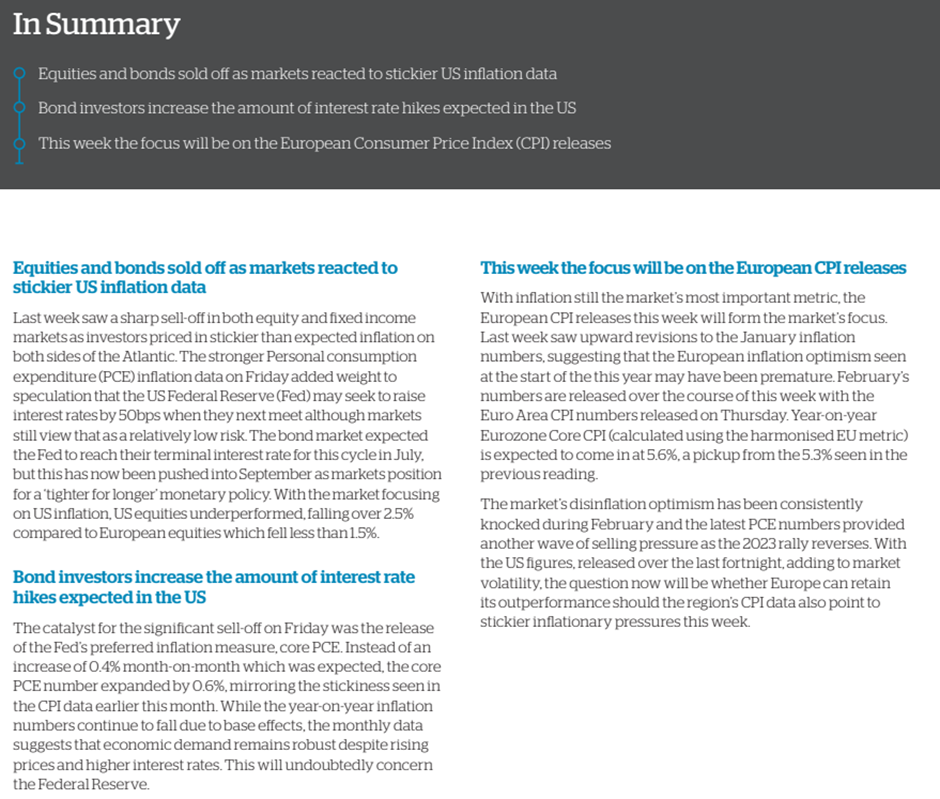
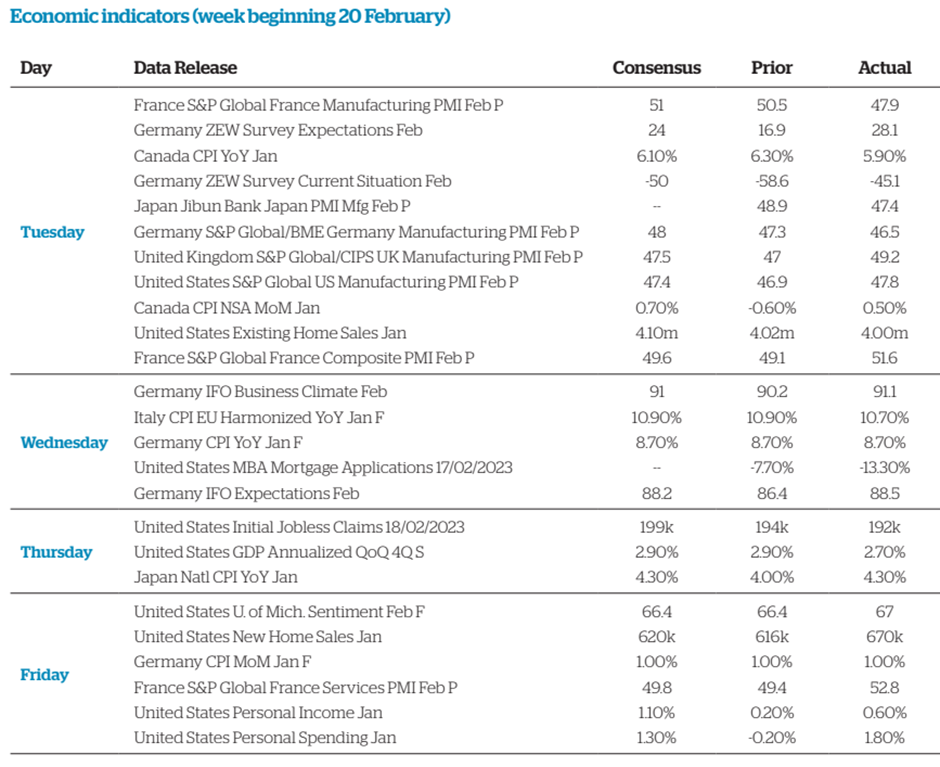
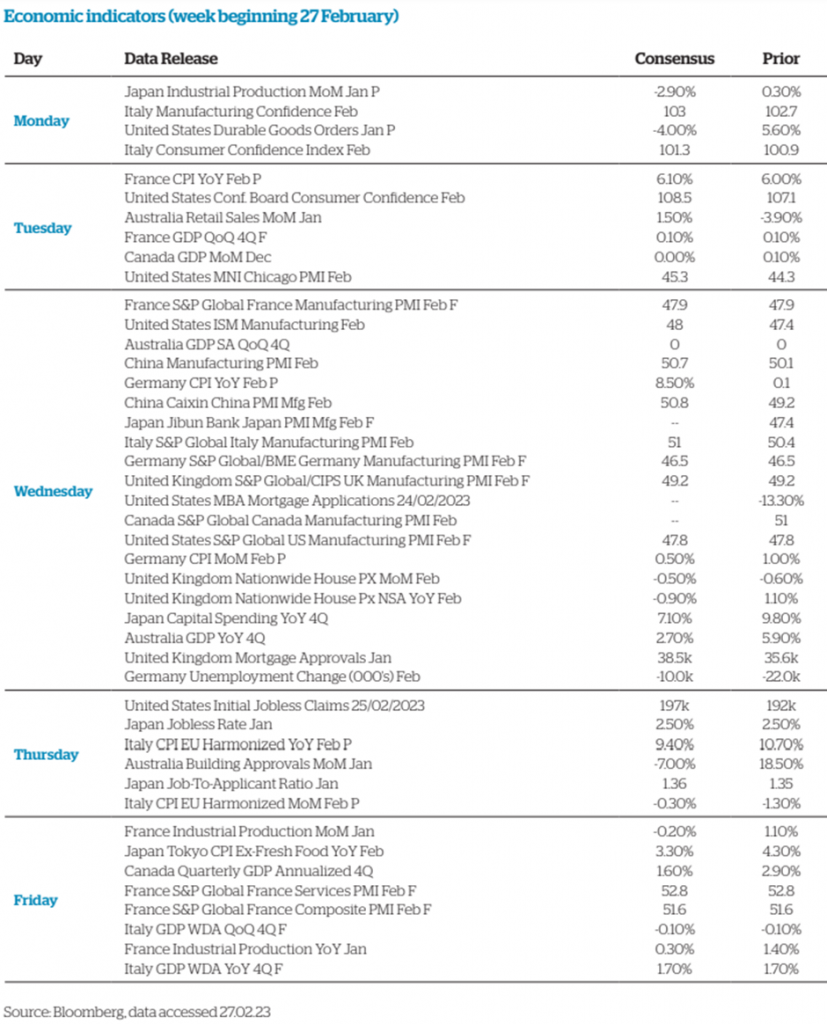
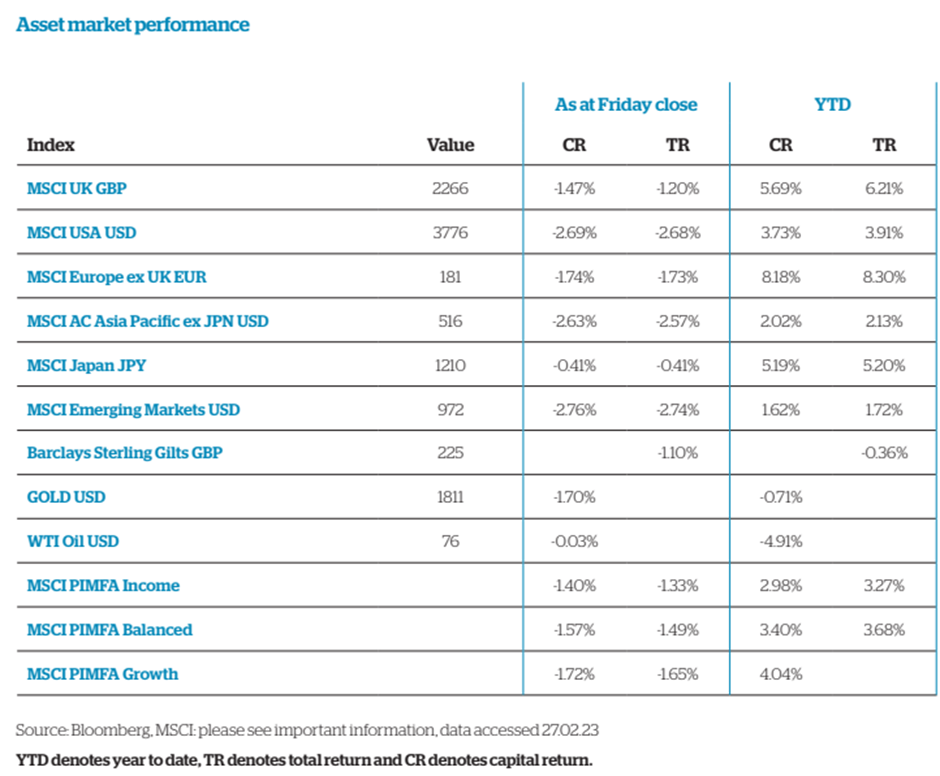
Brooks Macdonald – Weekly Market Commentary

Please see below the latest Weekly Market Commentary from Brooks Macdonald, which was published and received yesterday afternoon (03/10/2022):

Please continue to check our Blog content for advice and planning issues and the latest investment, markets and economic updates from leading investment houses.

Carl Mitchell – Dip PFS

Independent Financial Adviser

04/10/2022

Team No Comments

Overview: UK gains global attention – for all the wrong reasons

Please see below ‘Monday Digest’ article received from Tatton this morning, which provides a market update and details the repercussions of Kwasi Kwarteng’s initial plan to scrap the 45% higher rate income tax.  

Last week provided evidence for the fragility of capital markets, which have been grappling with the strain of transitioning from an ultra-low interest rate environment back to the one we knew before the global financial crisis of 2008. A policy mistake from a new government trying to fend off a looming recession rattled international capital markets to such an extent that it prompted a melt-down in the fundamentals of the UK’s capital market, which was only alleviated after the Bank of England (BoE) intervened in its capacity as lender of last resort.
 
The BoE’s swift and decisive action saved the UK government from presiding over more extensive damage in the short-term, but a fair amount of damage to the reliability of British political institutions, not to mention the damage to international trust levels, has been done. This means that the cost of capital for the UK, its businesses and consumers, is very likely to be higher than it would otherwise have been, which in turn will further reduce consumers’ ability to spend on non-essential goods and services.

Where things go from here is deeply uncertain. The International Monetary Fund’s rebuke – as well as worrying comments expressed by central bankers in the US – demonstrated the depth of the global concern. Given the UK these days relies on international investors rather than domestic savers to buy up newly issued government debt (gilts), and that the sterling gilt market cannot at all rely on being as big and systematically unavoidable as the US government bond market, any politician changing the perception of risk-free lending to the UK government does so at their own peril – as this very young government subsequently learned very quickly.

Our perspective on the bond market rout


Bond traders are still reeling from events over the last week. While UK-based investors will clearly be worried about the weakness in sterling and gilts, globally diversified portfolios – like the ones we manage on behalf of our clients – have a relatively low exposure to UK assets, and are therefore less sensitive to Britain’s specific issues. For markets more generally, the real danger lies in financial collapse and contagion, although given the BoE’s emergency intervention in longer-dated bond markets last week, that scenario now looks unlikely. Even so, it is an unwelcome additional complication, particularly given the already-fragile state of global bond markets.

After more than a decade of easy money, the world’s major capital markets are feeling the squeeze of rising yields caused by surprisingly strong and persistent US growth. As a result, bond values have fallen and risk assets like equities look relatively less attractive. Meanwhile, the tighter financial conditions and higher input costs from the energy price shock are casting a shadow over the near-term outlook for corporate profitability. In the US, where the post-pandemic economic recovery is going better than elsewhere, these pressures are much less pronounced. American companies do not appear burdened with unmanageable debts, nor have they been particularly affected by weak global demand, as the energy price crisis has affected the US much less. Despite some negative signals, US businesses are still motoring along, and employment remains strong. This tight labour market means the US Federal Reserve (Fed) has had to push real rates high enough to squeeze inflationary growth. But that has meant higher real returns on US debt, which has substantially pushed up the value of the dollar. This has led to currency weakness elsewhere, increasing inflation and putting pressure on other central banks to follow suit. To add to that, non-US growth has clearly deteriorated substantially – the UK being a prime example.

In this environment, it is hard to see dollar strength ending or reversing any time soon. But if the world’s reserve currency does stabilise, other supply-side inflation pressures would lessen. We have already seen signs that oil and other commodities (outside of European natural gas) have lost steam. Many emerging markets – having tightened earlier and harder than developed market counterparts – are already looking toward easing financial conditions. Asian countries, despite not going through that same tightening cycle, face nothing like the inflation pressures elsewhere, and yields are stable or falling. That said, current real yields are attractive and, if they are seen as stable at these levels, there will be plenty of willing buyers. When looking at lower yields and worse growth outlooks elsewhere – like in the UK – it is easy to see why. Those in shorter maturity bonds might soon be tempted into longer maturity assets. Yields still have the potential to rise – but the peak may be in sight.

For investors who have seen more painful losses from the government bond proportion of their diversified portfolios than the equity part, and wonder whether bond values have entered a long-term secular downtrend, it is important to recognise that fixed interest bonds have very different underlying characteristics than equities. Most importantly, western governments do not tend to default as companies sometimes do. The excessive volatility seen over the past 12 months is not a reflection of weakening governments’ solvency, but rather this asset class’s ability to protect and grow investors’ purchasing power in differing inflationary environments. When yields stop rising as growth and inflation pressure recede – and we indeed get close to the peak – the 2022 pains for bond holders should wane. But it is hard to see bond prices turning around until US earnings are on a clear downward trend, which would signal to the Fed that it can finally start to loosen its grip. 

Please check in again with us shortly for further relevant content and news.

Chloe Speed

03/10/2022

Team No Comments

Brewin Dolphin – Markets in a Minute

Please find below, a market update received from Brewin Dolphin, yesterday evening – 28/09/2022

Stocks slide as central banks hike rates

Stock markets suffered another bout of steep losses last week as a series of interest rate hikes intensified fears of a global recession.

The UK’s FTSE 100 lost 3.0% as the Bank of England (BoE) lifted interest rates by 0.5 percentage points and chancellor Kwasi Kwarteng’s raft of tax cuts raised concerns of more aggressive rate hikes in the near future. The pan-European STOXX 600 slid 4.4% following interest rate increases by central banks in Sweden, Switzerland and Norway.

US indices recorded a second week of losses after the Federal Reserve indicated that short-term interest rates are likely to continue increasing sharply over the next few months. The S&P 500 fell 4.7%, the Dow lost 4.0% and the Nasdaq tumbled 5.1%.

Fears of a slowdown in global economic growth weighed on stock markets in Asia, with the Nikkei and Shanghai Composite losing 1.5% and 1.2%, respectively.

Last week’s market performance*

• FTSE 1001 : -3.01%

• S&P 500: -4.65%

• Dow: -4.00%

• Nasdaq: -5.07%

• Dax: -3.59%

• Hang Seng: -4.42%

• Shanghai Composite: -1.22%

• Nikkei1 : -1.50%

*Data from close on Friday 16 September to close of business on Friday 23 September. 1 Closed on Monday 19 September.

Pound hits record low against the dollar

The pound hit a record low of $1.033 early on Monday (26 September) as investors reacted to Kwarteng’s ‘growth plan’ for the UK economy. The so-called mini-budget included a much bigger package of tax cuts than had been expected and raised concerns about a surge in government borrowing.

Several lenders pulled mortgage deals from the market amid speculation the BoE will be forced to hike interest rates at a more aggressive pace. The Bank’s governor Andrew Bailey ruled out an emergency rate hike this week, but said it would “not hesitate to change interest rates by as much as needed”. The Treasury announced that a fiscal plan would be published on 23 November, setting out details of the government’s fiscal rules “including ensuring that debt falls as a share of [gross domestic product] in the medium term”.

In the US, the Dow slid into bear market territory on Monday, down more than 20% from its recent peak, and continued to decline on Tuesday as fears of a recession grew. The FTSE 100 slipped 0.5% on Tuesday, with housebuilders hit especially hard by interest rate concerns. The blue-chip index was 1.4% lower at the start of trading on Wednesday after the International Monetary Fund criticised the UK’s tax-cutting plans. The BoE has now said it will start a temporary programme of bond purchases from 28 September to stabilise the market.

UK interest rate reaches 2.25%

The mini-budget came the day after the Bank of England lifted interest rates by 0.5 percentage points for the second month running. The base rate now stands at 2.25%, its highest level since 2008.

Bank of England base interest rate

Source: Refinitiv Datastream

The BoE’s monetary policy committee (MPC) noted that while annual inflation fell slightly from 10.1% in July to 9.9% in August, it is still expected to near 11% when energy bills rise in October and remain above 10% over the following few months.

“The labour market is tight and domestic cost and price pressures remain elevated. While the [energy price] guarantee reduces inflation in the near term, it also means that household spending is likely to be less weak than projected in the August report over the first two years of the forecast period. All else equal, and relative to that forecast, this would add to inflationary pressures in the medium term,” the committee said.

The MPC forecast a 0.1% decline in UK gross domestic product (GDP) in the third quarter, as opposed to its previous forecast of 0.4% growth. GDP already declined by 0.1% in the second quarter and another drop in Q3 would mean the UK is in a technical recession.

Fed announces another 0.75% rate hike

Over in the US, the Federal Reserve announced its third[1]consecutive 0.75 percentage point interest rate hike in its quest to tame inflation. The federal funds rate is now in the 3.0-3.25% range, the highest since early 2008.

Fed chairman Jerome Powell said the central bank was “strongly resolved” to bring inflation down to 2% and “will keep at it until the job is done”. In comments reported by CNBC, Powell admitted that interest rate hikes could spark a recession. “No-one knows whether this process will lead to a recession or, if so, how significant that recession will be,” he said.

Fed officials expect US GDP growth to slow to 0.2% for 2022, down sharply from June’s expectation for 1.7% growth.

Eurozone economic downturn deepens

The eurozone’s economic downturn deepened in September, according to S&P Global’s flash purchasing managers’ index (PMI). The composite output index fell from 48.9 in August to 48.2 in September and has now registered below the neutral 50.0 level for three successive months.

Manufacturing led the downturn, with factory output falling for a fourth straight month. Service sector output also fell, down for a second consecutive month. The service sector decline was the sharpest since 2013 excluding the falls seen as a result of pandemic containment measures.

Chris Williamson, chief business economist at S&P Global Market Intelligence, warned that a eurozone recession was on the cards. “The early PMI readings indicate an economic contraction of 0.1% in the third quarter, with the rate of decline having accelerated through the three months to September to signal the worst economic performance since 2013, excluding pandemic lockdown months,” he said.

Please continue to check our Blog content for advice and planning issues and the latest investment, markets and economic updates from leading investment houses.

David Purcell

29th September 2022

Team No Comments

Brooks Macdonald Daily Investment Bulletin

Please see below article received from Brooks Macdonald this morning, which provides a market update and refers to economic developments in the UK, the US and Europe.

What has happened

Equity markets failed to buck the trend of recent days, closing lower yesterday. A small loss in the US index disguises huge intraday volatility where positive US economic data was seen as emboldening the Federal Reserve in raising rates faster and further. The US index closed at its lowest level since November 2020, a sharp reversal after the optimism seen over the summer.

UK

The UK Gilt market remained a hotspot for the global bond selloff with the UK 10-year yield at 4.5% for the first time since the global financial crisis. The ongoing UK bond market rout caught the attention of the IMF yesterday, that cautioned the UK to reconsider its fiscal position and said that it would be closely monitoring the UK bond market for signs of stress. A public declaration that the IMF was actively engaging with UK authorities did little to boost confidence causing sterling to fall again versus the US dollar after a short period of stabilisation. All eyes are now looking at the Bank of England to find out when, and by how much, the Bank will raise rates. The Bank’s Chief Economist said yesterday that the fiscal event will require ‘a significant monetary response’ whilst also suggesting that the November meeting would be used for such a move, effectively suggesting an intra-meeting hike was not the preferred route. Given the recent volatility there is a degree to which the Bank of England will need to respond to events so markets are yet to fully rule out such a possibility.

European energy

Adding to the risk off feeling yesterday, multiple countries suggested that the recent leaks from the Nord Stream pipelines may be due to sabotage. Given the difficulty in defending such long pipelines, markets quickly extrapolated the impact of this occurring to other pipelines causing natural gas futures to surge. Furthermore, suggestions that Moscow could sanction Ukraine’s Naftogaz creates further questions over European energy supply.

What does Brooks Macdonald think

Given the range of bad news that markets could focus on, it seems counterintuitive that some strong US economic news could lead to a downturn in US equity indices. At the moment markets are constantly reassessing the need and ability for central banks to raise rates. Europe and the US both need to raise rates but the US is fairly unique in seeming to have significant relative capacity to raise rates given the more buoyant economy. Better US data suggests an economy that can absorb additional tightening, leading to higher rate expectations and further US dollar strength.

Index 1 Day1 Week1 MonthYTD
 TRTRTRTR
MSCI AC World GBP -0.1%0.4%-1.7%-4.7%
MSCI UK GBP -0.6%-2.8%-5.8%-0.2%
MSCI USA GBP -0.1%0.8%-1.1%-3.4%
MSCI EMU GBP -0.8%-1.8%-2.7%-16.8%
MSCI AC Asia ex Japan GBP 0.3%0.6%-2.1%-6.2%
MSCI Japan GBP 0.2%1.6%-1.8%-5.3%
MSCI Emerging Markets GBP 0.4%0.5%-2.3%-6.0%
Bloomberg Sterling Gilts GBP -3.2%-10.9%-16.9%-31.6%
Bloomberg Sterling Corps GBP -2.4%-8.5%-12.7%-26.2%
WTI Oil GBP 2.4%-0.9%-7.1%32.3%
Dollar per Sterling 0.4%-5.7%-8.6%-20.7%
Euro per Sterling 0.6%-2.0%-5.1%-5.9%
MSCI PIMFA Income -0.9%-3.6%-6.4%-11.6%
MSCI PIMFA Balanced -0.8%-3.3%-6.1%-10.6%
MSCI PIMFA Growth -0.4%-1.9%-4.3%-7.3%
Index 1 Day1 Week1 MonthYTD
 TRTRTRTR
MSCI AC World USD -0.1%-5.8%-10.7%-24.8%
MSCI UK USD -0.6%-8.9%-14.4%-21.3%
MSCI USA USD -0.2%-5.5%-10.1%-23.8%
MSCI EMU USD -0.8%-7.9%-11.6%-34.4%
MSCI AC Asia ex Japan USD 0.2%-5.7%-11.1%-26.0%
MSCI Japan USD 0.2%-4.7%-10.8%-25.3%
MSCI Emerging Markets USD 0.4%-5.7%-11.2%-25.9%
Bloomberg Sterling Gilts USD -3.3%-15.9%-24.1%-45.6%
Bloomberg Sterling Corps USD -2.5%-13.6%-20.2%-41.3%
WTI Oil USD 2.3%-7.0%-15.6%4.4%
Dollar per Sterling 0.4%-5.7%-8.6%-20.7%
Euro per Sterling 0.6%-2.0%-5.1%-5.9%
MSCI PIMFA Income USD -1.0%-9.6%-15.0%-30.3%
MSCI PIMFA Balanced USD -0.9%-9.3%-14.7%-29.5%
MSCI PIMFA Growth USD -0.5%-8.0%-13.1%-26.9%

Bloomberg as at 28/09/2022. TR denotes Net Total Return

Please check in again with us soon for further relevant content and market news.

Chloe

28/09/2022

Team No Comments

Brooks Macdonald – Weekly Market Commentary

Please see below, this weeks Weekly Market Commentary from Brooks MacDonald received late yesterday afternoon (26/09/2022).

This weeks commentary looks at the increase in interest rates around the world in recent weeks, the fiscal event in the UK last week and at the reaction from sterling and the gilts markets.

Global interest rates rise last week as a second week of major central bank meetings conclude

Last week was dominated by monetary and fiscal developments as we saw 500bps of rate rises from global central banks and the unveiling of the UK mini-budget. Against this backdrop bond yields rose and equity markets suffered, bringing major equity indices back to around their 2022 lows.

UK Chancellor unveils the largest tax cutting budget since the 1970s

The UK’s fiscal event was revealed as the single largest tax cutting budget since 19701. The Chancellor has pursued an aggressive tax cutting agenda, particularly impacting higher earners, in order to pursue economic growth. Global financial markets were less keen however, reflecting that such a cut would increase the budget deficit of the UK and raise borrowing costs. There is very much a short term versus long term narrative here. In the long run, cutting taxes may boost growth and help drive internationally mobile talent towards the UK. In the short term though, the higher budget deficit will need to be financed by international investors who have not been won over by what is seen as a fiscal handout at a time of heightened inflation. With markets already highly volatile due to inflation fears, the higher certainty of short term factors have won out, leading to higher gilt yields and weaker sterling.

Friday’s fiscal announcement, and comments from the Chancellor over the weekend that more cuts are on their way, creates a credibility problem for the Bank of England. Last week the Bank opted for a smaller 50bp move instead of a 75bp2 move after balancing inflation and economic growth risks. The heavy downward pressure on sterling since Friday risks further import price inflation which will worsen the cost-of-living crisis. The Bank is therefore likely to want to get on the front foot, raising interest rates by a sizeable quantity to restore faith in the independence of the Bank of England.

Sterling falls and gilt yields rise as investors react to higher government borrowing expectations
Bank of England Governor Bailey has two broad options, talk big or act now. Comments today outlining that the Bank is determined to raise interest rates aggressively in November due to rising inflation fears would be a good start although market assumptions have already baked some of this into expectations. The perhaps politically less palatable move would be an emergency rate hike today which would show that the Bank was determined to act quickly when the facts change. Such a move may look politically charged however, given such a decision would raise government borrowing costs one business day after the government had announced plans which will lead to a larger budget deficit, which the bond market will need to absorb.

1 Bloomberg, 23 September 2022 (https://www.bloomberg.com/news/articles/2022-09-23/uk-sets-out-biggest-tax-cuts-since-1988-to-boosteconomic-growth)

2 Bloomberg, 22 September 2022 https://www.bloomberg.com/news/articles/2022-09-21/bank-of-england-is-set-to-raise-base-interest-rate-andstart-qt-asset-sales

Please continue to check our blog content for advice and planning issues from us and leading investment houses.

Cyran Dorman

27/09/2022


Team No Comments

Tatton Investment Management – Monday Digest: Competing Policy Measures Leave Markets Fearful

Please see the below article from Tatton Investment Management, analysing the effects on markets of recent political and economic news from around the world. Received this morning – 26/09/2022.

Competing policy measures leave markets fearful

The last two weeks have been sobering for investors world-wide, with all major markets (including bond markets) falling between 5% and 10%. The summer rally, which many hoped meant the worst inflationary headwinds were behind us, faded after the late-August meeting of central bankers where they confirmed their resolve to continue on their monetary tightening course. Markets have also come to terms with politicians’ actions to counter rising economic headwinds at almost complete odds with decades of fiscal prudence. If that were not enough, a cornered Vladmir Putin cranked up his war rhetoric, increasing the likelihood of much longer-lasting geopolitical uncertainty. It is not surprising investors have felt uncertainty rising and are inclined to reduce their market risk exposures.

It appears this downcycle has not reached its trough yet. However, several elements of the downdraft headwinds have gone beyond their lows and point toward markets reaching the capitulation level sooner rather than later. The energy price shock is receding as the price of oil continues to fall, and is now trading a good 40% lower than at its peak. Meanwhile, fiscal countermeasures announced across wider European markets should soften the blow, for consumers and also businesses. Whether the aggressive fiscal counter-cyclical measures announced by the UK’s new Chancellor – the most generous consumer and business energy support subsidies across Europe and the largest package of tax cuts in 40 years – will arrest the UK’s current decline toward recession is questionable. We note this fiscal largesse also stands in stark contrast to the austerity that followed the Global Financial Crisis (GFC) and led to a decade of subdued growth. One consequence from it is all but certain though: the feared decline in corporate earnings, and thus the running dry of stock market ‘fuel’, should be smaller than previously feared.

Markets are right to accept that we are not out of the woods yet, but we think this latest bout of downdraft is getting us increasingly closer towards capitulation and (usually) the turning point. Against this backdrop, it is essential for investors to hold their nerve and not risk missing the onset of the recovery rally. History suggests that, once markets touch their lows, the rebound is sharp, powerful and often pre-loaded with the bulk of the returns of the next bull market. This time, being ‘in the market’ may prove even more crucial given higher interest rates and bond yields may well lead to overall lower average return levels during the next cycle.

Utility companies suffering an identity crisis

Germany is feeling Russia’s gas supply squeeze more than anywhere else, and Europe’s largest economy is set to ration heat and power this winter. Last Wednesday, the German government reached a deal to nationalise Uniper, its largest natural gas provider. Germany will buy the 56% share held by Finnish state-owned company Fortum for €500 million – leaving the government with a 98.5% stake. The fallout from Russia’s invasion of Ukraine is clearly a big driving factor – shaking up the structure of European and global energy markets, with an underlying trend towards renewable energy sources. Uniper came about from EON’s pooling of old coal and gas assets in 2016, which was itself a result of the German government’s strategic shift to wind and solar energy production. The underinvestment in traditional utilities left the sector vulnerable, a problem exposed by Russia’s halting of gas supplies.

These issues impact the way we think about utilities as investment assets. Traditionally, utilities are considered a defensive investment, providing a regular and dependable stream of profits without much volatility or opportunity for expansion. Price volatility and its debt implications change that picture. In Europe, dependence on expensive gas imports is much more pronounced, and reflected in lower valuations. This might also go some way to explaining the differing fortunes of utilities. Those generating energy from renewable sources have not seen their costs rise anything like those burning coal and gas, but they are all selling onto the same market, meaning profits for renewable generators skyrocket while others struggle. The shift makes it increasingly difficult to distinguish between straightforward utilities – the traditional middle-men – and upstream energy providers.

We are certainly entering a period of increased government intervention for the utilities sector. Ideally, this would come in the form of efficient regulation that keeps basic market mechanisms in place, rather than direct state involvement which tends to lead to inefficiencies down the line. Authorities have understood that utilities are a vital element in the energy transition, and therefore fears of the imposition of higher (windfall) taxes may not be as pronounced any more. That would make utilities once again the solid defensive equity sector that we are used to.

Recessions, bear market rallies and recoveries

The relatively low levels of overall financial leverage compared to previous crises, and a stable financial system (in large part down to post-Global Financial Crisis reforms) reduce the likelihood that the current downturn becomes structural and long lasting. Household and business balance sheets are healthy, meaning there is room to withstand higher interest rates without a collapse in demand or a big credit crunch causing a general liquidity crisis. That will not stop a recession, but it can at least limit the fallout.

However, balance sheets can only withstand so much pressure, and the more aggressive central banks get, the more likely that corporate defaults will follow. The crucial question is how long will inflationary pressures last? The answer to that differs by region. The US is dealing with an internal labour market problem, which will hopefully be cooled by an aggressive Fed. Europe, meanwhile, is struggling with an intense energy shortage on top of its post-pandemic hangover. Investment in alternative energy sources and changes to the market structure will help in the long term, but they are unlikely to have an effect in the short-to-medium term.

Whatever the case, the investment backdrop after this crisis fades will be different to the last few decades. Since the 1980s, globalisation, deregulation and the continually falling cost of capital (and bond yields) have led to higher equity valuations and capital-led growth. These trends now appear to be in reverse. This will likely mean structurally lower valuations and hence lower aggregate returns over the coming cycle. On the other hand, it might also lead to greater investment in productivity and higher rewards for shrewd stock-pickers.

Please continue to check our blog content for advice and planning issues from us and leading investment houses.

Alex Kitteringham

26th September 2022

Team No Comments

Brewin Dolphin – Mini Budget 2022 Update

Please see the below summary of last weeks Mini Budget from Brewin Dolphin and their thoughts:

Chancellor Kwasi Kwarteng has delivered his mini-budget, in which he unveiled measures that aim to drive UK economic growth.

The fiscal event came against a backdrop of high inflation and one of the steepest falls in real wages on record. With consumer prices up 9.9% in August from a year ago, and expected to near 11% when energy bills rise in October, Kwarteng confirmed that many of the tax cuts promised by prime minister Liz Truss during the Conservative Party leadership race would be enacted.

Kwarteng, who took on the position of chancellor less than three weeks ago, announced the scrapping of additional-rate income tax, the reversal of April’s increase in the rates of National Insurance (NI) and dividend tax, and a reform of stamp duty land tax.

Here, we summarise the main announcements, before giving Guy Foster’s view on what they could mean for investors and the economy.

The Economy

Unlike the full budget, this mini-budget did not include detailed economic and fiscal projections from the Office for Budget Responsibility (OBR). Instead, the chancellor published a ‘growth plan’, which sets a target of 2.5% average growth in UK gross domestic product (GDP) over the medium term. GDP fell by 0.1% in the second quarter and it is expected to fall by another 0.1% in the third quarter, meaning the UK would be in a technical recession.

Kwarteng said the 2.5% growth target would be supported through tax cuts and reforms to the supply side of the economy. The latter will include measures to speed up infrastructure projects, the creation of new investment zones, increasing private sector investment, and encouraging more people into work through reforms to universal credit and support for the over-50s.

The cost of the government’s tax-cutting measures will be published in a forecast by the OBR later this year. Measures to alleviate the pressure from rising energy bills alone will see borrowing for 2022/23 rise from £161.7bn to £234.1bn. Kwarteng said the government will provide an update on its fiscal rules alongside the OBR’s forecast.

‘With a lot of the measures in the minibudget boosting demand, the risk is that interest rates will have to rise further to offset this. The chancellor seems to be pressing the accelerator, while the Bank of England’s Monetary Policy Committee is pushing on the brakes’ – Guy Foster, Chief Strategist

Additional-rate income tax abolished

In a surprise move, Kwarteng revealed that additional rate income tax will be abolished. From 6 April 2023, those living in England, Wales and Northern Ireland will no longer pay 45% tax on annual income exceeding £150,000. Instead, all annual income above £50,270 will be taxed at 40%, the current higher rate of income tax.

Basic-rate income tax lowered

In another reform to income tax, Kwarteng confirmed that the planned reduction in the basic rate of income tax for those living in England, Wales and Northern Ireland will take place sooner than expected. The rate was due to be lowered from 20% to 19% from April 2024, but this reduction will now come into effect from April 2023. This will bring a tax saving of around £124 a year for someone on a £25,000 salary, or £374 a year for someone on £50,000. Kwarteng did not make any changes to the personal allowance (the amount you can earn each year before you start paying income tax) or the higher-rate tax threshold. These will remain at £12,570 and £50,270, respectively, after being frozen in April 2021 for five years.

Dividend tax increase reversed

Investors will benefit from lower dividend tax after Kwarteng announced April’s 1.25 percentage point rate hike will be reversed. As of 6 April 2023, the rate of dividend tax will revert to 7.5% for basic-rate taxpayers and 32.5% for higher-rate taxpayers. Additional-rate dividend tax will be scrapped to align with the removal of additional-rate income tax.

The annual dividend allowance – the amount of dividend income you do not have to pay tax on – will remain at £2,000.

National Insurance rate hike reversed

The day before the mini-budget, Kwarteng confirmed that April’s increase in the rate of National Insurance will be reversed. The 1.25 percentage point rate hike was part of previous chancellor Rishi Sunak’s plan to fund the NHS and social care. It was due to last for one year, after which the extra 1.25p in the pound would be collected as a new health and social care levy.

From 6 November, however, the rate of NI will fall from 13.25% to 12% on earnings between the primary threshold (£12,570) and the upper earnings limit (£50,270) and from 3.25% to 2% on earnings above this. The move will save around £155 a year for workers on a salary of £25,000, £468 a year for those on £50,000, or £1,093 a year for workers on £100,000, according to calculations by Brewin Dolphin. Next year’s levy will be cancelled, with funding for health and social care instead coming from existing taxes.

Stamp duty cut

Stamp duty land tax in England and Northern Ireland has been immediately reformed. The level at which homebuyers start paying stamp duty has doubled from £125,000 to £250,000. First-time buyers will start paying stamp duty if their first home costs £425,000 or more, up from £300,000 previously. The value of the property on which first-time buyers can claim stamp duty relief has also risen to £625,000 from £500,000.

According to the government, these measures will reduce stamp duty bills for all movers by up to £2,500, with firsttime buyers able to access up to £11,250 in relief.

Energy bills capped

The above tax cuts come on top of the government’s recently announced energy price guarantee, which aims to reduce some of the pressure from soaring energy bills. The guarantee replaces the Ofgem price cap and will see a typical household’s energy bill capped at £2,500 a year for two years from 1 October. This is expected to save the average household around £1,000 a year based on current energy prices from October. This is on top of the £400 energy bill discount that each household will receive over winter.

Businesses, charities and schools will be given equivalent support via a new ‘supported wholesale price’ for six months, with further help offered to companies in vulnerable industries after that.

Corporation tax frozen

In a welcome move for businesses, Kwarteng announced that the planned increase in corporation tax will no longer go ahead. The main rate of corporation tax was due to rise to 25% in April 2023, but it will now remain at 19%. For businesses in the pub and hospitality sectors, alcohol duty will be frozen from February 2023 rather than rise in line with the retail price index (RPI).

Businesses in some areas could also benefit from a new network of low-tax, low-regulation investment zones. Focusing on England in the first instance, regulations and planning rules will be eased in these new zones, and businesses operating in the zones will be able to access time-limited tax incentives over ten years.

Cap on bankers’ bonuses lifted

Kwarteng also confirmed that the hotly debated cap on bankers’ bonuses will be removed, suggesting this would help to make London a more attractive place for global banks to do business. The cap was introduced by the EU in 2014, when the UK was still a member, and limits bonuses to twice an employee’s salary. Once the cap is removed, banks will be free to award whatever level of bonus they choose.

With such a wide range of measures being introduced, Guy Foster, our Chief Strategist, shares his views on how they could affect investors and the economy.

The new prime minister and chancellor have been outspoken about their very ambitious growth target of an average of 2.5% over the medium term. The most common route to increasing growth comes from boosting demand and drawing people into employment, but with unemployment historically low that poses a major challenge. That’s the reason the Bank of England is raising interest rates – to slow demand and reduce inflation.

With a lot of the measures in the mini-budget boosting demand, the risk is that interest rates will have to rise further to offset this. The chancellor seems to be pressing the accelerator, while the Bank’s Monetary Policy Committee (MPC) is pushing on the brakes.

The energy bill cap, reversing the NI increase, bringing forward the income tax cut, and abolishing additional-rate tax are all policies that will boost demand.

The growth target depends much more on the UK’s ability to boost the economy’s potential capacity. That is what the government will hope to achieve through changes to universal credit in order to try and reduce labour inactivity. Other supply side measures include cancelling the planned increase in corporation tax, low tax investment zones and greasing the approval process for infrastructure investment. These kinds of policies have potential but they take a long time to take effect and will prompt public resistance, making them difficult to implement.

The net result of the chancellor’s statement was that government bond yields rose sharply. This was in anticipation of higher interest rates over the coming years, and the deluge of new bonds that will be issued so that the government can borrow more money to meet its extra spending and reduced tax revenue.

Markets moved to reflect a much steeper interest rate trajectory. Rates were volatile but at times implied that interest rates could go up by more than 0.75 percentage points at each of the remaining MPC meetings this year, eventually peaking at well over 5%.

With many of the details pre-released, the biggest surprise was that there was so little done to raise new funds or cut other spending to pay for the headline measures. Despite the prospect of higher interest rates, the pound eventually fell reflecting investors’ concerns about the deteriorating public finances and scepticism that the increase in debt will translate into higher growth.

Please continue to check our Blog content for advice and planning issues and the latest investment, markets and economic updates from leading investment houses.

Andrew Lloyd DipPFS

26/09/2022

Team No Comments

Brooks Macdonald Daily Investment Bulletin

Please see below today’s Daily Investment Bulletin from Brooks Macdonald, received this morning – 23/09/2022

What has happened 

The downbeat market tone continued yesterday as additional central banks joined the hawkish drumbeat of the last week. The Bank of England raised rates by 50bps rather than the 75bps expected by the market but those voters that dissented from 50bps leant towards a larger rather than smaller move. Equities fell further as monetary policy filtered into recessionary fears and risks of global policy error. 

Bank of England 

On the face of it, the Bank of England’s 50bp rate rise, being smaller than the market was predicting, should have led to falling gilt yields rather than rising ones. 10 year yields rose by around 18bps as investors interpreted the voting split of the committee. 5 members favoured the 50bps hike but 3 voted for 75bps and only one for 25bps. Additionally all voting members agreed to reduce the size of the Bank’s balance sheet of gilts by £80bn over the coming year. The overall statement was considered hawkish by the markets that now believe the Bank will raise rates by 75bps at the next meeting given yesterday’s meeting was a close call and inflation pressures are yet to abate. 

Mini-budget 

One of the factors that the Bank of England will need to consider next month will be the inflationary impact of today’s mini-budget which has been widely leaked ahead of time. The new Growth Plan will include a reversal of the 1.25% National Insurance rise from earlier this year and corporation tax will remain at 19% rather than moving to 25% as previously planned. In addition to these announcements, stamp duty cuts were announced as well as a cut to the basic rate of income tax from the next tax year. These releases are on top of the energy measures already announced which introduce a £2,500 price cap for the average household’s bill.

 What does Brooks Macdonald think 

With the UK seeing both fiscal and monetary changes in the last 24 hours, much investor focus has been on these well telegraphed changes. The EU responded yesterday to the partial mobilisation announced by President Putin, saying that it would work to impose a price cap on Russian oil exports. European natural gas prices have fallen during September as markets price in economic growth fears as well as growing expectations that European governments are going to become more proactive in their energy market interventions.

Please continue to check our Blog content for advice and planning issues and the latest investment, markets and economic updates from leading investment houses.

David Purcell

23rd September 2022

Team No Comments

Brewin Dolphin – Markets in a Minute

Please see this weeks Markets in a Minute update from Brewin Dolphin received late yesterday (21/09/2022) afternoon:

Please continue to check our Blog content for advice and planning issues and the latest investment, markets and economic updates from leading investment houses.

Carl Mitchell – Dip PFS

Independent Financial Adviser

22/09/2022

Team No Comments

Daily Investment Bulletin

Please see below Brooks Macdonald article received this morning, which provides a market update and refers to Ukraine’s successful counter-offensive strategies in their ongoing war with Russia.  

What has happened

Despite a lack of new news on the central bank front, markets have been increasingly preparing themselves for another hawkish rebuke from the Federal Reserve that could lead to a leg higher in interest rate hike expectations. As a possible portent of things to come, Sweden’s Riksbank surprised investors with a 100bp rate hike, which was above expectations.

Federal Reserve

7pm UK time will see the release of the latest Fed decision with markets expecting a 75bp increase in interest rates alongside some aggressively hawkish language. The mood coming into this meeting is a far cry from August when bond markets were hoping for a sign of a Fed pivot towards a more balanced outlook that weighed inflation and recessionary risks. Earlier in the summer we saw a leak when market pricing was significantly different to what the Fed was intending on unveiling, a lack of a similar briefing for this meeting suggests the Fed is comfortable with 75bps. Arguably the key question therefore is how the fresh economic projections from the central bank paint the inflation and growth picture and whether the bank prepares the market for a further 75bp hike in November. Whilst the Fed meeting is the most important of the week, the market is pricing a 50:50 chance between the Bank of England hiking by 50 or 75bps tomorrow.

Ukraine war

Yesterday Russia announced that it would be holding referenda in the four Russian-controlled regions of Ukraine. Such a move has been widely condemned and appears to be part of a strategy to quickly lay territorial claim to parts of Ukraine so as to claim that further incursions into that territory are an invasion of Russia itself. The recent, successful, counter-offensive by Ukraine appears to have raised concerns within the Russian government that further land could be lost, prompting these referenda and also a partial mobilisation of Russian forces. The mobilisation was announced earlier this morning and reservists will now be called up to assist in the invasion of Ukraine.

What does Brooks Macdonald think

The announcement of a partial mobilisation has led to a rise in oil prices but so far is yet to feed into broader equity markets, although it should be noted that an escalation in Ukraine War rhetoric, alongside the US CPI release last week, has already been weighing on risk appetite in recent days.

Index 1 Day1 Week1 MonthYTD
 TRTRTRTR
MSCI AC World GBP -0.5%-1.4%-4.4%-5.1%
MSCI UK GBP -0.5%-2.5%-4.5%2.7%
MSCI USA GBP -0.9%-0.8%-5.1%-4.2%
MSCI EMU GBP -1.3%-2.8%-4.3%-15.3%
MSCI AC Asia ex Japan GBP 1.2%-2.4%-1.8%-6.8%
MSCI Japan GBP 0.4%-0.6%-3.7%-6.8%
MSCI Emerging Markets GBP 1.1%-2.2%-1.7%-6.5%
Bloomberg Sterling Gilts GBP -1.2%-1.3%-8.4%-23.3%
Bloomberg Sterling Corps GBP -0.9%-0.9%-6.2%-19.4%
WTI Oil GBP -1.2%-2.1%-3.4%33.5%
Dollar per Sterling -0.4%-1.0%-3.8%-15.9%
Euro per Sterling 0.1%-1.0%-3.1%-4.0%
MSCI PIMFA Income -0.8%-1.4%-4.7%-8.3%
MSCI PIMFA Balanced -0.8%-1.5%-4.9%-7.6%
MSCI PIMFA Growth -0.9%-1.7%-4.7%-5.4%
Index 1 Day1 Week1 MonthYTD
 TRTRTRTR
MSCI AC World USD -0.8%-2.6%-7.9%-20.2%
MSCI UK USD -0.6%-3.7%-8.1%-13.7%
MSCI USA USD -1.2%-2.0%-8.7%-19.4%
MSCI EMU USD -1.6%-4.0%-7.8%-28.8%
MSCI AC Asia ex Japan USD 0.9%-3.6%-5.5%-21.6%
MSCI Japan USD 0.1%-1.8%-7.3%-21.6%
MSCI Emerging Markets USD 0.8%-3.4%-5.3%-21.4%
Bloomberg Sterling Gilts USD -1.4%-2.4%-11.5%-35.3%
Bloomberg Sterling Corps USD -1.0%-2.0%-9.3%-32.1%
WTI Oil USD -1.5%-3.3%-7.0%12.3%
Dollar per Sterling -0.4%-1.0%-3.8%-15.9%
Euro per Sterling 0.1%-1.0%-3.1%-4.0%
MSCI PIMFA Income USD -1.1%-2.6%-8.3%-22.9%
MSCI PIMFA Balanced USD -1.1%-2.7%-8.5%-22.3%
MSCI PIMFA Growth USD -1.1%-2.9%-8.2%-20.5%

Bloomberg as at 21/09/2022. TR denotes Net Total Return

Please check in again with us shortly for further news and relevant content.

Chloe

21/09/2022