Team No Comments

EPIC Investment Partners: The Daily Update | The jobs number meets the machine

Please see below, an article from EPIC Investment Partners which analyses the latest data release for US employment. Received today – 08/05/2026

Later today, the US gets a payrolls number that may be harder to read than usual. In the old version of the trade, strong jobs were bad for bonds because they delayed rate cuts, while weak jobs were good because they brought the Fed closer to easing. This one is less tidy. The question is not just whether hiring is slowing; it is whether companies are learning to produce more while employing fewer people.

Consensus is for April payrolls to rise by about 60,000 to 70,000, with unemployment expected to remain at 4.3 per cent. That would be a clear slowdown from March’s 178,000 gain, but not yet a recessionary number. It would fit a labour market cooling without quite cracking. The difficulty is that the headline has become less useful. A modest gain may hide a sharp split between sectors still hiring and sectors quietly reducing staff.

ADP added to the ambiguity. Private employers created 109,000 jobs in April, stronger than expected, with annual pay still rising at 4.4 per cent. But the composition was less comforting. Education and health did much of the work, while professional and business services lost jobs. The economy is still hiring, but not necessarily in the higher-paid white-collar areas that signal corporate confidence.

Manufacturing is more revealing. The April ISM manufacturing index held at 52.7, above the expansion line. Yet the employment index fell to 46.4, its 31st consecutive month in contraction. At the same time, the prices index jumped to 84.6, the highest since April 2022. That is the uncomfortable mix: output up, labour down, costs up. It is not the clean disinflationary slowdown the Fed would like.

This is where the argument about artificial intelligence becomes useful. AI should ultimately be disinflationary by raising productivity. This view is politically convenient, but not obviously wrong. If firms can produce more with fewer people, weaker hiring need not carry the same recessionary message it once did. That may be disinflationary in time, though it is less helpful today if companies also report rising input costs.

The awkward part is the transition. Productivity stories are rarely painless for workers. Coinbase offered an example this week, with Brian Armstrong announcing roughly 700 job cuts—about 14 per cent of staff—while saying the company needed to become leaner and more AI-native. Crypto has its own cycle, but the corporate logic is universal: fewer people, more output from remaining staff.

That makes today’s payrolls report more interesting than the headline suggests. A weak number once pointed directly to softer demand. Now it may reflect companies choosing not to replace workers or using software to absorb tasks. A strong number, meanwhile, may show that healthcare and lower-wage sectors are adding staff while other parts of the economy are adjusting.

For markets, that distinction matters. If payrolls are weak because demand is falling, bonds should rally. If payrolls are weak because companies are defending margins while input prices remain high, the signal is less bond friendly. The Fed can look through a softer labour market more easily when inflation is also falling. It is harder when manufacturers report rising costs and shrinking headcount simultaneously.

The base case remains a “muddle through” number: soft enough to show cooling, but not enough to force a Fed rethink. The point is not that today’s release proves machines are replacing workers. Payrolls are too blunt for that. The point is that investors are reading the number in a different economy. For years, the question was whether the labour market was too hot or too cold. Today, there is a third possibility: it may be becoming thinner—still producing, but with fewer people needed to keep the machine running.

Please continue to check our blog content for the latest advice and planning issues from leading investment management firms.

Alex Kitteringham

8th May 2026

Team No Comments

Brewin Dolphin – Markets in a Minute

Please see this week’s Markets in a Minute update below from Brewin Dolphin, received yesterday afternoon – 06/05/2026   

What’s driving market resilience?

We explore what’s driving continued market resilience as the war between the U.S. and Iran continues.

Key highlights

  • New peace proposal? The U.S. began escorting vessels through the Strait of Hormuz over the weekend, leading to news of a potential peace plan with Iran.
  • Interest rates held: Major central banks held interest rates, though they’re expected to start rising in June.
  • Mixed stock market results: European indices fell around 1% on Thursday while the U.S. bucked the trend – driven by generally good earnings numbers last Wednesday.

Strait talking

Last week saw the Iran-U.S. war enter its ninth week, and what had been cautious market optimism around a negotiated resolution gave way to a more sober assessment.

Early last week, reports emerged via Axios that Iran had submitted a proposal to reopen the Strait of Hormuz. This would reportedly involve the U.S. lifting its naval blockade, agreeing to a new legal framework for the Strait and deferring nuclear negotiations to a later date.

The U.S. indicated the offer was insufficient, and by mid-week, reports suggested President Donald Trump was being briefed on new military operations and had told aides to prepare for an extended blockade.

Over the weekend, the U.S. began escorting vessels through the Strait, coming under fire in the process. The escort plan was dropped after just one day, but has been followed by news of a potential peace plan between the U.S. and Iran. The deal is expected to revolve around a moratorium on uranium enrichment by Iran, sanctions relief by the U.S., and both sides lifting restrictions on transit through the Strait of Hormuz.

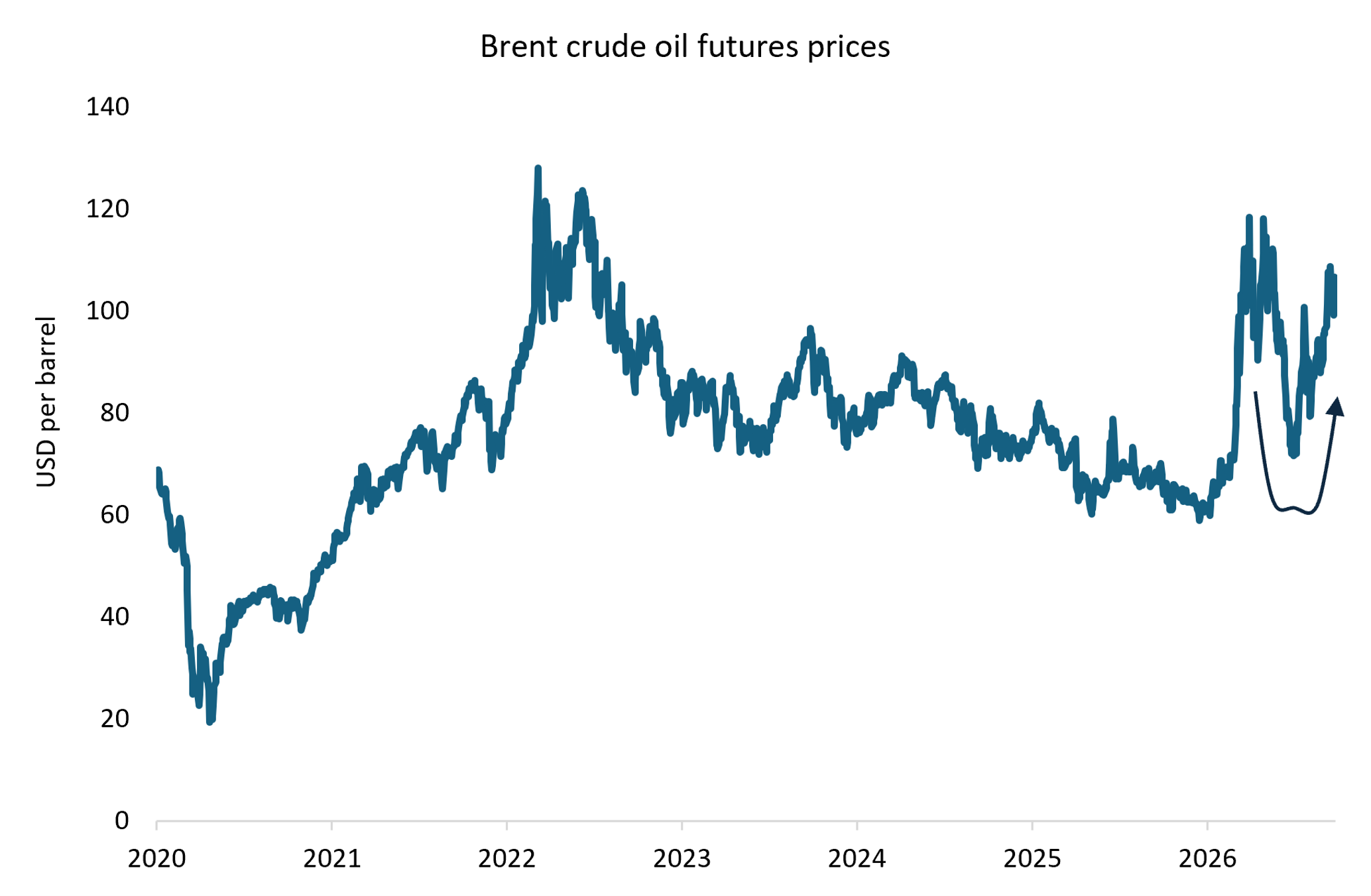
These developments were reflected in the oil market. Futures prices are still sloping downward, suggesting that prices are high now but will fall in the future. Spot prices (the cost of buying an actual barrel of physical oil) fell on the latest news but remain elevated, above even the short-term futures prices.

As supplies of crude have been slow to arrive at the refineries, companies have drawn down on inventories of oil products, which have been declining. For example, kerosene inventories in Europe have dropped sharply, leading airlines to cancel flights.

There’s growing optimism that these inventories will begin to be replenished through an eventual return of Gulf supplies. If not, the European market will end up buying kerosene and other oil products from other regions, allowing oil to flow through the markets that are prepared to pay the highest price. For example, a supply decline of 10% would necessitate a 10% reduction in energy consumption, but this may not happen in the regions with the lowest inventories. Therefore, the most obvious implication is the inflationary impact. This was something for policymakers to ponder last week, when all the major central banks were reporting.

Source: Bloomberg

Central banks: Hawkish drift and no action

As anticipated, none of the central banks changed their policies last week.

The Federal Reserve (the Fed) held rates at its final meeting under current Chair Jerome Powell. He will almost certainly be replaced as chair by Kevin Warsh, who’s in the process of being confirmed by the Senate.

RBC Wealth Management (U.S.)’s Tom Garretson, a senior portfolio strategist specialising in fixed income, points out that there hasn’t been much pushback on Warsh. Blanket statements that he’s an ‘impressive’ and ‘outstanding’ candidate who used to be at the Fed have been nearly universal.

Tom questions that appraisal: “The highlight of his entire CV is basically his time at the Fed during the Global Financial Crisis, but his only notable accomplishments were seeking to raise rates when unemployment was still around 8%, and then warning about the potential hyperinflationary impact of quantitative easing, which he ultimately resigned from the Fed over, and which ultimately never occurred.”

Kevin Warsh is President Trump’s selection because the president was frustrated that Jay Powell’s Fed wasn’t cutting rates fast enough. But now that Warsh is about to arrive, he’ll find it hard to persuade the Fed to cut given that inflation is on an upward trajectory due to the Iran-U.S. war.

It wouldn’t be surprising if his relationship with President Trump were to become a tense one from the start.

Elsewhere, the European Central Bank, Bank of Japan (BoJ) and Bank of England (BoE) all held interest rates. However, these are expected to start rising in June.

The key development was a hawkish shift in market pricing. At the start of last week, UK and Eurozone markets were discounting approximately two rate hikes by year-end. By Friday, this had edged towards the possibility of three – reflecting the inflationary impulse from elevated energy prices.

The Bank of England’s Monetary Policy Report laid out three scenarios:

– energy prices follow the futures curve lower, with no second-round effects – still justifying roughly two rate hikes.

B – prices remain elevated between current levels and the curve, with moderate wage effects.

– prices rise further with significant second-round effects, implying rates will rise by over one percentage point to 5.25–5.50%.

Even the benign scenario now appears to justify further tightening. This contrasts with comments made by BoE Governor Andrew Bailey over the past month – for example, when he described how the market’s “still pricing us to raise rates… I think they’re getting ahead of themselves.”

Additional anxiety over the direction of interest rates and oil prices was a headwind to markets but the earnings season was a tailwind.

Equity markets adopted a risk-off tone as last week progressed, with European indices falling around 1% on Thursday. U.S. equities bucked that broader move, driven by generally good earnings numbers on Wednesday, when the four hyperscalers of the ‘Magnificent Seven’ mega cap stocks (Microsoft, Meta, Amazon and Alphabet) reported their Q1 earnings.

The results were mixed, with Alphabet’s impressive results seeming to validate the full stack vertically-integrated model (infrastructure, language model, tools and applications). Meta, on the other hand, disappointed due to the costs of investment.

The dollar strengthened gradually, and Japanese government bonds sold off across the curve, with the yen breaching the 160-per-dollar level before an intervention by the BoJ to stabilise it.

Energy importers like Japan have suffered downward pressure on their currencies from the rise in energy costs and resulting higher import costs. Others include Turkey and India, which have also used reserves to attempt to stabilise their currencies. At the same time, Gulf states that would normally accumulate reserves, especially at times of high energy prices, haven’t done so while their cargoes can’t reach the market.

Source: Bloomberg

Taken together, these two groups have reduced the pace of reserve accumulation and, therefore, the structural demand for gold. This creates short-term pressure on the gold price, which will continue until reserve accumulation can return to normal.

Thereafter, the case for holding gold seems as strong as ever. The U.S. runs a large and persistent current account deficit and a deeply negative net international investment position, consuming more than it produces and financing the difference by accepting dollar-denominated loans from the rest of the world.

It’s understandable why other countries would balk at holding the majority of their foreign exchange reserves in dollars, and gold benefits as result.

Please continue to check our blog content for advice, planning issues and the latest investment market and economic updates from leading investment houses.

Charlotte Clarke

07/05/2026

Team No Comments

Brooks Macdonald – The Daily Investment Bulletin

Brooks Macdonald – The Daily Investment Bulletin

Please see the below article from Brooks Macdonald detailing recent market moves amid signs the US–Iran ceasefire is holding. Received this morning 06/05/2026.


What has happened?

Global equities and bonds gained, supported by signs the US–Iran ceasefire is holding. This pushed oil prices lower and eased escalation fears. The S&P 500 (+0.81%) reached a new record high, alongside the NASDAQ (+1.03%) and the Magnificent 7 (+0.26%). Chipmakers once again led the gains, supported by strong results from AMD, whose shares rose sharply in after-hours trading. The Philadelphia Semiconductor Index climbed +4.23%, bringing its total gain since late March to over 50%. European markets also moved higher, with stronger gains across major indices including the DAX and CAC, although the STOXX 600 advanced more modestly as UK equities lagged.


Tentative progress on geopolitics supports sentiment

President Trump indicated that the US would pause its “Project Freedom” initiative in the Strait of Hormuz to allow space for a potential agreement. He pointed to “great progress”, although the outlook remains uncertain, with Iranian officials continuing to push back against US demands. While the situation is still fluid, markets appear encouraged by signs that dialogue is ongoing and that further escalation may be avoided.


UK assets remain under pressure as political uncertainty builds

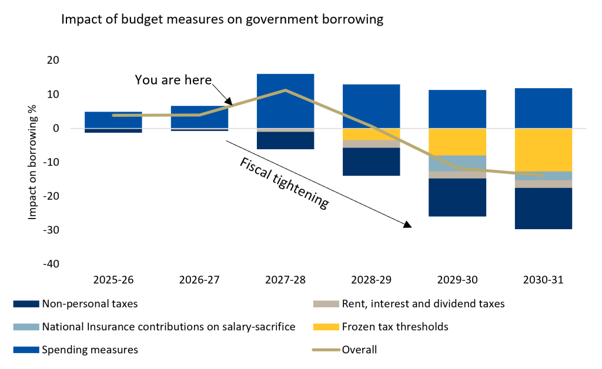
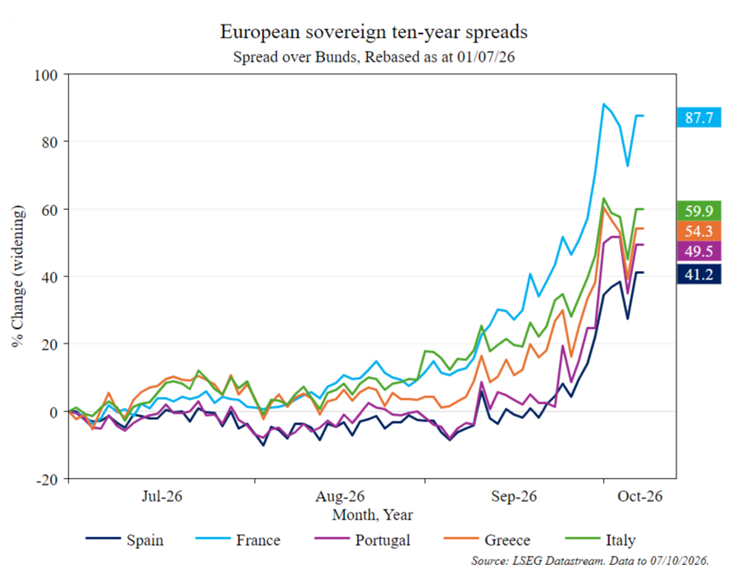
In contrast, UK markets faced pressure. Gilt yields moved higher, with the 10-year reaching 5.06% and the 30-year hitting its highest level since 1998. The spread between UK and German yields widened to its largest level since October. Investors appear increasingly focused on domestic political risks ahead of the local elections, including speculation around the Prime Minister’s position and the potential implications for fiscal policy and future gilt issuance.


What does Brooks Macdonald think?

Looking ahead, the focus will remain on incoming data and any further signals from policymakers. Today’s final PMI readings across Europe will offer a timely check on economic momentum. More broadly, while markets have responded positively in the near term, maintaining a balanced and diversified approach remains key given the range of risks still in play.


Please continue to check our blog content for advice, planning issues and the latest investment, market and economic updates from leading investment houses.

Alexander James Roberts

06/05/2026

Team No Comments

Tatton Investment Management: Tuesday Digest

Please see the below article from Tatton Investment Management discussing geopolitics, interest rates and market moves received this morning – 05/05/2026

Markets making the best of it

Oil prices spiked back above $120pb last week and have remained close to that level as the US-Iran ceasefire frays. But the equity market casualties have been UK and European stocks, while the US has gained. Asian trading is essentially paused for “Golden Week”. Thus, global stocks show a slight aggregate gain. Equity investors don’t think the oil shock is insurmountable but falling bond prices say different.

Washington’s blockade on Hormuz is no TACO; the White House is effectively telling everyone to stomach oil prices until Iran relents. Reports suggest that could happen within weeks, as Iranian storage reaches capacity or Tehran runs out of funds. Things could come to a head at the Trump-Xi summit later this month, as the block on Iranian oil now impacts China. Long-term oil pricing has barely moved – helped by the UAE’s exit from OPEC. It’s a reminder that the previous global oversupply is still there if trade reopens.

Interest rate expectations have moved up but, acknowledging that they can’t influence the oil shock, central banks kept rates steady last week. However, Australia has raised rates today to 4.35% and the BoE and ECB have signalled they will follow in June. Despite economic weakness, neither can afford to let inflation become embedded. The Fed seems minded to see the price shock as temporary (objections from some members notwithstanding) but the resilient US economy should arguably make policymakers nervous. Incoming Fed chair Warsh, picked by Trump to cut rates, has a tough few months ahead.

US mega-cap stocks revealed stellar profit growth and more AI spending. Worryingly, that spend is more about higher costs than expansion – hurting Meta’s stock. Our measure of earnings acceleration is actually coming down, suggesting that the AI spending spree is plateauing, albeit not coming down. That won’t help tech valuations.

Last week was a microcosm of the last two months: US-Iran tensions rose, but patient central banks and resilient earnings saw markets through. It can’t always be like this. If oil prices and bond yields stay high, a week without supportive growth news will hurt markets.

Emerging markets keep emerging

Despite global headwinds, Emerging Market (EM) stocks have comfortably outperformed Developed Markets (DMs) over the last year. MSCI’s EM index has gained 46.7% since April 2025’s “Liberation Day”. That is almost entirely down to three AI chipmakers: TSMC (+144%), Samsung (+289%) and SK Hynix (+604%). Taking those out, EMs only slightly outperform MSCI’s all-world index (28.6% versus 27.5%). Still, the fact three stocks have done so well doesn’t mean the rest have done badly – especially considering China’s economic struggles. Underlying EM earnings growth is outpacing DMs, even for markets without tech dominance, like Brazil.

That’s largely down to the weaker US dollar. A weaker dollar doesn’t help EM exporters, but deglobalisation is benefitting domestic-focussed EMs by forcing countries to build domestic consumption. A few months ago, we wrote that Trump-era regionalisation is a boost for EM currencies because it pushes them closer to purchasing power parity (PPP) levels (by equalising production and reducing asset risk differentials).

It’s not an economic story per se. Historically, high growth economies like China and India have struggled to turn growth into equity performance. Part of the positivity for EM assets is that this last roadblock is clearing.

EMs are becoming more like DMs, moving up the value chain and decreasing export dependence. They even have the same big tech dominance! Local-currency EM bonds have grown dramatically, which we take as less of a risk signal and more of a signal of deeper, financially mature asset markets. Many EMs are looking to get reclassified as DMs (Greece is confirmed, Korea is rumoured). That requires corporate governance improvements but opens those markets up to more capital. Changing your MSCI label might help individual EMs, but the point isn’t that some players are joining the big leagues. Rather, it’s that EMs overall are maturing. Emerging markets are emerging.

Bond yield moves expose structural weakness 

Sharply higher oil prices pushed up bond yields everywhere – but nowhere more than the UK. 10-year UK government bond yields (gilts) are now above 5%. This isn’t just about inflation. The 10-year forward yield (a synthetic construct measuring the last 10 years of a 20-year bond to current 10-years) rose, driven by higher real yields, both in the UK and US. The long-term real yield increase should indicate higher growth, but that’s not what happened here. Rather, it was a rise in the term premium – the extra amount investors demand for long-term lending. This reflects a stronger cash preference, particularly in the gilt market.

People standardly point to perceived government failure to explain gilt troubles. That doesn’t match up with gilt investors past approval of the government’s “fiscal rules”, but perhaps the worry is those will change after local elections. We prefer to think about it structurally. The gilt market is severely imbalanced, with a high proportion of inflation-linkers (making gilts more sensitive to inflation) and a higher average maturity than nations. The maturity issue is due to historic pension fund demand, which dropped away once regulation changed. That set the scene for the Liz Truss episode and it hasn’t gone away.

Outstanding gilts are skewed to the long-term, and investors are less keen on long-term debt. We said that gilt yields were attractive when they sold off last month and they have risen again; the 10-year forward yield is around 6.5% on our count. Why aren’t investors buying in? In primary bond auctions, they are. But the demand in secondary markets is fragile and fickle – as the gilt market struggles to recoup the stable, institutional demand that used to come from pension funds. Shocks and political dramas therefore have an outsized effect on gilts. That doesn’t change the fact that long-term yields are attractive.

Please continue to check our blog content for the latest advice and planning issues from leading investment management firms.

Marcus Blenkinsop

5th May 2026

Team No Comments

EPIC Investment Partners – The Daily Update | The Megacap dilemma

Please see todays Daily Update from EPIC Investment Partners received this morning (30/04/2026):

Alphabet, Meta, Microsoft, and Amazon continue to sit at the centre of global equity indices, and their latest results reinforce why. Sceptics question their size, sustainability, index exposure, and capital intensity, yet AI is no longer a forward-looking narrative for these firms. It is already embedded in revenue generation across advertising, cloud infrastructure, and enterprise software. The scale of monetisation is increasingly visible in reported results rather than speculative positioning.

At the same time, their growing weight in major indices raises a structural issue that cannot be ignored. A small group of companies now drives a disproportionate share of benchmark performance, meaning passive portfolios are increasingly dependent on outcomes tied to a narrow set of business models. This creates clear structural risk in equity markets, particularly during periods of earnings volatility or valuation compression.

Alphabet reported revenue growth of 22% to $110 billion, with Google Cloud expanding 63%, underscoring its growing relevance in enterprise AI workloads. TPU development is expected to become a more meaningful driver from 2027 onwards, reinforcing Alphabet’s vertical integration in AI infrastructure and compute.

Meta delivered 33% revenue growth to $56 billion, driven by continued improvements in AI-powered recommendation systems that enhance engagement and ad targeting. This is translating into stronger near-term monetisation, but it comes alongside a significant increase in capital expenditure. The central question for Meta is not adoption, but whether incremental AI investment continues to generate proportional returns without sustained margin pressure.

Microsoft remains the most established enterprise AI platform. Revenue rose 15% to $82.9 billion, while Azure grew 39%, reflecting continued demand for cloud and AI infrastructure. Persistent capacity constraints indicate that demand is still outpacing supply, highlighting both strength and the scale of ongoing investment required. Long-term returns will depend on how deeply AI workloads embed into enterprise operations beyond early adoption cycles.

Amazon reported revenue growth of 15% to $181.5 billion. AWS continues to benefit from accelerating AI workloads, while improvements in retail logistics and fulfilment efficiency strengthen its core consumer ecosystem. However, cloud competition is intensifying, and AWS growth remains sensitive to pricing pressure and workload diversification across providers.

These companies continue to defy their size and deliver above-market revenue growth at scale, reinforcing their status as structural compounders with entrenched advantages in data, distribution, infrastructure, and software ecosystems. Their scale enables levels of AI investment that smaller competitors cannot replicate, further strengthening their competitive positioning.

Collectively, we are seeing the redeployment of hundreds of billions into AI investments. These companies have not reached their current position by playing it safe; they have done so through aggressive, high-conviction investment in long-term strategic bets, often contrarian relative to Wall Street consensus. That pattern continues today. However, the difference in the current cycle is that the outcomes now carry system-wide implications, given the degree of concentration within US equity markets.

Please continue to check our blog content for advice, planning issues, and the latest investment, market and economic updates from leading investment houses.

Andrew Lloyd

30/04/2026

Team No Comments

Brewin Dolphin – Markets in a Minute

Please see this week’s Markets in a Minute update below from Brewin Dolphin, received yesterday afternoon – 28/04/2026   

How could energy impact investment markets?

A tighter energy market could affect household and corporate earnings – what impact might this have on investment markets?

Key highlights

  • What’s next in the U.S.-Iran war? Markets’ anticipation for a reopening of the Strait of Hormuz fell to 34% last week. The implications of a further five weeks of disruption are stark, causing additional tightening in the energy markets.
  • Firms predict price rises: The Bank of England (BoE)’s Decision Maker Panel expects companies to raise prices by 4.4% over the next year and for inflation to reach 4% – double the BoE’s target.
  • U.S. corporate earnings results: With about a quarter of companies having reported, aggregate earnings are coming in around 10% above expectations, producing a blended year-over-year growth rate of 14.4%.

The Iran war: Brinkmanship, blockades and fragile progress

The geopolitical stand-off between the U.S. and Iran over the Strait of Hormuz dominated market sentiment throughout the week. Oil prices returned to above $100 per barrel and risk appetite came under pressure.

Last week opened with both sides claiming the Strait was open to traffic, only for Iran to close it again after the U.S. failed to lift its naval blockade. A vessel was seized by the Americans for attempting to violate the restrictions, marking the first such incident.

Talks were scheduled in Islamabad, Pakistan last Tuesday, but Iran initially signalled it had no plans to send negotiators. By midweek, the U.S. had chosen to maintain the blockade while extending the ceasefire without an end date – a pragmatic acknowledgement that setting another deadline it might not enforce would damage credibility.

By Thursday, Iran had formally stated it had no plans to participate in negotiations, pushing Brent crude higher once more.

This led to a fall in anticipation of the reopening of the Strait of Hormuz. At the beginning of the week, there was a 60% chance of the Strait being reopened by the end of May, according to the Polymarket prediction market. By the end of the week, that had fallen to 34%. The implications of a further five weeks of disruption are stark, causing additional tightening in the energy markets.

Notably, while crude oil prices have retraced somewhat from their peaks, the pass-through to consumer fuel prices has been asymmetric – petrol prices at the pump remain stubbornly high despite some easing in wholesale markets. Towards the back end of the week, prices were rising once more.

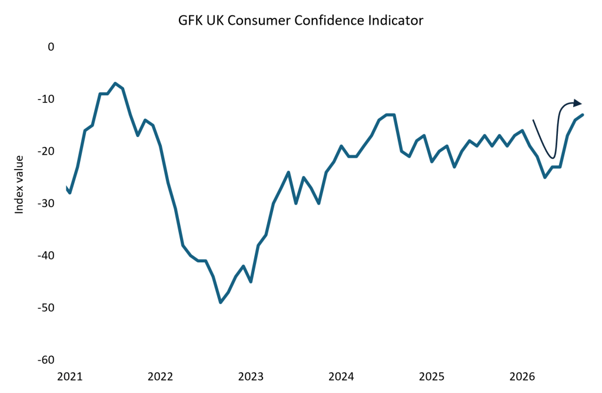
This is frustrating because there’s growing evidence that the UK economy was picking up before the war began. UK retail sales numbers released for March show that UK consumers have been able to dip into accumulated savings, so the war hasn’t slowed their consumption. But it won’t take long for the effects to be more pronounced as the GfK consumer confidence survey showed consumers are anxious about the economy, and business optimism fell to its lowest level since COVID-19 according to the Confederation of British Industry.

The UK isn’t alone in this. Global purchasing managers indices (PMIs) showed that businesses are slowing production and raising prices. Most countries are experiencing price increases not seen since the brief window of extraordinary inflation in 2022.

Inflation is bad for political leaders. The decline in President Donald Trump’s net approval rating has started to accelerate.

In the UK, it’s yet another challenge for UK Prime Minister Sir Keir Starmer – in addition to the difficult testimony he gave to Parliament regarding the Peter Mandelson vetting affair, and the even more difficult evidence heard from former civil servant Oly Robbins, who oversaw the process.

The combination of these factors has made gilts the worst-performing major bond market since the onset of the war.

UK inflation data released last week offered few surprises. Inflation has picked up due to energy. The combination of the survey data and PMIs caused expected interest rates to rise from a single increase in 2026 to two hikes for both the UK and Europe.

Source: Bloomberg

We’re often asked why central banks would increase interest rates when the economy is struggling due to high prices elsewhere. The answer is that if it seems like higher oil-related prices feed through into higher wages, the central bank faces a wage price spiral, which can only be broken by deliberately weakening demand – done by raising interest rates.

In April, the Bank of England’s Decision Makers Panel of firms said it expects firms to raise prices by 4.4% over the next year, and for inflation to reach 4% – double the BoE’s target. However, the BoE’s agents – who speak to businesses and gauge how they’re feeling about things – learned firms are worried about their ability to pass on price increases, which means they’re more likely to ‘absorb’ them (suffer weaker profits). If companies don’t pass on the price increases, the BoE won’t need to raise interest rates.

Corporate earnings: Strong but facing elevated expectations

Earnings season continues with quite strong numbers overall emerging from businesses.

At a time when valuation multiples have contracted (the S&P 500 12-month forward price-to-earnings ratio has declined from 22.9 to 20.1), corporate earnings have been the engine driving equity markets higher.

With about a quarter of U.S. companies having reported, aggregate earnings are coming in around 10% above expectations, producing a blended year-over-year growth rate of 14.4%. Technology has been the standout, with earnings up 46% year-over-year. Corporate balance sheets remain in good shape, with interest coverage for U.S. non-financial businesses at very high levels, leaving ample capacity for continued investment.

Companies tend to beat their short-term earnings estimates by design – they edge down their guidance to reach something achievable. But longer-term expectations are high and must be met in order to justify the current valuations. Several cyclical, sector-specific, and structural factors suggest meeting currently elevated expectations will be challenging.

The boost to the economy from lower bond yields appears to be over. Fiscal policy for advanced economies in 2026 is projected to be neither loose nor tight. U.S. jobs growth has slowed to zero – and historically, every time non-farm payroll growth has dropped to zero or below, corporate earnings have followed. Earnings recessions have occurred roughly once every four years; the last was in 2023, implying one could be due by 2027.

The main anxieties facing company earnings at the moment are around AI-related capital expenditure by hyperscalers, which has boomed. The four major hyperscalers – Microsoft, Meta (Facebook), Amazon and Alphabet (Google) – are expected to spend over $600 billion this year, up from $200 billion just two years ago. However, there are legitimate questions about what returns they are likely to make on this investment.

The relevant CEOs themselves have acknowledged they’re investing not solely for attractive returns but for survival – a dynamic reminiscent of a prisoner’s dilemma, where mutual investment compresses margins.

So, while this seems very different from the previous tech bubble because these companies are incredibly profitable at the moment, there are some genuine reasons to fear that future profitability could disappoint.

Please continue to check our blog content for advice, planning issues and the latest investment market and economic updates from leading investment houses.

Charlotte Clarke

29/04/2026

Team No Comments

Brooks Macdonald – The Daily Investment Bulletin

Please see the below article from Brooks Macdonald detailing their discussions on the US-Iran war and the ripple effect on markets. Received this morning 28/04/2026.

What has happened?

Two months into the Iran conflict, markets are in an uneasy stalemate. Brent crude touched $109/bbl overnight, a three-week high, after the White House signalled scepticism toward Iran’s proposal to reopen the Strait while deferring nuclear talks. Despite the backdrop, the S&P 500 and Nasdaq edged to fresh record highs, led by Nvidia.

The inflation clock is ticking

With Brent above $100/bbl for nearly a week, inflation is firmly back on the agenda. Equity markets are holding up on earnings and AI momentum, but fixed income is signalling that the longer the Strait stays closed, the harder it becomes for central banks to ease. Treasuries sold off with the 10-year yield rising to 4.34%, Gilts underperformed with the 30-year yield at a 7-month high, and the Bank of Japan held rates in a notably split 6-3 vote, raising inflation forecasts while cutting growth projections.

What does Brooks Macdonald think?

What began as an acute shock is increasingly being priced as a structural shift, oil markets are pricing extended disruption, inflation expectations are drifting higher, and the easing window is narrowing. US equity resilience is impressive but increasingly narrow, resting heavily on Mag-7 momentum which is facing its biggest test this week as Microsoft, Amazon, Meta and Alphabet all report. Disappointment on AI capex or forward guidance could remove one of the few remaining pillars supporting sentiment.

Please continue to check our blog content for advice, planning issues and the latest investment, market and economic updates from leading investment houses.

Alex Clare

28/04/2026

Team No Comments

Tatton Investment Management: Monday Digest

Please see the below article from Tatton Investment Management discussing resilient equity markets despite rising geopolitical, energy and interest‑rate risks, received this morning – 27/04/2026.

Resilient equity markets, rising risks

Risks have risen but stocks are little changed. Middle Eastern ceasefires have been nominally extended but the Strait of Hormuz remains closed. Both the US and Iran are conducting operations in the waterway – resulting in a tense stalemate. If Trump is right about Iranian “infighting”, negotiations will be slow. But any power struggle could easily end up with a strengthened, more hardline IRGC, making regime outcomes even less predictable. Steadily rising oil prices reflect the fact that the current stalemate isn’t economically sustainable. The risk to equities creeps higher the longer it remains.

Rising bond yields are another risk for equities. Ahead of this week’s rate decisions across the developed world, interest rate expectations rose last week. However, this was more about robust global growth signals than energy prices per se. The UK is case in point: commentary focusses on higher input costs, but UK business confidence is proving resilient. The Bank of England will probably have to pivot tighter, but that’s because growth looks stronger. Global growth looks resilient, which is a challenge for long-term bonds. As the challenge comes from growth, though, it should still mean a decent outcome for equities.

Earnings growth continues to be strong too – even in Europe, where most other data looks negative. Poor European confidence numbers are probably more accurate than backwards-looking earnings, but we should keep an eye on them for more clues. Global resilience puts markets back to where they were last summer: panic about policy (tariffs then, war now) but with earnings still ticking along.

Other risks are receding too. Kevin Warsh will become Federal Reserve Chair after the US Department of Justice dropped its probe into current chair Powell – helping bond yields fall. Warsh dismissed claims he would take monetary policy cues from Trump last week. Even if the president does something market-moving this weekend, history tells us that the economy can ignore the noise.

Business sentiment holds strong

April’s flash PMIs (purchasing managers’ indices, measuring business sentiment) were surprisingly strong, proving companies are resilient to the energy shock. The US (52), UK (52) and Japan (52.4) reported expansion, while the Eurozone (48.6) was the only disappointment. This strength was driven by manufacturers riding a wave of investment – defence spending in Europe and AI capex in the US. It’s a reversal of last year, when global growth was powered by consumption. Public and private investment taking the impetus is good news, since this investment should be more resistant to energy prices.

UK PMIs were significantly better than expected, despite a sharp rise in reported input costs. The inflation component has led some to question the UK figures, and whether they might be revised down (as flash PMIs often are). The pessimistic view is backed up by the CBI’s business confidence numbers, which show a sharp drop in manufacturing sentiment – in contrast to the positive manufacturing PMI (from S&P). CBI surveys have suffered low response rates in recent years, so we would lean more on S&P’s data. Coverage of the UK continues to be negative, highlighting inflation and potential interest rate hikes – but we stress this is about better-than-expected growth.

Europe stands out for the wrong reasons, with a dreary 47.4 PMI for the Eurozone services sector. This data is heavily focussed on French and German companies, and we’ve known for a while that Europe’s two largest economies are its weakest. Periphery growth is better, but not captured by the PMI. We should also note that manufacturing was stronger than expected – proving that defence spending is working. It’s not enough to counteract the oil shock right now, but it’s still a good sign. European confidence is understandably weak but, if the Iran war is resolved, there is enough momentum to get growth back on track.

Europe gets a Magyar boost

Viktor Orbán’s historic election loss could be a turning point for Europe. Incoming Prime Minister Péter Magyar wants to repair Hungary’s relationship with Europe and markets approve: the forint climbed against the euro and Hungarian stocks shot up, in the hope that Magyar will unlock €17bn in EU funds frozen over rule of law concerns.

The broader reaction for Europe was more muted. The euro gained a little after the election and European stocks rose, but that was more about easing Iran tensions. Investors took Orbán’s departure as a mild positive for Europe, without overreacting.

It is a clear benefit for Hungarian equities, which trade at lower price-to-earnings valuations than Polish and Czech peers after decades of corruption and economic stagnation. The cautious reaction for broader Europe makes sense too, since significant barriers to European integration remain (pro-Russian Rumen Radev just won Bulgaria’s snap election). Orbán has repeatedly obstructed European integration over the years but he’s far from the only obstruction. Even the core EU nations regularly disagree – exemplified by Chancellor Merz’s attack on UniCredit for its attempted takeover of Commerzbank. These disagreements have been a barrier to the all-important Savings and Investment Union.

Magyar’s victory is still symbolic for wider Europe. The $90bn of aid to Ukraine, now likely to be approved, could pave the way for alignment in defence spending and other areas – with downstream effects on growth. That’s why the unanimity requirement in EU foreign policy is still an economic issue. Orbán’s departure is not straightforwardly about right-versus-left politics; Magyar himself is a former Fidesz member. Rather, it shows that the specific brand of obstructive anti-European populism is less viable. Europe’s populists will likely be inclined to take the more conciliatory approach of Italy’s Meloni from here. That will lead to incremental improvements for European integration. Over time, these make a big difference.

Please continue to check our blog content for the latest advice and planning issues from leading investment management firms.

Marcus Blenkinsop

27th April 2026

Team No Comments

EPIC Investment Partners: The Daily Update | Colombia: Paid to Wait

Please see below, an article from EPIC Investment Partners discussing investment opportunities in Colombia. Received today – 24/04/2026

Colombia has been a difficult country to like, but a profitable one to own. At the end of March, the Republic’s 3.875 per cent dollar bond due in 2061 traded at 56.58 cents on the dollar. Less than four weeks later, the Ministry of Finance cleared the same bond in a cash tender at 64.875. That was more than eight points of capital appreciation in under a month, on a credit many investors had good reason to avoid.

The tender is useful, but it is not the main story. It showed that Colombia’s debt had become too cheap, even for Colombia itself to ignore. The more important question now is political. The first round of the presidential election is due on 31 May. Gustavo Petro cannot run again, but the vote is still a referendum on whether his project survives him.

That matters for bondholders. Petro did not create all of Colombia’s fiscal problems, but he has made them harder to overlook. The deficit remains large. Inflation is sticky. The central bank has been pulled into open confrontation with the executive. Energy policy has pushed Ecopetrol to look abroad for growth rather than commit more heavily at home. Relations with Ecuador have also deteriorated.

Iván Cepeda, the candidate of the left, would represent continuity with Petro’s Pacto Histórico. He is more diplomatic and less erratic than Petro, but markets would still read his victory as a slower repair of fiscal credibility, a more interventionist state and less immediate relief for the energy sector. The left has not collapsed; its congressional performance showed that Petro’s base remains mobilised.

Even so, the rightward shift is visible. Paloma Valencia’s March primary victory, with more than 3mn votes, gave the centre-right a candidate with momentum and organisation. Her choice of Juan Daniel Oviedo, the former head of the national statistics agency, as running mate adds a technocratic edge. That does not guarantee reform. Congress will remain fragmented and voters may want change without austerity. But it points towards more respect for the central bank, private investment and a pragmatic approach to energy.

Abelardo de la Espriella offers a more volatile version of the same correction. His appeal rests on security, lower taxes and rejection of Petro’s “Total Peace” strategy, which critics argue has allowed armed groups to consolidate. His style is not obviously reassuring, but his platform speaks directly to investor concerns over security, hydrocarbons and the state’s capacity to govern.

Colombia is not a pristine credit. The fiscal deficit is too large, policy credibility has been damaged, and the hydrocarbons policy is self-defeating. But none of this automatically creates an external solvency crisis. The maturity profile is manageable, the current account deficit is funded and reserves are not collapsing. Colombia remains messy, but serviceable.

That is why the bond story has changed. In March, the case was valuation. In April, the tender helped prove the point. By May, the question is political mean reversion. Fixed income does not require perfection. It requires compensation. Colombia still offers a spread, a discount bond, a tender precedent and an election that could shift policy back towards the centre-right.

For the past year, investors in Colombia have been paid to worry. They may now be paid to wait.

Please continue to check our blog content for the latest advice and planning issues from leading investment management firms.

Alex Kitteringham

24th April 2026

Team No Comments

EPIC Investment Partners: The Daily Update

Please see the below article from EPIC Investment Partners discussing how Middle East disruption is impacting time‑sensitive medical isotope supply chains and global healthcare delivery, received this morning – 23/04/2026.

Half-Life Crisis

While markets remain transfixed by oil routes, shipping lanes, and headline commodities, a more time sensitive supply shock may be unfolding in global healthcare. Conflict in the Middle East region is not only disrupting trade flows and energy markets; it is exposing a structural vulnerability in nuclear medicine, where value is governed by time as much as chemistry. Unlike conventional pharmaceuticals that can be stored, buffered, and shipped over weeks, many medical isotopes used in imaging and cancer therapy have half-lives measured in hours or days. In this system, delay does not simply reduce efficiency, it can erase clinical usefulness altogether.


That distinction is critical. Isotopes such as Technetium-99m, widely used in diagnostic imaging, and Lutetium-177, increasingly important in targeted radiotherapy, depend on tightly synchronised production and delivery chains. From reactor output and radio labelling to air freight, customs clearance, and hospital scheduling, every stage must align with the physics of radioactive decay. Even short delays can materially reduce potency; longer disruptions can render entire consignments unusable. These are not traditional pharmaceuticals; they are perishable assets.


Over the past two decades, parts of the Middle East, including Israel, Turkey, and Egypt, have also become important nodes in global clinical research infrastructure. Their role has been shaped by advanced hospital systems, experienced investigators, strong digital health records, and access to diverse patient populations. According to recent data from Phesi, approximately 6.7% of active global clinical trials, more than 4,300 studies, have been affected by recent regional disruption, with close to 8,000 investigator sites impacted.


The consequences are already emerging in the form of rising procurement costs and tighter hospital scheduling for time sensitive radio-pharmaceuticals. Oncology focused clinical trials, which rely heavily on consistent imaging, diagnostics, and specialist treatment centres, may also face delays or protocol adjustments. The impact is uneven, but it compounds over time, affecting both healthcare delivery and the pace of drug development.


Against this backdrop, Gulf investment in nuclear, research, and healthcare infrastructure is increasingly relevant. The UAE and Saudi Arabia are expanding capabilities that could support more localised radio pharmacy, isotope handling, and specialist medical manufacturing. While still developing, these efforts reflect a broader shift toward reducing dependence on long, fragile supply chains.

The broader lesson is straightforward: modern healthcare depends not only on scientific progress, but on timing. When conflict disrupts the routes between production and patient, the cost is measured in something far more finite than money, usable time.

Please continue to check our blog content for the latest advice and planning issues from leading investment management firms.

Marcus Blenkinsop

23rd April 2026