Team No Comments

What could make ‘value’ stocks finally outperform tech and ‘growth’ once more?

Please see the below article posted by AJ Bell last week:

Warren Buffett once noted that ‘A pack of lemmings looks like a bunch of rugged industrialists compared with Wall Street when it gets a concept in its teeth’ and those investors who piled in to tech stocks must now ask themselves why they were buying and what they should do after three days of sharp falls.

If they were just buying because they felt everyone else was and were simply looking to flip the paper on to someone else, they may feel pretty exposed and unsure of what to do. If they were buying out of conviction that companies such as FacebookAlphabetAmazonAppleNetflix and Microsoft – the FAAANM sextet which still represents a quarter of the S&P 500 index’s total valuation on its own – have such dominant market positions, shrewd management, strong finances and powerful future cash flow prospects that they deserve even higher valuations then they may be inclined to buy on the dips.

This temptation to run with the narratives that technology stocks are relatively immune to the pandemic and worth premium valuations because of the relative scarcity of consistent earnings growth right now is quite understandable.

But there remains the danger that neither narrative is particularly new and is therefore at least partly priced in to technology stocks’ valuations.

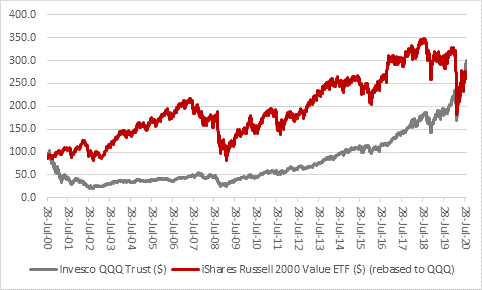
Just look at how ‘growth’ stocks in the USA have wiped the floor with ‘value’ stocks over the past decade and since 2017 in particular. This can be seen by analysing the performance of the Invesco QQQ Trust, an exchange-traded fund (ETF) designed to track and deliver the performance of the heavyweight NASDAQ 100 index (minus its running costs), relative to the iShares Russell 2000 Value ETF, which seeks to do the same for a basket of around 1,400 American small-cap ‘value’ stocks:

Source: Refinitiv data

Since January 2010, the iShares Russell 2000 Value ETF is up by 124% in capital terms, for a compound annual return of 7.8% – so it is hard to argue that ‘value’ has ‘failed’ as a strategy. What is clear is that ‘growth’ has simply done so much better, offering a 490% return, or a compound annual growth rate of 18%, as benchmarked by the Invesco QQQ Trust.

The performance gap between the two stands at a decade high.

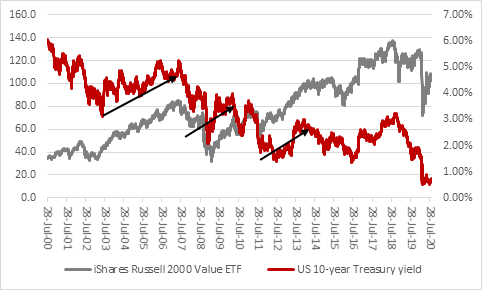
But it may surprise less experienced investors to learn that the last decade’s stellar outperformance from ‘growth’ has only just begun to cancel out the prior decade’s grinding period of marked underperformance relative to ‘value’, taking 2000’s launch of the iShares Russell 2000 Value ETF as a starting point.

Source: Refinitiv data

That miserable ten-year showing followed the bursting of the tech, media and telecoms (TMT) bubble, so investors in tech and growth stocks now need to ask themselves whether they should fear a repeat.

Valuation alone is never a catalyst for out- or –underperformance, but it is the single biggest determinant of long-term investment returns (and a decade seems like a suitable definition of long-term). If tech earnings keep growing and surprising on the upside, if interest rates stay low, if inflation stays subdued and the FAAANM stocks use the combination of product innovation and acquisitions to maintain and even deepen their powerful competitive advantages, then many investors will be tempted to dismiss valuation as an irrelevance.

But the trouble could start if regulators begin to take a hand, earnings disappoint (as Big Tech does not prove to be immune to the pandemic after all or the law of large numbers means it simply becomes harder to generate strong percentage growth figures) or the wider economy starts to accelerate and inflation picks up.

None seem likely now but that it why ‘growth’ has done so well relative to ‘value’.

If a COVID-19 vaccine is quickly and successfully developed and distributed, then stocks which are seen as ‘immune’ from the pandemic may be less in demand and seen as less worthy of a premium valuation.

Equally, if growth and inflation pick up, then investors may not be so inclined to pay such premium multiples for ‘growth’ companies, if rapid earnings increases can be acquired much more cheaply along downtrodden value, cyclical plays like industrials, financials and consumer discretionary plays.

Moreover, an increase in inflation could force Government bond yields higher, even if central banks decline to raise interest rates and let inflation run hot, as per the US Federal Reserve’s new ‘average’ inflation target.

Prior periods of rising 10-year US Treasury yields have coincided with attempted rallies in ‘value’ names, so perhaps a return to economic growth and inflation could be the trigger for a sustained period of underperformance from ‘growth’ and ‘tech’ stocks relative to value ones.

Source: Refinitiv data

Please continue to check back for our regular blog updates.

Andrew Lloyd

14/09/2020

Team No Comments

Jupiter Asset Management – Active Minds Blog

Please see Active Minds article below from Jupiter Asset Management – received 10/09/2020

Active Minds – 10 September 2020

Ed Meier – Fund Manager, UK Alpha

Exciting opportunities in UK’s transition to clean energy

When it comes to the transition to clean energy, the UK is well placed with the North Sea, which provides ample capacity to store captured carbon, along with the country’s amazing wind energy potential, said Ed Meier, Fund Manager, UK Alpha and specialist in utility companies.

In fact, energy from wind assets in the UK has the potential to be comparable to Saudi Arabia’s energy production from oil. Saudi Aramco produces around 12.5 million barrels of oil a day while the UK wind, if fully developed, could potentially generate the equivalent of 20 million barrels of oil a day, Ed said. It’s a phenomenal potential asset that would be exportable, and the UK government is very much supportive, he said.

In utilities there is a shift in market appetite related to the move to net zero emissions, Ed says. It’s now a legal responsibility for many governments around the world. In the EU, final energy consumption has recently been 20% electricity and 80% fossil fuels. To get to net zero, those numbers must reverse. This means extraordinary potential growth for an industry that has been shrinking. This provides an interesting opportunity, though with limited areas to invest in the UK, which has sold off much of its utility assets, he says.

There is a one publicly-listed utility UK company that is producing 12% of the country’s renewable energy, and the market is underpricing the stock, in Ed’s view. The company is reducing its cost base as it aims to produce clean electricity without subsidy post 2027. In addition, the company is developing a technology called biomass energy, carbon capture and storage (BECCS). It’s a global pioneer in this area and potentially could be a negative carbon producer (i.e. removing carbon from the air) – a vital step in helping companies get to net zero. Thus, negative emission technology could provide a significant level of value for the company, he says.

We’re all over the opportunities from the energy transition in the UK and believe it’s quite exciting, Ed says.

Matthew Morgan – Product Specialist, Multi-Asset

Fed’s fatal attraction to loose policy

The significance of what Jerome Powell and the Federal Reserve are trying to do should not be underestimated, said Matthew Morgan, Product Specialist, Multi-Asset. The recent speech from Powell could mark a critical break from three decades of central bank behaviour. It doesn’t necessarily follow that we’re going to see inflation rise imminently. What matters for markets is less the specific outcome a few years hence, more the balance of probabilities now. What the Fed plans to do shifts that balance from deflation towards inflation.

Following the ‘stagflation’ of the 1970s, the US Congress gave the Fed three main objectives in the Federal Reserve Reform Act of 1977: maximum employment, stable prices and moderate long-term interest rates, in that order. Since then, the principal target of central banks has arguably been to control inflation.

It’s the first point (maximum employment) that falls under the spotlight now. The Fed’s recent announcement of Flexible Average Inflation Targeting (FAIT) acknowledged that the Fed will do whatever it takes to deliver full employment, even if it means inflation being above the 2% target for a period of time.

Powell’s speech makes it clear that the lessons learned from the past few years are that the economy can sustain a higher employment level than previously thought without risking inflation (effectively admitting that 2018’s rate hikes were a mistake), and that the benefits of higher employment were beginning to be shared more widely across society. In addition, higher inflation is the easiest way to bring debt levels down.

This is a significant change to the Fed’s interpretation of its mandate. While there are many that will look – with good reason – to the significant deflationary pressures out there, for the multi-asset team the key takeaway is that this announcement frees the Fed to keep its foot on the gas for much longer than it could previously.

Joe Lunn – Fund Manager, Gold & Silver

Hi Ho, Silver!

The current bull market in gold and silver is best explained in macroeconomic terms, says Joe Lunn, Fund Manager in the Gold & Silver team. Investors’ disenchantment with the US dollar, due to the US Federal Reserve’s determination to continue to print money, has led them to reassess the merits of monetary metals. Yields on government bonds have become so low that they are unlikely to outpace inflation which means that some government bondholders face losses in real terms. Gold and silver, by contrast, are stores of real value.

During bull markets for monetary metals, silver can often rise faster than gold, says Joe. During recent months, the gold/silver ratio (the gold price per ounce divided by the silver price per ounce) has contracted. Silver has risen more quickly than gold: their ratio has fallen from 124 on 18 March, to 72 on 8 September. Joe expects it go lower still.

Joe believes silver bulls should play the contraction of the gold/silver ratio by investing in shares of mining companies. This allows investors to take advantage of the operational gearing in businesses where costs are largely fixed. A rise in the gold and silver price of about 20% could translate into a rise in a mining company’s EBITDA (net earnings with interest, tax, depreciation and amortisation added back) of more than 30%, he says. He also likes miners that are unlikely to issue new shares (some North American silver miners are prone to such dilutive behaviour).

A government’s attitude to COVID-19 is also important, Joe says. Mexico, for example, has granted key industry status to mining: mines would stay open even if much of the economy goes into lockdown. Peru, by contrast, is allowing companies to make up their own minds: miners might shut production if the second wave of infections continues to worsen. 

While Joe has strong views on the relative merits of individual mining companies, many of whose mines he has visited, he believes they should be held within a diversified portfolio as individual companies are not without risk.

Liz GiffordFund Manager, Global Emerging Markets

It’s not all about technology in emerging markets

Liz Gifford, Fund Manager, Global Emerging Markets, spoke about the opportunities available to emerging market equity investors outside of the large cap tech names that have been in such favour, particularly since the start of the pandemic. Liz and the team have a preference for companies with three key features: a high return on capital, a competitive advantage (protective moat) to protect those returns and the ability to grow while maintaining the high returns.

There are several examples of large, high-profile technology companies in emerging markets that meet those criteria, yet last week’s sharp correction in the US tech names underlined the need for investors to be well diversified across sectors. Liz touched on some examples of areas where the team can find attractive opportunities outside of large cap technology stocks.

One example she highlighted was a car rental company in Brazil with a 35% market share. It is the largest player in its local market, has scale and buys twice as many cars as its nearest competitor. This gives the company significant bargaining power that can benefit customers through lower pricing, which further reinforces the company’s dominant position in the marketplace. Covid-19 has presented challenges for the company, of course, but in the end Liz believes it will strengthen this company’s competitive position as smaller players go under.

On a similar theme, Liz also highlighted Thailand’s leading decorative paints company. The company has arguably already achieved its maximum market share, but Liz and the team see the local market has being underpenetrated both in Thailand itself and in neighbouring countries. Here the competitive advantage is in the paint mixing machine at the point of sale, these are expensive to replace and retail outlets don’t typically have capacity for more than one – keeping competitors at bay. The company’s high return on capital and continued growth potential make it attractive to the team. These are just two examples of the kind of stock opportunities that are available outside of the large cap tech names that tend to dominate passive indices.

Articles like this are useful for getting an insight to the market from market experts.

Please continue to check back for our latest blog posts and updates.

Charlotte Ennis

11/09/2020

Team No Comments

Royal London Economic Viewpoint & Market View Update

Please see below an update received late yesterday afternoon from Royal London which details their current Market View and Economic Viewpoint:

Market view

“The remarkable run of the global equity market continued in August, reaching all-time highs led by the US. The rally has been supported by signs of recovery in underlying economic data and progress in the development of vaccines and treatments for Covid-19. While there was a significant market sell-off at the end of last week, led by technology stocks, US equity indices remain markedly higher than they were at the start of August.

Equity markets were relatively calm for most of August. The VIX index, a measure of expected volatility based on S&P 500 index options, spent most of August hovering around 22 (a six-month low). However, the market correction at the end of last week caused the index to surge to around 37.5 although this has declined towards 30 as I write. For many, US equity markets near all-time highs will seem bizarre, but as I noted in March, markets are forward-looking, and just as they fell sharply as the uncertainty of Covid-19 emerged, so in response to the record monetary and fiscal stimulus they are taking the view that ultimately, there will be a substantial economic rebound. What is interesting is the acceleration of certain trends – notably technology-related areas such as digitalisation. While stocks will see the normal ebb and flow in sentiment, there can be periods where markets over-extrapolate trends, and this can manifest itself in higher price multiples that investors are prepared to pay to own assets with exposure to that trend. While there has been some evidence of these trends starting to emerge in part of the technology complex, underlying earnings growth and cashflow generation have been strong this year, but when this comes with multiple expansion, we need to approach this appropriate caution.

The risk-on sentiment seen in equity markets was replicated in government bond markets, with yields surging globally. Within this, European government bond markets strongly outperformed, while the UK gilt market lagged on anticipation of a massive supply of long-dated gilts over the next few months. One of the key strategies for our government bond funds this year, given the many uncertainties for investors, has been to embrace tactical, rather than strategic, trading around supply events. The next few months should provide ample opportunities for that approach.

Within investment grade credit, spreads (the yield difference between corporate bonds and government bonds) are now only about 0.2% wider on the year, with the average spread 1.25% at the end of August, though there is a lot of sectoral variation within this. Financial bonds (banks and insurance) have been notably strong in recent weeks, which have benefitted our credit portfolios given that they are typically overweight in this area and in particular subordinated financials. The high yield credit market has performed particularly well since the market crash in March, with August being no exception. It looks likely to have been one of the most significant months of issuance ever, with companies keen to take advantage of the high level of demand in the market. Periods of significant corporate issuance are often supported by increased risk appetite for the asset class but can see investors being prepared to accept reduced covenant protections. As fundamental investors we need to be especially diligent when these trends start to emerge and position our high yield funds accordingly.

As we’ve said before, the coronavirus pandemic has changed things forever. Our autumn investment series webinars at the end of September have been put together to look at how these changes will play out in various asset classes. We’re also providing an update on how RLAM functions, not because this is intrinsically interesting, but to give you confidence in how we are operating and have adjusted to this new world. In addition, I’m delighted that we will have Andrew Neil doing a session for us. Andrew has a unique insight into the political process here in the UK. Ten years ago there was an argument that politics mattered less given the consensus that existed at the time. In an age of Brexit and Coronavirus, that is certainly not the case, and I’ll be listening to what Andrew has to say with great interest.”

RLAM Economic Viewpoint

The months of economic recovery post-lockdown, into the early part of the summer were strong, bolstered by the release of pent-up demand. The current phase of the recovery looks more challenging and the pace appears to be slowing in many places. In recent weeks, data has been more mixed. US and euro area business survey data for August indicated growth, but with some survey indicators rising and some falling – sending mixed signals on whether growth is slowing or speeding up. Higher frequency mobility indicators have flattened in several countries over July and August. ‘Hard’ data for July, such as retail sales and manufacturing production, suggest that the pace of growth slowed in the US and euro area, although the latter is not yet available in the euro area. China’s business surveys suggest that the recovery continues, but the pace of improvement in ‘hard’ data series like retail sales has slowed.

Several factors seem likely to help hold back the pace of recovery, especially until an effective vaccine is widely available:

  1. Mandated social distancing;
  2. Damage done/scarring – relating to permanent job losses, permanent business closures and household/business balance sheet damage; 
  3. Fear – of the virus itself, but also of shutdown risks and related risks to job security and around the outlook for the return on any planned investment.

The progress of the virus will affect these (new case numbers have fallen in the US, but are rising in Europe). Governments have a direct role to play in 1); have pumped in a huge amount of economic policy support to limit 2); and through ongoing public health measures and economic stimulus, can help dampen 3).

Over the last few weeks, the role of governments is one area where risks are building, particularly in the US. US monetary policy remains accommodative and the FOMC’s recent adoption of an average inflation targeting framework further underscores that they will be in no hurry to take back that stimulus. Fiscal policy, however, has disappointed. There was some expectation that US politicians would agree a fiscal package earlier in the summer to offer at least some continuity after the provisions of the CARES Act rolled off – in in particular, the boost to unemployment benefits. With election campaigning now in full swing, it is less clear that both sides will be able to come together and pass a package. Another government funding deadline approaches at the end of this month, bringing the prospect of shutdown risk too.

Here in the UK, there are reasons to worry as well. Some temporary government interventions have been a big boost/support to activity, but it is not clear how well the economy will do once they are unwound. Eat Out to Help Out has been a success in getting people eating out, although it is too early to judge whether the effects will last. The heavily used furlough scheme is discontinued entirely in October. So far, the UK unemployment rate has stayed at very low levels as take up of the scheme has been high. That will have helped to shield many households from the effects of the crisis. As that support is unwound, more job cuts are likely as firms reassess their finances. It was notable that in the – generally strong – August PMI business survey, that the employment component remained weak. In their press release, compilers IHS/Markit comment that “lower payroll numbers were primarily attributed to redundancy programmes in response to depleted volumes of work and the need to reduce overheads before the government’s job retention scheme winds down”.

As for inflation, the data has yet to give a clear steer on whether the worst of the deflationary effects of the crisis are behind us. Across many developed economies, July inflation data surprised on the upside. However, euro area inflation went on to surprise on the downside in August, recording a first negative year-on-year print since March 2016 and the next print of UK inflation will incorporate the effects of the VAT cut and Eat Out to Help Out. As for how deflationary/inflationary the crisis will ultimately prove to be, the odds on an inflationary outcome have arguably risen after the FOMC’s change in monetary policy framework. However, “likely” aiming for “inflation moderately above 2% for some time” after inflation has been persistently below 2% – as has been in the US – is not a green light for a high inflation environment. Several other factors, including a boost for online retailing from the pandemic, are likely to work in the opposite direction on inflation.

Please continue to check our Blog content for advice and planning issues and the latest investment, markets and economic updates from leading investment houses.

Please keep safe and healthy.

Carl Mitchell – Dip PFS

IFA and Paraplanner

10/09/2020

Team No Comments

Brooks Macdonald – Weekly Market Commentary

Please see below an article by Brooks Macdonald which was received late yesterday afternoon and outlines their latest views on the markets:

Please continue to check our Blog content for advice and planning issues and the latest investment, markets and economic updates from leading investment houses.

Please keep safe and healthy.

Carl Mitchell – Dip PFS

IFA and Paraplanner

08/09/2020

Team No Comments

Legal & General – Asset Allocation Team Key Beliefs Blog

Please see article below from Legal & General’s asset allocation team – received 07/09/2020

Techastrophe or Techantrum?

This week we focus on technology stocks, given the recent drama, but also stand back from the hurly-burly and reflect on how far expectations for a vaccine have come since COVID-19 hit in the spring. We also touch on the recent change in tack from the European Central Bank (ECB) where the drumbeats of verbal intervention have started, and inflation data have – once again – been dire.

As with all Key Beliefs emails, this email represents solely the investment views of LGIM’s Asset Allocation team.

Shaken, not stirred

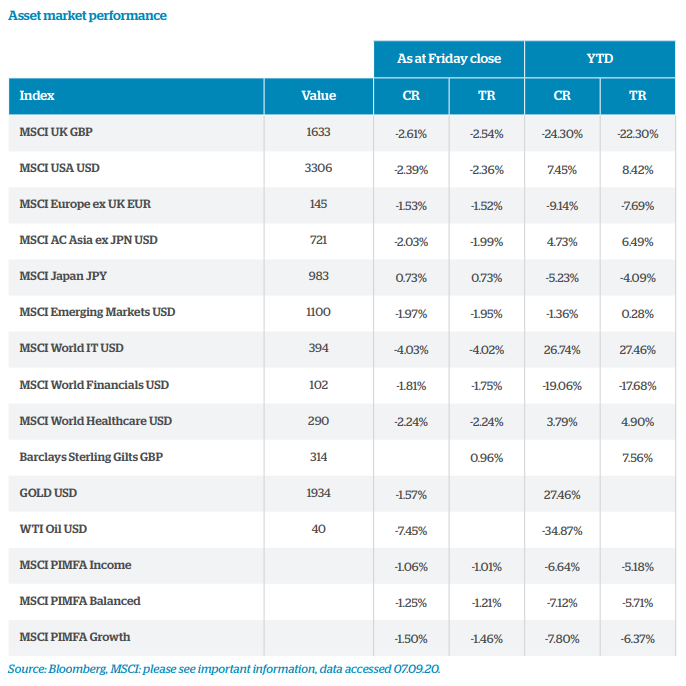
In an impeccably timed blog published last Thursday, Lars asked whether now is the time to start taking profits on technology stocks. Investors across the world obviously took note and decided that the short-term answer was an overwhelming ‘yes’, with the Nasdaq down around 10% in just two days. In recent months, we’ve seen record after record broken by technology stocks.

Nigel Masding on the Active Equity team produced some eye-popping statistics this week, looking at year-to-date returns for the MSCI World, which sum this up nicely. Until the end of August, the index of 1,718 stocks had generated a return of +5.7%. Just four stocks contributed enough on their own to push the index into positive territory and to deliver this return: Apple, Amazon, Microsoft* and Tesla*. An index composed of the other 1,714 stocks is still underwater (source: Bloomberg).

With that in mind, are we seeing the tech bubble pop or is this just a short technical correction? We favour the latter interpretation. There was no apparent news flow that was a convincing catalyst for the move and the overall pattern of performance within equities was not consistent with a risk-off environment or of particular virus concerns. Still, there were a few hints of pretty irrational behaviour in the immediate run-up to Thursday, with high-profile stock splits seemingly responsible for driving tech names higher last Monday and Tuesday.  

We have long-held two guiding principles for assessing when the time might be right to exit technology stocks: excessive valuations and excessive bullishness. In our opinion, neither signal has turned red yet. Outperformance has been driven by a step-change in earnings rather than by valuations. On sentiment, it is impossible to argue that tech is a particularly unpopular sector, but we don’t see signs of excessive bullishness either. For context, we’ve been tactically positive on technology stocks (relative to the broader market) since early 2018.

In the week in which a new trailer for the latest Bond film was released, our conviction in that trade is shaken, not stirred.

Vaccination vacillation

In the late 18th century, Edward Jenner pioneered the world’s first inoculation by intentionally infecting an eight year old boy with cowpox. Medical trials have evolved somewhat since then, but the word vaccine still derives from the Latin for cow. And it is hopes of a vaccine breakthrough that have continued to drive the bull market in equities and credit over recent months. This week saw the Centre for Disease Control (CDC) in the US issue advice to State governors to prepare for potential vaccine distribution as early as 1 November. The chart below, from Professor Philip Tetlock’s Good Judgement Project, shows the extraordinary change in expectations around the timeline to that vaccine. The chance of a vaccine being widely available by March next year is now seen as more likely than not, having been almost inconceivable only a few months ago.

Good Judgement Project: When will enough doses of FDA-approved COVID-19 vaccine(s) to inoculate 25 million people be distributed in the United States?

Source: LGIM, Good Judgement Project, 4 September 2020. There is no guarantee that any forecasts made will come to pass.

In the meantime, Jason Shoup of LGIM America raises the intriguing possibility of a breakthrough in testing technology. If cheap (<$5), rapid (<15 min), saliva-based (i.e. no nose swab), and self-administered coronavirus tests become widely available, it would allow a rapid normalisation in sectors where social distancing is difficult/impossible. The US government have called the development of a vaccine “Operation Warp Speed”. Not to be outdone, the UK government dubbed the development of rapid testing technology “Operation Moonshot”.

Financial markets will be willing to forgive signs of an economic stumble in the short term, provided that the medium-term outlook continues to look reassuring. With COVID-19 cases rising fairly rapidly across large parts of Europe again, these breakthroughs cannot come soon enough.

EUR-eka moment in FX markets

In the last few years, one of the most consistently poorly performing investment strategies has been following currency momentum. The kind of sustained multi-year currency trends that characterised the 1990s and 2000s have become a thing of the past as central banks deploy verbal (and the threat of actual) intervention to manage exchange rates within relatively narrow corridors. This change in landscape has become so extreme that anti-momentum currency trades have been started to become consistent winners. The post-COVID-19 currency markets have been dominated by a lurch lower in the US dollar that threatened to break that pattern: on a broad trade-weighted basis, the dollar index is down around 10% since the March highs with the Federal Reserve’s framework review providing the latest catalyst.

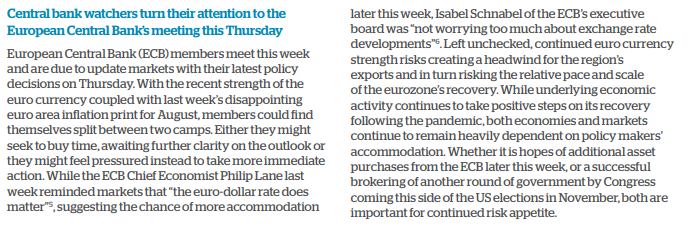
This week brought the first serious pushback against that trend from the ECB. Philip Lane, the central bank’s chief economist said the “euro-dollar rate does matter”. Sternly worded stuff, indeed! More revealing, a number of his colleagues on the Governing Council, under the veil of anonymity provided by an FT article, followed up with even stronger comments: the strengthening of the euro is a “growing concern” and “worrisome”. These kind of comments hark back to the days when Jean-Claude Trichet, former ECB president, used to bemoan “brutal” FX moves.
 
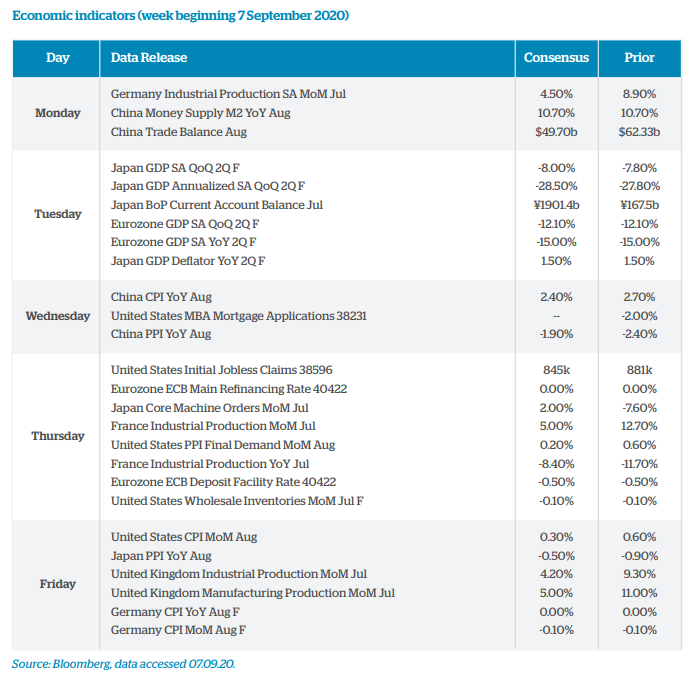
The market seems to have taken this as an indication that 1.20 is some kind of line-in-the-sand for the single currency. For that to be effective, the ECB will soon need to back up words with action. The ECB is obviously heavily constrained in its ability to cut interest rates further, but we anticipate an extension of the quantitative easing programme to be announced in the next few months. That won’t be a big surprise to the market, but should help to keep a lid on government funding costs in the periphery and tame the recent burst of euro strength, in our view.
 
The urgency of addressing the situation will have been underlined by some exceptionally weak European inflation data this week. European headline inflation dropped back below zero for the first time since 2016. On a core basis, HICP inflation dropped to the lowest level on record at just 0.4%. There are exceptional circumstances associated with the timing of summer sales, but these are the kind of numbers that will bring an inflation-targeting central banker out in a cold sweat. With the ECB looking dangerously like Old Mother Hubbard (with a bare policy cupboard) we think that staying short European inflation is a strategy likely to benefit from a consistent fundamental tailwind. *For illustrative purposes only. The above information does not constitute a recommendation to buy or sell any security.

A useful article from Legal & General’s Asset Allocation team with a focus on technology stocks, a vaccine for COVID-19 and the recent change in tack from the European Central Bank.

Please continue to check back for out latest updates and blog posts.

Charlotte Ennis

08/09/2020


Team No Comments

Invesco – Weekly Investment Update

Please see below an article published by Invesco today, which provides their insights to recent market performance:

Please continue to check our Blog content for advice and planning issues and the latest investment, markets and economic updates from leading investment houses.

Please keep safe and healthy.

Carl Mitchell – Dip PFS

IFA and Paraplanner

07/09/2020

Team No Comments

Blackfinch Monday Market Update

Please see below for the usual Monday Market Update from Blackfinch:

UK COMMENTARY

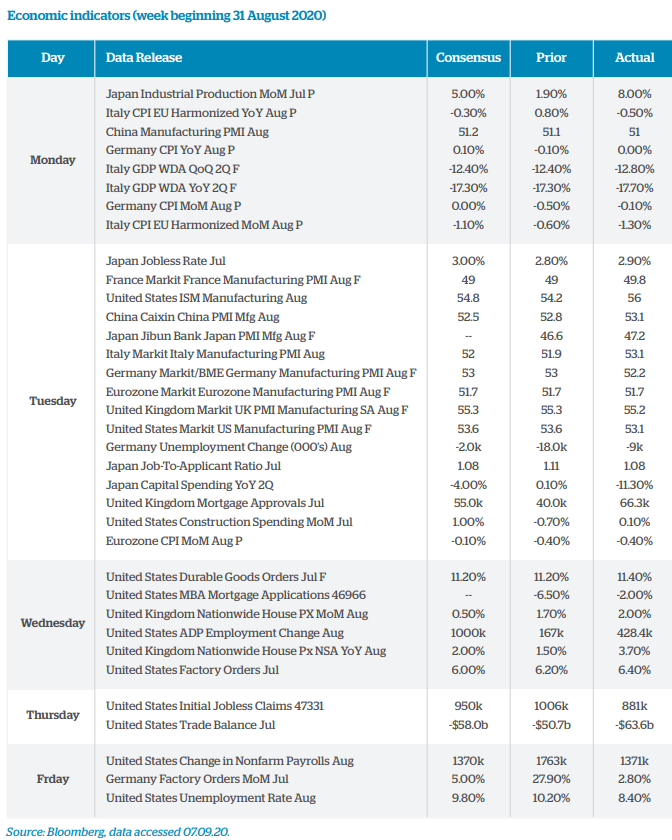
  • The seasonally-adjusted IHS Markit/CIPS Purchasing Managers’ Index (PMI) rose again in August to a 30-month high of 55.2, albeit marginally below the earlier flash estimate.
  • The Services PMI figure for August was also revised downwards from its earlier estimate and showed that the rate of job losses across the sector was at its highest since May.
  • Manufacturing PMI fell to 54.6 in August, with the lack of new work to replace completed contracts seemingly causing the slowdown. The data, however, shows that the industry remains in expansion territory.
  • The Bank of England reports that mortgage approvals for house purchases rose to 66,281 in July, up from 39,902 in June and 9,285 in May.
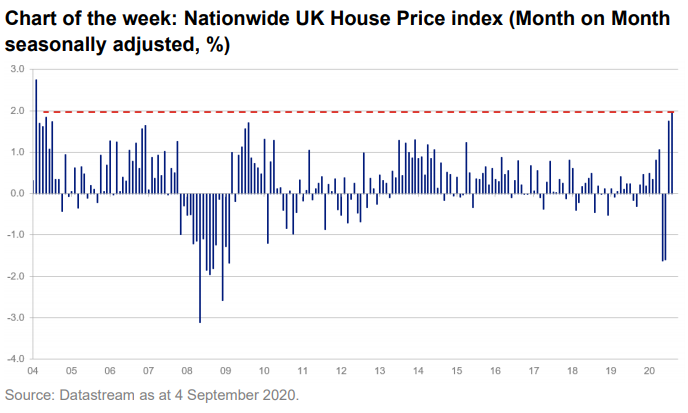
  • Figures from Nationwide show that house prices in August rose at their fastest rate in 16 years.
  • Four UK housebuilders are being investigated by the Competition and Markets Authority following ‘troubling evidence’ over the way in which leasehold properties were sold.
  • Alex Brazier, the Bank of England executive director for Financial Stability Strategy and Risk, tells MPs that it isn’t possible for all office workers to return to their desks, commenting that public health issues, public transport capacity and the ability for offices to comply with COVID-safe guidelines are all significant factors that need to be considered. Brazier adds that ‘we should expect a more phased return, depending on the public health outcomes we see in the coming weeks and months’.

US COMMENTARY

  • Talks restart between US Treasury Secretary Steven Mnuchin and House of Representatives Speaker Nancy Pelosi over a fresh round of stimulus, with the former stating that a ‘bipartisan agreement still should be reached’.
  • Non-farm payrolls show that the US added 1.4mln job in August, in line with expectations, with the unemployment rate falling to 8.4%.
  • Weekly jobs data shows that there were 881,000 new jobless claims, against estimates of 940,000.
  • Tech stocks fall as investors reconsider the valuations of those stocks that have rallied hard over the last few months.

ASIA COMMENTARY

  • The private Caixin survey shows that Chinese manufacturing activity in August rose at its fastest pace in nearly 10 years.

COVID-19 COMMENTARY

  • The New York Times reports that the US Centers for Disease Control (CDC) has notified public health officials in all 50 states to prepare to distribute a COVID-19 vaccine to health care workers and other high-risk groups as soon as late October or early November. The report suggests that the CDC has laid out the requirements for shipping, mixing, storage and administration of two vaccine candidates, currently only referred to as Vaccine A and Vaccine B.

Please continue to check back for more blog content.

Andrew Lloyd

07/09/2020

Team No Comments

AJ Bell – Barratt makes sure its balance sheet stays as safe as houses

Please see article below from AJ Bell received 06/09/2020.

Barratt makes sure its balance sheet stays as safe as houses

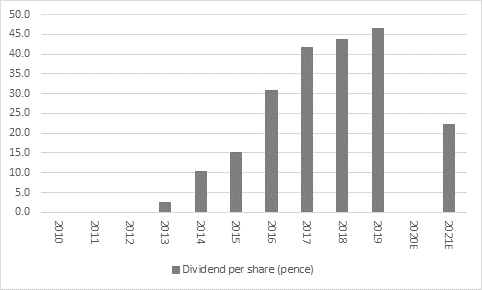
Barratt’s confirmation of its decision of 6 July to cancel both its planned second-half and special dividends for fiscal 2020, saving some £375 million in the process, may surprise some but the house builder’s reticence to lavish cash upon investors – at least for now – makes sense for several reasons. The early share price gains suggest that shareholders are not unduly concerned, either, especially as the FTSE 100 member is targeting a return to the dividend list when it feels it can comfortably make a payment that is 2.5 times covered by earnings per share.

The current consensus analysts’ forecasts for the year to June 2021 is a dividend of 22.1p per share, enough for a yield of more than 4%. That said, earnings estimates imply cover of 2.25 times, a little below management’s target ratio, to suggest that forecast could be a little optimistic unless profits exceed current expectations.

Source: Company accounts. Fiscal year to June

Still, a 4%-plus dividend yield may be enough to entice income-starved investors, even if the absence of any distributions for fiscal 2020 means patience will be required as Barratt hunkers down. The reticence to return cash now is understandable for three reasons:

Barratt did accept help from the Government’s furlough scheme and paying a dividend having accepted state assistance would not be a good look in the eyes of the wider public. To give Barratt its credit, though, the housebuilder did return the £26 million it received just as its new financial year began in July, so that could clear the way for a return to the dividend list in the fiscal year to June 2021.

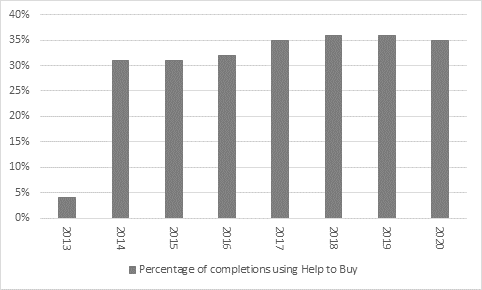
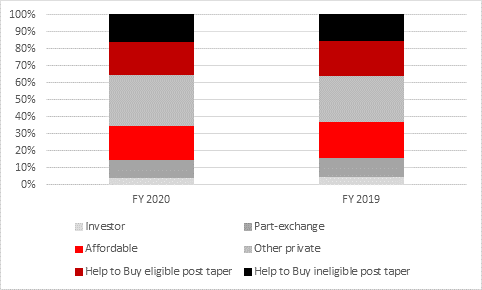
The Government’s Help to Buy scheme supported 35% of last year’s completions, broadly similar to the 36% level seen the year before.

Source: Company accounts. Fiscal year to June.

In its presentation to analysts and investors Barratt notes that just under half of these, or 16% of fiscal 2020’s total completions, would not be eligible to Help to Buy under the new, tapered terms of the programme which will apply from March 2021 to March 2023.

Source: Company accounts. Fiscal year to June.

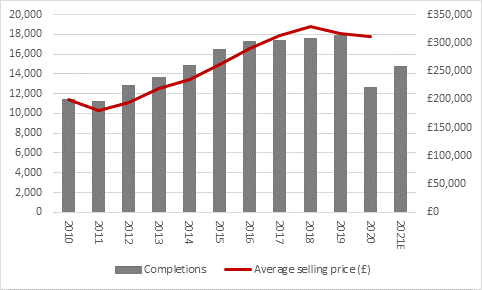
As a result, management may be inclined to caution, given wider uncertainty that surrounds the economic outlook. The furlough scheme is just starting to unwind and no-one quite knows what that will mean, although the Bank of England continues to expect an increase in unemployment above 7% before the worst is over, compared to June’s 3.9% rate. Any jump in joblessness could hit consumer confidence and the ability of would-be house buyers to meet mortgage payments, so they could be forgiven for deciding to stay put for a while, just in case. Whether a worst-case scenario would cap completions or hit selling prices remains to be seen, but Barratt’s target for volumes in fiscal 2020-21 of 14,500 to 15,000 lies short of prior peaks and speak of a gradual recovery, despite this week’s encouraging mortgage application statistics.

Source: Company accounts. Financial year to June. 2021E based on mid-point of management targets outlined in full-year results statement.

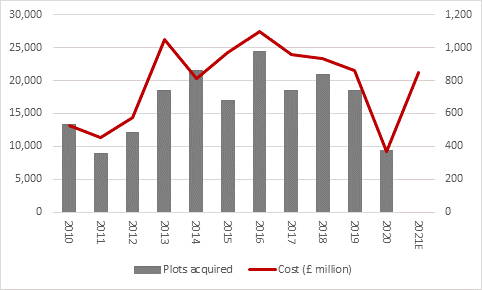
Land purchases are due to go up from £369 million in fiscal 2020 to £850 million in fiscal 2021.

Source: Company accounts. Financial year to June. 2021E based on mid-point of management targets outlined in full-year results statement.

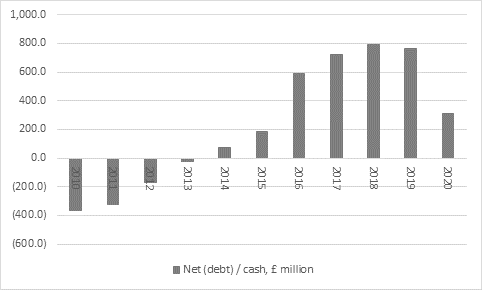
Buying land cheaply is the key to long-term margins so management presumably feels now is a sensible time to buy and prioritise this in terms of current capital allocation, while preserving a net cash balance sheet (as the memories of the fright received during the downturn of 2007-09 have yet to fade), to ensure strong long-term margins and returns on capital.

Source: Company accounts. Financial year to June.

These articles are for information purposes only and are not a personal recommendation or advice.

Please continue to check back for our regular blog posts and updates

Charlotte Ennis

07/09/2020

Team No Comments

Active Minds: Jupiter Asset Management Fund Manager Update

Please see the below article from some of the Fund Managers at Jupiter Asset Management posted late yesterday afternoon:

The big dollar downturn?

The Federal Reserve will try to inflate debt away, and the V-shaped recovery is intact, said Mark Nash, Fund Manager, Fixed Income. The US dollar has dropped, and government bond yields have surged following the Fed’s policy shift last week at the Jackson Hole summit, where Jay Powell confirmed that the central bank was prepared to tolerate higher inflation.

What is striking, Mark said, is that global bond yields moved higher too, indicating that the dollar price action is a global reflationary booster. A weaker dollar improves the outlook for the global economy, reducing the appeal of long dated government bonds, and therefore creating steeper yield curves, he explained.

Why? In Mark’s view, it’s because the tide of liquidity has now reversed. The strong dollar was a result of the global dollar shortage, and US growth exceptionalism was linked to less cross-border lending which curtailed emerging market activity and reserve growth in those country’s central banks. This amounted to less dollar liquidity for everyone, including the Fed, and excessively tight emerging market liquidity conditions to prevent local currency weakness (notably in China, for example).  This is why, as the dollar noose tightened, emerging markets underperformed and we saw the US repo funding crisis last year, said Mark.

The Fed’s quantitative tightening program made the problem worse by removing even more dollars from the system. Mark thinks they finally became aware of the error of their ways in 2020, which explains the speedy reaction to the March funding squeeze. It’s much easier to use a crisis to reverse previous mistakes than admit to them at the time!

Mark Nash

Fund Manager, Fixed Income

After Abe, is Japan ready for a taste of Suga?

Dan Carter, Fund Manager, Global spoke about the sudden resignation of Japan’s Prime Minister Shinzo Abe, who is leaving office for health reasons. The Japanese equity market fell somewhat in reaction to the news, although the greater activity has been in the production of column inches.

Dan argued that perhaps the market impact is being somewhat overplayed, reminding us that Japanese equities have seen something of an ‘anti-bubble’ in recent years, rising strongly in nominal terms while earnings multiples have stayed fairly static (due to rising corporate profitability). That hints to Dan at where the correlation/causation sits with respect to Japanese equity market performance under Abe – and it is to a greater extent more to do with correlation.

Shinzo Abe became Japanese Prime Minister (PM) for the second time in December 2012, at the end of a cycle that had seen Japan take a beating from the global financial crisis, the Fukushima nuclear incident, and the destruction of the Tōhoku earthquake/tsunami. An economic and equity market rebound from that low would have happened almost regardless of who was PM, and has been aided by the ongoing structural tightening of the labour market which has seen better allocation of capital and a greater focus on profits. Nevertheless, it is fair to say that Abe was always a pro-business leader, for example cutting corporate tax rates, and he realised that Japan needed to use its capital base better to squeeze more growth out of its maturing economy. So, although Abe’s departure cannot be seen as positive for the Japanese market, neither should it be all that great a blow, in Dan’s view.

The most important question now is who will now take over as Prime Minister. The three names in the frame are Yoshihide Suga, Shigeru Ishiba and Fumio Kishida. Kishida would be the main continuity candidate although is seen as a dull choice, while Ishiba takes a more populist approach and would be less pro-business than Abe, although he’s more popular with voters than he is with his political colleagues so the fact that this election will be held within the party works against him.

At the time of writing, however, the front runner is Suga, the current Chief Cabinet Secretary. He is very much an Abe lieutenant and so we could expect a continuation of the general thrust of Abe’s policy agenda. One key area of difference with implications for the equity market, however, is that Suga has previously been openly critical about high prices charged by the telecommunications sector. Has the strategic savviness of telcos in the last couple of years, through introducing better structured plans and additional services, done enough to address his concerns? Or would a Suga term in office lead to a tightening of regulations and a material hit to the sector’s profitability? This is a live issue for all investors in Japanese equities, particularly those like Dan who also seek a premium yield in addition to growth, and careful thought will be needed as the story develops.

Dan Carter

Fund Manager, Japanese Equities

Investors playing catch-up on gold

Despite this year’s strong rally in the price of gold, from around US$1,500 per ounce at the beginning of the year to almost US$2,000 recently, many investors are still playing catch-up, according to Ned Naylor-Leyland, Head of Gold & Silver. Many active investors remain underweight monetary metals, according to Ned, with only reluctant participation among buyers.

Among recent converts is Warren Buffett, the sage of Omaha, previously no fan of gold, but whose Berkshire Hathaway recently disclosed a sizeable, new position – valued at more than half a billion US dollars – in one of the world’s largest gold mining companies. Behind the rally in gold is the commitment of the Federal Reserve to monetary loosening, the swelling of central bank balance sheets, and the spike in government spending, fuelling distrust of the US dollar. Negative real yields mean that many US Treasury bondholders face losses in post-inflation terms, which makes gold and silver attractive as stores of true value.

The largest gains could be seen, not in monetary metals themselves, but in the shares of companies which mine them, Ned believes. Higher market prices for gold and silver have not yet been fully factored into valuations of mining equities, he argued. Ned said that the shares in silver miners are pricing in silver below US$20, well below current market prices, which have seen silver trade at more than US$28 per ounce lately.

Ned Naylor-Leyland

Head of Strategy, Gold and Silver

From reflation to Brexit: the outlook for UK midcaps

The UK small and midcap team is focused squarely on the dynamic between coronavirus newsflow, the US election in November, the reflation trade and Brexit negotiations, said Richard Watts, Head of Strategy, UK Small & Mid Cap.

This mix of events will make for an eventful fourth quarter of the year, said Richard, adding that his core expectation is a Brexit agreement that will be viewed as not too onerous for the UK. He recognizes the inherent risks in the UK-EU talks as Britain prepares for the end of the transition period at the end of the year, and he notes that the UK market and UK midcap stocks appear cheap largely because of Brexit.

In the US, Covid-19 news has been encouraging recently, with infection numbers falling meaningfully since a spike in July, while the presidential election race may be tightening, with some oddsmakers suggesting that President Trump has pulled level with challenger Joe Biden, said Richard. Trump’s re-election may benefit more traditional, value-oriented companies, he added.

The Federal Reserve’s robust support for the US economy combined with a weaker dollar underscores a reflation trade that has implications for positioning the portfolio, Richard said. He favours a ‘barbell’ approach, with technology companies and other structural winners on one side and value-oriented stocks including banks and housebuilders on the other.

UK housebuilders have struggled to gain traction this year, in contrast to the US, where the housebuilders index has touched an all-time high. The difference in performance seems to be down to Brexit, said Richard, noting the difficulty for investors in balancing the desire for more reflationary exposure with the risks and opportunities of the Brexit dynamic. The solution may be to proceed cautiously, he said.

Richard Watts

Head of Strategy, UK Small & Mid Caps

Tech bulls still charging, but elsewhere it’s a sceptical rally

Ross Teverson, Head of Strategy, Emerging Markets, made some observations from the second quarter reporting season. Generally, these fell into two categories – those from companies that are relatively unscathed by the pandemic and those that have faced major challenges.

Internet and tech names stand out among the former category, and banks are well represented in the latter camp. The leading technology and internet commerce businesses in China, some of which already dominate some of the local indices in terms of constituent weightings, posted strong numbers with sales up by around 30% year-on-year. Semiconductor and tech hardware companies have likewise performed well as the sector benefited from a following wind. These results haven’t materially altered Ross and his team’s view of the individual companies: the strategy continues to hold their preferred names in these sectors, and so far they have resisted the temptation to take profits as they see stock-specific reasons why positive change can continue to drive earnings upgrades.

Among the more challenged part of the emerging market equity universe, Ross sees no problem in making a valuation case for investing in banks, many of which are trading at or even below book value. Banks have clearly been some of the largest hit business by the Covid-19 pandemic, but aggressive provisioning in the first quarter when the pandemic first took hold is now feeding through to an improving trend for capital ratios. Ross also highlighted a Russian bank, which delayed its dividend decision earlier in the year, but has now proposed to pay a normal level of payout (indeed it is higher than last year’s).

In summary, Ross said that for those companies that have been impacted by the pandemic, there is mounting evidence that the worst is behind them, although (with the exception of the internet/tech sector as mentioned above) there is still a lot of scepticism expressed in share prices.

Ross Teverson

Head of Strategy, Emerging Markets

This article gives a good insight into what is currently going on within a range of different areas and shows the current views of the fund managers within these sectors.

Articles like this provide us with a good update and insight into the current direction of travel within the markets.

Please continue to look out for our regular blog updates.

Andrew Lloyd

04/09/2020