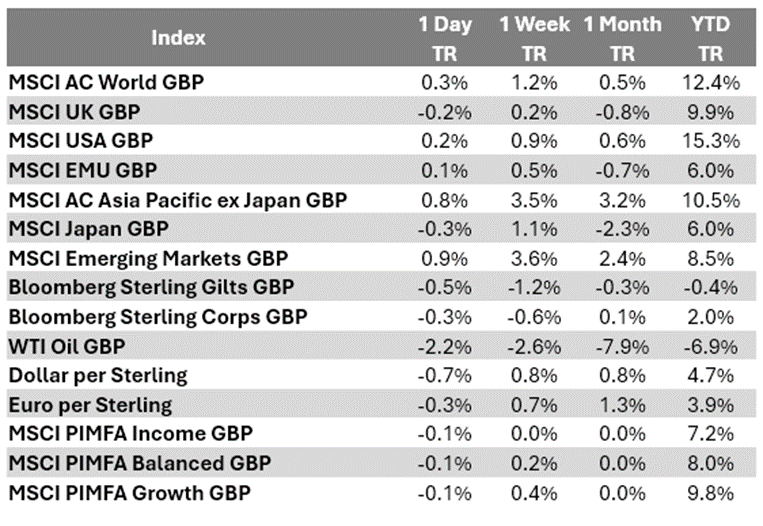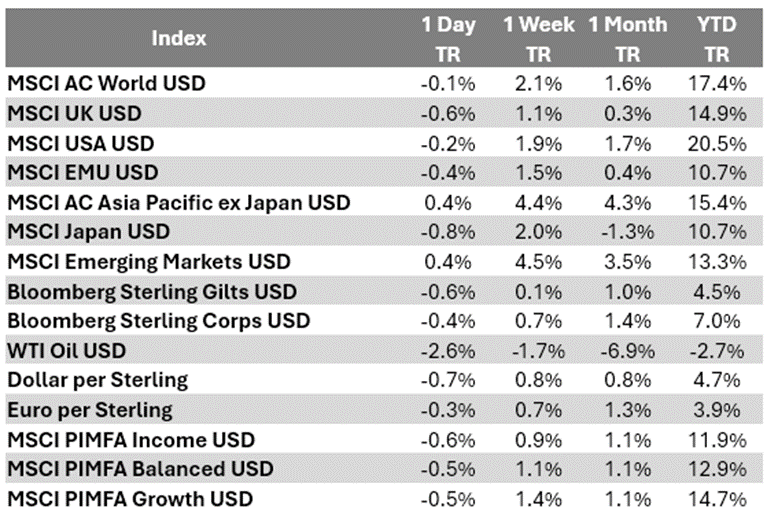
Please see today’s daily update from EPIC Investment Partners Received this morning:
China’s Guangzhou Automotive Group (GAC) announced in mid-April that it had “broken through” several obstacles regarding the durability and safety of all solid-state batteries (ASSB), best described as the next generation of EV (electric vehicle) batteries. GAC has opted for a solid electrolyte system. This sets it apart from Toyota, a long-term partner of GAC, who are the world’s leading holder of ASSBs patents by some margin.
It is widely recognised that China leads the way in EV adoption. In 2023 EVs market share reached 24%, almost double the market share in 2021. However, over the same period PHEV’s (hybrids) market share has almost quadrupled from 3% to 11%. The biggest advantage of PHEVs over EVs? Range and ease of ‘recharging’.
This is about to change. GAC expects to roll out its ASSB in 2026 offering a range of over 1,000km (620 miles). Toyota and CATL are aiming to roll out their ASSBs in 2027 while Nissan and BMW are aiming for 2028 and 2030 respectively. All are expected to have a similar range.
Crucially Toyota’s ASSB will have a charging time of just ten minutes – not substantially different from the time taken to refuel a vehicle with fossil fuel! This is likely to be a real game changer.
We read about oversupply in solar panels, batteries and indeed EVs as China ramps up its goal of reducing dependence on (largely imported) oil and gas by increasing renewable energy production. China’s ability to develop at scale and reduce costs across a variety of industries is well documented. As the US and Europe complain about subsidies and other Government support, EV customers worldwide are enjoying better products at lower prices.
We have the impression, rightly or wrongly, that the EVs currently available with a range of perhaps 250-300 miles suit an urban population much better than a rural dweller. This is a global opinion, not just China.
An EV that will match an ICE (Internal Combustion Engine) on range and refuelling time suddenly looks like a very smart option for everyone, urban or rural. The real question is whether countries will invest sufficiently fast in their electricity infrastructure to cater for the increased demand for high-speed charging. There is no doubt that China will react to this challenge positively. The one ESG caveat is that the majority of China’s electricity (circa 56%) is still produced by coal fired power plants.
Please continue to check our blog content for the latest advice and planning issues from leading investment firms.
Please see below today’s Daily Investment Bulletin from Brooks Macdonald, which was received this morning, 16/05/2024:
What has happened
Markets enjoyed a reignited rally yesterday following a warmly-received US Consumer Price Index (CPI) report which for once avoided any nasty surprises. Hopes for US interest rate cuts later this year were also buoyed by the latest US retail sales data for April, where the annual rate dropped to +3.0%, and weaker than expected. On both sides of the Atlantic yesterday, the US S&P500 and the pan-European STOXX600 equity indices both hit fresh all-time highs.
Latest US consumer inflation data lands
The latest (April) monthly US CPI report landed yesterday. The annual all-items CPI rate came in at +3.4% for April, down from +3.5% back in March. The core (excluding energy and food) CPI annual rate came in at 3.6% for April, down from 3.8% back in March. For both the all-items and the core rates of annual inflation, these were in-line with market expectations. Importantly, the annual core rate of inflation was the lowest reading in 2 years.
Market expectations for US Federal Reserve cuts up to two this year
On the back of the US CPI data, yesterday saw markets raise their expectations for Fed rate cuts later this year. For calendar 2024 as a whole, yesterday saw markets price in a cumulative -0.52% of cuts by the Fed’s December meeting, up +9 basis points, so once again pricing in a full two quarter-percentage-point cuts. For context, markets have had quite the ‘expectations journey’ so far this year. At the start of 2024, markets were pricing in more than 6 cuts each of -0.25% from the Fed. Lately this had dropped to less than 2 such-cuts. As for when the first Fed cut might come, markets yesterday raised the probability of a rate cut by the Fed’s September meeting to 61%, up from 50% the day before.
What does Brooks Macdonald think
As is so often the case, the devil is in the detail. Digging into yesterday’s US CPI report, the Month-on-Month (MoM) data gave investors some grounds for cautious optimism. Core services inflation slowed from +0.5% in March to +0.4% MoM in April, while core goods inflation remained negative at -0.1% MoM. Importantly, there was also a deceleration in shelter rents, which fell from +0.5% in March to +0.4% in April MoM. All in all, the US CPI data yesterday was a step in the right direction, and especially so following the previous four monthly CPI reports which had all been a bit hotter-than-expected. That said, further progress on inflation is likely going to be needed over the coming months in order to win over the US Federal Reserve and give them the confidence they need to finally start cutting interest rates.
Bloomberg as at 16/05/2024. TR denotes Net Total Return.
Please continue to check our blog content for advice, planning issues and the latest investment, market and economic updates from leading investment houses.
Please see the below article from Brewin Dolphin detailing their key takeaways from recent market data. Received yesterday.
Markets were kind last week, marrying with the sentiment of the previous week’s round-up, where we discussed how the U.S. employment report added credibility to a dovish tone from Federal Reserve Chairman, Jay Powell.
We’ve seen a bit of push and pull with investors of late. At the start of the year, there were expectations of deep interest rate cuts (which seemed excessive), but some investors have now reached the point where they are entertaining the possibility of an interest rate increase.
However, markets now seem more realistic about the future trajectory of interest rates and the yield curve implies that rates will gradually fall over the next few years. Assuming that we see a recession within that period, bonds may outperform, but a repeat of the post-financial crisis bull market for bonds seems unlikely.
A quick recap of earnings season
The very recent stabilisation of interest rate expectations has been a supportive feature for equity investors, who’d started to become much more concerned about possible rate increases than economic growth. However, they’ve also had a raft of earnings results to sift through over the last few weeks.
Regular readers will know that some oft-quoted statistics regarding earnings season are meaningless. It’s of no consequence that 80% of companies beat estimates for earnings and 50% beat estimates for sales, because this happens every quarter. Generally, the important thing is the guidance companies give to inform these estimates, and how they evolve over time.
Usually, estimates are set and are influenced by whatever guidance companies offer, after which they gradually decline as the year progresses. My colleague Kelly Bogdanova from our RBC Wealth Management U.S. team has observed this phenomenon over time and notes that full-year estimates for 2024 company profits are holding up well, where usually they tend to slide downwards over the year (around 5% by this stage).
No change from the Bank of England
In the UK, the Bank of England (BoE) announced its latest monetary policy decision. Unsurprisingly, there was no change to the actual policy rates, but this was a meeting in which the BoE updates its forecasts.
It raised its growth forecast, albeit marginally, and reduced its inflation forecasts, even more marginally. The significance of this is that the BoE makes its forecasts based upon the path of interest rates implied by the markets. So, despite markets expecting fewer interest rate cuts, the BoE still expects growth to be a touch better.
To me, the most striking comments from Governor Andrew Bailey were that the committee would likely “need to cut bank rates over the coming quarters and make monetary policy somewhat less restrictive over the forecast period, possibly more so than currently priced into market rates.” That last phrase signals that he’s happy to guide interest rate expectations downwards. Doing so is effectively changing monetary policy, because the interest rate expectations he guides downwards will feed into mortgage rates. Those mortgage rates will then trigger housing market activity, support house prices and will likely make homeowners feel wealthier as a result.
This is also important because Bailey’s comments were couched in language which made clear that incoming data will need to support the idea of inflation moderating. Goods inflation is quite subdued at the moment, but services inflation remains high. A big part of high services inflation is housing and particularly high rental inflation. Expectations are for rental inflation to slow over the year. According to some studies, rents forming a record level of household earnings would seem likely to restrain the pace of rent increases to some extent.
The UK economic recovery arrives
I’ve talked about the signs of a cyclical recovery in the UK economy for the past few months, bouncing back from the “technical recession” of last year. Well, last week’s Q1 GDP report seemed to reflect that, with the economy expanding 0.6%. This was much stronger than expected.
The strength was across a broad range of sectors, but services consumption was a key area of strength. Any further recovery in house prices would likely drive more growth in consumption now that households have rebuilt their savings and are beginning to acclimatise to the higher prices.
So, the recovery of growth should be able to continue, particularly if the BoE is right and inflation continues to moderate, but there are some things to watch out for.
In the UK, the labour market seems to have slackened off from the post-pandemic labour shortage. The question is how much further will it weaken?
Provisional data has suggested that April saw the sharpest drop in employment outside of the pandemic period (records only go back ten years or so). These data are quite erratic and usually substantially revised (similar estimated declines from last month have been largely wiped out by revisions) so we shouldn’t be too hasty to extrapolate them into a sharp recession, they’re more likely to reflect a gradual ebbing of labour demand. In fact, the more worrying trend data, from the BoE’s perspective, would be the apparent resumed pick up in wages that is evident in the official figures and also some survey data.
Despite all the emphasis on the UK last week, it’s also worth mentioning that initial jobless claims ticked higher in the U.S., which will add to the softer labour market data from last week and give fuel to the argument that interest rates will indeed be cut this year.
Please continue to check our blog content for advice, planning issues and the latest investment, market and economic updates from leading investment houses.
Please see below today’s Daily Investment Bulletin from Brooks Macdonald, which was received this morning:
What has happened
Markets looked to be in a holding pattern on Monday, ahead of key US Consumer Price Index (CPI) inflation data due out tomorrow. Helping to dampen the mood a little, was some caution from US Federal Reserve (Fed) Vice-Chair Philip Jefferson. Jefferson said yesterday that the Fed should keep interest rates in “restrictive territory” until it has “additional evidence” that inflation is moving toward target. Staying with the US, later today we have retailer Home Depot’s earnings results – along with fellow retailer Walmart due on Thursday, these are two of the most important corporate barometers for the US consumer, so it should provide us with a lot of information about how the US consumer is doing ‘at the coalface’. Finally, earlier this morning, UK labour market data just published has shown wage growth remaining strong. UK annual (nominal) regular pay in the 3-months-to-March is up +6.0%, unchanged from an upwardly revised 3-months-to-February, and above expectations looking for +5.9%. At the edges, this wage data will likely push back a little on the chances of seeing a June rate cut from the Bank of England.
European banking consolidation gets a possible green light
It’s been busy in the European banking sector lately. Last week, we saw a hostile Eur11.5bn all-share offer surface between two Spanish banks, with BBVA seeking to acquire its smaller rival Sabadell. But while the Spanish government has been quick to criticise BBVA’s approach, it is interesting that other European governments might take a different view to possible banking deal activity in their own markets. In a Bloomberg interview yesterday, French President Emmanuel Macron said he would be open to seeing a major French bank being taken over by a European Union rival because “dealing as Europeans means you need consolidation as Europeans”. According to Bloomberg, Macron’s logic is that such a move would spur the deeper financial integration which he sees as critical for the European bloc’s future prosperity. While European banks have seen good relative-market performance lately, valuations, at meaningful discounts to book value for the sector in aggregate, arguably still offer upside potential.
New York Federal Reserve survey sees inflation expectations pick-up
A survey out yesterday has seen a pick-up in consumer inflation 1-year-ahead expectations. The survey, from the New York Federal Reserve, on Monday, showed consumer prices are expected to be up +3.3% over the next year. That’s a pick-up from around the +3.0% mark over the previous four months and is the highest reading since November last year. Later today, the US inflation ‘news-train’ continues with US Producer Price Index (PPI) inflation due, before the all-important US CPI data lands tomorrow.
What does Brooks Macdonald think
Fed officials have been clear that they want to see more evidence that inflation is falling before they cut rates. Not only this but, in particular, they want to see evidence that inflation is moving sustainably towards their 2% target. If that’s the hurdle to get over, yesterday’s pick-up in surveyed consumer inflation expectations is not helpful. Meanwhile, the number of 0.25% cuts from the Fed expected by markets this year is currently stable at between 1-to-2, though this is a long way south of the 6-to-7 cuts that were priced in at the start of this year. With markets having already moved a long way already this year to discount the Fed’s current caution, interestingly, it could leave upside risk for Fed interest rate cut-hopes should US inflation data come in lower-than-expected over the next 2 days.
Bloomberg as at 14/05/2024. TR denotes Net Total Return.
Please continue to check our blog content for advice, planning issues and the latest investment, market and economic updates from leading investment houses.
Please see below, Tatton Investment Management’s ‘Monday Digest’ received this morning, 13/05/2024.
A blooming May for the UK
Markets had a bright week, thanks to weaker US job market data and hints that the Federal Reserve might cut rates. US consumer sentiment seems to be wavering thanks to higher inflation, but the Fed thinks inflation pressures are abating. Hong Kong stocks were up too, thanks to potential Chinese tax waivers.
The UK market is performing well now, with the FTSE 100 storming above 8,400. Data shows Britain rebounded in the first quarter of this year, with surprising strength in manufacturing and services. That didn’t stop inflation expectations falling either, allowing Bank of England Governor Andrew Bailey to indicate interest rates will be cut.
That might not happen by the June meeting, though. UK businesses gave become more confident, and sectors like property are primed to bounce back if rates do indeed fall. Even so, the BoE doesn’t think real growth is inflationary, and the dovish tilt is boosting bonds and equities.
That has helped turn things around for FTSE, which underperformed Europe and the US in the first quarter but is now level year-to-date. A lot of this is down to external factors (HSBC’s Hong Kong exposure or Anglo American’s buyout) but smaller, domestic focused companies have started rallying too. They will be helped by the BoE’s dovishness.
Interestingly, currency markets seemed more affected by politics this week than by central bankers. The Labour party’s fiscal policies have become increasingly conservative – with both a big and little ‘C’ – and markets now expect a gentler path for UK government debt than for the US under a potential Republican presidency. That is a role-reversal when it comes to markets’ political preferences. It is possible that currencies may be ruled less by yield differentials and more by political differentials in the next few months.
UK stocks are enjoying a bit of time in the sun, after what feels like a long period in the cold. Maybe it has something to do with the improving weather.
What to take from a strong earnings season
Corporate earnings reports for Q1 have been very strong. US company profits were up 5.2% year-on-year, beating the 3.4% forecasted and delivering America’s strongest profit growth in two years. European firms joined in the good times too: UBS reported $1.8 billion net profit for the first three months of 2024, while UniCredit announced plans to distribute €10bn to investors after beating earnings forecasts.
These reports are crucial given the market backdrop. The timeline for interest rate cuts has been repeatedly pushed back this year – particularly in the US – to the point where investors are questioning whether they will actually happen. Markets don’t know how to interpret strong data; it could delay rate cuts, but it could also bring the profits that ultimately give stocks their value. This confusion has meant up and down equity prices, as economic expectations bounce between ‘soft landing’ and ‘no landing’.
Q1 earnings suggest ‘no landing’ – growth or inflation strengthening without ever properly tailing off. Not only were previous earnings strong, but future earnings projections strengthened through the reporting season. This is the opposite of what normally happens, since companies tend to temper profit expectations the closer they get to give them a lower target to beat. Expected S&P 500 earnings for the current quarter have risen to 9.8% from the 9% expected in March.
Even better growth is expected later in the year, with 17.3% projected for Q4. Mentions of “recession” in corporate reports have dropped to the lowest point since early 2022 too – a sign that the current growth cycle will be reignited before its even burnt out. How much of this optimism is itself down to rate cut expectations – which are sure to be tempered if strength continues – remains to be seen. We also don’t know how much of this strength is unique to the US: European earnings have been strong, but the economy still looks weak. At the very least, we know that if inflation continues, profits will continue alongside.
Share trading catches up with technology
Trading settlement times are about to be cut in North America. Securities trading currently works on a ‘T+2’ rule, mandating a maximum of two days between a trade being agreed and the cash and shares officially changing hands. That will be shortened to T+1 by the end of this month in the US, Canada and Mexico.
Others will soon join the tighter schedules. The EU will publish a consultation on T+1 by the end of the year, and the UK has already committed to adopting it by 2027. India already has T+1 and is talking about moving to T+0 – same-day settlements – with an option for instant settlements.
Many outside of finance think it strange this hasn’t been done already. Not only are long settlement times annoying, they introduce risk for trading parties: asset or currency values might change between trade and settlement.
But fund managers have been fretting about T+1 for months. Updating and shortening processes costs firms. Funds will need greater liquidity access, which is currently expensive thanks to high interest rates. British or European investors in the US have to contend with time zone differences and foreign exchange problems too.
These issues prove why regulation is necessary, though. Everybody wants quicker settlements, but nobody wants to be the first to invest in back room operations that would cost a lot but bring little competitive advantage. As the UK’s consultation highlights, “No one will invest to upgrade their technology to enable T+1 unless the whole market does so at the same time.”
Further cuts to settlement times are likely in the future, but the costs do not scale evenly with every day knocked off – and actually accelerate the closer we get to zero. This is why a seemingly obvious update has taken so long to come about; it is a cost-benefit trade-off. But if T+1 goes smoothly, further reductions are likely.
Please continue to check our blog content for advice, planning issues and the latest investment, market and economic updates from leading investment houses.
Please see below, an update from EPIC Investment Partners which covers the Bank of England’s latest Monetary Policy Committee meeting and highlights the potential implications for markets. Received this morning – 10/05/2024
As expected, the Bank of England (BoE) maintained its policy rate at 5.25% in a 7-2 vote, with the two dissenters calling for an immediate reduction. This marked an increase in the number of dovish voters compared to the previous meeting. Notably, there were no calls for a rate hike this time around. The central bank revised its forecasts, projecting inflation to fall to the 2% target, reaching 1.9% in two years and 1.6% in three years. For context, CPI fell to 3.2%yoy in March. The central bank also upgraded its economic forecast, saying the recession has ended, predicting growth had expanded 0.4% in Q1’24.
The BoE’s Governor Bailey hinted at the possibility of a rate cut at the next meeting but cautioned that a reduction is not “fait accompli”. He also indicated that cuts may come more aggressively than markets perceive. Interestingly, markets appeared to shrug off the more dovish tone only marginally increasing pricing for a June cut, to ~60%, from just under 50% ahead of the MPC announcement. The odds have, however, been trimmed this morning to under 60% following the stronger-than-expected Q1’24 GDP print which showed the economy expanded 0.6% (exp. 0.4%, prev. -0.3%); indicating that markets do not currently perceive an urgent need for monetary easing.
There are still two sets of inflation – and labour market – data for the BoE and markets to unpick ahead of the June 20 meeting. Bailey expects inflation will ease, before increasing to 2.5% in the second half of the year, “owing to the unwinding of energy-related base effects”. In a similar vein with his ECB counterpart, Lagarde, Bailey stated: “There is no law that the Fed has to go first”.
Rate cuts would undoubtedly be welcomed as a “feel good factor” ahead of the elections, as described by Chancellor Jeremy Hunt. However, in a blow, we read a report from the National Institute for Economic and Social Research (NIESR), which indicates UK Chancellor Jeremy Hunt will likely need to raise taxes, as weak growth and sticky inflation undermine public finances. This clearly conflicts with his plans to cut taxes ahead of what is being reported as a potential Conservative election loss. NIESR recommends replacing Hunt’s fiscal rules with a longer investment compliant framework, potentially requiring income tax hikes up to GBP20bn despite £8.9 billion existing headroom. Moreover, the institute’s growth estimates of 0.4% this year and 0.8% in 2025 is even worse than last week’s dire OECD forecasts which said the UK will suffer the slowest growth amongst the G7 nations.
Finally, for those considering indulging in a “dirty kebab” this weekend, spare a thought for British southerners who must pay three times as much as the rest of the country. In fact, to rub salt into the wound, earlier this week we heard that the German Left Party has proposed the use of state funds to cap the price of kebabs at €4.90 (£4.20), and €2.50 (£2.10) for the youth. According to reports, the tasty meaty flatbread costs on average €7.90 (£6.80) and increases with inflation, so called “donerflation”. So, with roughly 1.3bn kebabs consumed in Germany annually, the proposed subsidies would amount to ~€4bn. While Kathi Gebel, a member of the Left Party, calls for a cap on kebabs as a “cry for help!”, the nation’s Chancellor Scholz, who is regularly heckled on the subject, highlighted the “good work” the ECB has done in handling inflation.
Please continue to check our blog content for the latest advice and planning issues from leading investment firms.
Please see below article received from Evelyn Partners this afternoon, which conveys their Investment Strategy team’s thoughts on today’s Bank of England MPC decision to continue to hold interest rates at 5.25%.
What happened?
The Bank of England (BoE) held the base rate at 5.25% at their meeting today. This was consistent with market expectations and marks the sixth consecutive meeting where rates have been held at this level.
The committee vote remained split two ways albeit with another move in the more dovish direction with 7 members voting to hold the base rate at 5.25% and Ramsden joining Dhingra in calling for a 25 basis point cut.
In addition to this there was also a further dovish tilt with 2-year and 3-year CPI forecasts being revised down to 1.9% and 1.6%, from 2.3% and 2.2%. The guidance remained more balanced in keeping the “policy could remain restrictive even if Bank Rate were to be reduced” but adding that it will watch “forthcoming data releases and how these informed the assessment that the risks from inflation persistence were receding.”
What does it mean?
As widely anticipated, the BoE held the base interest rate at 5.25%. Dovish changes included the vote split moving from 8:1 to 7:2 and CPI projections showing a quicker deceleration beyond the 2% target.
Since the March meeting, UK economic data has come in mixed with weak Q423 GDP offset by a stronger start to the year. Domestic wage data and inflation, while still heading in the right direction, then came in slightly above expectations.
Market rate expectations over the period however moved significantly higher, arguably more in relation to stronger US data than the combination of domestic news.
The BoE’s downgrades to CPI forecasts could be seen as indicating that the markets had potentially priced in too much. However, that the guidance remained more neutral arguably detracted from this nuance and market reaction was muted. The odds of a June rate cut nudged up to ~55% from ~50% before the announcement with the full cut still being priced in for August. In total there are 2 cuts priced in for 2024.
Bottom Line
The BoE held interest rates at 5.25%. We continue to expect the first rate cut to materialise over the summer as inflation heads to target but acknowledge that a stronger US and global recovery could have implications.
Please check in with us again soon for further relevant content and market news.
Please see below article received from Brewin Dolphin yesterday evening, which discusses US interest rates, US jobs data, and financial conditions impacting monetary policy.
Last week, investors’ interest was drawn to two beacons, Wednesday’s decision on interest rates by the Federal Reserve (the “Fed”), and the health of the labour market.
The new norm for interest rates?
Firstly, interest rates, and it came as no surprise that they remained unchanged for the sixth meeting in a row, by virtue of which the upper threshold of the U.S. Federal Funds rate has remained at 5.5% for over nine months. A major topic of this year has been the disconnect between the economy and expectations of interest rate movements. For some reason, investors were very confident that rates would fall this year, and I have discussed in previous weekly round-ups that this expectation seems at odds with the available evidence. So, why did investors believe it? There are a few connected reasons:
• Monetary policy operates with long and variable lags, so just because the economy is doing well now, doesn’t mean it won’t be doing badly soon.
• The Fed has raised interest rates to a level it believes should slow the economy down.
• Historically, attempts to do this have tended to go too far.
• While interest rates often fall and stay low for long periods of time, they rarely rise and stay high for very long.
Speculation that interest rates could stay higher for longer has been rife over the last year or so. While it was discussed a lot, economists’ forecasts and market positioning made it clear that the general belief was in interest rates that followed a historical precedent of a rapid decline from a short-lived peak.
However, lately that view has been challenged. Speculation has moved from interest rate cuts starting by March this year to there being no rate cuts at all in 2024; more recently, some have even suggested the next move in interest rates might be upward.
Where are expectations now?
The consensus is still for interest rates to fall by a quarter to a half percentage point by Christmas this year.
Last week offered an opportunity to hear from Fed chairman Jay Powell whether his conviction that rates would fall was wavering, and it is to some extent. Powell believes that gaining the confidence to cut rates will take longer than previously expected.
Why? Well, partly because interest rate cuts have had relatively little effect on the household sector. The very low interest rates during the pandemic allowed most U.S. homeowners to lock in very low mortgage rates, such that there has been minimal impact on aggregate consumer debt service costs.
Beyond interest rates
Sometimes, monetary policy is measured through a broader concept of financial conditions rather than just through interest rates. That includes such things as the level of the stock market (which makes people feel wealthier), or the cost of new borrowing for individuals and companies.
Financial conditions have been loose due to the strong performance of the stock market, and the Fed’s conviction that it will be cutting policy rates has pre-emptively caused a decline in market interest rates.
In the background, inflation has remained higher than had been expected. Some of that has to do with core inflation and reflects a labour market that is still strong and house prices that are more resilient than predicted. Headline inflation has also been driven higher by gasoline prices.
Right now, some of these forces are turning. Gasoline prices have been easing back as the situation in the Middle East shows signs of stability, and connected to that, inflation arising from supply chains has slowed.
The jobs market
The main focus, though, must be on the labour market.
Typically, the labour market responds to a weak economy, so by the time the central bank sees a rise in the unemployment rate, that increase has often developed enough momentum to trigger a recession.
And with that, focus has been on labour market data from last week. Earlier, the very lagged data on job openings suggested the medium-term trend of declining job openings remains in place. We have also seen a decline in the number of people who are voluntarily leaving their jobs – job quitters often achieve higher compensation, so a high quit-rate suggests inflation may be high.
Last week’s monthly labour market report for the U.S. had some very encouraging news for investors. Although new jobs were created, the pace has slowed. The unemployment rate edged up, but only slightly, while wage growth slowed slightly. Everything about the report exuded a sense of controlled descent.
What’s next?
Looking forward, the question is firstly whether this month’s data is noise, and strength will recur next month. That seems unlikely given many of these trends were already in place.
So, if this trend intensifies, could this mean an economy that decelerates or contracts in the run-up to the election? Or can the economy maintain its state of grace, slowing towards target without triggering a recession?
That might seem far-fetched but in support of the latter, more optimistic scenario, the nine months that interest rates have spent unchanged (after a series of rate hikes) is a relatively long time. It’s similar to the year that rates spent unchanged before the financial crisis.
Other than that, it’s almost unprecedented. In the mid-90s, there was a period in which interest rates declined before being reasonably stable for around four years. And these periods of stability seemed to congregate around interest rates of between 5% and 5.5%.
The timing is of interest because the beginning of the 90s ushered in a new era of inflation targeting by central banks, which led to remarkable stability in interest rates.
There are some very valid observations that this period was unusually easy because it coincided with globalisation and the onset of the internet – which conspired to reduce inflationary pressure. Perhaps to some extent, central bankers, who have had a torrid time over the last few years, can claim they are getting to grips with the art of monetary policy and not just lurching from crisis to crisis, as it sometimes feels.
Please check in again with us soon for further relevant content and market news.
Please see the below daily update from EPIC Investment Partners received this morning:
In a long-awaited move, the board of state-owned Petroleos Mexicanos (Pemex) recently approved the oil giant’s Sustainability Plan. The ESG outlay, which aligns with the company’s Business Plan to “consolidate the route to sustainability performance”, establishes goals and ambitions spanning the medium (2030) and long term (2050), with a focus on greenhouse gas emission reduction and energy transition.
Among the key objectives, the company aims to reduce methane emissions by 30% from 2020 levels by 2030 and phase out routine gas flaring by the same year. Additionally, Pemex plans to allocate 14% to 18% of its capital expenditures in 2024, and 10% to 14% annually from 2025 to 2030 towards ESG projects.
In terms of the social aspect, the plan outlines commitments to improve industrial safety performance, generate positive impacts on communities, and strengthen relationships with local populations. The anti-corruption approach is highlighted as a permanent legacy within the company’s compliance culture. Moreover, to strengthen governance conditions and enable effective execution of the sustainability strategy, the plan identifies key enablers and promotes transparency and disclosure of information, aligning with international standards.
Pemex’s Chief Financial Officer, Carlos Cortez, emphasised the company’s commitment to reducing its environmental footprint through efficient practices and sustainable operations, calling the plan “a roadmap to a more prosperous future.”
The government-owned petroleum company has and will continue to be a topic of hot debate ahead of Mexico’s elections in less than a month’s time. Pemex has been grappling with mounting debt and lower crude oil production, and has thus received substantial support from its government, via tax cuts and capital injections. Leading presidential candidate Claudia Sheinbaum vowed to maintain support for Pemex whilst also pushing her renewable energy agenda. “It’s about strengthening Pemex in its main function of oil production, but at the same time, reinvigorating the company in the face of the current moment within the context of climate change,” Sheinbaum said. “Pemex is — and will continue to be — the company of all Mexicans,” she added.
Pemex is rated investment grade, BBB+, by S&P Global. The company’s bonds have broadly enjoyed positive performance so far this month and continue to offer attractive risk-adjusted returns. The 6.625% bond, maturing in 2035, for example, trades 465bps cheaper than similarly rated bonds with a duration of ~7 years, resulting in an expected return to “fair value” of 32%, plus a yield around 10.5%. We have long held Pemex within our core Next Generation Strategy.
While some investors may need to see concrete steps to achieve the stated goals before fully embracing the ESG theme, we expect the sustainability plan to open the window of opportunity for those investors with ESG restrictions, particularly in Europe.
Please continue to check our blog content for the latest advice and planning issues from leading investment firms.
Please see the below article from Tatton Investment Management detailing information on their latest launch of three low-cost Passive Funds
I am delighted to announce the launch of the new risk rated Tatton Passive Funds – it’s a pleasure to respond to adviser demand for new solutions, and we are delighted to have three new passive tracker funds to sit alongside our market leading MPS service and, of course, our popular Blended Fund range.
With a competitive target OCF of 0.27%-0.29%, the new Tatton Passive funds will benefit from the same Tatton strategic active asset allocation to create multi-asset passive funds managed proactively by our proven investment team.
We are launching three risk profiles – aligned to Defaqto risk ratings 4,5 and 6:
Tatton Passive Cautious Fund – Risk Profile 4
Tatton Passive Balanced Fund – Risk Profile 5
Tatton Passive Growth Fund – Risk Profile 6
We will soon be able to confirm risk alignment to Dynamic Planner and additional risk profilers to support your individual business models.
The Tatton Passive Funds make a multi-asset fund family with the popular hybrid Tatton Blended Funds across your choice of platforms.
Please continue to check our blog content for advice, planning issues and the latest investment, market and economic updates from leading investment houses.