Team No Comments

Brooks Macdonald Blog – Election Day – All eyes on the U.S.

Please see below the latest bulletin from Brooks Macdonald, which was received earlier this morning and outlines their overview on the U.S. election so far:

What has happened

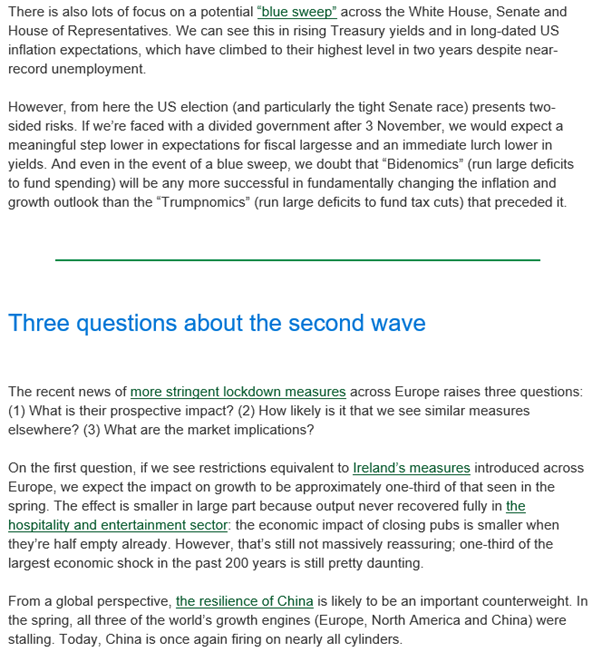
US equity futures and US Treasuries have both swung between gains and losses overnight as the US election results have started to roll in after polls closed. With key ‘swing states’ pointing to a much tighter overall race than expected, markets have had to recalibrate earlier expectations of a Democrat ‘blue wave’.  Earlier, during regular trading hours on Tuesday, equity markets and government bond yields had both risen in tandem as investors focused their hopes for a post US election fiscal stimulus. On Tuesday, US ten year government bond yields had risen to their highest levels since June, and economically sensitive sectors including financials, industrials and consumer discretionary led, while gains in US technology shares also kept pace with the rally in the broader US equity market. However overnight, early voting results have suggested a much closer race than the polls had initially been expecting, and futures markets have braced for the risk that there might be a longer wait before a clear overall election result is known. While the race to the White House looks to be somewhat closer than first thought, an early clear winner has been the voting turnout. The latest update from the University of Florida’s US Elections Project (USEP) shows that more than 101m Americans cast their ballots before election day, easily beating past early voting election records, and equal to 73.4% of the entire 2016 election total votes. USEP also estimates that this puts the US on track for its highest voter participation in more than a century, with an estimated 160m votes or 67% turnout rate for those eligible to vote.

Early eyes on Florida, but it is not the only ‘swing state’.

As states race to count the expected record number of ballots, all eyes were on ‘bellwether state’ Florida. The state has a well-established process for counting early votes, and was always expected to be able to declare a result relatively early in the hours after polls closed. Of the two presidential candidates, Florida was considered more important for President Trump in order to keep any hopes of re-election alive. With 96% of the vote counted, Trump has held Florida, with 51.2% of the vote, against Biden’s 47.8%, and by a bigger margin than Trump won in the 2016 election. But Florida is not the only swing state. There are as many as a dozen or so ‘swing states’ to watch in the US election, which are states that historically have been closely divided politically. Alongside Florida (which has 29 electoral college votes), these include Pennsylvania (20), Ohio (18), Georgia (16), Michigan (16), North Carolina (15), Arizona (11), and Wisconsin (10). However, some US states, such as Pennsylvania and Wisconsin could not start processing and counting early votes until election day, so early final results here are less likely. Initial indications across some of these states suggest that the balance of votes might be close.

Not just the race for the White House, as Senate is key

In recent weeks, while polls suggested a Democrat win for the presidency and the House of Representatives, a much closer race has been for the control of the Senate. With Republicans defending a majority of 53 seats to 47 in the Senate, Democrat hopes for control have needed to flip a net of at least 3 Republican-held seats if Biden took the presidency, and 4 if Trump stayed in office (as the Vice-President can vote in the Senate in the event of a 50-50 tie). So far, Democrats have lost a seat in Alabama, and gained one in Colorado. Ultimately, should the Republicans keep control of the Senate, this would suggest more of an economic status quo where fiscal policy hopes might be more constrained that they might otherwise have been under a Democrat majority. As such, a ‘blue wave’ of infrastructure spending looks a little less likely at this time.

Initial reactions from Biden and Trump

Biden was first to speak to his supporters in the early hours, He called for “patience” and conceded that for a result it might be “maybe tomorrow morning maybe even longer“ and “it isn’t over until every vote is counted”. Meanwhile Trump has tweeted “We are up BIG but they are trying to STEAL the Election. We will never let them do it.” In a following address, Trump has remained confident saying “As far as I’m concerned we’ve already won this”. Clearly, neither candidate is looking to concede to the other at this early stage.

What does Brooks Macdonald think

Coming into this week’s US election, markets have had to contend with two key potential headwinds for risk appetite: first, there was the risk of an inconclusive early electoral result and with it likely legal challenges and worries of civil unrest; and second the risk of a corresponding delay to a long-awaited additional stimulus. With results so far pointing to a much tighter race than the polls had predicted in recent weeks, both of these risks remain a focus for investors. With no clear overall victory for either candidate at this stage, uncertainty looks to be the near-term reality for investors.
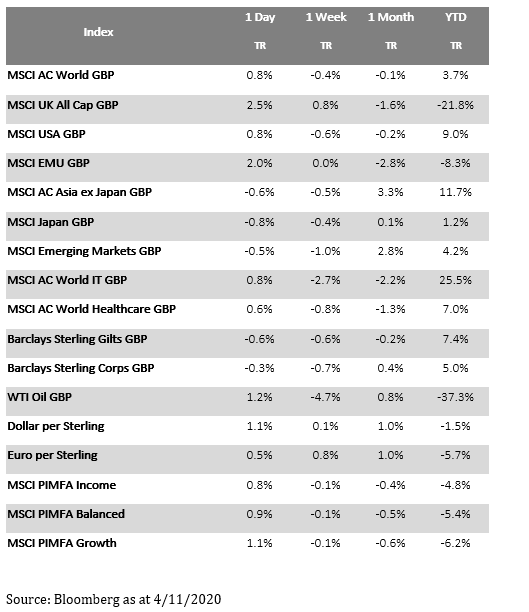
As you can see from the above, nothing is a given at this stage in terms of the election outcome and uncertainty in markets seems to be the forecast for the near term. I think it is fair to say, that when the outcome has been confirmed and gone through any legal challenges that may arise, that’s when markets will be more indicative of what impact the outcome will have.

As I say, it is imperative to remain focused on your long-term investment objectives, do not let short-term volatility, as we are seeing right now, distract you. It is important to remain invested to ensure you benefit from the recovery when it comes.

We will continue to provide you with updates on the ever-moving feast that is the U.S. election along with market commentary from leading investment houses to keep you abreast of the outlook for the future.

Please keep safe and healthy.

Carl Mitchell – Dip PFS

IFA and Paraplanner

04/11/2020

Team No Comments

Equities fall sharply on broadening lockdowns

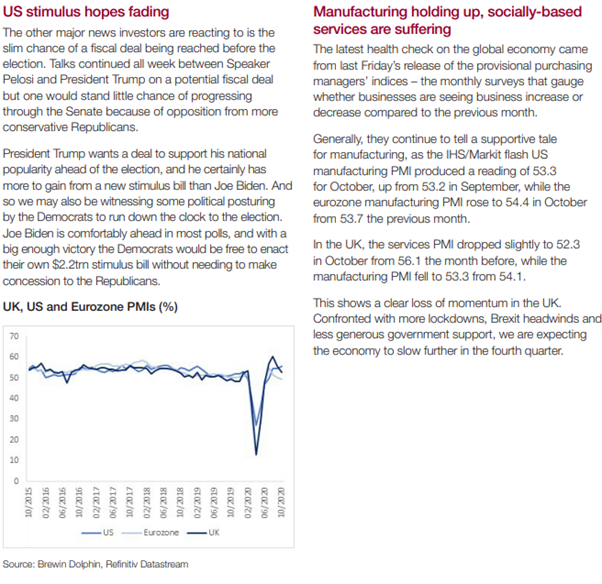
Please see below ‘Markets in a Minute’ update received from Brewin Dolphin yesterday evening. The article comments on a rise in Covid-19 cases leading to re-imposed Government restrictions and the world-wide effects of this on the markets.

Global equity markets suffered some of their worst falls since the start of the pandemic during the past week as Covid-19 infections continued to break new records.

In the last week of trading before the US elections today, numerous countries saw their highest daily infection rates and, worryingly, hospitalisations and deaths also increasing rapidly.

The data led to the widespread introduction of more severe containment measures across the UK and Europe. France and Germany announced full varying degrees of national lockdowns, with England set to join them from this Thursday.

As a consequence, optimism is fading for the fourth quarter, with the UK and eurozone economies likely to contract in the last three months of the year.

On the upside, there were reports of progress on Brexit, with talk of a compromise on fishing rights that would grant reduced access to EU boats in British waters. The news helped the pound strengthen against the dollar and the euro.

Last week’s markets performance*

• FTSE100: -4.82%

• S&P500: -5.63%

• Dow: -6.47%

• Nasdaq: -5.51%

• Dax: -8.61%

• Hang Seng: -3.25%

• Shanghai Composite: -1.63%

• Nikkei: -2.29%

Share markets rise despite announcement of lockdown in England

Markets rose on Monday despite the generally bad news flow over the weekend. The FTSE100 closed up by 1.4%, while equities across Europe also saw good gains. The benchmark EuroStoxx600 rose by 1.61%, the Dax gained 2% and the CAC40 finished 2.11% higher.

It may seem counterintuitive for markets to rise after so much bad news, but it reflects the fact that the market was anticipating a lockdown at some point, and investors prefer to have certainty – even if it is confirmation of something unwelcome such as a national lockdown – than live with uncertainty. There is an expression in the investment world that holds “sell the rumour, buy the fact” and that reflects precisely that investors are happier to put money to work in equities when they are sure about what events may hit the market, rather than making decisions based on guesswork.

Markets also rose in the US, on the last trading day before the election. The Dow closed up 1.60% and the S&P 500 was 1.23% higher at 3,310.24. The Nasdaq closed up by 0.42% at 10,957.61.

UBS mobility restrictiveness rating (scale of 1-10)

Furlough scheme extended

The government is extending the furlough scheme which pays up to 80% of wages for those unable to work during the new lockdown period.

The new lockdown will close pubs, restaurants and non-essential shops from Thursday until 2 December, and the government says it intends to return to the three-tier system when the lockdown ends, although the government has conceded that the full lockdown may have to be extended beyond 2 December if the “R” rate has not fallen sufficiently.

What is not clear is whether the furlough scheme will also be extended if that is the case.

US election

Despite Joe Biden being ahead in the polls and looking likely to take the White House and the Senate, the risk of a contested election this year is high for a couple reasons.

One is the fact that a very high proportion of votes will be mailed in. Donald Trump has repeatedly said that this increases the risk of fraud, which makes the loser more likely to contest the result.

Donald Trump has already objected to a Supreme Court decision to allow mail-in ballots in Pennsylvania to be counted up to three days after the election. In a tweet, he warned there could be violence on the streets as a result. This highlights how keen he is to dispute any close results.

Because these postal votes take longer to count, it is possible that Trump is ahead at the end of election day and claims victory prematurely. If the postal votes later change the result to a Biden victory, Trump would likely claim the comeback was down to fraud.

If either candidate wanted to contest the result, there is a lot of uncertainty and disagreement among legal experts over what would happen. The Supreme Court could get involved like it did in 2000, which was the last time the presidential election was contested, but some experts think the Supreme Court would choose not to this time, saying that the dispute is inherently political and not suitable for the court to decide. Biden or Trump could take their case to Congress, who under the constitution has the responsibility for counting Electoral College votes.

If the election ends up being contested, we’d likely see equity markets move lower. Back in 2000, it took more than five weeks to resolve, and the S&P 500 lost as much as 9.6% from election day before Al Gore conceded.

The US election appears to be more closely fought than the polls have previously indicated. Further changes in the markets are to be expected as we await the election result over the coming days. Please therefore check in again with us soon for market updates and relevant news. 

Stay safe.

Chloe

04/11/2020

Team No Comments

Brooks Macdonald – Weekly Market Commentary

Please see below this week’s market commentary update article from Brooks Macdonald, received 02/11/2020.

Weekly Market Commentary | Tuesday’s US election day key focus for markets this week

02 November 2020

Read detailed economic and market news from our in-house research team.

  • Weekly Market Commentary
  • COVID-19 updates

By Matthew Cady
Global equity markets suffer their worst week since March, as a coronavirus second wave threatens the pace of economic recovery

UK Prime Minister Boris Johnson signals a move back into lockdown for England from Thursday, but the Furlough Scheme is extended

The US election on Tuesday is the highlight for the week, but markets will also be watching policy decisions due from US and UK central banks

Global equity markets suffer their worst week since March, as a coronavirus second wave threatens the pace of economic recovery

Global equity markets fell -1.2% on Friday, finishing the week down -5.3%, and suffering their worst week since March (MSCI ACWI net total return in US dollar currency terms, MSCI: please see important information). Gripping the markets’ risk-off mood was concern about the economic impact from a rising second wave of coronavirus infections. Ending the month on a sombre note, the US set a record for daily new cases on Friday with almost 100,000 people testing positive according to the US CDC1, and a new one-day country world record for the pandemic. Globally, the US continues to lead with over nine million cases2, but COVID-19 is seeing a resurgence across other countries, including UK and Continental Europe.

UK Prime Minister Boris Johnson signals a move back into lockdown for England from Thursday, but the Furlough Scheme is extended

Over the weekend, England announced a return to a national lockdown, joining similar measures taken in France and Germany in recent days. England will start a new country-wide lockdown on 5 November, lasting four weeks until 2 December, although lockdown 2.0 will be somewhat different with schools and universities remaining open. The UK Prime Minister also indicated that the Furlough Scheme, which was due to be replaced at the end of October, would instead be extended at 80% of hours not worked, and would last for the period of the new lockdown.

The US election on Tuesday is the highlight for the week, but markets will also be watching policy decisions due from US and UK central banks

This week, the long wait is over. Tuesday 3 November is US election day, but that date is less significant this year, as record numbers of US citizens have already chosen to vote early either in person or by post. According to the US Elections Project as of 1 November, some 92 million Americans (equivalent to 66.8% of the total votes counted in the 2016 US election) have already cast their ballots3. According to Reuters, only 47 million votes came before Election Day in 20164. In addition, some states are allowing the counting of late postal ballots, for example, by three days and nine days after election day respectively in the case of swing states Pennsylvania and North Carolina. Normally, a state requires ballots to arrive on election day in order to count but, following legal rulings, this time for some states it means that ballots need only be postmarked by election day or the day before and can still be counted if they arrive within the allotted time after election day. This suggests that for a very close-run result in some states, postal votes might be the deciding factor and counting those in the days following 3 November could well leave markets unsettled.

While the US election is the main event of the week, markets will still have plenty on their plate on the data front. The week starts with final October purchasing manager surveys for manufacturing around the world, before getting services and composite surveys later in the week. The week will end with US October payrolls and unemployment data on Friday, and while consensus is looking for another fall in the US unemployment rate to 7.7% in October (from 7.9% in September5), the focus will be on any clues about the pace of change behind the headlines. If that wasn’t enough, it’s another big week for corporate earnings, with a host of companies reporting Q3 results through the week including AstraZeneca, the company behind one of the hoped-for COVID-19 vaccines, due on Thursday. Finally, UK-EU trade discussions continue this week, and news here could surprise either way. With markets having been on the back foot in recent sessions, it means the pressure-release valve button for this week is back with the US Federal Reserve who will announce their latest policy decisions this week on Thursday. Closer to home, the UK Bank of England’s Monetary Policy Committee also announces its latest policy decisions on Thursday and following the latest UK lockdown measures and extension to the Furlough Scheme, markets will be expecting policy coordination to be delivered.

A useful article from Brooks Macdonald, focusing on the UK national lockdown and the US election.  The US is one of the most influential markets globally, what happens next from a political point of view is important to the global economy.

Please continue to check back for our regular blog posts and updates.

Charlotte Ennis

03/11/2020

Team No Comments

A.J. Bell Article – The factors that could make value outperform growth and tech

Please see below an article from A.J. Bell which was received over the weekend, which provides their insight into investment opportunities:

As you can see from the above article, although value stocks can provide some stability, the idea is really to invest in growth stocks from an early stage to reap the rewards. With this in mind, it is important now more than ever, to remain invested and focus on your long-term investment objectives and whilst markets are low, now is an opportune moment to invest additional funds into the market and get in at a lower price.   

Please continue to check our Blog content for advice and planning issues and the latest investment, markets and economic updates from leading investment houses.

Please keep safe and healthy.

Carl Mitchell – Dip PFS

IFA and Paraplanner

02/11/2020

Team No Comments

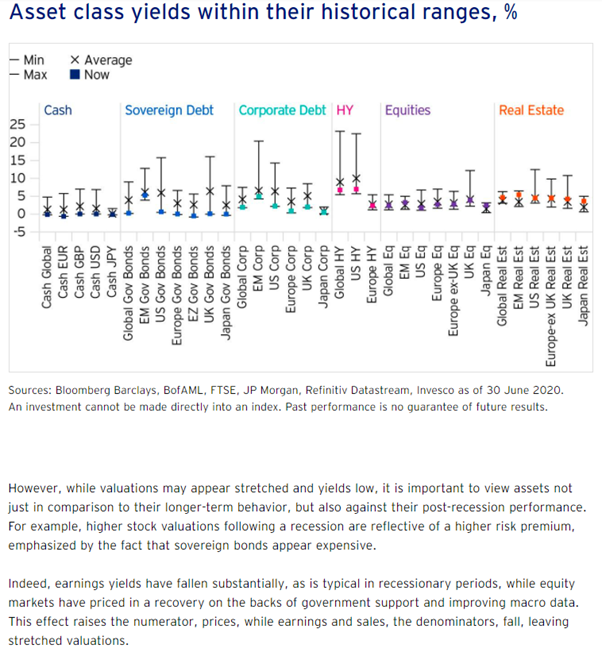
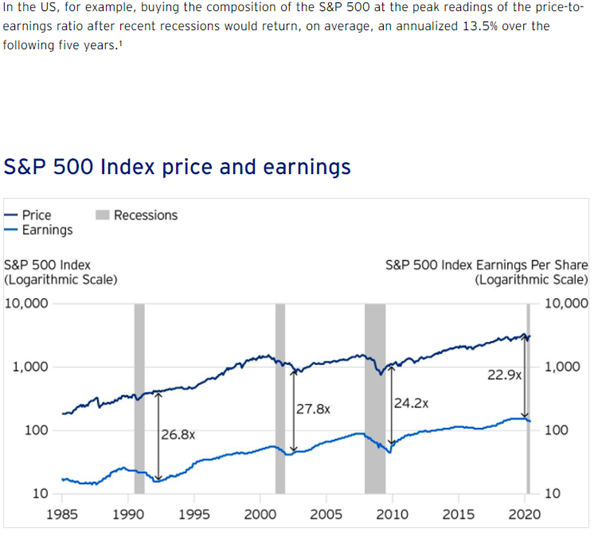
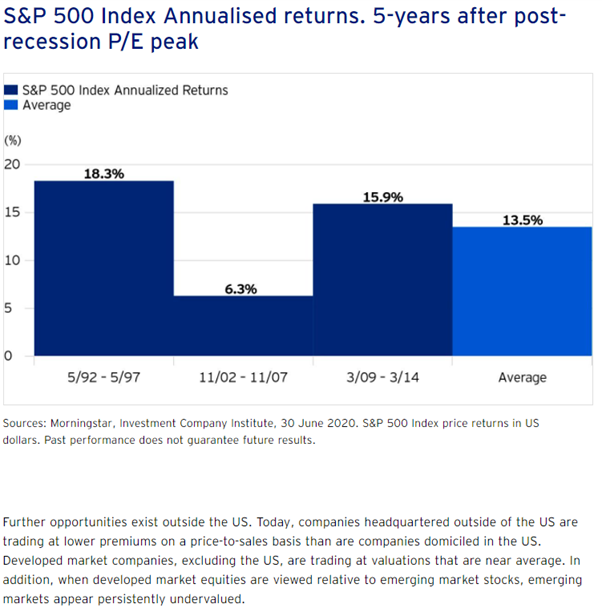
Invesco Article – Volatility is your friend – valuation opportunities

Please see below an article received late yesterday afternoon from Invesco which provides their insight into volatility and investment opportunities:

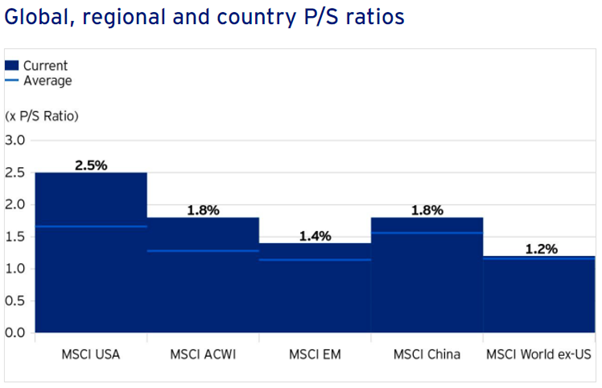
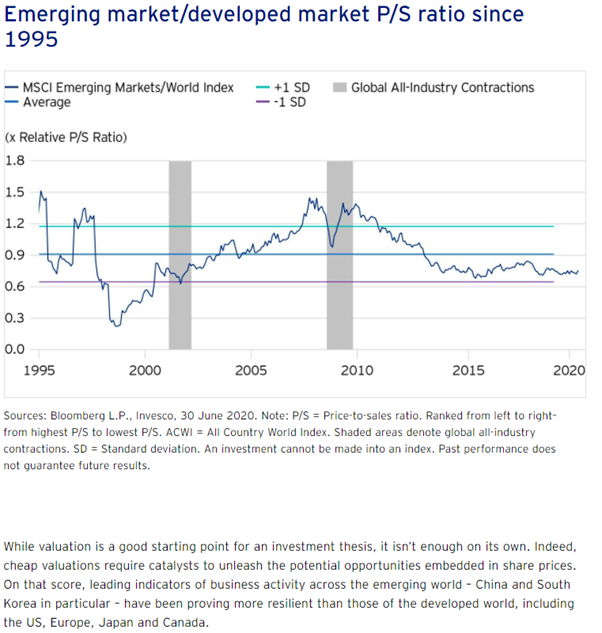
Distorted market valuations mask compelling opportunities


It is worth remembering that valuations tend to be distorted in a post-recession world, but while economies recover from the COVID-19-related ‘sudden stop’, there are opportunities to be found.

As you can see from the above article, investment opportunities are still out there for investors, but it remains important to have a long-term (minimum 5 years) view and a diversified portfolio, which is spread across a number of regions and sectors in order to benefit from these opportunities. The longer the investment term, the better.

Please continue to check our Blog content for advice and planning issues and the latest investment, markets and economic updates from leading investment houses.

Please keep safe and healthy.

Carl Mitchell – Dip PFS

IFA and Paraplanner

30/10/2020

Team No Comments

Brooks Macdonald – Daily Investment Bulletin

Please see article below from Brooks Macdonald received today 28/10/2020.

Brooks Macdonald – Daily Investment Bulletin

What has happened

Coronavirus malaise continues to grip markets with European and US equities recording losses. European equities have been underperforming the US of late, in part due to Europe being the main focus of this second wave but also the cyclical tilt in the European indices which suffer as near-term economic activity looks more uncertain.

Coronavirus restriction update

The day by day movements in COVID-19 restrictions will likely dominate markets over the coming weeks, particularly if the US election proves to be a drawn-out affair. France and Germany are expected to move into a form of lockdown over the coming few days, this will represent the culmination of the relative willingness for tight restrictions on social activity and hospitality with bars and restaurants expected to be shut. The next step will be tough decisions over whether to close schools and businesses in a return to the restrictions seen earlier in the year, it is mainly this step that markets are worried about. Add in the fact we are moving into the colder months, and flu season, and the market is struggling to be optimistic about the coming 3/6 months.

‘Filibuster’ is the most important word in the US Election

With only a week to go until the US Election, much discussion focuses on the implications of any change at the White House. With Joe Biden’s current polling lead, and early polling which has likely already translated that into votes, the Senate is arguably far more important. Major legislative changes however require a House majority (which the Democrats have) and a filibuster-proof majority in the Senate. A filibuster is effectively a political procedure, through the medium of an exceptionally long speech, designed to slow down proceedings to a halt and prevent a vote on a piece of legislation. So, what can be done to prevent this? Either one party wins 60 Senate seats (highly unlikely), sufficient to pass a ‘cloture’ motion which effectively puts a time limit on any given debate or the new Senate votes to remove the filibuster for the entirely of the next session.

What does Brooks Macdonald think

Joe Biden has previously favoured a bipartisan approach to legislation and therefore may be intellectually against the idea of filibuster reform which hugely strengthens the incumbent party. That said, with the Supreme Court now having a 6/3 conservative majority, the Democrats may want the additional power to ‘pack’ the court to create a more balanced bench. This will arguably be the most important, and fascinating aspect of US politics in the coming months.

Source: Bloomberg as at 28/10/20

Philip Penrose
Business Development Manager

A good brief commentary from Brooks Macdonald giving updates on the latest Coronavirus restrictions and the US election.

Please continue to check back for our regular blog posts and updates.

Charlotte Ennis

28/10/2020

Team No Comments

Markets in a Minute

Please see this week’s Markets in a Minute update from Brewin Dolphin:

With one week left until the US Election, the surge of Covid infections worldwide, and the Brexit deadline looming we don’t expect the market volatility to subside just yet!

It’s still going to be a bumpy ride as we approach the end of the year.

Stay posted for our regular updates as we continue to keep you informed of market developments.

Andrew Lloyd

28/10/2020

Team No Comments

Legal & General Investment Management Blog

Please see below an article received late yesterday afternoon from Legal & General Investment Managers which provides their latest market views:

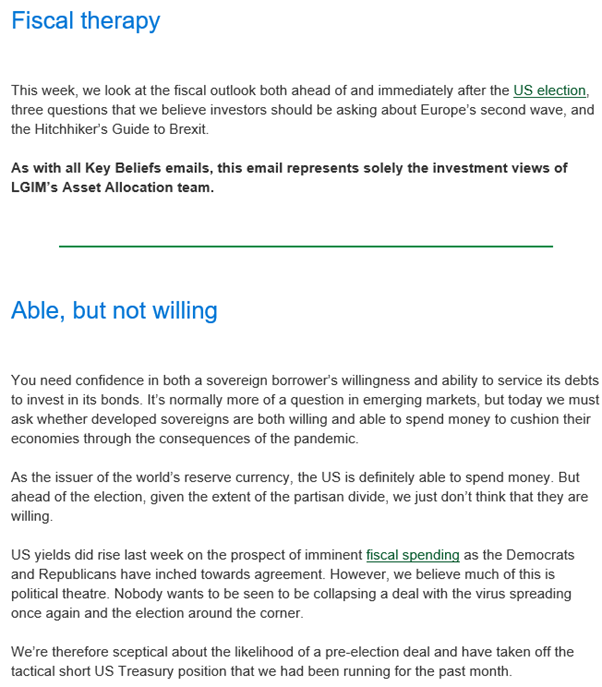
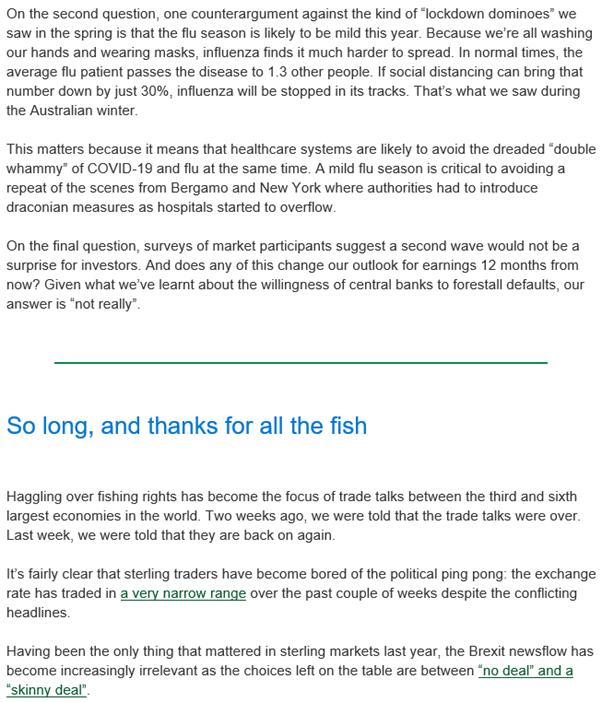
As mentioned in my LGIM blog last week, one of the key focuses remains the outcome of the upcoming U.S. election, more so than the ongoing Covid-19 pandemic and it looks like China is nearly back pre-pandemic activity. If stricter lock-down measures are introduced, it is anticipated that these are likely to have a lesser impact on markets than they did in Spring. This is mainly because markets didn’t fully recover from the impact of the first lockdown.

The good news here is that if markets do decline again, this will present a good buying opportunity for investors.

Opportunity is still out there for investors, but it remains important to have a long-term (minimum 5 years) view and a diversified portfolio, which is spread across a number of regions and sectors in order to benefit from these opportunities. The longer the investment term, the better.

Please continue to check our Blog content for advice and planning issues and the latest investment, markets and economic updates from leading investment houses.

Please keep safe and healthy.

Carl Mitchell – Dip PFS

IFA and Paraplanner

27/10/2020

Team No Comments

Monday Market Update

Please see below update received from Blackfinch this morning. The bulletin provides world-wide commentary on market performance in response to events such as the ongoing Covid-19 pandemic and the upcoming US election.

UK COMMENTARY

The IHS Markit UK Household Finance Index for October was at 40.8. A value below 50 indicates that respondents believe their financial well-being is deteriorating.

UK consumer price inflation rose to 0.5% year on year in September, up from 0.2% in August. While the downward impact of the Eat Out to Help Out scheme was removed, the temporary VAT cut in the hospitality sector continued to help keep inflation low.

The Government borrowed £36.1bn last month, above consensus forecasts and bringing the total borrowing for the first half of the financial year to a record £208.5bn

Lancashire, Greater Manchester and South Yorkshire all joined Merseyside in tier 3 COVID-19 lockdown

The Business Impact of Coronavirus (COVID-19) Survey showed that 71% of businesses said they were at no or low risk of insolvency

Rishi Sunak announced the latest COVID-19 support package, including grants for businesses affected by tier-2 restrictions, a tweak in the job support scheme and extra support for the self-employed

UK retail sales rose by 1.5% in September from August’s level, the fifth consecutive monthly increase

The IHS Markit/CIPS Flash UK Composite Purchasing Managers’ Index (PMI) for October fell to a four-month low of 52.9

US COMMENTARY

Democrats and Republicans continued to debate the introduction of a further stimulus package ahead of the presidential election

First-time jobless claims fell to 787,000

Another presidential debate did little to clear up which candidate is likely to emerge victorious from next month’s election

Markit’s latest PMI survey showed that business activity rose at its fastest rate for 20 months in October

ASIA COMMENTARY

China’s third-quarter gross domestic product grew by 4.9% as compared to a year ago, falling just short of economists’ expectations

Retail sales of consumer goods in China rose by 3.3% in September

The International Monetary Fund downgraded its forecast for the Asia-Pacific region to -2.2% in 2020.

COVID-19 COMMENTARY

Pfizer said that it is ready to file for regulatory sign-off of its COVID-19 vaccine and has already manufactured ‘several hundred thousand doses’ to sell. This is if current clinical trials involving 44,000 people are successful.

Gilead Sciences’ COVID-19 treatment Remdesivir has been approved by the US Food and Drug Administration. The drug has now been renamed Veklury.

We will continue to source information from the research teams of reputable providers in order to publish the most relevant market data. Please check in with us again soon.

Stay safe.

Chloe

26/10/2020

Team No Comments

Invesco – Investment Intelligence – Weekly Performance Update

Please see latest ‘investment intelligence update’ from Invesco received today 26/10/2020.

Monday 26 October 2020 – update

The contrast between those economies seeing a severe re-escalation in the virus and those that have escaped relatively unscathed was clear to see in economic news flow last week. China’s economy continues to recover strongly (see chart of week), while declining flash PMIs in Europe, led by the more exposed Services sector, highlighted the increasing economic pressures being felt in the region from renewed containment measures. The EZ’s Composite PMI is now in contraction territory, below 50, and although it remains just above 50 (52.9) in the UK, it is well below the 59.1 level seen in August’s survey. And it is only likely to get worse as the full impact of lockdown measures start to hit home. A difficult winter ahead for these economies. Fortunately for the global economy, the US continues to defy any virus-related concerns with last week’s PMI hitting a post-pandemic high, led by the Service sector. Notwithstanding that, further fiscal support is deemed necessary there to underpin the recovery and bridge the gap to the widespread availability of an effective vaccine. The UK has already been forced down that route, with further policy support announced last week for businesses and the labour market. Alongside the virus, politics continues to hog the limelight. The US elections are just over a week away, while closer to home Brexit negotiations appear to be back on track. The outcome of both remains uncertain, bringing with it the potential for increased market volatility in coming weeks.

Against this backdrop, equity markets struggled to make any headway last week. The MSCI ACWI declined slightly, with EMs comfortably ahead of DMs. Japan was the only gainer amongst the major DM markets. Small Caps marginally outperformed. Value and Cyclicals were the best style factors. IT had a rare poor week and Financials a rare strong one, the latter helped by higher bond yields. It was a mixed week for UK equities, with decent gains from mid and small caps being offset by large cap weakness, with the FTSE 100 hitting its lowest level for five months. Improved Brexit sentiment was the key driver here, with a strengthening £ a headwind for the latter.

Government bond yields had a difficult week, with yields moving higher across the board. 10yr USTs hit their highest level (0.85%) since June but remain over 100bp below their YTD starting level (1.91%). Expectations of further stimulus was the culprit here. Improved Brexit sentiment was behind higher Gilts. Weakness in government bonds weighed on IG credit, even with spreads hitting post-virus lows. HY performed better, with yields edging lower. 

In currency markets the US$ weakened across the board. £ had its strongest day since March during the week on Brexit optimism. Copper benefitted from a weaker US$ as well as strong economic news flow from China, hitting a YTD high during the week. Gold remained below $1900. Oil weakened on expectations of increased Libyan output and virus-related demand concerns.

Market performance last week (%)

Past performance is not a guide to future returns. Sources: Datastream as at 25 October 2020. See important information for details of the indices used.1

YTD market performance and YTD low/high (%)

Past performance is not a guide to future returns. Sources: Datastream as at 25 October 2020. See important information for details of the indices used.1

Chart of the week: China Real GDP and forecasts (yoy%)

Source: Datastream as at 23 October 2020. Forecasts are red dashed line based on Bloomberg median quarterly yoy%.

  • China announced its Q3 GDP number last week. While these numbers always need to be treated with a degree of caution given the speed in which the second largest economy in the world can produce its “final” estimate (the US by contrast does not produce its first estimate until late October and its final estimate until late December) they are the only official numbers available as to understand the overall state of the Chinese economy. And for 2020 at least the lack of an official growth target means there has been less political pressure to massage the figures this year.
  • In Q3 the economy grew by 4.9%yoy. This was disappointing relative to the consensus expectation of 5.5%, due to below trend growth in the services sector, but was still an acceleration from Q2’s 3.2%yoy. A “good” pandemic, substantial fiscal and monetary support and strong foreign demand have clearly been important contributors to this rapid recovery back towards “normality”. And a continuation of the recovery in Q4 should take real GDP growth back to its pre-virus 6% trend. This puts the median consensus expectation for 2020 at 2.1% growth, which would leave China as the only major economy to see positive growth this year (by contrast the US is expected to contract by 4% and the EZ by 7.9%).
  • The strong relative performance of the Chinese economy has had a positive knock-on effect on the performance of Chinese assets. The MSCI China and MSCI China A Onshore (large and mid cap stocks just listed on Chinese domestic exchanges) have returned 20% and 17% respectively, while the Renminbi has risen 4% against both the US$ and China’s preferred Trade Weighted measure (CFETS RMB index).
  • In terms of longer-term prospects, Chinese leaders will discuss the next 5 Year Plan (2021- 2025) at the 5th Party Plenum meeting this week. The main theme of this FYP will be the “dual circulation” strategy, which calls for more emphasis on the domestic economy as a source of growth, compared to earlier export-driven growth strategies. This is against a backdrop of a steady economic slowdown, driven by an ageing population and slower productivity growth, rising geo-political tensions and a slowing down of globalization. Key to this will be a focus on boosting domestic consumption and further market opening measures. While any growth target is unlikely to be announced until March next year, expectations are that it will be in the range of 5-5.5%, which compares to the 6.5% target in the previous FYP.

Key economic data in the week ahead

  • A fairly busy week on the data front, with the highlights being Central Bank meetings in the EZ and Japan alongside the first look at GDP performance in the former as well as the US. Outside the data news flow, developments on the virus front, the final run-in to the US elections and Brexit progress will all be closely watched by investors.
  • Preliminary US Q3 GDP data is published on Thursday and forecast at an annualised 31.9%qoq – the sharpest rebound in the history of post-WW2 GDP. However, this will still see the overall economy behind where it was at the end of March, following the 31.4%qoq contraction in Q2. On Wednesday the Conference Board Consumer Confidence index is expected to show a slim improvement in October at 101.9 from September’s 101.8, but this would still leave it well below the 130+ level at the start of the year. The impact of the virus on consumer confidence remains plain to see. Following last week’s surprise drop in US Initial Jobless Claims at 787k, this week is forecast at 785k when released on Thursday.
  • In the UK, the housing market takes centre stage, with Wednesday’s Nationwide House Price Index for October. House price inflation is expected to have slowed to 0.3%mom from 0.9%mom in September. Year-on-year house prices are estimated to have increased 5.2%yoy from 5.0%yoy. This would be the strongest growth since 2016. Mortgage Approvals for September on Thursday are expected to confirm the current robustness of the housing market, even if new approvals are forecast to be lower, at 76.1k from August’s 84.7k. This is still comfortably above the 60k 10-yr average pre-pandemic.
  • The EZ publishes its first estimate of Q3 GDP on Friday. A strong rebound to 9.5%qoq is forecast, but again insufficient to redeem the -11.9%qoq drop of the previous quarter. Year-on-year this leaves growth at -7%, compared to -14.7% last quarter. On Thursday the ECB monetary policy meeting is expected to keep the policy stance unchanged, but the press conference should be of interest as ECB members discuss their updated economic outlook. The latest Inflation and Unemployment data is published on Friday. For the former, no improvement is expected in October, with Headline and Core forecast to remain at -0.3% and 0.2% respectively. The latter is expected to see a small uptick from 8.1% to 8.2% – still low in the context of the past decade – as government support schemes continue to underpin the labour market.
  • The Bank of Japan meets on Thursday, with no change in policy expected there either. A busy day on Thursday also sees Industrial Production data for September, expected at 3%mom and -9.8%yoy, and September’s Unemployment numbers, where expectations are for 3.1% compared to 3% in August. The Jobs-to-Applicants ratio is likely to remain close to 1 – well below the 1.6x level seen at the start of the year. Retail Sales for September on Wednesday are forecast to show a significant -7.9%yoy drop from -1.9%yoy in August, but this is largely a function of consumers looking to beat the sales-tax hike in October 2019 rather than pandemic-related weakness.
  • Official PMI data is released in China on Saturday. Following last week’s Q3 GDP results, the Manufacturing PMI for October is expected to continue to point to expansion, remaining at 51.8, while the Non-Manufacturing PMI is forecast to fall marginally to 52.8 from 53 in September.

A useful article from Invesco, reviewing current market issues and highlighting the key economic data in the week ahead.

Please continue to check back for our regular blog posts and updates.

Charlotte Ennis

26/10/2020