Team No Comments

Why watching new issue flow will be important in 2021

Please see below article received from AJ Bell yesterday evening, written by their Investment Director, Russ Mould. The commentary indicates a positive start to 2021 in relation to UK equity markets and predicts market performance for the year ahead.

After a rotten showing in 2020, when the FTSE 100 ranked plumb last among major national indices on a local currency, total-return basis, the UK equity market is off to a flyer in 2021. Whether this is a simple case of every dog having its day or the start of a more fundamental turnaround will only become clear with the passage of time, but what is undeniable is that the FTSE 100 has just had its best start to a year in its history, using the capital return over the first five calendar days’ trading as a benchmark.

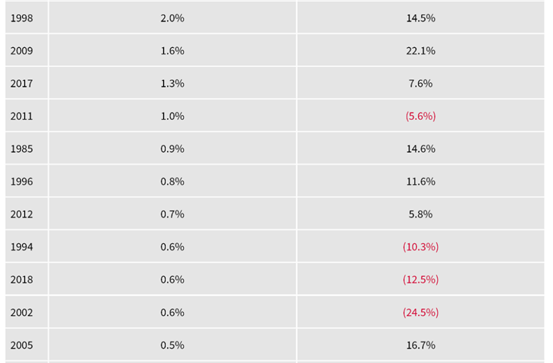
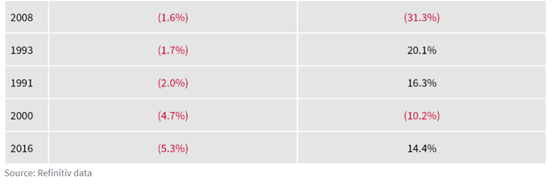
FTSE 100’s fast start looks promising for the rest of 2021, if history is any guide

“It is eye-catching to see how the FTSE 100 has generated positive capital returns on every occasion bar one when it has begun the year with an opening-week gain of 1% or more.”

The past is no guarantee for the future, as all advisers and clients know (and the numbers show that a bad start does not guarantee a bad overall outcome). Even so, it is eye-catching to see how the FTSE 100 has generated positive capital returns on every occasion bar one when it has begun the year with an opening-week gain of 1% or more. That exception was 1987 and even that year looked like plain sailing until October, although a nasty reckoning then followed with the Crash.

That episode shows that trouble can come when it is least expected and, as part of any risk-management review, advisers and clients will look at what can go wrong. There is a saying that “bull markets end when the money runs out” and, at the moment, there seems to be no shortage of cheap cash upon which financial markets can feast, as central banks continue to run ultra-loose monetary policy and governments around the world continue to provide fiscal support to their economies, racking up huge budget deficits in the process.

“Spotting misallocation of capital is important when it comes to market tops. In 1999–2000 and 2006–7, overpriced merger and acquisition deals had a role to play. So did a very active market for Initial Public Offerings (IPOs) and secondary sales of stock by either vendors or companies themselves.”

So perhaps advisers and clients need to start wondering where all of this money could go, or what could soak it up, to end the bull run. Spotting misallocation of capital is also key. In 1999–2000 and 2006–7, overpriced merger and acquisition deals had a role to play. So did a very active market for Initial Public Offerings (IPOs) and secondary sales of stock by either vendors or companies themselves. Many of those IPOs were in what turned out to be overpriced tech, media and telecoms stocks in 1999–2000, while miners and junior oil explorers, property stocks and financial investment vehicles took centre stage in 2006–7 (and more of the last-named in a moment), to eventual great cost to buyers of this new paper.

Some advisers’ and clients’ interest may therefore be piqued by the announcement of planned stock flotations by Moonpig, Foresight Group and Dr Martens at the start of 2021, even if the specifics of the individual companies will be left to their preferred UK equity managers to assess.

Functioning markets

In some ways, these new flotations could be a good sign.

They suggest that capital markets are working well and doing what they are supposed to do, which is provide capital that companies can use to invest and hire, create wealth and ultimately help the economy to grow.

Fund managers may also see them as a chance to buy into new, exciting stories that generate capital gains or welcome income over the long term for their clients, or at least offer the potential for a quick turn if a deal looks like it is going to be hot and the shares are going to spike.

However, a sudden flood of new market entrants might also be warning sign, on the grounds that you can have too much of a good thing.

“Not surprisingly given the circumstances, and especially last spring’s stock market rout, newcomers to the London market were relatively few and far between in 2020, although the pace did pick up in the second half and some deals, such as THG, proved to be absolute winners.”

Not surprisingly given the circumstances, and especially last spring’s stock market rout, newcomers to the London market were relatively few and far between in 2020, although the pace did pick up in the second half and some deals, such as THG, proved to be absolute winners.

Overall, the number of new issues and IPOs in London last year was the second-lowest since 2009 and the end of the Great Financial Crisis, according to data from the London Stock Exchange (only 2019 was lower).

New issue activity has been relatively quiet in the UK for some time

Source: London Stock Exchange

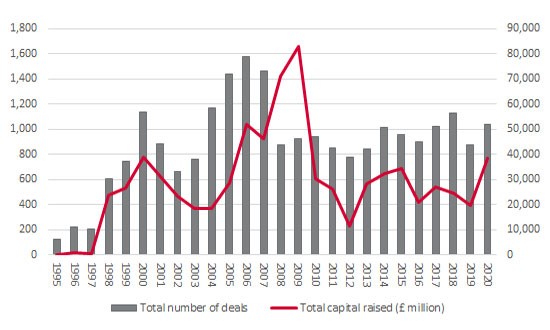
Over £7 billion was raised by primary offerings, the highest figure since 2017, and that exceeded the sums generated by market newbies in 2009, 2012, 2015, 2018 and 2019.

And with only a select number of names announcing plans for an IPO so far in 2021, it is too early to be pressing the panic button about a deluge of new issues swamping investors and snuffing out the UK market’s attempt to forge a sustained bull run.

The £7.3 billion raised in 2020 came nowhere near the £31 billion of 2006 and £27 billion of 2007, right before trouble hit and the bear market began, or the £18.7 billion peak of the prior cycle in 2000.

Warming up

But advisers and clients need to be on their guard. The US market has shown signs of an overheated new offerings market, especially given the post-listing surges in names such as Airbnb and DoorDash, the coming to market and the lofty valuations at which many new entrants have gone public and the torrent of Special Purpose Acquisition Companies (SPACs) that have listed, in a manner that is eerily reminiscent of 2006–7 on both sides of the Atlantic.

“The US market has shown signs of an overheated new offerings market. The UK is showing no real signs of any of those, which is reassuring, although advisers and clients will also want to keep an eye on secondary offerings too, since they can also soak up cash that could otherwise be deployed elsewhere.”

The UK is showing no real signs of any of those, which is reassuring, although advisers and clients will also want to keep an eye on secondary offerings too, since they can also soak up cash that could otherwise be deployed elsewhere.

Over 950 secondary deals, including rights issues, placings for cash, open offers, subscriptions and further issues took place in 2020, perhaps understandably as many companies tapped their shareholders for fresh liquidity to help see them through the pandemic and the subsequent recession. London-listed and quoted firms raised over £31 billion, the highest figure since 2008–9 when companies were again in cash-raising, crisis-management mode.

Secondary issuance began to pick up in 2020 as many firms scrambled for cash

Source: London Stock Exchange

That meant the total cash raised across primary and secondary deals reached nearly £39 billion, again the highest mark since 2009. Couple that with hefty cuts to dividend payments and a collapse in share buyback activity and it is no surprise that the UK stock market’s headline indices struggled to make headway in 2020.

Total UK equity issuance picked up in 2020 just as dividends and buyback activity fell
Source: London Stock Exchange

Watch the flow

Dividend payments are expected to rebound this year and buyback activity could conceivably start to pick up, too, should the global economy really begin to gain traction in the wake of vaccination programmes.

This remains far from certain, however, and advisers and clients do need to be on their guard in case the steady flow of new deals becomes a flood, especially if deal quality starts to flag and certain hot or popular sectors witness very high levels of activity. This is not a problem in the UK, as Foresight Group, Dr Martens and Moonpig all come from different sectors and industries, but advisers and clients might like to make sure that their chosen fund managers bear in mind Warren Buffett’s warning, should copycat deals start to proliferate:

“First come the innovators, who see opportunities that others don’t. Then come the imitators who copy what the innovators have done. And then come the idiots, whose avarice undoes the very innovations they are trying to use to get rich.”

We will continue to publish relevant market analysis and news, so please check in again with us soon.

Stay safe.

Chloe

18/01/2021
Team No Comments

Invesco – India offers tremendous growth potential

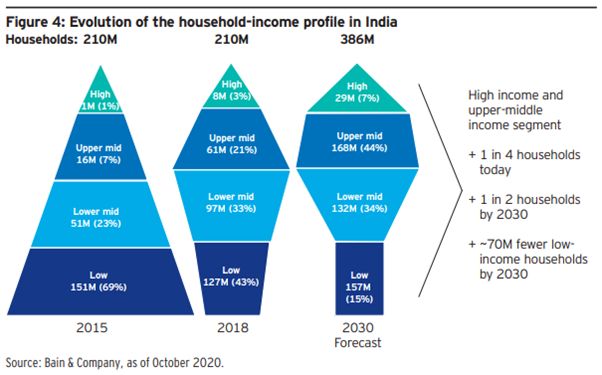
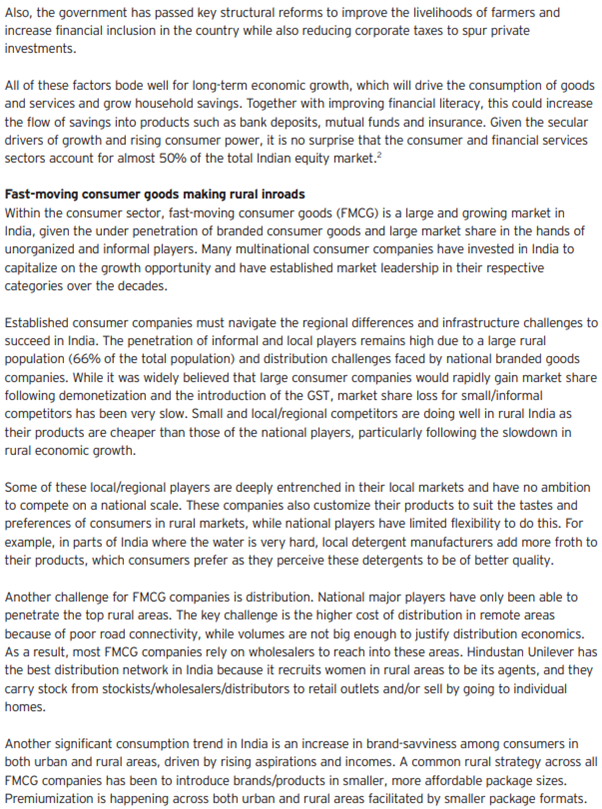
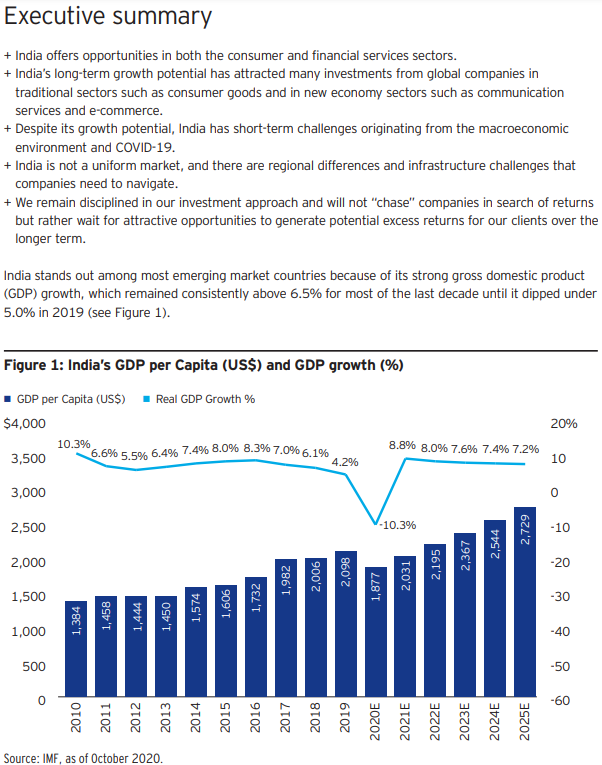
Please see below an article published by Invesco on 8th January and received today, which outlines the long-term growth potential of investing in India:

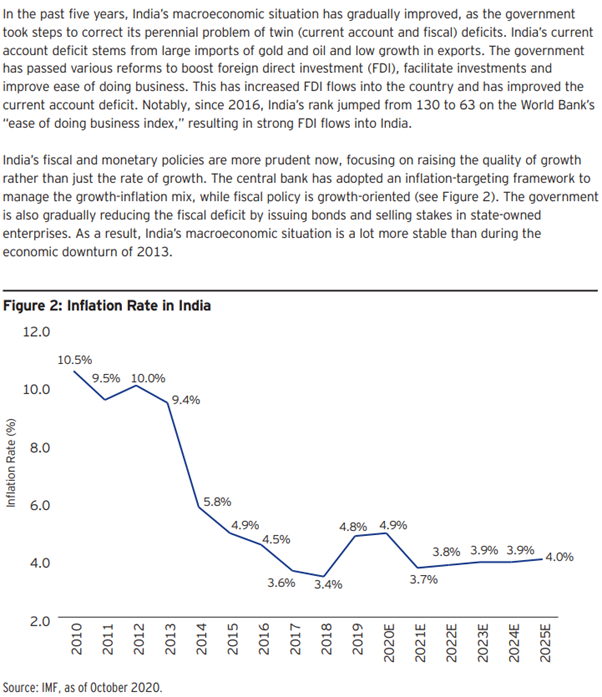
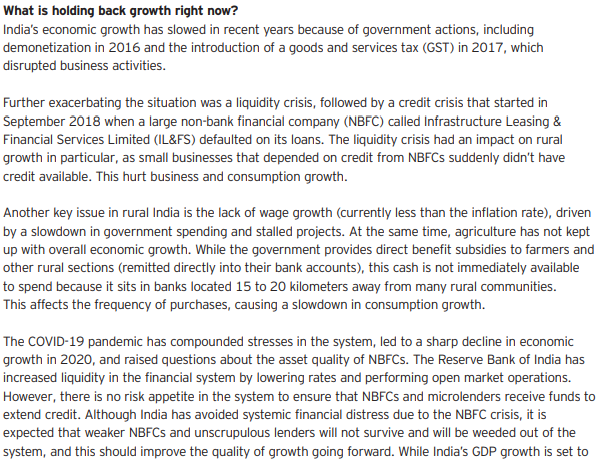
As you can see from the above, India has faced its issues recently, but the long-term growth prospects for this emerging market remains positive.

Please continue to check our Blog content for advice and planning issues and the latest investment, markets and economic updates from leading investment houses.

Please keep safe and healthy.

Carl Mitchell – Dip PFS

IFA and Paraplanner

15/01/2021

Team No Comments

AJ Bell – A history-making bubble in bitcoin

Please see article below from AJ Bell – received yesterday afternoon – 14/01/2021

A history-making bubble in bitcoin

There is no reliable basis for valuing cryptocurrencies

Thursday 14 Jan 2021 Author: Martin Gamble

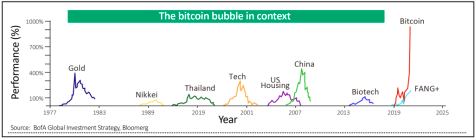
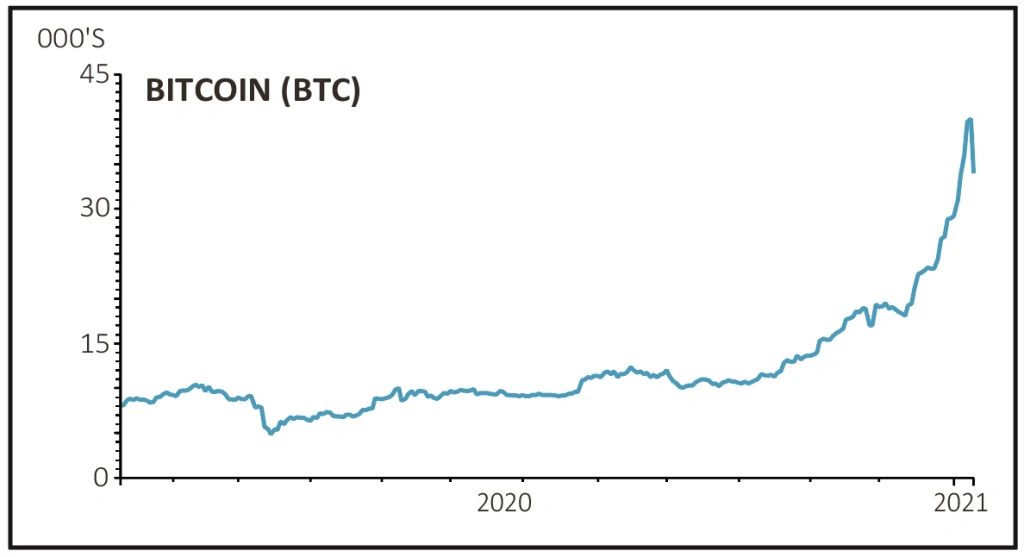
Bitcoin could turn out to be the ‘mother of all bubbles’ according to Bank of America’s Michael Hartnett who has compared the price action of the cryptocurrency to former bubbles in history including the 1979-to-1981 Gold bubble which took the price up 400% in around two years.

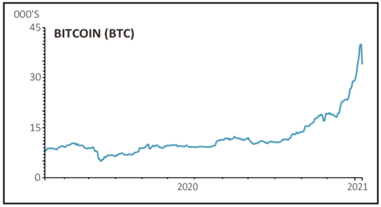
As the charts illustrate bitcoin’s gains have been spectacular and over the month to 8 January it had gained 10-fold (it has since lost 25% of its value).

This sort of volatility isn’t normally associated with ‘safe’ assets, but more institutions are taking the cryptocurrency seriously and adding exposure as an alternative to gold as a hedge against inflation.

This feels like a rehash of arguments made over the last 40 years for various assets.

With so much debt being issued since the start of the pandemic, some investors worry about future inflation and see bitcoin as an alternative to gold.

One such institution is asset manager Ruffer which recently purchased bitcoin saying: ‘Bitcoin diversifies the company’s (much larger) investments in gold and inflation-linked bonds, and acts as a hedge to some of the monetary and market risks that we see.’

Hedging a diversified portfolio with bitcoin after conducting thorough research may be appropriate for institutions, but the worry is that recent price momentum has been driven by individual investors looking to make a quick return with little regard for the risks.

As the Financial Conduct Authority (FCA) warned on 11 January, cryptocurrencies offering high returns generally involves taking high risks and investors should ‘be prepared to lose all their money.’

Since 10 January all UK crypto-asset firms must be registered with the FCA under regulations to tackle money laundering and operating without a registration is a criminal offence.

In the long run digital currencies like bitcoin may have a role to play with central banks looking very carefully at them and large companies like Starbucks trialling them as a form of payment.

However high-profile fraud cases like the Mt. Gox exchange in Japan, where bitcoin wallets were emptied, and the assets disappeared, and high price volatility means bitcoin’s entry into the mainstream may be delayed. [MG]

Please continue to check back for our latest updates and blog posts.

Charlotte Ennis

15/01/2021

Team No Comments

Brooks Macdonald – MPS Monthly Market Commentary

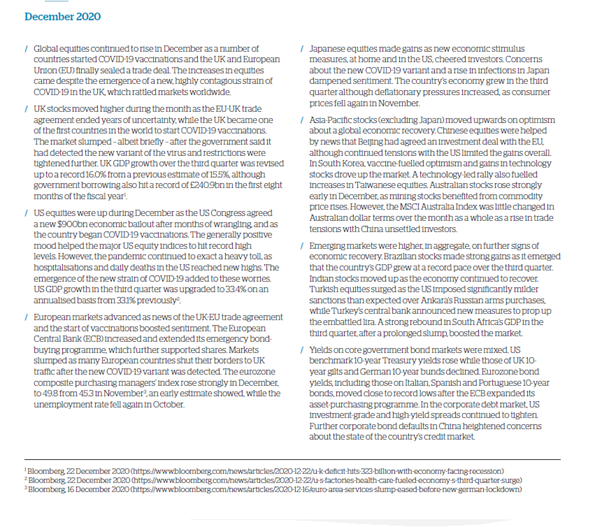
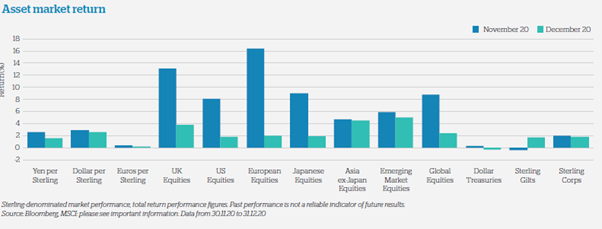
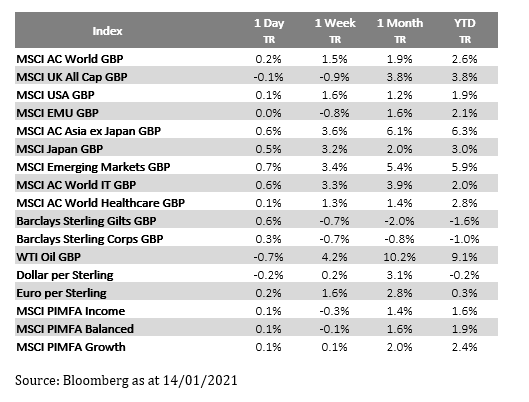
Please see below an article published by Brooks Macdonald earlier this week and received today, which details their views on markets in December 2020:

Please continue to check our Blog content for advice and planning issues and the latest investment, markets and economic updates from leading investment houses.

Please keep safe and healthy.

Carl Mitchell – Dip PFS

IFA and Paraplanner

14/01/2021

Team No Comments

Daily Investment Bulletin

Please see below Daily Investment Bulletin received from Brooks MacDonald earlier this afternoon. The update provides analysis on the fall and rise of bond markets in response to political developments in the US and Italy over the past few days.  

What has happened

Equity markets retained a constructive tone yesterday, but it was really bond markets that did the most travelling. Initially US Treasury bond yields fell as markets continued to digest the series of Fed governors who reassured bond investors that they would remain accommodative for the foreseeable future. Overnight however, Bloomberg reported that President-elect Biden’s administration would be seeking a bi-partisan $2 trillion bill which led the decline in yields to reverse. The interplay of the nascent economic recovery, fiscal stimulus and monetary stimulus will be a key theme of 2021.

Italian politics

As widely expected, Matteo Renzi announced yesterday that his party, Italy Alive, was quitting the government’s coalition. Matteo Renzi previously was Prime Minister as well as leader of Democratic Party however his new party has far fewer seats in Parliament. Those few seats are still enough to topple the delicate coalition, but investors are currently expecting an election to be avoided. Prime Minister Conte may now resign, or a vote of confidence may be called, regardless Conte will first seek to build a new coalition amongst the parties. Should this fail we may see a change of Prime Minister or a technocratic administration as an interim measure. Hope that Italy could avoid the destabilisation of fresh elections helped support Italian government bonds after a difficult start to the week.

US Politics

The major news story yesterday was the second impeachment of President Trump, a first in American history. The key question now is when the articles of impeachment will be reviewed by the Senate, commencing the trial. There is an active debate amongst Democrats over whether it is better to deal with the trial as the first order of business under a new White House or whether it is prudent to conclude other business first. There is certainly no urgency on the Senate trial given the trial will take place after President Trump leaves office however the political palatability of a delay is probably the key factor.

What does Brooks Macdonald think

With talk that President-elect Biden will seek a $2 trillion package, well ahead of expectations, cyclical equities are seeing another boost overnight and today. Today we hear from Fed Chair Powell who will be talking about the Fed’s policy framework. Investors will be scouring the speech for commitment to the mood music from recent Fed governor speeches which have sought to reassure markets that monetary accommodation is here to stay.

Please check in again with us soon for more relevant data and market analysis.

Stay safe.

Chloe

14/01/2021

Team No Comments

Brexit: Where next?

Please see below an interesting article received from Invesco earlier this afternoon, which provides an insight into the intricacies of the UK’s relationship with the EU following the long-awaited agreement of Brexit terms on Christmas Eve.

Almost four and a half years to the day since the Brexit referendum took place, the terms of the future relationship between the UK and the European Union were finally agreed on Christmas Eve. Having spent the final months of the year wrangling over provisions relating to the level playing field, governance and enforcement mechanisms, and fisheries, both sides proclaimed victory as the legal text on these issues was finally settled.

In Downing Street, Prime Minister Boris Johnson declared that the UK had delivered on the referendum verdict by taking back control of its borders, laws and waters, ending the jurisdiction of the European Court of Justice and gaining the freedom to set its own rules and standards.  In Brussels, Commission President Ursula von der Leyen said the deal had safeguarded the integrity of the EU’s Single Market and the four freedoms of people, goods, services and capital, demonstrating that having left the EU the UK would no longer be able to enjoy the benefits of membership.

In reality, the verdict on which side was better able to secure its political priorities in the Agreement, and at what cost, will take many months, if not years, to reach.  While agreeing a comprehensive trade deal in just ten months was a significant achievement for both sides, the full implications of the 1,246 pages of text and their impact on diverse business models on both sides of the Channel will only become clear over time:  even the most obvious physical signs of separation – at the Dover-Calais border – have yet to manifest themselves given that haulier traffic has been much lower than normal during the early days of the year.

But what is clear is that, by avoiding a ‘no deal’ outcome, the UK and the EU have also avoided the risks of an acrimonious break up and blame game that could have soured relations between the two sides for years to come.  Instead, they have a platform on which to build – should both sides choose to do so – in the coming years and decades. 

Yet despite the last-minute Agreement, significant questions about the future relationship remain.  What will be the key drivers of the UK-EU relationship in next years?  Where will the main points of friction between the two sides emerge?  Will the Agreement stand the test of time or require significant revision?  Will, as President von der Leyen optimistically declared, both sides be able to “leave Brexit behind us”; or will the UK join Switzerland as a country outside the EU but in almost constant negotiation with its near neighbour?

It seems clear that on the UK side, the Agreement will not end the debate on Brexit.  The Conservatives are already road testing messaging for the next election on the basis of an appeal to “keep Brexit done”,  playing to concerns that Labour, should they regain power, would seek to forge a closer relationship with the EU in the future.   Former Prime Minister David Cameron’s gambit to try to finally put the EU question to bed may instead have kept Pandora’s box wide open.  Britain’s relationship with the EU looks set to continue to be a polarising issue in UK politics, and something that the devolved administrations will seek to play to their advantage in relations with Westminster.  By comparison, the EU will be keen to leave Brexit, as a distinct problem to be solved, well behind it; but it will fuel the EU’s growing emphasis on strategic autonomy, requiring a delicate balance to be found between wanting to keep the UK within its area of influence while at the same time arguing for self-sufficiency in areas where it sees itself in competition with the UK.

One bellwether of this approach is likely to be the EU’s stance towards the UK on financial services.  Despite the importance of financial services to the UK economy, and the cross-border integration of industry operations in Europe, the financial services section in the Agreement contains just eight articles, covering little of real substance. With the EU keeping the UK in suspense on a range of potential equivalence determinations, it remains to be seen whether the two sides will remain aligned on major regulatory issues such as sustainable finance, financial stability and protections for retail investors.  The Governor of the Bank of England, Andrew Bailey, has argued that the UK cannot be an automatic rule-taker from the EU.  But where might the UK seek to use its freedom to diverge to forge a separate path; and what would be the EU’s likely response?

Finally, in a world of increasing polarisation and renewed threats to international trade, market stability and security, will the lack of a framework for cooperation on foreign policy, security and defence cooperation in the Agreement significantly weaken the UK and EU’s ability to defend their interests on the international stage?  How might actors such as Russia and China seek to exploit the UK’s exit from the EU; and will Europe’s collective influence in Washington now be weaker than before?

Although the UK and EU are now separate entities, they now have the opportunity to move forward together as allies in a productive and positive way. Please check in again with us soon.    

Stay safe.

Chloe

13/01/2021

Team No Comments

Brooks Macdonald: Weekly Market Commentary | A strong start to the new year for markets

Please see the below weekly market commentary from Brooks Macdonald received yesterday evening:

In Summary

  • Markets start 2021 strongly as expectations of US fiscal stimulus buoy risk assets
  • US jobs market weakness could be good news for risk assets as it ensures the Federal Reserve will remain cautious
  • The US House of Representatives may launch impeachment proceedings against President Trump despite him only being in office for nine more days

Markets start 2021 strongly as expectations of US fiscal stimulus buoy risk assets

Markets had a strong start to 2021 with equities welcoming the prospect of higher US fiscal stimulus. Outside of equities, bond markets saw substantial moves as the US 10-year treasury, which has remained stubbornly below a 1% yield over the last nine months, pushed to 1.12% as investors priced in less monetary stimulus. One of the principle beneficiaries of this move was the banking sector which outperformed in the US and Europe and was a significant factor in the large upswing in the bank-dominated UK large cap index.

US jobs market weakness could be good news for risk assets as it ensures the Federal Reserve will remain cautious

The US payrolls data came in worse than expected with the labour market losing jobs month-on-month for the first time since April 2020. Delving into the detail, the weakness was driven largely by services impacted by COVID-19 restrictions such as restaurants and bars. There was better news in Europe where unemployment continued to fall faster than analyst expectations. With markets already experiencing a sell-off in expectations of central bank assistance, slightly weaker US jobs data could actually be a positive for risk assets as it means the Federal Reserve will be cautious of stepping away too early. Markets were largely unfazed by the miss vs expectations, suggesting this narrative is starting to gain traction.

The US House of Representatives may launch impeachment proceedings against President Trump despite him only being in office for nine more days

House Speaker Pelosi has said that the Democrat-controlled House will seek to impeach President Trump this week unless Vice President Pence invokes the 25th Amendment and removes the President. Given President Trump is in office for just nine more days, the market reaction to a second impeachment hearing has been far less dramatic than the first time around. Given these tight timings it may well be that the Senate hearing (effectively the trial) takes place post President Biden’s inauguration. It is unlikely that the Republican controlled Senate would seek to reconvene before the scheduled date of 19 January to hold an impeachment trial for a Republican President.

Even with a Democrat-controlled Senate, two-thirds of Senators need to vote to impeach President Trump for the proceedings to succeed. The main consequence of impeachment could be a ban on seeking re-election in 2024. This, combined with the social media bans on President Trump’s accounts, would make it far harder for him to achieve a political platform. Markets should largely shrug this off as theatre, however tail risks do remain for the next week.

As you can see from this update, this is a very US focused article, with all that’s going on across the pond at the minute, it’s no surprise that the US is the focus.

Although the UK isn’t having it easy at the moment either with a struggling NHS, high Covid-19 infection rates and lockdowns, it isn’t all doom and gloom. The recent news of the UK approving a 3rd vaccine and the fact that we have already vaccinated more people in the UK than the rest of Europe combined, we may actually now be seeing the end to the nightmare that has been Covid-19.

Please continue to follow the government guidance and keep yourselves safe and well, the next few months will still be difficult, but let’s all remain hopeful that life will return to some normality later in the year.

Keep an eye out for further blog updates from us.

Andrew Lloyd

12/01/2021

Team No Comments

Monday Market Update

Please see below Monday Market Update received from Blackfinch Group this morning, which reflects on how the market is reacting to current world events.

UK COMMENTARY

  • Boris Johnson announced a third national lockdown, with households told to stay home until at least 22nd February.
  • Chancellor of the Exchequer Rishi Sunak unveiled a £4.6bn grants package to help businesses survive the new lockdown.
  • Retail footfall declined sharply after Christmas, according to market researcher Springboard. The number of recorded shoppers was down 23.2% week-on-week and 55.7% year-on-year.
  • British supermarkets enjoyed their busiest ever December, with shoppers spending £11.7bn on groceries over the month.
  • December saw seasonally adjusted Purchasing Managers’ Index (PMI) survey data for the manufacturing sector rise to a three-year high of 57.5, up from 55.6 in November.
  • Services sector PMI rose to 49.4 in December, up from 47.6 in November, but remained below the 50.0 breakeven mark, suggesting activity was still contracting.
  • PMI survey data for the construction sector eased slightly to 54.6, down from 54.7 in the previous month.

US COMMENTARY

  • The Democratic Party won both seats contested in the Senate run-off elections in the state of Georgia, securing control of the Senate due to the vice-president’s casting vote.
  • Protest groups stormed the buildings on Capitol Hill following Donald Trump’s speech outside the White House. The scenes shocked onlookers around the world, with more than 60 police officers injured and five people dead. However, the violent protests did not stop the certification of Joe Biden’s electoral victory.
  • The US economy shed 140,000 jobs in December, the first monthly decline since April.
  • Initial jobless claims data beat expectations, with the number of US citizens filing for first-time unemployment falling to 787,000, despite economists predicting a reading of 800,000.
  • ISM PMI manufacturing survey data defied market expectations and rose strongly to 60.7 in December, up from 57.5 in November.

ASIA COMMENTARY

  • In China, Caixin/Markit PMI survey data for the services sector fell to 56.0 in December, compared to the November reading of 57.8.

We will continue to source and publish relevant market analysis and news as we push through the UK’s 3rd national lockdown in the knowledge that we have 3 approved vaccines to be rolled out. Please check in again with us soon.

Stay safe.

Chloe

11/01/2021

Team No Comments

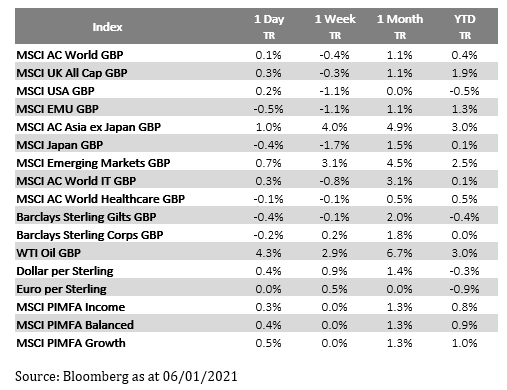
A.J. Bell – A preview of markets in 2021 in five charts

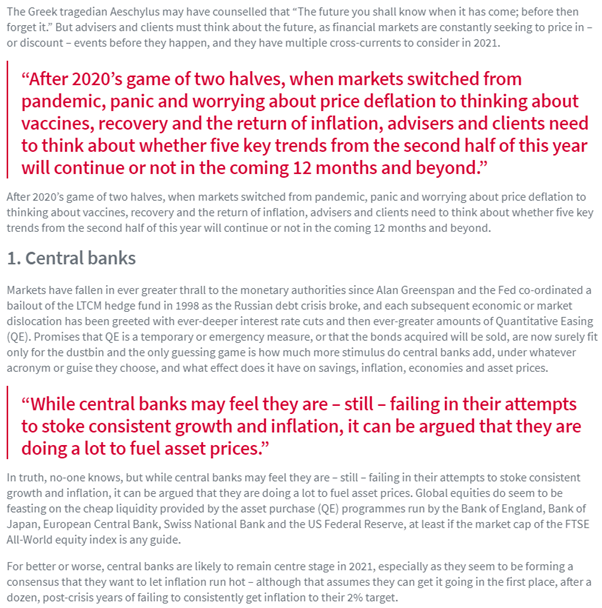
Please see below an article from A.J. Bell, which was received over the weekend and outlines some of the potential market trends that we could see in 2021:

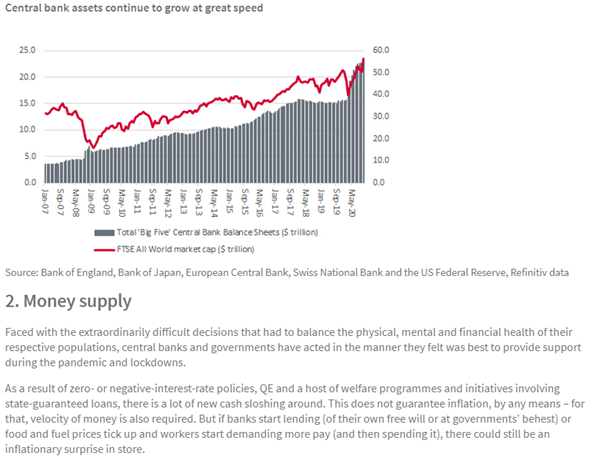
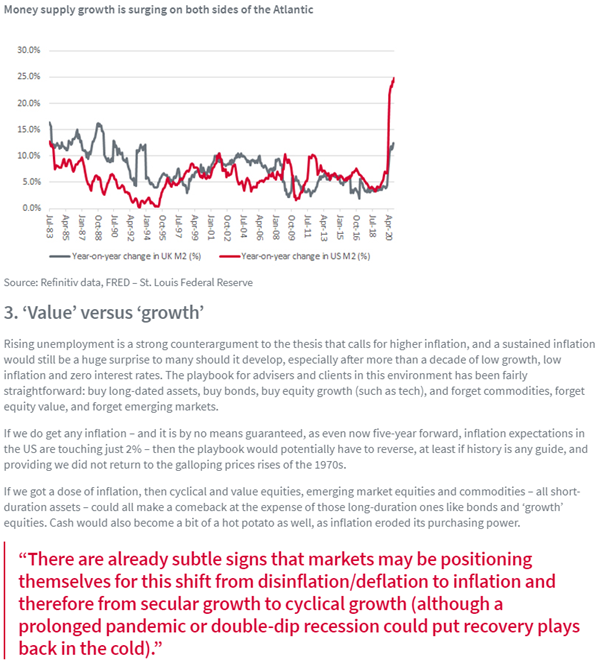
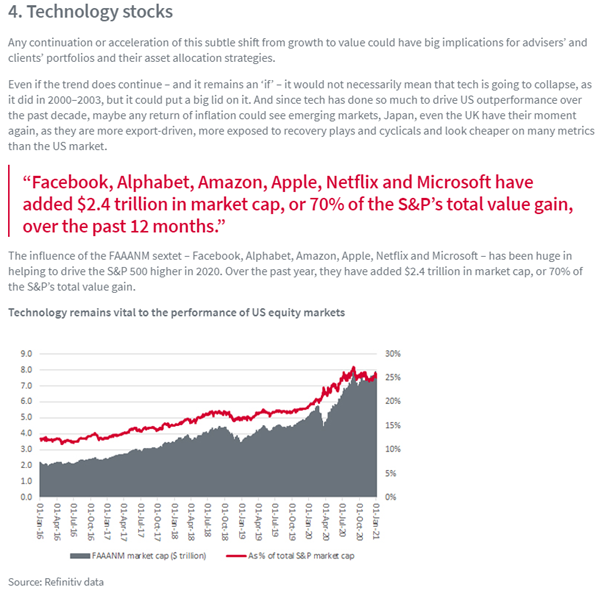
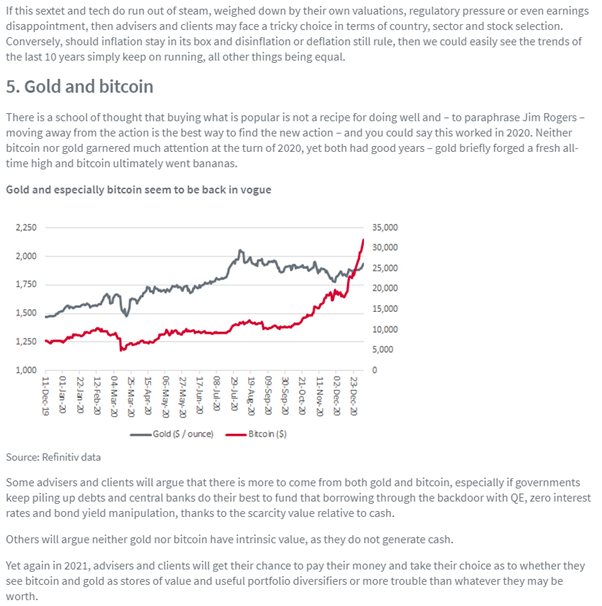
As you can see from the above, there are a number of areas to keep an eye on during 2021 and central banks and inflation will play a pivotal role in markets over the next few years.

Please continue to check our Blog content for advice and planning issues and the latest investment, markets and economic updates from leading investment houses.

Please keep safe and healthy.

Carl Mitchell – Dip PFS

IFA and Paraplanner

11/01/2021

Team No Comments

Daily Investment Bulletin

Please see below Daily Investment Bulletin received from Brooks MacDonald earlier today. The update provides market analysis and refers to developments in US politics and the Oxford/Astrazeneca vaccine roll-out. 

What has happened

The two seats in the Georgia run-off elections look to be tipping in favour of the Democrats which will have wide ranging implications for the first two years of President-Elect Biden’s Administration. Markets were quick to interpret this with US index futures losing ground and Treasury yields rising.

Vaccine race hots up

We saw a swathe of forward-looking PMI data yesterday from across the world, much of this is pointing to more optimism ahead, but that optimism is largely focused on hopes around the vaccine. As the Oxford/Astrazeneca vaccine begins to be rolled out across the UK, the government announced that 1.3 million people had now been vaccinated and around 23% of those over 80. The wider the roll-out becomes the more political choices governments will have as immunity for those most at risk of hospitalisation or death will give hospitals capacity for any surges amongst less-at-risk populations.

Georgia run-off

Whilst there were concerns that we wouldn’t see a result for several days, with 98% of the vote counted it looks likely that both Democrat candidates will with their races. This brings the Senate to a 50-50 tie but Vice President-elect Harris will have the deciding vote and therefore will be able to edge a vote over the line should all Senators vote along party lines. This would give far more legislative options to President-elect Biden but legislation would need to be unanimously supported by Democrat Senators to pass so there will still be some consensus building required to pass laws. All short-term attention will be on US Fiscal Stimulus with, if the polls are confirmed, a larger package now on the table for Q1 2021 possibly including an infrastructure package alongside to provide a further boost. Of course the sting in the tail could be tax rises or increased regulation around healthcare or big technology, but the wafer thin working majority will moderate any of the more ambitious Democrat policies. With expectations of nearer term stimulus, the market expects the Federal Reserve to need to do marginally less in terms of monetary policy and as a result the 10 year US Treasury hit 1% for the first time in more than 9 months.

What does Brooks Macdonald think

Whilst the Senate looks likely to be split 50/50 with VP-Elect Harris’s vote tipping the balance, such a narrow working majority will inevitably reduce the risk of any highly divisive legislation passing the Upper Chamber. There is also the issue of the filibuster which, unless reformed, can effectively block legislation unless there are 60 Senators in favour of moving the bill along.

We will continue to publish news and market analysis throughout the third and hopefully, final, national UK lockdown. Please check in again with us shortly.

Take care.

Chloe

06/01/2021