Team No Comments

Stocks slump as central banks hike interest rates

Please see below this week’s Markets in a Minute article from Brewin Dolphin received yesterday afternoon – 21/06/2022

Global equities fell sharply last week after several central banks announced interest rate increases.

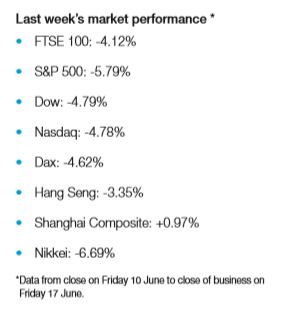
The S&P 500 recorded its worst weekly decline since the onset of the pandemic, sliding 5.8% and officially entering bear market territory (down more than 20% from its January peak). The Dow and the Nasdaq both fell 4.8% as the Federal Reserve announced its most aggressive rate hike since 1994.

In Europe, the STOXX 600, Dax and FTSE 100 all lost more than four percentage points as the European Central Bank (ECB) called an emergency meeting and the Bank of England (BoE) and Swiss National Bank both raised interest rates.

Fears of a global recession weighed on Japan’s Nikkei 225, which plummeted 6.7%. In contrast, the Shanghai Composite added 1.0% on news China had approved ten fixed-asset investments worth 121 billion yuan – a more than six-fold jump from April – in an effort to boost economic growth.
UK house prices hit fresh record high

UK and European indices started this week in the green, with the FTSE 100 and STOXX 600 up 1.5% and 1.0%, respectively, at the close of trading on Monday (20 June). US markets were closed on Monday for a public holiday. Figures from Rightmove showed UK house prices hit a record high for the fifth consecutive month in June to reach £368,614. However, the 0.3% month-on-month rise was the smallest increase since January and suggests the pace of price growth is slowing. Rightmove said price rises are expected to slow further in the second half because of worsening affordability challenges, bringing the annual rate of price growth down from the current 9.7% towards 5.0%. The FTSE 100 was up 0.6% at the start of trading on Tuesday following a rebound in Asian markets overnight.

Federal Reserve lifts interest rates by 75bps

Last week’s economic headlines were dominated by the US Federal Reserve’s decision to increase interest rates by 75 basis points (bps), its steepest rate hike for nearly three decades. This takes the level of its benchmark funds rate to a range of 1.5-1.75%, the highest since just before the pandemic hit.
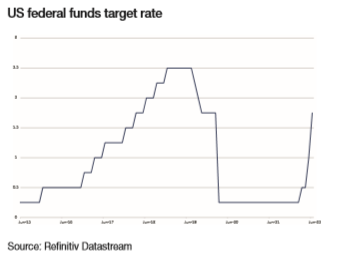
Fed chair Jerome Powell said the increase was “an unusually large one, and I don’t expect moves of this size to be common”. However, he added that the July meeting is likely to see an increase of 50 or 75 bps.

Members of the Federal Open Market Committee (FOMC) expect the benchmark rate to end the year at 3.4% and rise to 3.8% in 2023 – one percentage point higher than anticipated in March. The FOMC also cut its outlook for gross domestic product (GDP) growth for 2022 to 1.7%, down from 2.8% previously. Inflation, measured by personal consumption expenditures, is expected to measure 5.2% this year, up from 4.3% previously, before falling sharply to 2.6% in 2023.

US retail sales weaker than expected

Fears that interest rate hikes could spark a recession were exacerbated by disappointing US retail sales data. Sales fell unexpectedly in May by 0.3% from the previous month, driven by a steep decline in auto sales and a drop in furniture sales, according to the Department of Commerce. Economists had expected a rise of 0.3%.

Receipts at auto dealerships dropped by 3.5%, the largest fall in almost a year, and online store sales fell 1.0%. Sales at service stations surged by 4.0%, driven by record high gasoline prices. Excluding gasoline, retail sales fell by 0.7% month-on-month.

BoE makes fifth consecutive rate hike

Here in the UK, the BoE increased its base interest rate from 1.0% to 1.25%, the highest level in 13 years. This was the fifth time in a row that the Monetary Policy Committee voted to increase rates. It came after annual inflation rose to 9.0% in April amid large increases in global energy and goods prices, fuelled by the Ukraine war and the pandemic.

The Bank said inflation is expected to be over 9.0% during the next few months and top 11.0% in October, following an additional large increase in the Ofgem energy price cap. Meanwhile, GDP is expected to fall by 0.3% in the second quarter, worse than previously expected. The Bank did not update its outlook for the third quarter, but it has previously said it expects the economy to grow in July to September, meaning the UK would avoid a recession (defined as two consecutive quarters of shrinking GDP).

ECB holds emergency meeting

The ECB held an emergency meeting last week to address rising borrowing costs in some member states. This followed a surge in bond yields in countries like Italy and Spain and growing fears that the eurozone could be on the cusp of another debt crisis.

Noting the widening gap in the cost of borrowing between stable countries like Germany and other more vulnerable member states, the ECB said it would accelerate plans to create a “new anti-fragmentation instrument”. It also said its governing council had approved plans to apply flexibility in the way it reinvests bond proceeds from its Pandemic Emergency Purchase Programme – in other words, focusing on buying the bonds of vulnerable member states like Italy.

Please continue to check back for our latest blog posts and updates.

Cyran Dorman

22/06/2022
Team No Comments

Brooks Macdonald: Weekly Market Commentary – Hopes grow that China can turn a corner on COVID-19

Please see this week’s Weekly Market Commentary update from Brooks Macdonald received late yesterday afternoon:

Hopes grow that China can turn a corner on COVID-19, as Shanghai authorities signal an easing of restrictions ahead

After a difficult week, markets managed a decent bounce on Friday but the mood has soured coming into trading on Monday, following a slew of weaker than expected data out of China. Amongst the data releases, China Industrial production fell -2.9% Year on Year (YoY) vs +0.5% expected, and retail sales was down -11.1% YoY vs -6.6% expected. Despite the disappointment, it’s important to keep in mind that COVID-19 lockdowns in April were the main culprit behind the weaker data, but the good news is that the virus situation looks to be improving. In Shanghai (home to the world’s biggest container port), on Sunday the city reported a second day of no COVID-19 infections outside government-mandated quarantine, and local authorities there have now signalled a timetable for the easing of restrictions and aim to return to normality as early as the start of June.  Starting the return to more normal economic activity, on Monday, the city will begin to reopen supermarkets, convenience stores and pharmacies. Elsewhere in China, with the exception of Beijing, outbreaks in rest of the country look to have eased as well. Assuming this all proves durable, it paves the way for a possible rebound in the economic data going forwards.

Inflation on the radar as UK CPI data is due this week, but keep in mind the caveats with year on year comparisons

After last week’s focus on US CPI (Consumer Price Index data), this week sees more CPI prints for the month of April, including the UK on Wednesday. UK April Core CPI (excluding energy and food) is expected to rise to 6.2% YoY, up from 5.7% YoY in March. The UK headline CPI (including energy and food) is expected to grab most of the headlines however, with an expected print of 9.1% YoY, boosted in part by the 54% rise in the energy price cap set by Ofgem which was introduced on 1st April and which is expected to make its way into the latest reading. With inflation still the focus, markets will be trying to gauge whether the more hawkish cadence from central banks over the past few months has started to filter through into any changes in consumer activity. Taking a temperature-check on spending, we have retail sales data due from the US on Tuesday and the UK on Friday. When we look at UK CPI Year on Year inflation prints, it is important to keep in mind that these tell us just as much about what was happening to prices a year ago, as much as it does about what is happening to prices today. For the UK, this time last year, April 2021 YoY Core CPI was running at 1.3%. Back then, the UK economy was still in the process of coming out of lockdown, with non-essential retail shops only opening up midway through the month, and with restrictions on mixing between different households still in place. As such, the April 2022 CPI print due out on Wednesday is going to be comparing a reasonably ‘normal economy’ this year against a somewhat ‘restricted economy’ last year – as such, while the headline prints will undoubtably generate big headlines, we should treat YoY comparatives with a bit of caution.

Sterling is the pressure release-valve as the risk grows of a UK-EU Brexit bust-up over the Northern Ireland Protocol

Speculation is mounting that the UK government might be willing to unilaterally override parts of the Brexit Northern Ireland Protocol, and an announcement on this might come as soon as this week. In response, the EU has warned that the protocol is a ‘cornerstone’ of the wider UK-EU withdrawal agreement and renegotiation is not an option. The prospect of a possible UK-EU Brexit bust-up has fed into currency markets, with Sterling falling to around 1.22 vs the Dollar last week, levels last seen around May 2020 during the height of the pandemic. Expect Sterling to continue to be the immediate pressure release valve, but there is a potential knock-on factor for inflation also: should Sterling see sustained weakness, then this also risks adding to the current inflation pressures, by adding to import costs.

Please continue to check our Blog content for advice and planning issues and the latest investment, markets and economic updates from leading investment houses.

Andrew Lloyd DipPFS

17/05/2022

Team No Comments

Brewin Dolphin – Insight into the Spring Statement

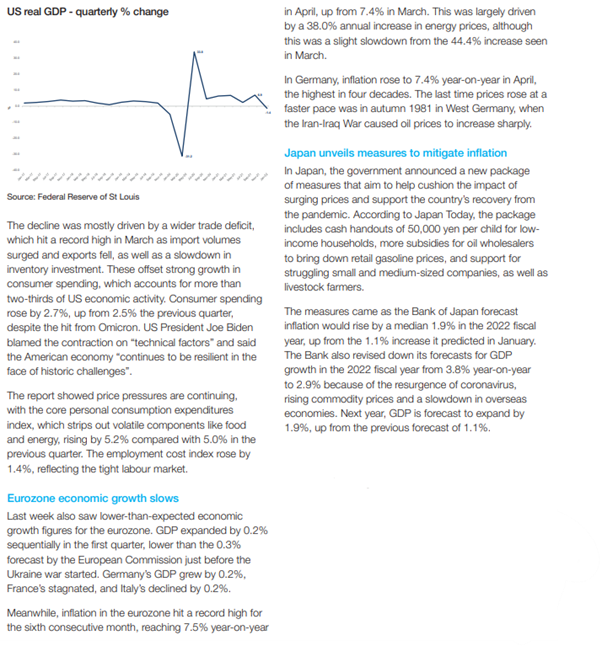
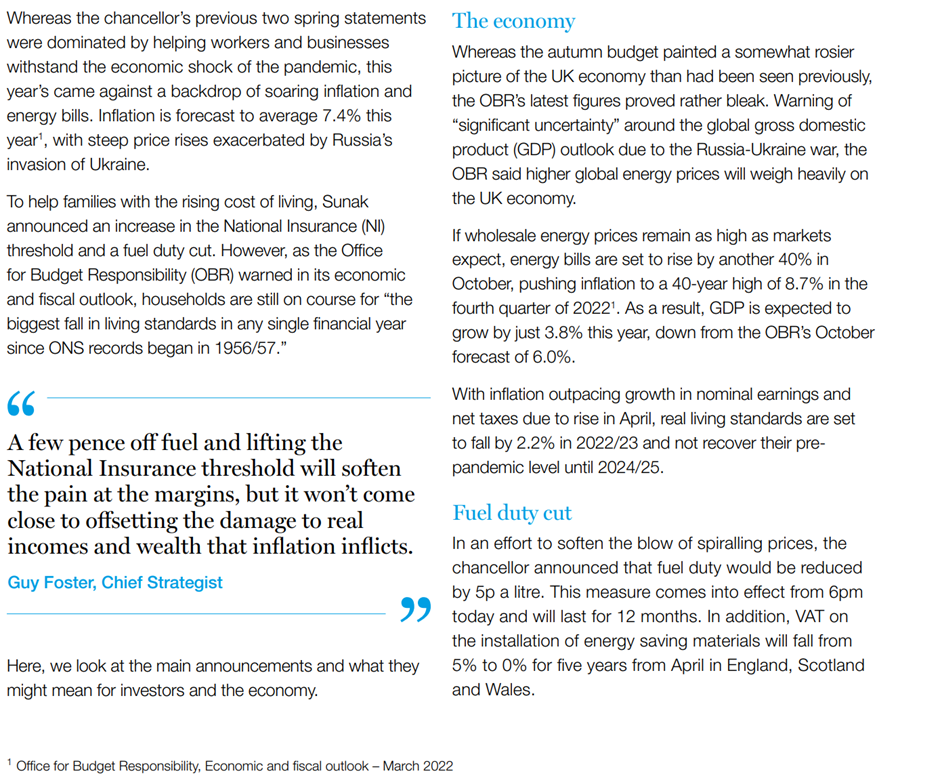
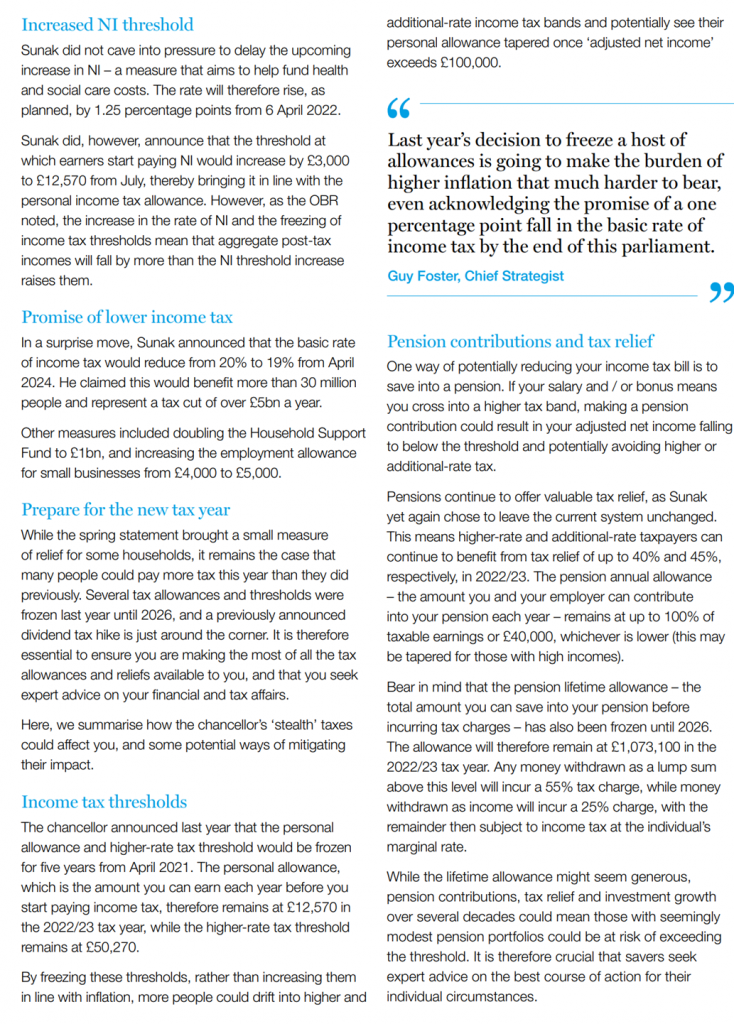
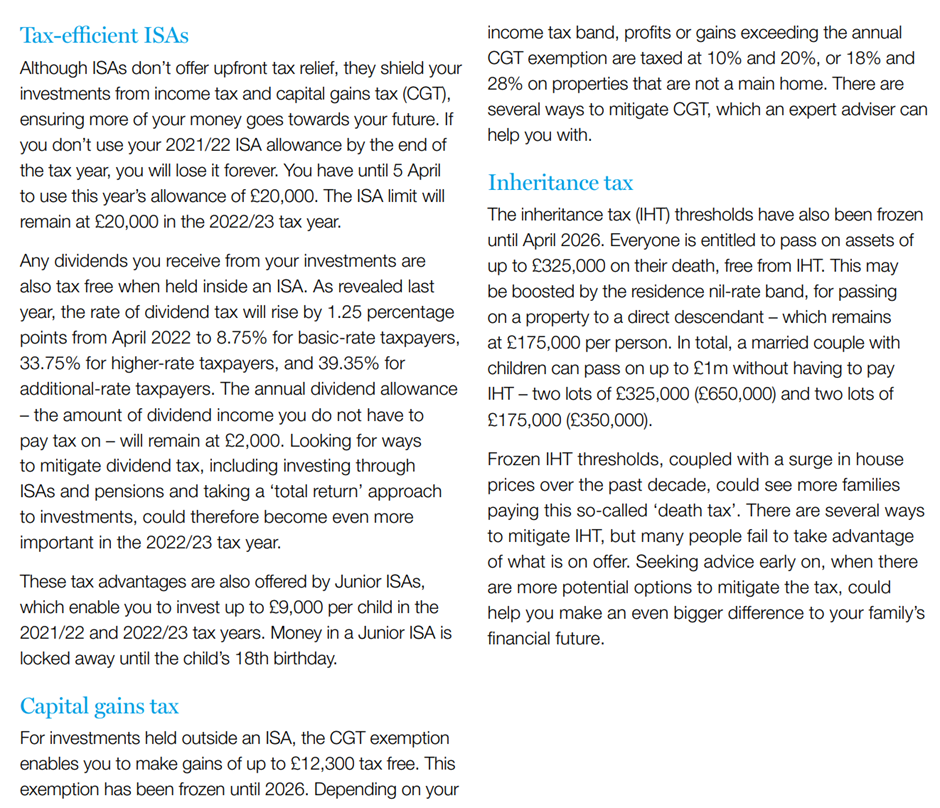
Please see below an article from Brewin Dolphin which was published and received yesterday (23/03/22) evening. This article outlines their thoughts on the 2022 Spring Statement, which was delivered to the House of Commons yesterday by the Chancellor, Rishi Sunak:

As you can see from the above, the economic outlook remains uncertain as it remains to be seen what the full impact will be on us of Russia’s invasion of Ukraine.

The positive news is the National Insurance equalisation, to bring this in line with the Personal Allowance of £12,570.00 from 06/07/2022. This will help ease some of the burden of the National Insurance increase which is due to come into effect from 06/04/2022.

As the article outlines, with the personal allowances being frozen until 2026, it is more important now to make full use of the reliefs and allowances available, such as Pension contributions and saving into ISAs etc.

Please continue to check our Blog content for advice and planning issues and the latest investment, markets and economic updates from leading investment houses.

Please keep safe and healthy.

Carl Mitchell – Dip PFS

Independent Financial Adviser

24/03/2022

Team No Comments

US Fed raises rates: how does this impact our outlook and what risks lie ahead?

Please see below article received from Invesco yesterday afternoon:

What happened?

The Federal Open Market Committee (FOMC) released its statement following the March meeting, and US Federal Reserve Chair Powell held his regularly scheduled post-meeting press conference.

As anticipated, the FOMC increased the Fed Funds Target Rate2 by 25 basis points (bps), with James Bullard the sole dissenter preferring to raise by 50bps. References to the balance sheet were limited, with the Fed explaining that “the Committee expects to begin reducing its holdings of Treasury securities and agency debt and agency mortgage-backed securities at a coming meeting.”

There were some significant changes in the Summary of Economic Projections, compared to the December 2021 meeting.

The Fed revised its forecast for 2022 real GDP growth to 2.8% from its December 2021 forecast of 4.0%. The median forecast for 2022 core personal consumption expenditure3 (PCE) inflation increased to 4.1% from 2.7%. This has prompted the FOMC to adjust its 2022-end target for the Fed Funds Target Rate to 1.9% from 0.9%, with the highest individual forecast (presumably Bullard) at 3.1% by the end of 2022.

We welcome the increase in inflation forecasts by the FOMC, which is a reasonable step to move closer to what we are seeing in the data and prepare the ground for further revisions if necessary for 2023.

During the press conference, Powell made some key points:

  • The robustness of the labour market, highlighting that it is “extremely tight”, with wages rising the fastest in many years
  • Risks to inflation remain to the upside
  • The FOMC has “made good progress” in discussing the future of the Fed’s holdings of Treasury and mortgage-backed securities
  • The Committee’s view that the US economy is strong, and well placed for a tightening in monetary policy4. He also believes that a recession in 2022 is unlikely
  • He reinforced the idea that balance sheet reduction can be thought of in terms of interest rate increases, prioritising price over quantity analysis
  • Balance sheet reduction will “be faster than last time”, “earlier in the cycle than last time”, and “will look familiar”

What is our take on what is happening?

What we are experiencing is the unwinding of the “dash-for-cash” phenomenon that occurred in 2020. At the height of uncertainty related to the Covid-19 pandemic, investors de-risked portfolios and demanded to hold more liquid assets, including higher money balances. The Fed rightly accommodated this shift in investor demands, but grossly overestimated how accommodative they could be without affecting future inflation.

As consumer behaviour and spending has normalised, these excess money balances have been reflected in a strong economic recovery in the US, and ultimately accelerating inflation. The transitory explanation of inflation that was endorsed by the Fed has fallen away as inflation has broadened out throughout the US economy.

What is our outlook?

In our view, the Fed is attempting to “thread the needle”, by trying to limit the rise in long-term inflation expectations amid several notable headwinds for global economic growth. The most notable is the war in Ukraine and the zero-Covid policy in China. Three scenarios are possible:

  1. The Fed achieves its desire for a “soft landing”, with inflation returning to 2% relatively quickly, growth affected only marginally, and a terminal Fed Funds Target Rate in line with their projections;
  2. The Fed delays the required degree of tightening as a commodity price shock dramatically slows growth, and the US enters a period of stagflation;
  3. The Fed tightens too aggressively, facilitating a more conventional deflationary recession in 2023.

Our base case (based on current forward guidance from the Fed) remains firmly in the first scenario, but risks have increased recently.

History suggests that despite some initial volatility, stocks tend to outperform bonds once the Fed starts new tightening cycles. The FOMC’s projections portray the desire to remove the generous policy support provided since the outbreak of the pandemic, especially with inflation running higher than previously expected. 

The removal of support is likely to keep Treasury yields moving higher, although a flattening of the yield curve is likely to dampen the effect on longer maturities. It would not be a surprise to see 10-year yields above 2.5% this year, though after recent strong gains, a period of consolidation may be in order.

Higher yields may be expected to support the dollar, but it has already strengthened over the last year, even more so since Russia’s invasion of Ukraine. We wouldn’t be surprised to see the greenback consolidate over the rest of the year.

Within equities, value stock tends to outperform growth stock when inflation is high and falling, as cyclicals do over defensives. Alternatives such as real estate and private credit, as well as commodities, could also outperform in this environment.

US treasuries and high-quality investment grade bonds may be worth watching should the Fed decide to “slam on the brakes” and a recession ensues (where both growth and inflation fall).

What are we looking out for? What are the risks to our view?

The primary risk to the markets in 2022 is if the Fed makes a policy error by engineering a fully contractionary monetary policy in response to persistent, above-target inflation. This would likely result in a recession in 2023. We will follow a variety of incoming data, including inflation and inflation expectations, that could trigger more aggressive monetary policy.

Furthermore, the war in Ukraine has significantly increased the chances of a stagflationary scenario, although this is not our base case.

Please continue to check our Blog content for advice and planning issues and the latest investment, markets and economic updates from leading investment houses.

Andrew Lloyd DipPFS

18/03/2022

Team No Comments

Brewin Dolphin – Are we heading towards 1970s-style stagflation

Please see article below from Brewin Dolphin – received late yesterday afternoon – 16/03/2022.

Are we heading towards 1970s-style stagflation?

A growing number of investors are beginning to worry about a return to the environment that characterised the 1970s. Both Otmar Issing, the European Central Bank, s first chief economist, and Larry Summers, former US Treasury secretary, have recently flagged stagflation risks (weak growth and high inflation). Could things get this bad? Paul Danis, our Head of Asset Allocation, discusses below.

What was the economy like in the 1970s? The 1970s was a decade plagued by high inflation. The oil crises of 1973/74 (following the OAPEC oil embargo) and 1979 (following the Iranian revolution) made an already challenging inflation backdrop worse. The spike in energy costs in each crisis left consumers with substantially less disposable income to spend on other goods and services, which weighed on consumption.

Industrial action in the UK was particularly severe in the 1970s. The coal miner strikes early in the decade restricted supply, resulted in blackouts, and forced businesses to close. Ultimately, the government of Edward Heath imposed a three-day week, further weighing on growth. The widespread strikes in the ‘Winter of Discontent’ later that decade led to major disruption, with graves left undug and rubbish piled up in the streets.

High inflation eventually forced central banks to aggressively raise interest rates, which weighed heavily on the interest-sensitive areas of the economy. This combination of high inflation, weak demand and rising long-term interest rates was toxic for financial markets, and led to very weak ‘real’ asset returns (the return that is left over after subtracting inflation).

Just how bad were real returns?

Taking the US as an example, annualised real returns were negative for stocks, cash, government bonds and corporate bonds in the 1970s. In the case of equities, the annualised real return in the decade amounted to -1.5%, which compares to an approximate +7.7% annualised real return over the 100 years leading up to today. Conversely, returns on commodities such as gold and oil were much stronger than average in the 1970s.

What caused the high inflation of the 1970s?

A perfect storm of factors led to the high inflation 1970s. Sticking with the US as an example, government expenditure rose on the back of both the Vietnam War and President Lyndon Johnson’s ‘Great Society’ legislation, with the latter involving higher government spending on social programmes.

When the gold standard came to an end in 1971, the US dollar was able to float freely. The greenback dropped sharply over the next few years, pushing up import cost inflation. President Richard Nixon pressured then Federal Reserve chairman Arthur Burns (who was previously Nixon’s economic adviser) to maintain an expansionary monetary policy heading into the 1972 election, despite a growing inflation problem. Burns complied. Nixon also introduced wage / price controls in the early 1970s in a bid to get inflation under control. While temporarily slowing inflation, these measures led to shortages and so ultimately made the problem worse.

The oil crises of 1973/74 and 1979 reduced global oil supply and drove up petroleum prices. Meanwhile, real-time estimates overstated the ‘potential output’ of the US economy. This led policymakers to believe there was more ‘slack’ (unused resources) in the economy, which caused them to underestimate the inflationary effects of their policies. Finally, labour union worker contracts typically were linked to inflation. This setup produced a ratcheting effect when price increases picked up.

What was happening in the UK?

As was the case in the US, mismeasurement of the ‘output gap’ (the difference between actual output and the level of output consistent with sustainable full employment of resources) was a problem for UK policymakers. A Bank of England (BoE) working paper concluded that monetary policy errors due to this problem contributed about 3.0 to 7.1 percentage points to average UK inflation in the 1970s (Nelson / Nikolov, 2001). Meanwhile, the BoE was not independent. Several studies have established a significant link between the level and variability of inflation and the degree of central bank independence. Both the oil supply shocks and effects of wage indexation played a similar role in pushing up UK inflation as they did in the US.

Are there parallels between the 1970s and today?

Some of the factors that contributed to the high inflation of the 1970s are prevalent today. Labour markets across the developed world are tight. In the US, the unemployment rate heading into the 1970s was 3.5%. At present, it is 3.8%, and likely to reduce further.

The US has enacted massive fiscal stimulus under President Joe Biden at a time when the economy was already expanding rapidly. Global oil prices have surged, most recently on the back of Russia’s invasion of Ukraine. This will bolster inflation, and weigh on growth.

That said, there appear to be more differences than similarities. Central banks today are probably less likely to give in to political pressure. The Federal Reserve restored its credibility under Paul Volker, who quashed inflation after taking charge in August 1979. That credibility largely remains intact. Central banks have formally adopted inflation targets. Households, businesses and investors believe they will take steps to reduce inflation if inflation expectations were to become ‘de-anchored’. Meanwhile, developed world economies are now structured in a way that makes a wage / price spiral less likely. Union power has declined as economies have become more service oriented, and wage indexation is built into a much lower percentage of contracts today. Wage / price controls seem very unlikely. Importantly, the current ‘oil shock’ is nowhere near as bad as either of the two that occurred in the 1970s. We believe that supply concerns linked to the war in Ukraine have boosted the oil price by around 10%. This is far less than the 237% supply-driven rise in 1973/74 and 154% in 1979.

How do you expect the economy and markets to evolve?

Absent an escalation in the Ukraine crisis that causes energy prices to surge anew, it is likely that inflation in the Western world will moderate as the year progresses. Supply bottlenecks should continue to improve, the impact of last year’s fiscal stimulus should wane and monetary policy will tighten. That said, inflation is likely to remain uncomfortably high. Even without additional upside, the process by which commodity inflation filters through to consumer prices should last for some time. Tight labour markets should bolster wage inflation, which will encourage businesses to raise prices to protect profit margins. So-called shelter inflation pressure (categories related to rent and imputed rent) will also likely remain strong.

Regarding growth, we believe that 2022 should see most developed world economies grow at a solid pace. However, the rise in energy costs and inflation more broadly should combine with rising interest rates and slower job growth to weaken the pace of the global economic expansion.

On markets, we continue to expect stocks to outperform bonds. However, the economic cycle has moved into a later stage. As such, we expect to use periods of market strength to lighten our equity exposure.

What about longer term?

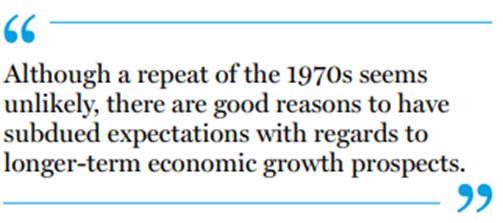
Although a repeat of the 1970s seems unlikely, there are good reasons to have subdued expectations with regards to longer-term economic growth prospects. Demographics are a headwind, as labour force growth is likely to be weak.

Meanwhile, we suspect that longer-term inflation risks lie to the upside. Entitlement spending (healthcare, pensions) for ageing populations will require continued deficits. There is a risk that these may end up being partly financed by central banks via additional quantitative easing, which would amount to moneyfinanced fiscal policy. Globalisation headwinds are mounting, and the age structure of populations is shifting so that the ratio of workers relative to consumers will fall. Both developments risk higher inflation. The process of decarbonisation of the global economy also risks boosting inflation over the longer term.

Subdued growth combined with rising inflation risks suggest that equity returns over the next decade will likely be much lower than investors have grown accustomed to since the 1980s. But even so, we would still expect equities to be a better investment than cash over the long term.

Please continue to check back for our latest blog posts and updates.

Charlotte Clarke


17/03/2022

Team No Comments

Ukraine Update

Please see below article received from Waverton yesterday afternoon, which provides an update on the abhorrent war in Ukraine and advises investors to remain steadfast.

Sadly, the war in Ukraine continues. The news changes hour-by-hour, but, at the time of writing, there is speculation of a potential meeting between the respective foreign ministers, and there has been a successful evacuation of civilians from Sumy, in north-eastern Ukraine. Stark contrast to the shelling of a nuclear power station just days ago.

Despite the apparent progress that a meeting might suggest, 24 hours ago President Zelensky was channelling Churchill by saying “we’ll fight in the forests, on the shores, in the streets”. Any peace deal at the moment would likely require a significant move in the stance of one or both sides, something that currently seems relatively unlikely. Should peace break out, however, then this would likely buoy the markets.

The market reaction thus far has been largely explainable, though often volatile. Europe’s proximity to the fighting and associated disruption has meant that reaction has been most acute there. Russia and Ukraine are important producers of a wide range of commodities. The war has led to a sharp increase in the price of many raw materials thanks to concern about supply disruption. Many Russian assets have collapsed in value, not least because of the wide-ranging and coordinated sanctions against the country.

At Waverton we do not hold any Russian equities or bonds directly. We also do not hold any companies with significant dealings in Russia, though, of course, large multinational companies will likely have some exposure. Russian investments owned in third-party funds that we hold are small. Russian exposure can realistically be measured as a fraction of one percent in any Waverton portfolio.

Inflation was a significant issue even before the invasion. The war will compound the problem via higher commodity prices, and further supply chain disruption.

The combination of both elevated inflation and geopolitical uncertainty has meant that economic growth expectations have been lowered, particularly in Europe, raising the spectre of “stagflation” (a term coined in the 1960’s that was mainstream in the 1970’s). That outcome would make life difficult for central bankers, as raising rates to quell inflation will also negatively impact demand and therefore economic growth.

We are continuing to watch developments closely. We have a neutral Equities position in portfolios and have added to bond and alternatives exposure with a focus in the latter on real assets with inflation linked cashflows.

We continue to have faith in our tried and tested investment process. This is not a time to make hasty judgements. Any outbreak of peace would be a significant short-term boost to markets but the level of inflation and the likelihood of tighter monetary policy ahead remain challenges to the outlook for economic activity and corporate earnings.

Please check in again with us shortly for further relevant content and news.

Chloe

10/03/2022

Team No Comments

The Big Market Pay Debate

Please see the below article from AJ Bell, examining the potential effects on wage growth from current inflationary pressure and the implications for stock market valuations  – received yesterday – 27/02/2022

Calls from both the Bank of England’s governor, Andrew Bailey, and its chief economist, Huw Pill, for wage restraint do not sit easily alongside the current headline inflation figures. Nor does Unilever’s statement (10 Feb) that it raised prices by 4.9% in the fourth quarter of last year and has planned further hikes in 2022, thanks to expected input cost inflation of 3% to 4%.

A few small caps, notably own-brand cleaning products specialist McBride, loo roll maker Accrol and retailer Joules, had dished out profit warnings as they have proved unable to raise prices far or fast enough to compensate for rising costs.

But Unilever is the biggest so far, as it forecast a drop in profit margins of some 1.4 to 2.4 percentage points in 2022, down to 16% to 17%. Even though not all of this is down to higher raw material, freight and packaging costs, as the food-to-personal care giant continues to invest heavily in product development and marketing, it does beg the question of who is able to defend product margins in an inflationary environment if Unilever cannot? After all, it can call upon the power of brands such as Marmite, Hellmans, Dove and Magnum.

Investors must again therefore address three key questions:

Will workers demand – and get – meaty wage rises in response to their rising bills and expenses? Lowly unemployment numbers would suggest this is their time to strike (either figuratively or literally speaking).

If they are successful will that drive wider inflation and force central banks to raise interest rates further and faster than currently anticipated by markets?

Will rising wages, alongside freight, raw materials, packaging, start to take a bite out of corporate profit margins? And, if so, what does that mean for stock market valuations, especially at a time when interest rates are rising?

Vicious circle

Wage growth is cooling a little on both sides of the Atlantic, but the readings are still high by the standards of the (admittedly relative short) datasets that we have. In the UK, total pay rose by 4.8% year-on-year in the three months to December and US workers’ average hourly pay rose 5.7% year-on-year in January.

Low unemployment rates and high numbers of job vacancies relative to the numbers of those without work would suggest labour may just have the whip hand in any pay negotiations. Trades unionists and workers may be happy about that for political, philosophical and economic reasons as there can be little doubt that capital has had its wicked way with labour for much of the past four decades, and beyond.

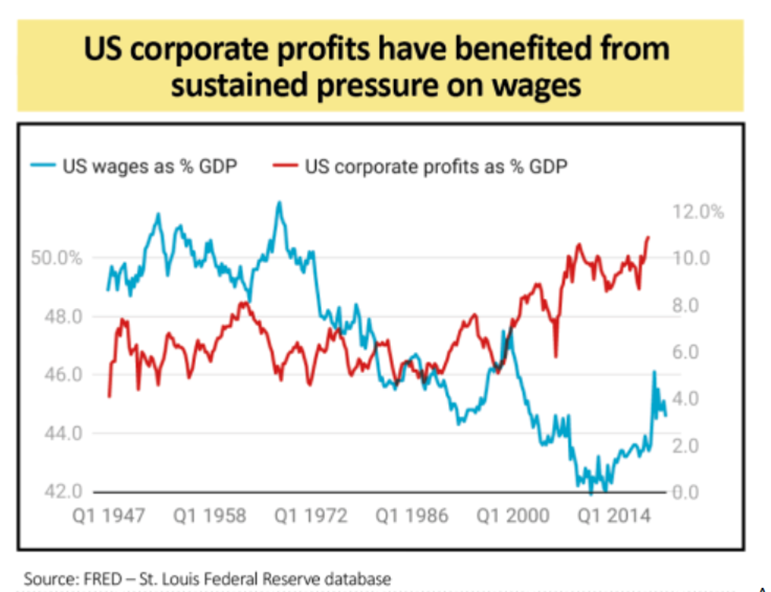
Since 1947, Americans’ pay has fallen by more than four percentage points as a portion of GDP. American corporate profits have increased by around six percentage points over the same time frame.

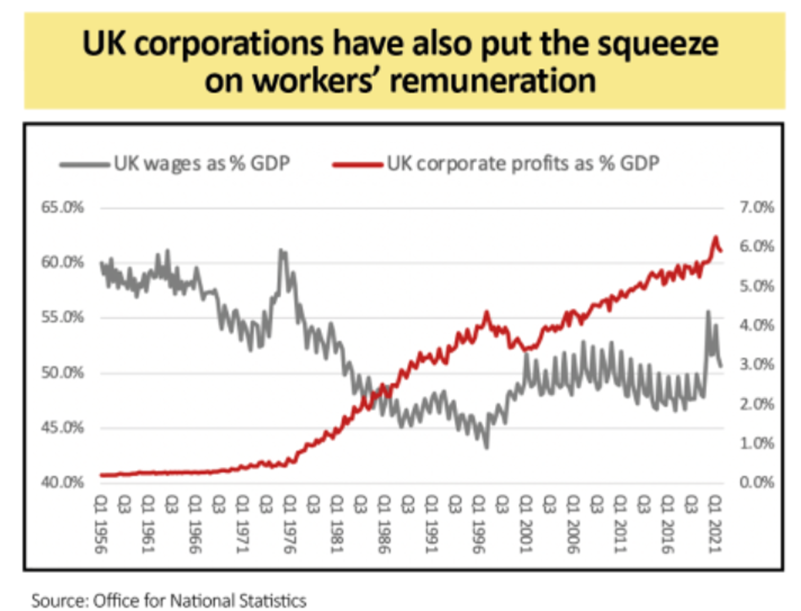
A similar trend can be seen in the UK, where the data goes back to 1955. Since then, labour’s take-home slice of the economy has dropped by almost ten percentage points, while corporations have increased theirs by the thick end of six points.

Margin call

Investors could therefore be forgiven for wondering what may happen next. After all, corporate profits stand at, or close to, a record high as a percentage of GDP in both the US and UK.

Any margin pressure could therefore restrict profit growth (and that is before UK-based firms face a jump in corporation tax to 25% from 19% from April 2023). And the combination of higher interest rates and slower profit growth is not an ideal one, especially in the US stock market, where valuations are at or near all-time peaks, based on market-cap-to-GDP and the Shiller cyclically adjusted price earnings CAPE ratio.

Yet all may not be lost for three reasons. Higher pay could help consumers’ keep spending. Companies report sales and profits in nominal, not real, inflation-adjusted terms. Sales up, costs up can still mean profits up, which is why stocks and shares are seen as offering a better hedge against inflation than say bonds.

Granted, some companies and industries may be better suited to coping with inflation than others. Areas where demand is relatively price inelastic, or insensitive, are one – they include oil and tobacco. Industries where demand growth outstrips supply growth (and it takes time to create fresh supply) are another – and that could include mining, especially as central banks cannot print copper, gold or cobalt.

And consumer staples or luxury goods companies with brands can be better placed than most to raise prices thanks to the customer loyalty and pricing power they confer. Luckily, the FTSE 100 has quite a few of those.

Please continue to check our Blog content for advice and planning issues and the latest investment, markets and economic updates from leading investment houses.

Alex Kitteringham

28/02/2022

Team No Comments

Explaining the European Union Taxonomy Regulation

Please see the below article from JP Morgan, received this morning:

Sustainability, which includes environmental, social and governance (ESG) considerations, has long been a focus for the European investment community, European governments and regulators. In recent years, the European Union (EU) has taken specific legislative actions to encourage the flow of capital towards a sustainable economy, including developing and enacting regulation related to sustainable finance.

The EU Sustainable Finance Disclosure Regulation (EU SFDR), which went into effect 10 March 2021, aims to increase transparency and standardisation within financial products with regards to their environmental and social characteristics and sustainable objectives.

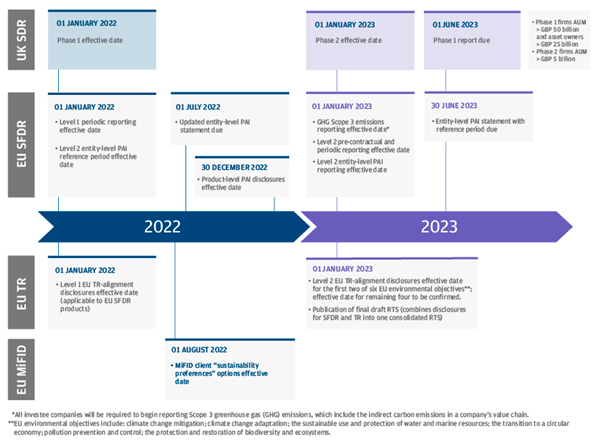
The EU Taxonomy Regulation (EU TR), which went into effect 01 January 2022, provides an additional level of transparency to financial market participants by recognising and outlining six specific environmental objectives. The EU TR supports the EU’s goal of helping capital flow to sustainable finance and green projects.

An EU taxonomy specific to social objectives is currently being developed and a draft report was released by the social taxonomy subgroup of the EU Platform for Sustainable Finance in July 2021. We expect to learn more about the progress of the social taxonomy in the near term. Throughout this article we refer only to the EU TR related to environmental objectives.

It is important for investors to understand the scope of the EU TR.  In-scope firms are not required to have binding commitments to make EU TR-aligned investments within their financial products; they are only required to disclose the degree to which their financial products commit to aligning with the EU TR.  For example, zero alignment is permitted.

Taken all together, elements of the EU TR and the EU SFDR, along with ESG-related changes to the EU Market in Financial Instruments Directive (MiFID), introduce enhanced levels of ESG-related disclosures. Investors will see the most significant impact by mid-2022. 

What is the EU Taxonomy Regulation (EU TR) and why is it important?

The EU TR is the EU classification system for environmentally sustainable economic activities. It translates the EU’s environmental objectives into a clear framework for investment purposes. The EU TR creates a common, standardised language, criteria and due diligence (quality assurance) process related to identifying economic activities that align to recognised environmental objectives. 

The EU TR specifies six EU environmental objectives:

  • Climate change mitigation*
  • Climate change adaptation*
  • Sustainable use and protection of water and marine resources**
  • Transition to a circular economy**
  • Pollution prevention and control**
  • Protection and restoration of biodiversity and ecosystems**

*Level 2 standards confirmed as of 9 December 2021.
 **Level 2 standards under review.

Broadly, an economic activity may be considered “environmentally sustainable” if it meets the following conditions:

  1. Makes a substantial contribution to at least one of the EU’s six environmental objectives
  2. Does not cause significant harm to any of the other EU environmental objectives to which it is not aligned
  3. Meets prescribed minimum ESG safeguards
  4. Meets the “technical screening criteria” set out by the EU TR

In addition, the EU TR mandates a series of disclosures that in-scope financial firms and financial products are required to make with regards to the degree to which their activities and/or investments are aligned to the EU TR.

Who is affected by the EU TR?

The EU TR affects all financial market participants in the EU.  Asset managers and financial advisers need to disclose the degree to which they commit to being invested in taxonomy-aligned activities within their financial products. As a result:

  • Companies have clearer guidance on sustainable finance initiatives and regulation, which helps in strategic planning and raising capital for these projects.
  • Investment managers can design credible green products that meet the approved common standards.
  • Retail investors can better compare financial products based on EU TR-aligned activities.
  • Professional investors (portfolio managers) can better compare companies through improved disclosure of EU TR-aligned activities.

How does the EU TR apply to an investment portfolio?

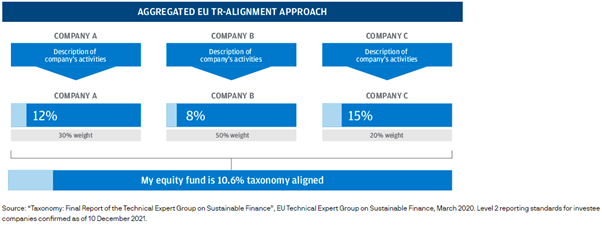
The disclosure of EU TR-aligned activities at the company level feeds up into disclosures of EU TR-aligned activities at the portfolio level. In-scope EU companies will be required to disclose the degree to which their economic activities align to the EU TR. Asset managers aggregate the company disclosures, incorporating all key conditions, so they can disclose the percentage of the fund that is aligned to the EU TR.

Aggregated EU TR-alignment approach

The quality, completeness and timeliness of the corresponding disclosures from investee companies is critical to ensuring the ability of asset managers to meet their own obligations under the EU TR. In time, the improved corporate disclosures will help portfolio managers better incorporate environmental considerations into investment decisions and portfolio construction.

How will the EU TR interact with the EU SFDR and other EU sustainable finance initiatives?

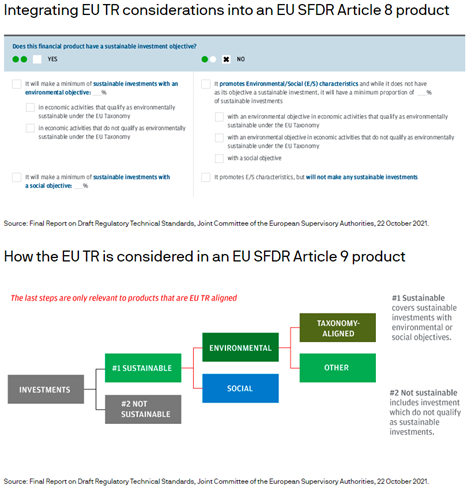
The EU TR is being integrated into the disclosure obligations set out by the EU SFDR. A firm is expected to reflect its minimum alignment to the EU TR alongside EU SFDR considerations. In addition, both Article 8 and Article 9 EU SFDR financial products need to disclose the degree to which they are committed to making sustainable investments, referencing both the EU SFDR and EU TR standards.

Under the EU SFDR, “sustainable investment” broadly means an investment in any economic activity that contributes to an environmental and/or social objective, provided that such investments do not significantly harm any of those objectives and that investee companies follow good governance practices.

Under the EU TR, a “sustainable investment” (being aligned to the EU TR) means specifically an investment in any economic activity that contributes to one of the six environmental objectives recognised by the regulation, on the condition that the investment meets the four-step due diligence standards outlined earlier.

The Article 8 and Article 9 disclosures will provide investors with a detailed understanding of the sustainable investment commitments of financial products via precontractual (ex-ante) disclosure obligations, such as a prospectus. Investors will also be able to see how financial products fared in terms of those commitments via periodic reporting (ex-post) disclosure obligations.

Several EU sustainable finance initiatives, in various stages of development, will likely incorporate elements of the EU TR, such as:

Will there be a UK version of the EU TR?

The UK is planning to follow a hybrid, parallel model of regulation potentially incorporating:

  • The Task Force on Climate-Related Financial Disclosures recommendations for climate-related entity- and product-level disclosures that came into effect 1 January 2022
  • Possible Sustainable Disclosure Requirements (UK SDR) based on a discussion paper issued 3 November 2021
  • Possible Environmental Taxonomy Regulation, similar to the EU, expected at the end of 2022

The UK authorities have not yet decided whether they are planning to integrate ESG into their own legacy regulations.

What further developments related to the EU TR should investors look out for?

Integrating “sustainable preferences” within existing suitability rules defined by MiFID will be one of the next developments that will impact investors.

Recent EU rules regarding the integration of sustainability factors, risks and preferences into certain organisational requirements and operating conditions for investment firms, as outlined within MiFID, will also incorporate “sustainability  preferences” within existing suitability rules. This is currently scheduled to take effect in August 2022, alongside other ESG-related changes affecting several EU regulatory frameworks including Undertakings for Collective Investment in Transferable Securities (UCITS) and the Alternative Investment Fund Managers Directive (AIFMD).

Sustainability preferences allow clients (or potential clients) to determine whether they would like to consider sustainability in their investments, and to what extent, through a financial instrument with one of the following options:

  • Minimum proportion invested in environmentally sustainable investments as defined by the EU TR
  • Minimum proportion invested in sustainable investments as defined by the EU SFDR
  • Considers principal adverse impacts (PAI) on sustainability factors with qualitative or quantitative elements demonstrating that consideration

Additional amendments will incorporate key terms, such as “sustainability factors” and “sustainability risk”, and incorporate ESG considerations to align with the EU SFDR.

What is the timeline for implementing the EU TR?

The EU TR is effective 01 January 2022, when the Level 1 precontractual ex-ante disclosure standards are applied.

Subject to corresponding Level 2 standards of the EU TR being passed into EU law, the enhanced disclosure standards will be integrated into the disclosure templates set out by the EU SFDR effective 1 January 2023 (this date is subject to confirmation). 

How will the EU TR benefit investors?

The impact of the EU TR is expected to be incremental over the coming years, rather than immediately transformative, particularly for non-professional investors.

As elements of the EU TR are integrated into the EU SFDR, investors will be able to gain additional detailed understanding of the minimum sustainable investment commitments of financial products and their alignment to the EU TR, both before making an investment and while invested in a particular product. In other words, investors will be able to better compare and monitor the sustainability commitments of financial products over time.

Ultimately, along with additional ESG-related changes to MiFID, investors will benefit from enhanced levels of ESG-related disclosures in financial products.

Keep checking back for our regular blog updates which cover a range of topics and market updates.

Andrew Lloyd DipPFS

07/02/2022

Team No Comments

Waverton – Inflation and Tightening Monetary Policy

Please see article below from Waverton received yesterday – 26/01/2022, which details some of their thoughts on the recent market volatility.

Investors have been concerned about inflation and about the potential for tighter monetary policy to counter it. UK CPI is up 5.4% from a year ago; RPI is up 7.5%, the highest since 1991. In the US, CPI is up 7.0% on a year ago, the highest figure since 1982. The market expects inflation to be above the central bank target of 2% on both sides of the Atlantic over the next five years. There are signs of wage inflation rising, not just in official statistics but also in what companies are saying about their business prospects in earnings reports, which are coming out this month and next. The unemployment rate is 4% here and 3.9% in the US so the pressure on wages may well be higher in coming months.

The Bank of England raised interest rates in December for the first time since 2018 and also in December the US Federal Reserve Board not only increased the speed with which it intends to reduce its bond purchase programme (so called “Quantitative Easing”) but also discussed the possibility of reducing the level of its bond holdings later this year. That would be an additional tightening of monetary policy on top of any interest rate increases, just as Quantitative Easing is an additional easing of policy above and beyond interest rate reductions.

Tighter monetary policy is making the market rethink the outlook for the economy and for companies. For a number of the fastest growing companies valuations have been elevated relative to history for much of the time since 2009. Higher interest rates will challenge the sustainability of those elevated valuations.

Markets are also likely to have one eye on the growing geopolitical tensions, with developments in Ukraine and Taiwan making the headlines.

In this difficult environment the UK market is outperforming the World index. Partly this is because the UK market does not have many high growth companies trading at elevated valuations. Partly it is because the UK market has a heavier weighting than the world index to energy, financials and consumer staples which are among the sectors that are outperforming.

At Waverton we build global equity portfolios for our clients. The UK market has a weighting of 4% in the World Index and although your portfolio has a higher weighting than that, the vast majority of our portfolios are invested in companies listed overseas. So a period of drawdown in those markets will impact our returns.
It is also worth highlighting that as well as a declining stock market, investors have seen bond investments lose value as interest rates have risen.

Against this backdrop, in building equity portfolios we remain focused on bottom-up fundamentals, ensuring that the companies we own can maintain their competitive advantage, retain the flexibility to absorb higher costs, can continue to grow future free cashflow, with balance sheets that can withstand higher interest rates.

Within fixed income we have a diversified approach that we expect to navigate a sustained period of higher interest rates better than indices. We also expect longer duration bonds to perform better if we enter a prolonged period of stock market weakness.

We remain neutrally positioned in equities but markedly underweight fixed income. Our ability to diversify broadly across a range of alternative asset classes does help us navigate these testing conditions.

Please continue to check back for our latest blog posts and updates.

Charlotte Clarke

27/01/2022