Team No Comments

US earnings season gets underway, with Q3 reports to be revealed this week

Please find below a detailed economic and market news update from the research team at Brooks Macdonald, received yesterday afternoon. The article provides an insight into the markets’ response to Brexit developments and the ongoing Covid-19 pandemic.

  • US earnings season begins this week but with few companies guiding analysts ahead of the numbers, we expect surprises
  • The European Council meeting on Thursday and Friday was meant to be the deadline for a Brexit agreement but this is likely to be delayed
  • With a number of US data points being released this week, we will see whether the US economy is coping with its second COVID-19 wave

US earnings season begins this week but with few companies guiding analysts ahead of the numbers, we expect surprises

Risk assets continued their rise at the end of last week as markets looked through the doubtful state of pre-election stimulus and focused on significant aid post.

As is tradition, the US financials sector will kick off the Q3 reporting season and this week we will see earnings reports from JP Morgan, Wells Fargo and Morgan Stanley amongst others. According to Factset’s Earnings Insight, the expected US earnings per share decline is -20.5% year-on-year for Q3, with Energy and Industrials expected to lead the decline1. As with the second quarter, Technology and Healthcare are expected to be considerably more resilient, but all sectors are expected to see a year-on-year fall in earnings. As we know, earnings in aggregate are typically ‘beaten’ as analysts reduce forecasts ahead of the season and management keep something up their sleeve. A point of note is the small number of companies, compared to history, that have issued earnings guidance for Q3. This sets the scene for a surprise either to the upside or the downside. 

The European Council meeting on Thursday and Friday was meant to be the deadline for a Brexit agreement but this is likely to be delayed

The European Council summit takes place on Thursday and Friday of this week and was the previous deadline set by Boris Johnson for a deal to be agreed in principle. The last few weeks have seen improvements in rhetoric but we appear a while away from a comprehensive deal. Over the weekend, Prime Minister Johnson had talks with Macron and Merkel, so conversations are at least happening at a senior level. Given the timelines, we expect this week to end with an announcement of continued talks. Good progress has been made in recent weeks but for fishing rights and state aid remaining the key issues to thrash out. While Sterling (against the Euro) is off its lows, there is still considerable uncertainty baked into the UK’s currency, and foreign exchange traders expect this to continue for several months until the 31st December deadline looms large.

With a number of US data points being released this week, we will see whether the US economy is coping with its second COVID-19 wave

Some of the hard data from the US will be released for September this week, including Consumer Price Inflation, retail sales and industrial production. Markets will be watching these data sets closely to see if the US economy really has been insulated from the economic restrictions of the second COVID-19 wave, as some of the ‘faster’ data has suggested. Over the next few weeks, we will have a far richer US picture from both a corporate and economic perspective.

Please check in again with us soon for interesting market commentary and up to date information on world-wide events.

Please stay safe.

Chloe

13/10/2020

Team No Comments

Blackfinch – Weekly Market Update

Please see below an article published earlier today from Blackfinch Investments, which outlines their latest views on markets across the world:

UK Commentary

US Commentary

Europe Commentary

Asia Commentary

Global Commentary

Based on the above it looks like things are potentially moving in the right direction, however, it is yet to be seen what impact today’s lockdown announcements from Boris will have on markets and the economy. I think it is fair to say that the overall recovery of industries and economies will drag into next year and even possibly the year after.

Please continue to check our Blog content for advice and planning issues and the latest investment, markets and economic updates from leading investment houses.

Please keep safe and healthy.

Carl Mitchell – Dip PFS

IFA and Paraplanner

12/10/2020

Team No Comments

Jupiter Active Minds Blog

Please see below an article received late yesterday afternoon from Jupiter which provides their latest market consensus:

Emerging Markets

Four key themes for emerging market investing 

Salman Siddiqui, Fund Manager, Global Emerging Markets, outlined four investment themes that excite him in emerging market (EM) equities. These include the digital transformation of EM businesses, as companies use technology to improve the overall customer experience, such as through a better website or payment platform – and Covid-19 has obviously accelerated that need. IT consulting companies should be well placed to benefit from that trend, he said.

The second theme is a consumption and lifestyle improvement in EM, just one manifestation of which is in the area of sports participation, said Salman. China has seen a massive increase in the number of marathons, for example, and this trend offers opportunities for sportswear manufacturers. The third theme is the ‘plumbing’ behind the scenes of the technology sector, including chipmakers and chip designers. As the world moves towards greater automation and greater connectivity, Salman sees these companies as becoming more and more critical.

Salman’s fourth theme, financial inclusion, is one he sees as particularly important in EM, where it is not only a financial opportunity but also a social opportunity to help communities. He notes that in South Africa, where 12 million people – a third of the adult population – are classified as ‘unbanked’, there’s a company that offers financial products to help drivers start minibus taxi businesses. 80% of its customers were previously financially excluded and would not have had access to credit. The company has created a tech-savvy business that operates profitably, serves the country’s thriving minibus industry and provides drivers with a potential pathway to avoid poverty, Salman said. This is an example of an investment opportunity that not only stacks up well from an ESG point of view, he said, but is also appealing on fundamentals, combining high return on invested capital, a moat to help it sustain those returns over time and the ability to compound those returns over time.

Value Equities

Addressing disruption and ESG concerns for Value stocks

Value, as a style of investing, continues to experience an historic period of underperformance relative to Growth, said Ben Whitmore, Head of Strategy, Value Equities. The reasons often cited for Value’s continued stay in the doldrums include issues around disruption, ESG and low (or zero) interest rates into perpetuity.

On disruption, Ben highlights that Value investing has coped with disruption on other occasions over the decades. He is keenly aware that at times of disruption some industries do not survive, but believes that Value opportunities remain in sectors that, although they face challenges, are not facing an existential crisis. Ben sees ESG risk as an investment risk and is keen to point out that investors should look beyond simple ESG scorecards, which can reward companies merely for disclosure and describe the past more than they do the present or future. He thinks it is important for investors to look deeper at the specifics of a situation. An example is Japanese equities, which in aggregate are undergoing a positive change in governance culture, historically an area of weakness. Mining is another example. It’s a sector that understandably raises various ESG question marks, but Ben pointed out that base metals will remain a key component of the global economy and that investors should actively engage with mining company management on issues such as staff working conditions and environmental impact, among other topics.

The past few years have been a grim period for the Value style. However, when Ben looks at the extreme levels of low valuation, the strong balance sheets that can be found, and a historical precedent that shows Value has tended to bounce back strongly from periods of extreme underperformance, he feels relatively optimistic about the outlook for Value.

Global Convertibles

Green bonds finally come to convertibles market

Although convertible bonds as an asset class have done well year-to date, this has been driven almost entirely by 100%-150% rises in the share prices of US technology and software services stocks, says Lee Manzi, Fund Manager, Multi-Asset. With their sky-high valuations and often less-than-robust balance sheets, these stocks present a high hurdle to investment for any strategy aiming for superior risk-adjusted returns.

Lee notes the market is waking up to this risk. The latest Bank of America Merrill Lynch survey shows global fund managers have started to trim their tech equity positions and move into cyclical companies such as industrials. This can also be seen in the convertibles new issues market, which for much of 2020 has been dominated by tech firms coming to market, partly because high share prices reduce the probability of the bonds having to convert and dilute equity.

More recently, Lee has observed new issues coming from a much broader range of recovery-oriented companies such as airlines, retail and travel/cruise lines. The quantity of new issues is currently 80% higher than a year ago and the convertibles market is finally seeing the issuance of Green convertibles (e.g. by a giant French utility company), which have accounted for around 5% of new issues year-to-date designated as green bonds. Looking ahead, Lee expects these to make up an even greater proportion of new issues as the green bond market continues to grow and diversify. 

Absolute Return

Earnings momentum won’t guarantee returns

Last week, European equities outperformed global equities, partly driven by re-ratings, but more interestingly also by earnings momentum, said Tommy Kristoffersen, Equities Analyst, Absolute Return. A couple of months ago, Tommy noticed that those sectors with the biggest earnings downgrades were actually outperforming. More recently, however, that relationship has reversed into a more intuitive one, with earnings changes positively correlated with relative sector performance for the majority of sectors

Over time, there’s actually little evidence that picking the stocks with the best earnings momentum beats the market, said Tommy. Research from Liberum showed that a strategy of investing in the top quartile of UK stocks with best earnings momentum, and rebalancing monthly, would have generated the same returns over the last 20 years as investing in the bottom quartile. There’s one important caveat though: the bottom decile for earnings momentum dramatically underperformed other groups, generating a negative return over 20 years. So, in other words, it’s ok to identify stocks that are generating lots of earnings momentum, but the most crucial thing is to avoid the losers.

You might think, perhaps, that the best way to avoid the losers is to stay on top of earnings forecasts from sell-side analysts. However, research in the Review of Quantitative Finance and Accounting showed between 1995 and 2013, following sell-side earning upgrades failed to generate significant returns. Additional research shows that analysts consistently overestimate earnings growth potential, and the higher their forecasts, the less accurately they reflect the subsequent real earnings growth.

Combining these insights, Tommy thinks investors should be selective about the research they consume; and, if we want to improve on unreliable forecasts, we should be more pessimistic. We must acknowledge that, when stock prices are aligned with sell-side earnings expectations, all other things being equal, the market is likely overpaying for expected earnings.

In practice, this means greater scepticism about some of the big market themes like e-commerce, said Tommy. Several stocks playing on this mega trend have the boldest sell-side assumptions when it comes to long-term earnings growth. Given what we know about the inaccuracy of exuberant earnings growth forecasts and just how badly things can turn for these sorts of companies, several of these stocks seem like prime candidates for some investor pessimism.

Please continue to check our Blog content for advice and planning issues and the latest investment, markets and economic updates from leading investment houses.

Please keep safe and healthy.

Carl Mitchell – Dip PFS

IFA and Paraplanner

09/10/2020

Team No Comments

Why infrastructure will be key to a ‘green’ recovery

Following on from the M&G article we posted yesterday, please see the below article from M&G:

Alongside their immediate priority to protect health, governments around the world are looking to ensure that the pandemic does not do irreversible damage to the global economy. Huge fiscal stimulus packages, amounting to trillions of US dollars, have been pledged in 2020 to try and prevent a protracted recession.

Infrastructure investment is high on the agenda, not only because it can lay the foundations for long-term economic growth but also because it is essential. Indeed, the need to reverse decades of chronic underinvestment in US infrastructure is one of the few things that presidential candidates Donald Trump and Joe Biden agree on.

As the urgency to move towards a zero-carbon economy has grown, the requirement for new and improved infrastructure has come into focus. I believe that calls for a ‘green’ recovery will only accelerate investment in solutions that support the low carbon transition.

Building back better’

In Europe, the issue of sustainability is central to the €750 billion “Next Generation EU” recovery plan, which promotes investments that help cut greenhouse gas emissions and advance renewable energy and energy efficiency.

It is hoped that large-scale public investment, combined with regulatory changes, will galvanise the private sector investment needed for the bloc to reach its goal of being climate neutral by 2050, in line with 2015 Paris Agreement commitments.

The infrastructure built today will determine whether climate targets are met. After all, the OECD estimates that more than 60% of global greenhouse gas emissions are related to physical infrastructure.

A transformation of the systems that form the backbone of modern society is therefore urgently needed. To meet the climate and development objectives articulated in the UN Sustainable Development Goals (SDGs), the OECD has estimated that US$6.9 trillion needs to be invested each year until 2030.

The need for cleaner energy

It is unsurprising that the energy sector is a top priority for decarbonisation, given power generation accounts for around 40% of global CO2 emissions.

Encouragingly, the shift away from burning coal, the most polluting fossil fuel, makes economic sense. The cost of wind and solar electricity generation has tumbled over the past decade, relying ever less on subsidies to be competitive. According to the International Renewable Energy Agency, replacing much existing coal-fired capacity with new solar farms would very quickly pay for itself .

Yet the scale of the challenge is enormous, especially as global demand for electricity is set to keep rising. The International Energy Agency estimates that around US$1.3 trillion a year needs to be invested if SDG 7 – affordable and clean energy for all – is to be achieved by 2030.

The call for better connectivity

Low-carbon electricity is a cornerstone too for more sustainable transport, which accounts for around one-quarter of global CO2 emissions. Beyond electric cars, the long-term trend towards growing urban populations creates a need – and an opportunity – for efficient mass transit systems.

The experience of the pandemic has also revealed the critical importance of the infrastructure that connects us digitally. Without the network of data centres, masts and cables, the ‘work from home’ economy would not have been possible.

Digital infrastructure can also be a ‘green enabler’, in the sense that better digital connections can reduce the need for travel and improve access to opportunities. Further investment is needed to enhance digital connectivity, which is a key ingredient to meeting SDG 9 – building resilient infrastructure, and promoting inclusive and sustainable industrialisation.

Opportunities in the ‘green’ recovery

Commitments to invest in a ‘green’ recovery should prove to be a powerful tailwind for companies that own and develop physical infrastructure assets, like wind farms, solar parks and electricity grids, all of which are necessary to transition to a lower carbon future. Likewise, businesses that own the digital infrastructure on which modern economies depend.

I believe infrastructure companies exposed to the structural shift towards a more sustainable economy are potentially well placed to prosper for decades to come.

The value and income from a fund’s assets will go down as well as up. This will cause the value of your investment to fall as well as rise and you may get back less than you originally invested.

The Covid-19 Pandemic has shifted the focus even more so onto a ‘greener’ world, investments included. We knew this focus was coming but it has been kicked up a gear now.

Again, I’ll take this opportunity for another shameless plug of our blog series from the summer in which we provided an introduction to ‘ESG’. This will provide an explanation and more context regarding these investment themes.

What is ESG? – An Introduction – Blog Series Part 1, Part 2 and Part 3.

Andrew Lloyd

09/10/2020

Team No Comments

Investing in the road to zero carbon

Please see the below article from M&G Investments:

Engaging with renewable energy champions on both sides of the Atlantic.

Among the core holdings in the M&G Global Listed Infrastructure Fund are NextEra Energy and Enel, two companies at the vanguard of renewable energy deployments. The critical nature of the underlying assets epitomises the attractions of infrastructure as an asset class, while the structural growth in renewables provides a powerful long-term tailwind for companies addressing climate change.

NextEra Energy is a US utility company which ranks as the world’s largest producer of wind and solar energy. With a broad geographic footprint across the US, NextEra Energy is the nation’s leading provider of clean energy including natural gas, a key transition fuel for the reduction of carbon emissions. It is also a market leader in energy storage, with more capacity than any other company in the US, to improve the efficiency of energy use.

Past performance is not a guide to future performance.

Enel, the Italian utility, shares the same philosophy of sustainable growth. Enel is a domestic champion but also a global company with a significant presence in the long-term growth markets of South America. Enel’s strategy combines significant and growing investment in renewables with an acceleration in decarbonisation by way of phasing out coal. The company is planning to increase renewables capacity by more than 30% over the next three years, with wind, solar and hydroelectric power expected to account for 60% of total capacity by the end of 2022.

Enabling the development of electric mobility is another key initiative, with Enel embarking upon the single largest deployment of charging stations in Europe. The company is proposing to increase the number of charging stations across the group by a multiple of nine over the next three years, from 82,000 last year to 736,000 in 2022.

Enel also has a clear commitment to returning cash to shareholders. The company’s guidance for dividend growth over the next three years is at least 8% per annum.

We invested in Enel in June 2018 when concerns about the political and fiscal situation in Italy led to indiscriminate selling in the Italian stock market, particularly in the more interest-rate sensitive sectors. Enel’s business is not confined to the domestic market and we saw the sentiment-driven weakness as a buying opportunity. The stock was purchased on a historic yield of more than 5% with robust and reliable growth in the dividend stream.

The value and income from the fund’s assets will go down as well as up. This will cause the value of your investment to fall as well as rise. There is no guarantee that the fund will achieve its objective and you may get back less than you originally invested.

The fund can be exposed to different currencies. Movements in currency exchange rates may adversely affect the value of your investment.

The fund holds a small number of investments, and therefore a fall in the value of a single investment may have a greater impact than if it held a larger number of investments. Investing in emerging markets involves a greater risk of loss due to greater political, tax, economic, foreign exchange, liquidity and regulatory risks, among other factors. There may be difficulties in buying, selling, safekeeping or valuing investments in such countries. Further details of the risks that apply to the fund can be found in the fund’s Key Investor Information Document and Prospectus.

The fund invests mainly in company shares and is therefore likely to experience larger price fluctuations than funds that invest in bonds and/or cash.

This blog supports what we have been talking about lately with ‘green’ or ‘ESG’ investing. More fund managers are moving in this direction.

For more on ESG, please check out our 3 part blog series on ‘What is ESG? – An Introduction’ that we posted earlier this year. These blogs will give you an introduction to what ESG stands for, what it means, and what firms in the industry and we as a firm, are doing about it.

What is ESG? – An Introduction – Blog Series Part 1, Part 2 and Part 3.

Andrew Lloyd

08/10/2020

Team No Comments

Equity markets up on hope for US stimulus deal; Brexit optimism

Please see below ‘Markets in a Minute’ update received from Brewin Dolphin yesterday evening, which focuses on Brexit as well as the effects of Donald Trump’s positive Covid-19 test result on the markets.

Global share markets mostly rose over the last week as hopes increased that Democrats and Republicans will agree a new stimulus deal to keep the US recovery on track.  However, some of those gains were lost on Friday as markets fell on the news that President Trump had tested positive for Covid-19. The S&P500 fell by 1% on Friday, while the tech-heavy Nasdaq dropped by 2.2%. The news had less impact on the UK market where the FTSE100 closed up by 0.4%.

Last week’s markets performance*

  • FTSE100: +1%
  • S&P500: +1.5%
  • Dow: +1.87%
  • Nasdaq: +1.47%
  • Dax: +1.76%
  • Hang Seng: 0.96%**
  • Shanghai Composite: -0.04%***
  • Nikkei: -0.75%

*Data for the week to close of business, Friday 02 October.
**Market closed for holiday from close of business Wednesday 30 September until Monday 5 October.
***Market closed for holiday from close of business Wednesday 30 September until Friday 9 October.

Shares start week with gains on Trump prognosis

Global equities rose yesterday on news that Donald Trump was likely to be discharged from hospital.  The S&P500 closed up by 1.8%, the Dow gained 1.68% and the Nasdaq rose by 2.32%. In London, the FTSE100 gained 0.7% to close at 5,942.94.
In Europe, the benchmark Eurostoxx600 gained 0.81% and the German Dax closed up by 1.1%.
Donald Trump left hospital on Monday evening, telling Americans: “One thing that’s for certain – don’t let it dominate you, don’t be afraid of it,” even as his doctors warned that he was “not out of the woods” and could still be infectious.

Covid-19 resurgence; lockdowns increasing

Reports last week that the infection rate in the UK was falling appear to have been premature. The government has blamed an “IT issue” for failing to capture 15,841 infections that should have been added to the test and trace system.

The cases occurred between 25 September and 2 October. When incorporated into the published data, they reverse the trend of flat to falling infections and instead show cases in the UK continuing to rise, with the North of England and the Midlands worst affected, although London too is trending up. That can only increase the risk of more local lockdowns. On that note, a leak to the Guardian newspaper revealed a three-step government plan to reimpose tough restrictions if cases keep rising.

Some of the measures being considered are:

  • Closure of hospitality and leisure businesses.
  • No social contact outside your household in any setting.
  • Restrictions on overnight stays away from home.
  • No organised non-professional sports permitted or other communal hobby groups and activities, such as social clubs in community centres.

Numerous other countries are battling localised outbreaks with new containment measures. All bars have been ordered to close in Paris for two weeks from today (Tuesday) after the French government raised the city’s virus alert to maximum following a sustained rise in infections. Gyms and swimming pools will also be ordered to shut. In New York, schools and non-essential businesses have been ordered to close in a number of postcodes where cases have risen sharply. Over the weekend, residents of Madrid and nine towns in the regions entered a partial lockdownwhere they can’t leave their localities except for school, work or medical reasons.

Brexit and the pound

Sterling has been trending up on hopes that progress in Brexit talks will be enough for bureaucrats to enter the so-called “tunnel” (the media blackout period in which the detail of any high level deal gets worked out). That optimism proved well-founded as prime minister Boris Johnson met European Commission president Ursula von der Leyen on Saturday, and both agreed to work together to help resolve the final sticking points, mainly around state aid, dispute mechanisms and fishing rights. Negotiations are now entering an “intensified” phase and EU leaders will evaluate the progress at a summit on 15-16 October.

Housing

We have seen a strong performance in the UK housing market since Rishi Sunak announced a stamp-duty holiday until next year. Working from home has given many potential buyers more freedom about where they live. A survey last week from Nationwide showed prices rising at their fastest annual pace for four years.

As we have discussed before, the pandemic has given people genuine reasons to want to move, but lack of job security in the face of rising unemployment seems to be causing many to hold off, particularly younger buyers.

Mortgage conditions are also starting to tighten in the UK for higher loan-to-value home loans. So, the cut in stamp duty seems destined to help the better-off to further improve their quality of life, but will do less to help first-time buyers on to the property ladder. 

Employment

The employment market has on paper held up well due to the furlough program, but is set to get worse. Even with the furlough scheme, unemployment claims have increased by more than double the amount that took place during the financial crisis and as the furlough scheme winds down there is expected to be a further rise in the unemployment rate.

In the US, the employment data had been encouraging last week, with the ADP survey showing more jobs have been created. The Institute of Supply Management survey of the manufacturing sector also showed an improvement in its employment category.

Initial and continuing unemployment as measured by the US Labor Dept also improved. However, while the key non-farm payrolls report in the US did show the economy had created 661,000 new jobs in September, the figure was less than had been hoped for.

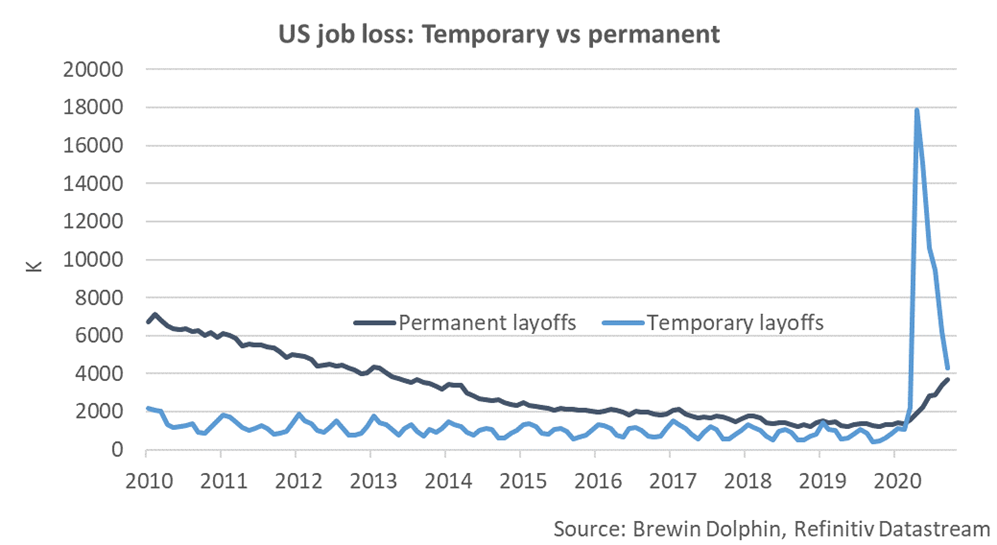
The most alarming feature of the report was the growing numbers of permanent job losses, which are now rising faster than they were during 2008.

Although the overall unemployment rate declined, this reflected people leaving the workforce – either retiring or giving up looking for work – rather than them finding jobs.

Communication has never been more important in the ever-changing world we live in. Please check in with us soon for further updates on world-wide events and the markets.

Stay safe.

Chloe

Team No Comments

Investment Risk

All investors should have an awareness of risk, but how many actually understand risk and the different types of risk that can come along with investing.

This blog is designed to give you a basic summary of all the different types of investment risk and highlights the importance of diversification within a portfolio of investments.

What is risk?

Everyone knows what risk is, in the simplest terms, risk is the possibility of something bad happening.

Investment risk is no different. Investment risk is defined as the probability or likelihood of losses relative to the expected return on any particular investment. This includes the possibility of losing some or all of an original investment.

Risk is an unavoidable part of the investment process, even so called ‘risk free’ investments are still exposed to a degree of risk.

Most investors simply think of risk in terms of their investment moving up and down in line with the stock markets, i.e. the market crashes for whatever reason, then the investment goes down. We all saw this earlier this year at the height of the Covid-19 outbreak.

However, in actual fact, this is only one type of investment risk. Investment risk can be split into many different types of risk.

The main two types of risk in investing are market risk and investment specific risk.

Market Risk

Market risk is also referred to as systematic risk. This is the risk that affects the markets as a whole and cannot be avoided.

This is the risk that the stock markets will go down (or in some cases ‘crash’) as a result of news or events, such as terrorist attacks, global pandemics (as we are all now very well aware), changes of government or changes imposed by governments (such as tax changes), changes in interest rates, inflation or other general changes in the economy.

Investment Specific Risk

This is also known as non-systematic risk. This is the risk specific to a particular company or investment and can be described as news or events that are specific to that particular company which is unrelated to the systematic risks described above. Examples of this type of risk include, technology breakthroughs which may make a product obsolete or a new competitor coming to the market offering the same product/service etc for potentially more competitive cost.

This can be avoided or diversified away by for example, including investments with multiple companies so that if the investment in one goes down, this will only be a smaller part of a portfolio of investments compared to having 100% of an investment in one company.

Other types of risk include the following;

Inflation Risk

Inflation risk is the risk that inflation will undermine an investment’s returns through a decline in purchasing power. Bonds and cash are most subject to inflation risk.

You may think that cash is a risk free investment however if inflation is higher than the interest rate then the real value of the cash is eroded as it will now buy less than it would have at the time of the deposit.

The best way to avoid inflation risk is by investing in ‘real assets’ such as equities, property etc, which are known to beat inflation over the long term, keeping only the necessary emergency funds in cash so that these are easily accessible.

Interest Rate Risk

Interest rate risk is the potential for investment losses that result from a change in interest rates. If interest rates rise, the value of a bond or other fixed-income investment will decline, and if they fall, the value goes up.

Changes in interest rates can be caused by the general economic cycle (booms, recessions) and government fiscal and monetary policy.

This type of risk can be reduced by investing in shorter duration bonds or in cash.

Credit Risk

Credit Risk mainly affects bonds. This is the risk that the bond issuer will fail (default) to meet their obligations to pay interest payments or return the capital invested. This can happen if the institution issuing the bond gets into financial difficulty or has its credit rating downgraded.

This can be avoided by investing in government issued bonds which are generally secure as they are government backed or by diversifying bond holdings as with investment specific risk, so that losses from one will not affect the others.

Currency Risk

Currency risk is the possibility of losing money due to unfavourable moves in exchange rates.

Investments that operate in overseas markets are exposed to currency risk. For example, if a UK based investor invests in a US Equity fund and Sterling strengthens against the Dollar. This erodes the real value of the Dollar dividends paid into the fund. If Sterling falls, the overseas investment tends to rise.

This can be diversified away by investing in a range different world markets, as not all currencies move in the same way at the same time.

Liquidity Risk

Liquidity is how easily an asset or security can be bought or sold in the market, and converted to cash.

Property is one of the most illiquid investments, how easy is it to release funds if needed if they are tied up in property? Again, diversification of investments can help with this type of risk.

Event Risk

Event risk refers to any unforeseen or unexpected event that can cause losses for investors in a company or investment. This links into market risk, investment specific risk and credit (default risk). For example if a company is unable to pay interest/dividends or return the capital invested due to a specific event (credit risk), either due to a global event such as terrorist attacks or war (market risk), or due to a specific event within a company (investment specific risk).

This can include events such as an industrial disaster such as oil spills. Event risk also incorporates the ‘acts of god’ events such as hurricanes, earthquakes etc.

As with market risk, certain events cannot be diversified away but for the more company or even industry specific risk, a well diversified portfolio can help with these elements of risk.

Political Risk

This is the risk that Governments (or potentially new governments in the lead up to an election) will change monetary or fiscal policies, such as increasing taxation.

However global political risk is also a contributor to the risk and volatility of UK investors.

For example, have you checked the stock markets (like the FTSE 100) lately? How many times do you see an article starting with ‘FTSE down (or up) as Donald Trump says… well ‘something controversial’?

Operational Risk

Operational risk is defined as the risk of loss resulting from inadequate or failed internal processes, people, systems or external events.

This includes the risk of the transaction failing to settle, fraud, misleading reports/ valuations, system failures, trading errors, regulatory risk and staff (human) errors.

Operational risk issues at investment banks are costly to address, but the reputational repercussions also can affect stock prices.

Note on Diversification

You can see from each of the types of risk, the best strategy for reducing risk is good diversification.

This reduces the risks of any one particular investment, asset class, market (i.e. UK, Emerging Markets etc). This minimises the chance of an overall portfolio suffering a loss and increases the probability of good overall investment growth.

However, it is important to note, that some risks cannot be diversified against.

Summary

Hopefully, this content has been useful in helping you understand the different types of investment risk and the need for diversification although some risks such as market risk, cannot be diversified against.

Its also important that you do not invest in any investment that is higher than your risk tolerance or capacity for loss and to make sure you a comfortable with the level of risk taken and the impact of any potential losses.

Please keep checking back for a range of blog content and insights from us like this blog, and updates and insights from a range of leading fund managers and investment houses.

Andrew Lloyd

07/10/2020

Team No Comments

Legal & General Asset Allocation Team – Key Beliefs Blog

Please see article below from Legal & General’s asset allocation team – received 05/10/2020

Our Asset Allocation team’s key beliefs

Prepare, don’t predict

Developments in the US election campaign remain highly unpredictable, so this week we discuss how the team thinks about political risk events and scenario analysis, our latest thoughts on the election itself, and our response in terms of asset allocation.

As with all Key Beliefs emails, this email represents solely the investment views of LGIM’s Asset Allocation team.

What’s the forecast?

We are fans of the Good Judgement Project, so were excited to have a virtual meeting with their ‘Superforecaster’ team this week. The initiative, led by Philip Tetlock and Barbara Mellers at the University of Pennsylvania, has regularly beaten even intelligence analysts with access to classified data when it comes to forecasting geopolitical events.

Their methods teach us how to become better forecasters ourselves, and this year they have released some time-series predictions from their network of Superforecasters on a number of COVID-19 related economic topics. These have helped us navigate the shifting timeline probabilities for vaccines and the likelihoods of fiscal stimulus in the US.

As a team, we have always been very interested in this topic: forecasting is our bread and butter, but we recognise it is not an easy task. We spend considerable time running scenarios for political risk events, macro outcomes and tail risks, as good forecasters are obliged to consider different scenarios. Our team motto is ‘prepare, don’t predict’. We have learnt to quantify our forecast likelihoods, and to update those likelihoods frequently and incrementally, with new information or simply as time passes.

The US election obviously poses our next challenge. It’s interesting to note the gap between the Superforecaster probabilities of a Democrat win, at 80% at the end of last week, and the betting odds suggesting a closer race.

Fireworks on the fourth or fifth of November?

Despite the wide gap in polls and a high apparent likelihood of a Democrat victory, we believe this race will feel tight until the night of the election. Due to an increase in postal voting and tensions between the parties, we see a high probability that no party will concede the election until sometime after the vote on 3 November. We believe the chances of a result by 4 November are below 50%.

The markets are also showing an elevated risk of a contested election, with expected volatility for November unusually elevated, even for an election year. But overall, we believe markets will price a likely winner well before either candidate concedes the election.

What can we say about the state of play for the big day? Well, there are not many undecided voters left in the US as views among voters have become more polarised, meaning voting switches are less likely. This is in contrast with 2016: the ‘decided’ share of the electorate in the US is currently 94%, which is roughly normal by historical standards, but in 2016 that number was 83% at the same point before the election.

There are many reasons to believe Joe Biden has an advantage: incumbents haven’t historically won after recessions, with rising unemployment, and with approval ratings below 48%. Democrats are also more unified than in 2016. Biden is polling well in battleground states, with Florida and Pennsylvania drawing our attention in particular.

Many states don’t start counting postal votes until election day, but Florida starts counting three weeks before then, so we may quickly be able to get a picture of how postal votes stack up to physical votes there. And in Pennsylvania we received interesting anecdotal information from our US-based colleagues about greater numbers of Trump placards and billboards in recent weeks, which may show that the president’s ground operation is paying off compared with Biden’s virtual-focused strategy. Indeed, that is reflected in new voter registration in Pennsylvania. Republicans added a net 135,619 voters from June to end September, while Democrats added 57,985. Back in 2016, Trump won the state by a margin of just 44,292 votes, so these numbers matter.

Fatter tails

After the news of Trump’s positive COVID-19 test, we moved our short-term US Treasury and overall duration outlook to become more negative. We had been looking for an opportunity to reduce duration risk ahead of the election, so the market’s knee-jerk reaction to the news – with perceived safe havens jumping higher – presented us with an attractive opportunity to make our move.

Market pricing in the past week has confirmed the sensitivity of the US Treasury markets to potential stimulus. In our opinion, more fiscal stimulus drives up yields through two channels: more issuance for the market to digest, and firmer near-term growth prospects.

We still don’t know exactly how Trump’s health will impact the election, but it introduces even more volatility into the race. If we think the distribution of potential outcomes is now fatter, then it increases the chance of a Democrat clean sweep of the White House and Congress. That is, in our view, the most negative scenario for US Treasuries.

The main risk to this is the prospect of stalling economic growth in the fourth quarter if fiscal stimulus fails to flow to a material degree. However, we struggle to believe that that will be as important as news on potential vaccines and the election.

A good input from Legal & General giving a view on political risk events and their latest thoughts on the US election.

Please continue to check back for our latest updates and blog posts.

Charlotte Ennis

06/10/2020

Team No Comments

Blackfinch – Weekly Market Update

Please see below an article published earlier today from Blackfinch Investments, which outlines their latest views on markets across the world:

Please continue to check our Blog content for advice and planning issues and the latest investment, markets and economic updates from leading investment houses.

Please keep safe and healthy.

Carl Mitchell – Dip PFS

IFA and Paraplanner

05/10/2020

Team No Comments

Will Suga stoke returns from Japanese stocks?

Please see below insight received from AJ Bell yesterday evening in relation to Japan’s struggle to recover their economy and the effect of this on the financial markets.

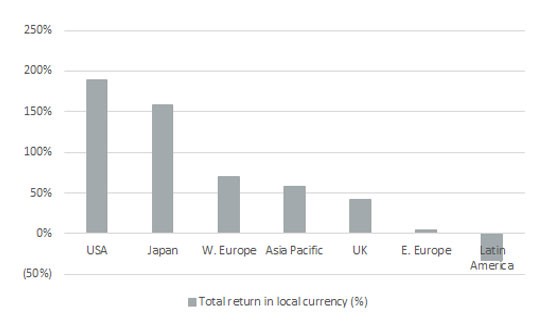
Investors with exposure to Japanese equities, following Tokyo’s Prime Minister Shinzō Abe departure for health reasons in September and his replacement by right-hand man and Liberal Democratic Party stalwart Yoshihide Suga, now have several questions to ponder. After all, the ‘Abenomics’ era – which began in December 2012 when Mr Abe returned to power five years after his first term ended with a sudden resignation – saw Japan’s headline Nikkei 225 index offer a total return (including dividend reinvestment) of 158% in local currency terms. That ranks Japan in second place out of the seven major geographic options available to investors over that time span, behind only the rampant US equity market.

Japan has been a strong performer during the Abenomics era

Source: Refinitiv data. Covers period of second Abe premiership, 26 December 2012 to 28 August 2020.

“Mr Suga has lot to live up to, and not just because he is replacing Japan’s longest-serving modern-day Prime Minister. The ‘three arrows’ of Abenomics are seen as having provided huge amounts of support to Tokyo’s financial markets.”

That leaves Mr Suga with a lot to live up to, and not just because he is replacing Japan’s longest-serving modern-day Prime Minister. The ‘three arrows’ of Abenomics – fiscal stimulus, monetary stimulus courtesy of interest rate cuts and Quantitative Easing (QE) from the Bank of Japan (BoJ) and widespread structural reform – are seen as having provided huge amounts of support to the Tokyo market. Investors will be wondering whether the new PM will keep on firing them, or whether he gets chance, since his term as leader of the LDP and Prime Minister only runs to September 2021, when elections are due on both fronts.

Bear case

Mr Suga therefore has work to do, especially as public satisfaction with the prior administration’s handling of COVID-19 had slumped by the time Mr Abe stepped down (even though the number of daily deaths had not exceeded 20 since May). Appeasing investors may be lower down his list of priorities and there are three reasons why investors may have doubts about building, or adding to, their exposure to Japanese equities.

1. The political situation is less clear. Mr Suga’s early pronouncements have focused on mobile phone charges and boosting Japan’s digital economy, while the ongoing global pandemic will also require attention. This may suggest that ongoing reform is not going to be top of Mr Suga’s list of things to do.

2. Abenomics may have boosted the stock and bond markets but it failed in its overall economic goals. The goal was to boost economic growth and drive inflation toward the BOJ’s 2% target but the programme’s success rate here is mixed, given that Japan is back in recession and headline inflation is 0.1%. In addition, the BoJ’s enormous QE scheme, which is running at ¥80 trillion (£588 billion) a year, is seen as distorting the markets by some. The central bank’s ¥683 trillion in assets represent around 125% of GDP and leave it holding some three quarters of all Japanese Exchange-Traded Funds (ETFs), more than half of the Japanese Government Bond (JGB) market and some 10% of the stock market, according to some estimates.

“The long-term bear case is still based on the assumption that Japan cannot break free from the legacy of the bursting of the debt-fuelled property and stock market bubble which peaked on 31 December 1989.”

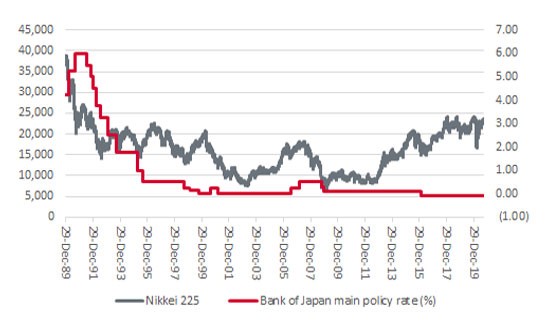
3. Japan’s economy is still bedevilled by poor demographics and huge public debts. This is the long-term bear case – namely that Japan cannot break free from the legacy of the bursting of the debt-fuelled property and stock market bubble which peaked on 31 December 1989. The economy has rarely gained sustained traction since and the Nikkei 225 still trades at 40% below its all-time high, despite 25 years or more of QE and zero or negative interest rates.

Zero or negative rates have not helped the Nikkei return to past highs

Source: Refinitiv data, Bank of Japan. Since Nikkei 225’s peak on 31 December 1989.

Bull case

Bulls of Japanese equities will sweep aside such concerns.

1. Debt and demographic concerns are neither new nor unique to Japan. As the US, UK and Europe all slip into the public debt mire, there may be less chance of the markets picking a fight with Japan’s bond market or currency. Nor have these issues stopped the Nikkei rising 5% over the past year, despite COVID-19, or advancing from a modern-day low of barely 7,600 in 2003 to more than 23,500 today. Ultra-loose monetary policy from the BOJ is helping here, as investors look for returns better than those available from cash or JGBs, and the BoJ seems unlikely to throttle back any time soon, either.

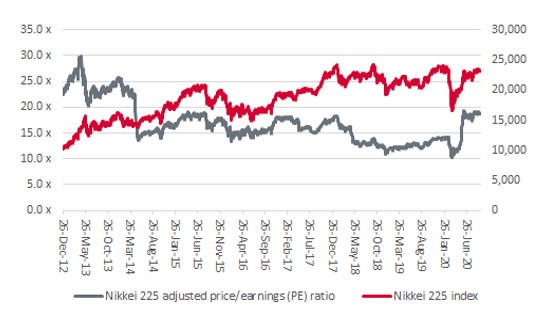
2. Japan could offer value. The fact that the bear cases are not especially new would suggest they are at least partly factored into valuations already. In addition, the Abenomics actively promoted corporate governance reforms and even prompted the creation of a new stock index, the JPX Nikkei 400, where return on equity, dividend and buyback policies and shareholder relations were key entry criteria. Before the pandemic, Japan was trading on a lowly price/earnings ratio (PE) relative to its history, thanks to Abenomics’ focus on profitability, and the latest spike in the PE simply reflects the hit to corporate earnings from the pandemic-related global recession.

Japanese stocks looked cheap before the pandemic

Source: Refinitiv data. Covers period since start of Abenomics, 26 December 2012.

“The Japanese market is packed with high-quality manufacturers and exporters, giving it leverage into whatever form of global upturn follows the pandemic.”

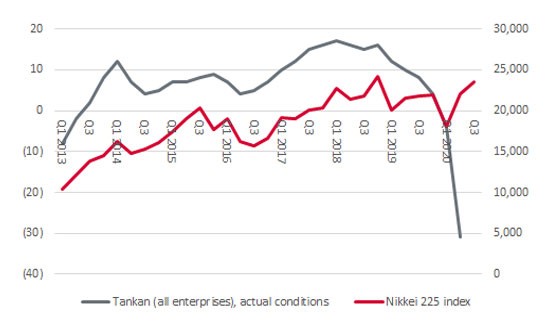
3. Japan provides exposure to a global recovery. The Japanese market is packed with high-quality manufacturers and exporters, giving it leverage into whatever form of global upturn follows the pandemic. Business confidence is currently low, using the quarterly Tankan – or the Business Short-Term Economic Sentiment Survey – as a guide, but any upturn could quickly feed through to share prices.

A global economic recovery could boost Japanese stocks

Source: Refinitiv data. Covers period since start of Abenomics, 26 December 2012.

We aim to communicate relevant content on a regular basis so please check in again with us soon. 

Please stay safe in these uncertain times.

Chloe 

05/10/2020