Team No Comments

Legal and General Asset Allocation Team Update

Please see the below update from Legal and General Investment Management’s (LGIM) Asset Allocation Team:

Investors often think that whatever happens in financial markets is the most important thing in everyone’s lives. Last week, with COP26, it was easy to wake up from that distortion. World leaders and captains of industry, including our own CEO, Michelle Scrimgeour, gathered for the United Nations climate change conference. It looks like they made good progress, though much still needs to be made concrete.

Back in the world of macro minutiae, central bankers mostly indicated that monetary tightening will take longer than investors expect. Both equities and bonds liked that message.

As with all Key Beliefs emails, this represents solely the investment views of LGIM’s Asset Allocation team.

It might be a COP out, but…

We use a cyclical framework (a sort of investment clock) to drive our medium-term risk taking. Our confidence in our assessment of the current position of the cycle is lower than normal — due to the pandemic, the extraordinary policy response and the unique nature of the supply disruptions.

We see the risk that the US and some other economies are later in the cycle than realised, and that the currently high rate of inflation will act as a catalyst for more persistent inflation.

Even though uncertainty is increasing, our research shows that even a late-cycle view isn’t necessarily bad for risk assets as long as the recession risk remains low. We think the 12-month recession risk is increasing, but from a low base. We are wary of taking risk off too soon, especially as we see the majority of possible outcomes for now as equity-positive with above-trend growth. So, despite the challenges to our framework, we are sticking to our bullish medium-term view and remaining long equities.

VIX and MOVE: Good COP bad COP

There’s a growing gap between bond and equity volatility. While the VIX index – a summary measure of US equity implied volatility – has revisited post-Covid lows, the MOVE index – a roughly equivalent measure for US Treasury bond implied volatility – was busy making new post-Covid highs.

Bond volatility has broadly risen in line with yields over the past year. The positive correlation between the two makes sense: assuming the existence of some implied lower bound to interest rates, large yield movements are less likely to occur at low levels. As yields rise, so too then should market-implied volatility.

The relatively gradual increase in the MOVE index masks a pretty dramatic increase in volatility at the shorter end of that spectrum over the past month. One-month two-year swaption volatility rose threefold from mid-October to the start of last week, as short-term rates reflected a more hawkish Fed.

While the low level of equity implied volatility may be an attractive entry point for a long position – in strategies that allow it, we currently hold VIX calendar spread positions to take advantage of the sort of short-term spikes in volatility that become more likely as we move from mid- to late-cycle – we don’t see the rise in bond implied volatility as an opportunity to go short. To the contrary: with rising yields and uncertainty around inflation expectations, two-way risk is ever more present, so we are holding on to our long interest rate volatility positions for now.

Calling the COPs on the currency manipulators

In the easing cycle, we saw some central banks resorting to currency intervention as the zero-bound in interest rates kept them from cutting rates further. We believe that with the tide turning, the first thing those central banks will do is step away from currency intervention and allow their currencies to strengthen. It could be argued that currency strength is more effective than rate hikes in managing inflationary pressures resulting from supply-side constraints.

Switzerland and Israel are clear examples where central banks had intervened to stop their currencies from appreciating, but now the franc and shekel have resumed strengthening. Some central banks are more explicit about their goals than others, but our emerging market economists have done some interesting work to unmask the “currency manipulators” by scrutinising foreign exchange reserves.

This is important, as we believe we may see more strength from such currencies. Based on this work, we have increased our exposure to the Indian rupee. In the latest US Treasury Department’s semi-annual report, India is on the list of countries that merit close attention to their currency practices and macroeconomic policies.

If it’s not inflationary pressure that convinces India’s central bank to stop currency intervention and let the rupee appreciate, political pressure may do the trick.

Please continue to check back for a range of blog content from us and from some of the world’s leading fund management houses.

Andrew Lloyd DipPFS

09/11/2021

Team No Comments

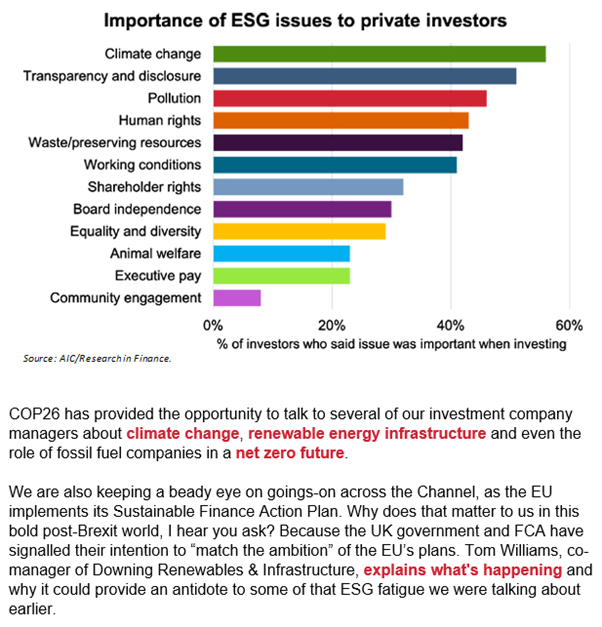
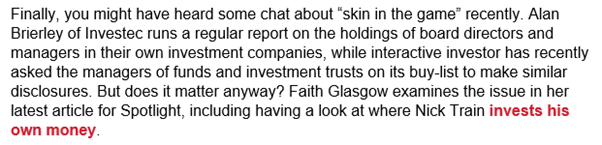
The AIC – Facing up to the ESG fatigue

Please see below an article from The AIC, which was received yesterday (04/11/2021) covering their views on ESG discussions:

Please continue to check our Blog content for advice and planning issues and the latest investment, markets and economic updates from leading investment houses.

Please keep safe and healthy.

Carl Mitchell – Dip PFS

Independent Financial Adviser

05/11/2021

Team No Comments

Daily Investment Bulletin

Please see below article received from Brooks Macdonald yesterday, which provides an update on the markets as world leaders reconvene for a fifth day at the United Nations Climate Change Conference in Glasgow.

What has happened

Global equities continued their series of fresh highs yesterday with mild gains across the US and Europe. Earnings continue to be a driver of these gains, even if they look slightly less bountiful than at the start of the season, with c. 90% of US companies reporting yesterday beating their earnings estimates.

Central Banks

After the RBA decision yesterday we saw a rally in sovereign bonds as bond markets priced in the possibility of central banks’ bark being worse than their bite. The major event today will be the Federal Reserve decision which is widely expected to contain a reduction in the monthly asset purchases by the US central bank. It’s worth noting that this is tapering the pandemic quantitative programme i.e. until the middle of next year there is still pandemic era net stimulus being provided by the Fed, just every month it’s slightly less. The distinction between a withdrawal of pandemic era stimulus narrative versus the beginning of a tightening cycle will be a tightrope all central banks will need to walk. Meanwhile President Biden yesterday said that we would make an announcement ‘fairly quickly’ on whether Fed Chair Powell would continue in his post for another term.

US Politics

Voters have gone to the polls in Virginia and New Jersey to elect their new governors. Several news outlets have called Virginia for the Republicans and rumours are abound that New Jersey will follow the same path. Virginia saw a 10 point margin of victory for Biden in the Presidential Election so a defeat here will be politically difficult for the President and bode badly for the mid-terms next year. Whilst a year is a long time, the probability of legislative gridlock in the US after the midterms seems to be increasing.

What does Brooks Macdonald think

A tapering announcement at the Fed’s meeting today is very much in line with the market’s expectation, however what will be of more interest is whether the Fed push back against the interest rate pricing for 2022. The difficulty for Fed Chair Powell is the highly uncertain path of near term inflation, should the inflation issues prove transitory a 2023 rate rise is probably still the base case, should pressures continue into the middle of next year a 2022 rate hike (or two?) is on the cards.

The Fed did as expected yesterday and reduced asset purchases. It will be interesting to see what the Bank of England do today on interest rates.

Please check in again with us soon for further relevant news and content.

Stay safe.

Chloe

04/11/2021

Team No Comments

Prudential – Common misconceptions about investing for good

Please see article below from Prudential, which covers the common misconceptions about investing for good, received yesterday afternoon – 02/11/2021

Common misconceptions about investing for good

Mythbusters

In today’s world of social media and the web, it’s often hard to separate the facts from the fiction. Just because we hear something often doesn’t necessarily make it true. For example, have you ever heard a goldfish only has a 3-second memory span or that lightning never strikes twice? Both these things have been scientifically proven as untrue and yet people still believe them.

When it comes to investing, there are many misconceptions out there. One of the areas that are often misunderstood is investing to help people and the planet. There are ways to give your money a chance to work harder whilst also helping to create a better world. We want to address some of the common questions and confusion about this. It may be for you, it may not, but to make that decision – it’s important to know the facts.

Does investing for good only help the environment?

While the environment plays a huge part in ‘investing for good’ it is not the only focus. Firstly when we say environment it covers a wide spectrum from climate change, finding environmental solutions to tackling the huge amount of waste in today’s world with a circular economy. Secondly investing for good aims to tackle some of the most pressing issues facing society. This ranges from diversity and inclusion within society and workplaces, better work and education and better health which saves lives.

Investing for good looks to invest in companies proactively finding solutions to these challenges whether that is advancements in medical treatments or bringing education to smaller communities in remote locations.

It goes way beyond ‘just the environment’.

Does investing for good give poorer returns?

A survey by the Global Impact Investing Network (GIIN)* shows that an overwhelming majority of people who took part reported their impact investments as meeting or exceeding their financial expectations.

The same survey also goes on to show that over half of the impact investments looked at resulted in competitive returns.

The idea that you can’t make money whilst doing good is simply wrong.

Of course, as with any investment, it can go down as well as up and you might not get back what you put in. It’s also important to know that past performance Is not a guide to the future.

Is it too risky? 

All investments have a level of risk, but there’s no reason why investing to help create a better world would mean your money was at greater risk than investing in something else. A common misconception could for example be that all companies with big dreams about saving the world are risky startups with no profits. This simply isn’t true. In fact to the contrary often it can be large industry-leading companies – that can have positive outcomes on society and the planet.

An adviser will always talk to you about the level of risk you are willing and comfortable taking as well as how much money you can afford to lose.

Is ‘investing for good’ a fad?

The ideas behind investing for good are not new, but there has been a surge in demand for funds that invest to help the planet. Based on data from the Global Sustainable Investment Alliance, the amount invested in sustainable investments globally is more than US$30 trillion.

Sustainable investing is becoming more popular with societal shifts such as the mass rejection of single-use plastic and climate change warnings.

The importance of looking after our planet and society is becoming a movement with the younger generation and is only set to continue.

*GIIN Annual Impact Investor Survey, 2020

Please continue to check back for more ESG related insights along with our usual market updates and blog posts.

Charlotte Clarke

03/11/2021

Team No Comments

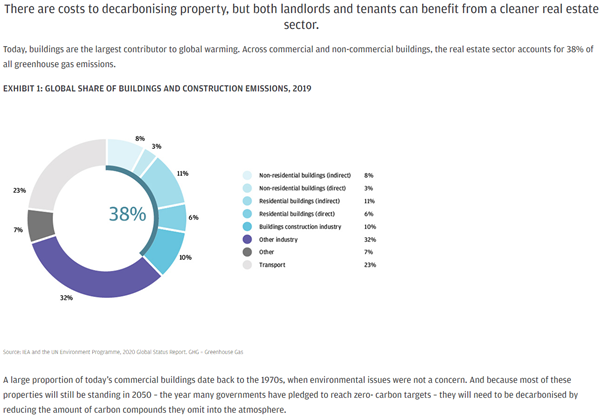
J.P. Morgan – Buildings reimagined: Why carbon neutral property is the future of real estate

Please see below an article from J.P. Morgan which was received yesterday (01/11) and covers their views on the Property sector and going carbon neutral:

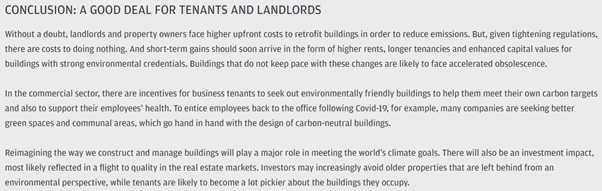
As you can see from the above, Property, both Commercial and Residential, account for a high proportion of total green house gases. This means that a lot of investment is needed in this sector in an effort to move towards becoming carbon neutral.

There also seems to be a focus on trying to get employees back into the office, which could help a full recovery on Commercial Property investment.

Property is a key focus of COP 26 and we believe it still has a vital role to play in an investors portfolio. It is a great diversifier and normally provides some inflation proofing as it is backed by a real asset that generally has upward only rent reviews in the commercial sector.

Please continue to check our Blog content for advice and planning issues and the latest investment, markets and economic updates from leading investment houses.

Please keep safe and healthy.

Carl Mitchell – Dip PFS

Independent Financial Adviser

02/11/2021

Team No Comments

COP26: For market support the world needs its leaders to lead

Please see the below blog article taken from this weeks Tatton Weekly, a weekly update from Tatton Investment Management:

The 2021 United Nations Climate Change Conference, known as COP26, begins on Sunday. Current weather forecasts for Glasgow are perhaps a little too literal, with visitors to the city braced for torrential rain and flooding. Along with the precipitation there is also an air of – if not downright pessimism – ahead of the summit. Last month, Boris Johnson told world leaders at the UN that “it is easy being green” and referenced Kermit the Frog to reinforce his point. But on Monday, he was downplaying expectations by telling schoolchildren and reporters in Downing Street that it was “touch and go” whether COP26 would deliver any sort of climate change breakthrough.

The mood darkened further this during the week after it was announced that the $100 billion of climate finance promised by developed countries in 2005 – pledged to help developing countries adapt to climate change – had not been met by the original deadline of 2020, and would most likely not be reached until 2023.

Next came another stark warning from the UN, ratcheting up the pressure on COP26 attendees. It declared climate goals are off track and emissions rise could lead to 2.7°C warming. Some countries, notably China and India, have not updated their emissions reduction pledges ahead of the summit. Other nations, including Brazil, have submitted weaker pledges than were outlined in their original commitments. As one of the UN delegates succinctly put it: “Unless more progress is made in the next fortnight, we will all be in trouble.”

We don’t have a crystal ball of course, so it’s impossible to make any predictions of what progress will indeed be made over the next couple of weeks, if any. That said, news flow this week has presented a few ideas on what to look out for.

For example, COP26 could deliver what’s being labelled a “methane moment”, after another 25 countries joined the US and EU-led initiative to drastically cut global methane emissions by 30% from their 2020 levels by 2030. That takes the total number of countries backing the pledge to 34, although again, Brazil, India and China are conspicuous by their absence. This is a positive development. While carbon dioxide (CO2 ) is the biggest contributor towards human-made global warming, methane runs a significant second. According to the International Panel on Climate Change, methane contributed to about 0.5°C of warming between 2010 and 2019 relative to 1850- 1900 levels, whereas carbon dioxide produced about 0.7°C of warming over the same period/

Although carbon dioxide gas stays in the atmosphere for longer, methane is considered some 28 times more potent in global warming terms, as its properties trap more heat.

Another initiative to look out for over the next fortnight could be further developments made on carbon pricing. Carbon pricing programmes usually involve countries taxing polluters’ carbon emissions, or ‘cap and trade’ systems that effectively limit a company’s level of emissions before costs become prohibitive.

International business groups are pushing for an international carbon price strategy to be unveiled at COP26, to prevent the bewildering patchwork collection of local policies they are struggling to contend with now. The World Bank recently identified 64 different carbon pricing initiatives across 45 countries. Disappointingly, the World Bank says these initiatives cover less than 22% of global carbon emissions, and most schemes use carbon prices too low to incentivise heavy emitters to change their business models.

Carbon trading schemes rely on private market mechanisms to attach a price to a tonne of CO2. Usually, governments set an economy-wide allowance (or per sector) and issue permits. If a company needs more permits, it has to purchase them in the CO2 market. It is a highly effective set-up (first applied in the early 1990s to reduce US sulphur emissions in the most cost-effective way), provided it comes equipped with a functioning framework. Recurring issues are that too many permits are issued, and hence the trading price drops close to zero. Remedies to this include issuing fewer permits or, as California has decided, introducing a floor, which is then a carbon tax that the government levies. Besides poorly set-up trading mechanisms, control and enforcement mechanisms also tend to be too weak. What really seems to be lacking, on top of it, is international co-ordination on such schemes, which renders them currently to be somewhat akin (and globally ineffective) as domestic stock markets that operate under capital controls.

Getting a majority of countries to agree to some sort of carbon pricing framework looks like a tall order. A carbon price that is high enough to limit rising temperatures to no more than 2°C from pre-industrial times is considered unworkable by the likes of the US, China and India. The EU, however, has been more forward-thinking, adopting its own ‘carbon-border adjustment mechanism’. This would mean companies importing goods – such as steel, aluminium, fertiliser, cement or electricity – into the EU would have to buy carbon certificates that reflect the same carbon prices faced by European producers under the EU’s emissions trading system. However, even this scheme has been criticised, with detractors suggesting it could lead producers from developing nations to sell into other markets with lower standards, hindering climate action.

The UK is not a member of the EU’s mechanism, which is perhaps another example of the somewhat muddled response from the UK government. At COP26, Boris Johnson will plead with the international community to make significant pledges to cut carbon emissions. Yet on Thursday, Rishi Sunak’s Autumn Budget drew criticism for measures that would make it cheaper to take domestic flights. Sunak also continued the time-honoured practice of freezing fuel duty (a freeze that has remained firmly in place since 2010), which has the net result of making car travel less expensive than more environmentally sustainable alternatives. According to the Office for Budget Responsibility, this year’s fuel duty freeze alone will mean an additional 450 million litres of fossil fuels purchased over the next five years. Such mixed messages certainly make alignment difficult.

When it comes to tackling climate change, every action has a reaction, and risks creating losers as well as winners. Which leads us to another key theme that has emerged this week: divestment. On Tuesday, Europe’s biggest pension fund, ABP of the Netherlands, announced plans to divest €15 billion worth of fossil fuel assets by early 2023. The fund said it doesn’t expect the decision to hurt long-term returns and added that the move will allow it to unveil a more ambitious CO2 reduction goal next year. Also on Tuesday, several UK faith institutions, announced an en masse $4.2 billion divestment from coal, oil and gas companies. Six cities, including host city Glasgow, have also said they will sign formal commitments to dispose of their fossil fuel assets in the future. According to the DivestInvest lobby group, that helps to bring the totals committed to be divested by asset managers on behalf of their investors to a stunning £39 trillion in the next few years.

Unsurprisingly, fossil fuel producers have spoken out against the hidden dangers of divestment. Coal producer Glencore argued that the movement was counterproductive, as it would force them to dispose of their assets and place them in the hands of less responsible owners (‘brownwashing’). Other producers have pointed out that it is better to allow these assets to run down, and that companies that demonstrate engagement on addressing the climate agenda should still be deemed worthy of investment. They do have a point. After all, divestment arguably just means gains are being pushed elsewhere and perhaps towards investors without CO2 reduction aims at all, and that will most likely have unforeseen and unintended consequences. Unceremoniously dumping fossil fuels might well be a ‘quick win’ for funds that are keen to decarbonise their portfolios – although whether this has a net positive effect on the environment – as discussed above – is another matter entirely. It changes the dynamics of capital markets, certainly, but without addressing the underlying problem. After all, selling the stocks themselves doesn’t reduce the demand – or use – of fossil fuels. Instead, it’s likely to just make stocks more volatile, and therefore tradeable. Without government action, and policy on a global scale, that discourages the use of fossil fuels, there will always be a demand for ‘dirty fuels’ to be met by someone.

The markets will always look towards global leaders to provide them with the framework in which they can successfully operate. If we think green investment is still the missing piece of the puzzle, and we want the market to help solve this problem, we need a framework that is clear, transparent and can be relied on to be here to stay to provide the planning certainty that is so crucial for successful longer-term investments. At the same time, from an investment point of view, it’s important to recognise that climate change is not a sector-by-sector issue. The whole of the economy has to ‘green up’, while accepting the risk of stranded assets and that there will be losers as well as winners.

Climate change is a global problem that requires a truly global approach. The key point regarding COP26 is that big events like these can – and must – be used to create common frameworks. So far, governments have been walking a political tightrope in terms of making the right noises about dealing with climate change, but without making the hard choices that a genuine commitment demands, or without being honest about what a fully transitioned global economy would look like – for better or worse. We can’t keep having it both ways.

What is COP26 and why is it happening?

COP 26 is the 2021 United Nations Climate Change Conference which is currently being held in Glasgow from 31st October – 12th November.

The world is warming because of fossil fuel emissions caused by humans.

Extreme weather events linked to climate change – including heatwaves, floods and forest fires – are intensifying. The past decade was the warmest on record, and governments agree urgent collective action is needed.

For this conference, 200 countries are being asked for their plans to cut emissions by 2030.

They all agreed in 2015 to make changes to keep global warming “well below” 2°C above pre-industrial levels – and to try aim for 1.5°C – so that we avoid a climate catastrophe.

This is what’s known as the Paris Agreement, and it means countries have to keep making bigger emissions cuts until reaching net zero in 2050.

Keep checking back, we will be posted regular updates and articles as the conference takes place and announcements are made.

Andrew Lloyd DipPFS

01/11/2021

Information Source: Tatton Weekly and BBC News

Team No Comments

Market impact of company updates more obvious than economic data

Please see below article received from AJ Bell yesterday afternoon, which seeks to explain how economic set-pieces and corporate releases influence stocks.

You don’t need a degree in finance to understand that both company earnings reports and major economic indicators and events both influence the investing landscape.

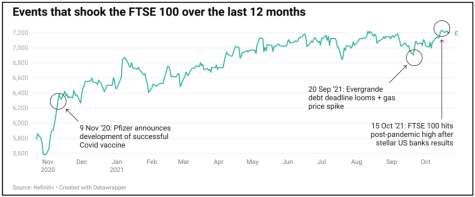
However, looking at how London markets have performed over the last, complicated, 12 months it’s interesting to dig into those peaks and troughs and explore trends.  Just weeks ago, at the start of the latest round of company earnings, the FTSE 100 surged to a pandemic high despite ongoing concerns about supply snarl ups and rising prices.

US banks in particular exceeded expectations, but it wasn’t just banks and it wasn’t just US companies reporting forecast busting figures. It’s not surprising that stellar results whet investor appetites.

They’re straightforward and immediate. If profits and earnings are up there’s an instant catalyst to buy and vice versa when the numbers disappoint.

The X-factor is surprise. Investors are pretty good at picking up cues and pricing them in, so often its more about how a company does relative to expectations rather than how it makes out in absolute terms. Sometimes just meeting expectations will disappoint investors.

Updates from individual firms may have a significant impact on their own share price but a limited one on the wider market in isolation. However, in combination a results season can set the tone for the markets.

MARKETS DON’T LIKE SURPRISES

Economic data typically acts more like a drip, drip of incremental news which gradually shifts investor sentiment in different directions. Often individual releases like GDP figures don’t tend to make big ripples unless there’s a major upset.

For example, China’s latest growth numbers unsettled many people but that’s because any slowdown seems unusual, and they came off the back of events which have already impacted sentiment towards China, from the tech crackdown in May to the Evergrande debacle which came to a head in September.

Both of those events in singularity took time to permeate through to big market movements, primarily because it was hard to know immediately what the situations might mean, it can take days or even weeks for the ramifications to really permeate.  It buys investors time, gives them breathing space to make adjustments in their portfolios and get comfortable with the winds of change.

It’s why the anticipated interest rate hike from the Bank of England which has received so many column inches has seemingly had a modest influence on markets so far.

Even when it comes it’s unlikely to merit much of a move, unless the MPC (Monetary Policy Committee) go bonkers and shoot for a whole 1% all in one go, but that’s about as likely as the UK experiencing a white Christmas in June.

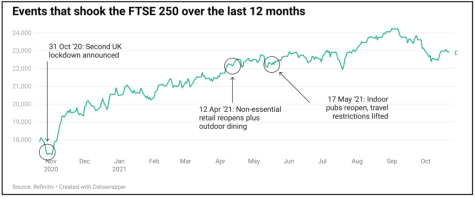
The more UK-facing FTSE 250 index has endured a year of uncertainty. Covid hasn’t run in a smooth line, lockdowns have had to be re-implemented, ‘Freedom Days’ have had to be shifted and sometimes the expected benefits are undone by crises like the ‘pingdemic’ which saw many businesses scrabbling to find the staff they needed just to keep operations going.

When the economy has enjoyed a smooth run, when the recovery juggernaut ploughed through, the FTSE 250 soared; its domestic companies expected to benefit from a return to something like business as usual.

RISING PRICES NOT THE ONLY TROUBLE AHEAD

Gas prices on the other hand, they nestle between the two extremes. On the one hand rising prices and the impact they were having on energy providers could be clearly seen for some time. The energy cap was going up, small providers were dropping like flies.

But this impact was crystallised in a single day, a day of extremes, that made waves. After a 37% jump in 24 hours the gas price cooled as the Russian president stepped forward and seemed to imply more supply would be forthcoming to Europe.  

Forget the next 12 months, the next six months is shaping up to bring more of those heart stopping, unexpected moments that markets hate to love and many more of those priced in economic set pieces.

And the next quarterly results, the judgement is still out on that one… even among companies which have beaten analysts’ estimates, there have been warnings that margins are set to be eroded, that supply issues and inflation will take their toll.  Investors love certainty, but in the unexpected there are opportunities as well as potholes.

Please check in again with us soon for further relevant content and news as we approach the festive season.

Stay safe.

Chloe

29/10/2021

Team No Comments

Budget notes from Brewin Dolphin

Received last night, 27/10/2021.  Our thoughts added.

Chancellor Rishi Sunak has delivered his autumn budget, in which he announced a series of measures that aim to strike a balance between “preparing for a new economy post-Covid” and ensuring household wallets are not unduly squeezed by rising prices.

The budget came against a backdrop of unprecedented government borrowing, supply chain disruption, rising energy prices, and surging inflation that is forecast to reach 4.4%1 next year. Yet with economic growth forecasts more optimistic than six months ago, Sunak moved away from the March budget’s focus on protecting people’s jobs and livelihoods to one of investing in public services and infrastructure. 

After already freezing tax thresholds and increasing national insurance and dividend tax rates, the chancellor spared investors and pensioners from further tax hikes. At the same time, he proposed new fiscal rules that would commit the government to balance the books and reduce national debt. 

Here, we look at the main announcements and what they might mean for investors and the economy.

The economy 

The lifting of lockdown restrictions over the summer provided a much-needed boost to activity, with the latest figures from the Office for Budget Responsibility (OBR) providing a somewhat rosier picture of the economy. 

The OBR expects the economy to return to its pre-pandemic level by the turn of the year, six months earlier than previously thought, with gross domestic product (GDP) growing by 6.5% this year compared with the March forecast of around 4% growth. The OBR also revised down its estimate of long-term scarring to the economy from the pandemic to 2% from 3% previously. Meanwhile, unemployment is expected to peak at 5.25%, compared with the March forecast of 6.5%, suggesting the end of furlough will have a smaller impact than previously thought. 

At the same time, higher tax receipts mean government borrowing in 2021/22 is expected to be £183bn, some £51bn lower than the previous forecast of £234bn. However, with interest payments on borrowing revised up by £15bn, and the GDP growth forecast for 2022 lowered from 7.3% to 6%, the challenge of balancing the public finances is far from simple. Sunak proposed new fiscal rules whereby net debt as a percentage of GDP should be falling, and the government should only borrow to fund investment, with everyday spending funded by taxation. 

P and B comment:

This is a really difficult balancing act, with a lot to be taken into consideration.  For example, if interest rates increase too quickly the impact on the economy could be dramatic. Consumers are spending less, and the State is having to pay a lot more to service the interest on the covid debt in addition to other debt. Total debt in the UK c £2.2 trillion.

Investment in services and the economy 

A key area of focus was the announcement of additional investment in public services and infrastructure. This will include an extra £5.9bn to help the NHS tackle the backlog of non-emergency procedures and modernise digital technology; £5.7bn to transform transport networks outside London; £4.7bn for schools; £1.8bn for new housing; a £1.4bn fund to attract overseas investment into the UK; and increased spending on sports and youth clubs, support for families and children, and crime prevention. The government will also increase its investment into research and development to £20bn by 2024/25 as part of its goal to “drive economic growth and create the jobs of the future”.

P and B comment:

A very welcome investment into research and development for economic growth and future jobs.  Unfortunately the NHS and social care will need a lot more funding.

National living wage 

In an effort to help families who are struggling with rising prices, Sunak confirmed the national living wage would rise from £8.91 to £9.50 per hour for workers aged 23 and over from April 2022. This represents an increase of 6.6%, which is double the September inflation rate of 3.1%. 

Sunak also ended the public sector pay freeze introduced last November, cancelled the planned rise in fuel duty, and reduced the universal credit earnings taper rate from 63p to 55p in the pound.

P and B comment:

All of the above points are welcome but lower earners will need every penny as they combat inflation generally and in particular energy prices this winter.

Business rates 

The chancellor froze the business rates multiplier for a further year, which he said would be equivalent to a tax cut worth £4.6bn over the next five years, with bills 3% lower than without the freeze. He also announced plans to temporarily halve business rates for the retail, hospitality and leisure sectors, overhaul alcohol duties and reduce taxes on draught beer and cider.

P and B comment:

The business rates system in the UK is now out of date and doesn’t take into account the move to online shopping.  This system needs a complete overhaul but the problem is it’s worth c £25 billion a year to the Treasury.

Personal allowances

The chancellor previously announced in March that the personal tax allowance and higher-rate tax threshold would be frozen for five years from April 2021. The personal allowance, which is the amount you can earn each year before you start paying income tax, therefore remains at £12,570, while the higher-rate tax threshold remains at £50,270. By freezing these thresholds, more people could drift into higher and additional-rate income tax bands, and potentially see their personal allowance tapered once adjusted net income exceeds £100,000. 

The national insurance (NI) threshold was also frozen at £9,568. However, as announced in September, the rate of NI for employees and the self-employed will increase by 1.25 percentage points from April 2022 to help fund health and social care costs. Working pensioners will pay 1.25% on their earned income for the first time from April 2023.

P and B comment:

Effectively no real change from previous announcements.  As we get squeezed for more tax in all areas, it makes tax planning more important.

Dividend tax

As announced in September, the rate of dividend tax will also rise by 1.25 percentage points from April 2022 to 8.75% for basic-rate taxpayers, 33.7% for higher-rate taxpayers, and 39.35% for additional-rate taxpayers. The annual dividend allowance – the amount of dividend income you do not have to pay tax on – will remain at £2,000. The changes are expected to raise around £600m for the Treasury. 

Looking for ways to mitigate dividend tax, including investing through ISAs and pensions and taking a ‘total return’ approach to investments, could therefore become even more important when the tax hike comes into effect.

P and B comment:

As above.  Tax planning is more important.  Use the right products and allowances, plan ahead.

ISA allowance

Fortunately, for savers and investors, there were no changes to ISA allowances. The main ISA limit for 2022/23 will remain at £20,000, meaning a couple could invest up to £40,000 a year into ISAs to benefit from tax-free income and growth. The limit for Junior ISAs remains at £9,000. 

P and B comment:

ISAs still remain a very useful planning product alongside other assets.

Capital gains tax

There was some speculation that the chancellor would scrap existing rates of capital gains tax (CGT) and align them more closely with income tax rates. This was recommended by the Office of Tax Simplification in November 2020 and, if implemented, would have resulted in higher-rate taxpayers paying CGT at 40% on profits or gains exceeding the annual CGT exemption. 

Fortunately for investors, this did not come to fruition. CGT rates remain at 10% and 20%, or 18% and 28% on properties that are not a main home. The annual CGT exemption remains at £12,300 after being frozen in the March budget until 2026. 

P and B comment:

This is good news.  Any ‘simplification’ would have been penal.

Pensions tax relief

It was rumoured that the chancellor would look at overhauling pensions tax relief by, for example, moving to a flat rate of 25%. In the end, Sunak chose to leave current rates untouched, meaning higher-rate and additional-rate taxpayers can continue to benefit from tax relief of up to 40% and 45%, respectively. The pension annual allowance also remains at up to 100% of taxable earnings or £40,000, whichever is lower (this may be tapered for those with high incomes). 

As more people drift into higher tax bands due to the personal allowance and higher-rate tax threshold being frozen, these tax reliefs could make pensions an even more valuable financial planning tool.

P and B comment:

Pension tax relief rumours of change have been around for years.  Thankfully, no change here.  We need to maximise our pension funding whilst we have this tax relief available to us.

Pension lifetime allowance

The chancellor announced in March that the pension lifetime allowance, which is the total amount you can save into your pension before incurring tax charges, would be frozen until 2026. The allowance will therefore remain at £1,073,100 in the 2022/23 tax year. Any money withdrawn as a lump sum above this level will incur a 55% tax charge, while money withdrawn as income will incur a 25% charge, with the remainder then subject to income tax at the individual’s marginal rate. 

While the lifetime allowance might seem generous, pension contributions, tax relief and investment growth over several decades could mean those with seemingly modest pension portfolios could be at risk of exceeding the threshold. It is therefore crucial that savers seek expert advice on the best course of action for their individual circumstances. 

P and B comment:

As more people breach the Lifetime Allowance, I think it’s perceived as a target by some, an achievement. Having more pension than the Lifetime Allowance is not necessarily an issue, it means you have good pension assets and should be able to sustain a reasonable level of retirement income over the long-term.

Other tax planning vehicles are also available if you have good levels of pension provision in place.

Inheritance tax

The inheritance tax (IHT) thresholds remain the same and will be frozen until April 2026. Everyone is entitled to pass on assets of up to £325,000 on their death, free from IHT. This may be boosted by the residence nil-rate band, for passing on a property to a direct descendant – which remains at £175,000 per person. 

This means a married couple with children will be able to pass on a maximum of £1m in total without having to pay IHT – two lots of £325,000 (£650,000) and two lots of £175,000 (£350,000).

Although IHT thresholds have been frozen, there is still uncertainty around how the tax could be treated in the future following several reports from the Office of Tax Simplification and an All-Party Parliamentary Group. Seeking advice on IHT as early as possible, when there are more potential options to mitigate the tax, could therefore prove especially important in the years ahead.

P and B comment:

If you have an inheritance tax problem, start your planning now. This type of planning is a journey and can take many years to do. 

Budget – general comment from P and B:

An interesting Budget from Rishi Sunak as he tries to balance increasing tax receipts to pay for the NHS, social care, investment in the economy and servicing the massive debt we have in the UK, whilst getting the economy back to full growth following Covid and the impact of Brexit.

It’s a very delicate balance. We need the consumer to continue spending as c 60% of the UK economy is based on consumption, and too many tax rises and increases in the cost of living could reduce consumption as we become more cautious.

The last c 19 months has been difficult but this transition phase as we try to exit the pandemic and return to normal is very tricky too. Central Banks need to maintain the status quo and not raise interest rates too quickly and governments globally need to remain supportive.

Hopefully our government and the Bank of England will make the right decisions – we will see.

Steve Speed

28/10/2021

1 Source: CPI inflation. Office for Budget Responsibility: ‘Economic and fiscal outlook – October 2021’

Team No Comments

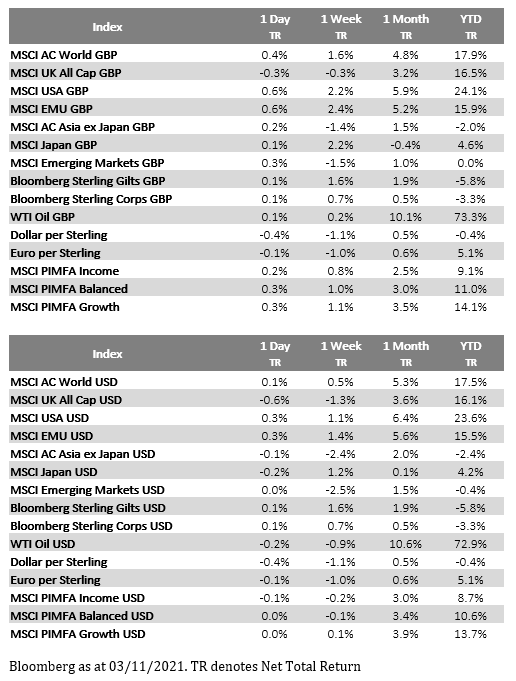
Brewin Dolphin – Markets in a Minute

Please see below Brewin Dolphin’s latest market summary, which was received late yesterday (26/10/2021) afternoon:

Please continue to check back for a range of blog content from us and from some of the world’s leading fund management houses.

Andrew Lloyd DipPFS

27/10/2021

Team No Comments

Brooks Macdonald – Weekly Market Commentary

Please see below this week’s market commentary from Brooks Macdonald received yesterday afternoon – 25/10/2021

Weekly Market Commentary | Equities perform well ahead of bumper week for US earnings

25 October 2021

Read detailed economic and market news from our in-house research team.

By Edward Park

  • US earnings season continues to show strong momentum with a bumper week ahead
  • Inflation expectations surged last week which set a rocky backdrop for the sovereign bond market
  • The UK Budget and Spending Review is likely to contain few carrots, given the outdated fiscal data the government has chosen to use

US earnings season continues to show strong momentum with a bumper week ahead

Last week saw inflation expectations surge across the US and Europe but this was counterbalanced by continued strength in US earnings numbers. Spurred by the earnings season, equities performed strongly with around one quarter of US companies having now reported and another bumper week, which includes many of the heavyweight US technology companies, ahead.

Inflation expectations surged last week which set a rocky backdrop for the sovereign bond market

Last week saw US 5-year inflation breakevens (a proxy for inflation expectations) increase to 2.9% and 10-year breakevens move to 2.64%, setting post financial crisis records1. European expectations also rose with the ‘5-year, 5-year’ inflation expectations (5-year inflation starting in 5 years’ time, used to assess medium term expectations), rising to 2% for the euro area2. 2% may seem mild but against the context of an European Central Bank that has struggled to reach 2% in recent history, despite negative interest rates, this is impressive movement. With higher inflation expectations now incorporated into the medium-term figures, this suggests a bond market that is moving away from its pure focus on the transitory inflation narrative to a more balanced position.

The UK Budget and Spending Review is likely to contain few carrots, given the outdated fiscal data the government has chosen to use

Next week sees the Bank of England’s November policy meeting and it is widely expected that it will contain the first hike since the summer of 2018. Whilest the Bank of England have made it clear that they want to reduce some of their monetary support, there are many question marks over the future for UK fiscal impulse. This week’s 2021 Spending Review will be the Chancellor’s opportunity to set the path of government spending for this parliament and perhaps more importantly for markets, determine the balance between near-term fiscal restraint and promised spending. This week’s budget is likely to focus on the updated economic forecasts as well as the pre-announced national insurance increase and dividend tax rate hike. There are a few areas that the Chancellor could consider in order to increase the government’s tax take but most of them, such as pension reform or Capital Gains Tax hikes, would have political ramifications.

It is likely that this will be a UK budget with few sweeteners given the Chancellor has chosen to use September fiscal numbers which paint a slightly weaker picture for the UK economy. This serves three purposes, political validation for what is expected to be a tighter budget, justification for setting new fiscal rules to achieve fiscal balance, but also setting a lower bar for future performance.

Please continue to check back for our latest blog posts and updates.

Charlotte Clarke

26/10/2021