
Please see this week’s Markets in a Minute update below from Brewin Dolphin, received yesterday afternoon – 25/08/2026.
Are governments engineering bond demand?
Discover why debt keeps climbing, but the political will to cut has gone.
Key highlights
- Washington and the yield curve: The U.S. Treasury doubling its buybacks of outstanding debt adds evidence of financial repression.
- UK inflation rises: UK inflation data for July came in at an annual rate of 2.9% on Wednesday. The first rise in four months suggests inflationary pressures remain.
- Bank of England to hold interest rates: Decidedly mixed economic data out of the UK has left markets expecting the Bank of England to hold interest rates at its September meeting.
Is Washington quietly taking control of the yield curve?
Source: LSEG
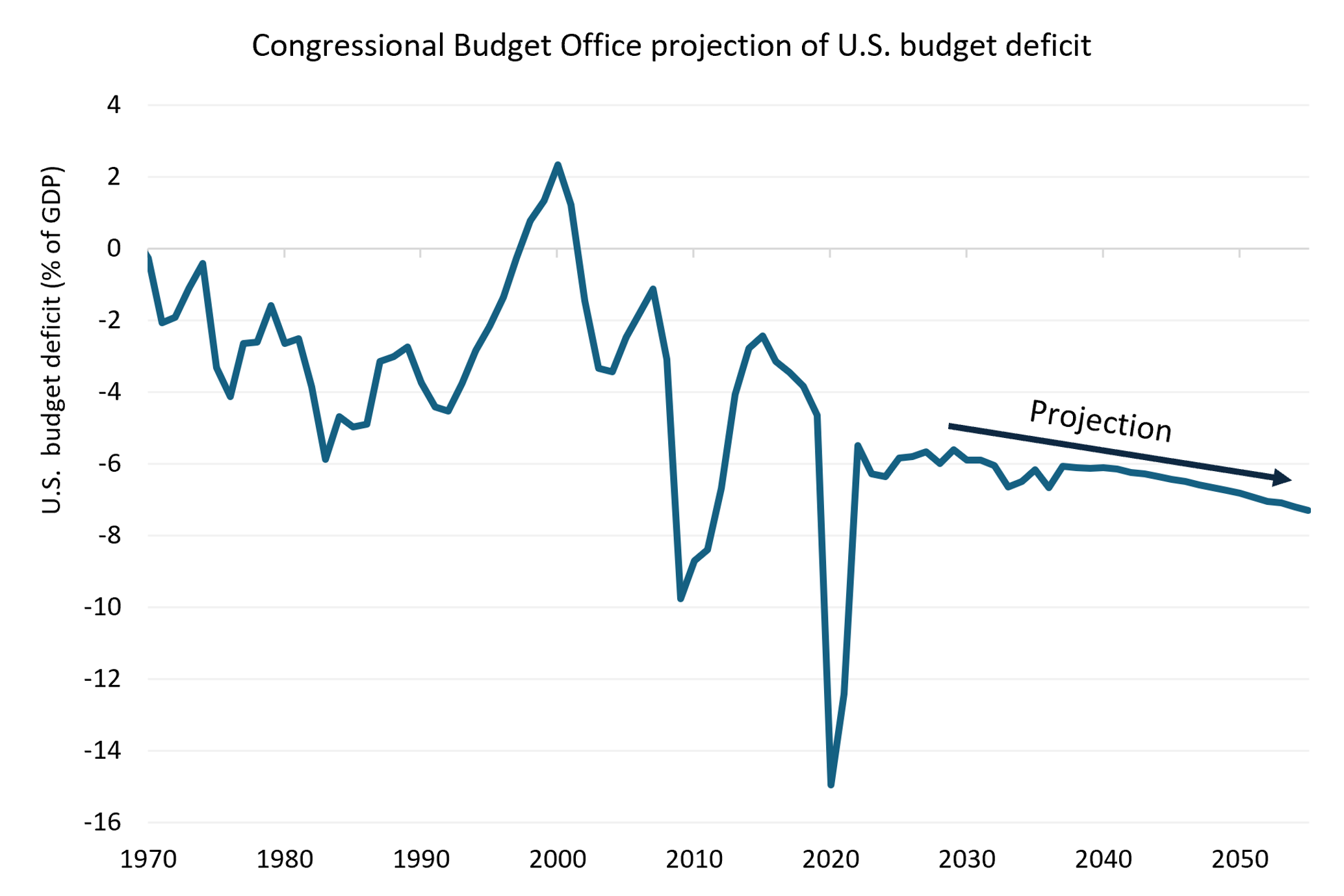
A recurring concern for investors during extraordinary periods of expansion has been the sustainability of debt. How can the good times continue when the debt-to-GDP (gross domestic product) ratio keeps increasing and with it the share of tax revenue being spent on interest payments alone?
The maths is straightforward, if uncomfortable. The most obvious way a government can improve its debt position is by cutting spending or raising taxes, but these are both politically thankless, whether you lean left or right. And while there was a brief period following the Great Financial Crisis in which fiscal repair was not completely rejected by voters, those halcyon days have passed.
For example, my colleague Atul Bhatia from our U.S. fixed income team describes U.S. policymakers as “one-way Keynesians” – they ramp up spending during economic shocks (such as a global pandemic), but neglect to run a corresponding budgetary surplus during better times.
If spending cuts and tax rises are politically untouchable, the only remaining route to lowering debt is by widening the gap between growth and borrowing costs. An optimistic scenario is that an AI miracle results in high growth and lowers inflation and therefore interest rates, allowing countries to outgrow their debt. While this is possible, it’s but one possibility. A particularly vigorous AI revolution could, for example, result in lower employment and higher benefits payments, which would have quite a different impact on public finances.
What does seem likely though, partly because it’s already happening, is that governments can achieve the same result with nominal growth (which includes inflation) rather than real growth. It’s quite customary for nominal growth to exceed interest rates, allowing countries to either pay down debt or, more commonly, run fiscal deficits. Widening that gap would give policymakers more palatable options.
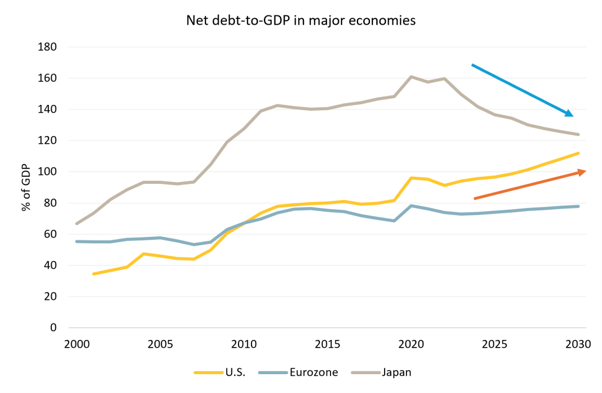
To see this in action, Japan – the most indebted major economy in the world – has trimmed its debt-to-GDP ratio since 2020 by precisely this route: inflation has risen faster than interest rates even as the country continued to run a budget deficit.
Source: LSEG
With that in mind, U.S. Secretary to the Treasury, Scott Bessent, confirmed it would at least double its buybacks of outstanding 10-year to 30-year debt, lifting operations from $2 billion to $4 billion. That saw a rally in the bond market. It was short-lived, but the buybacks announced won’t start until September, so this doesn’t mean it’s been futile.
When long-dated Treasury bond buybacks first began under former Secretary to the Treasury, Janet Yellen in 2024, ostensibly to manage liquidity, they were considered controversial by some. But last week’s events seem to connect the policy to the management of bond yields (interest rates).
It comes shortly after the U.S. sold euros to buy yen to spare Japan from selling its U.S. Treasury holdings. Demand for Treasuries is also being supported in other ways, such as making it easier for banks to hold them and potentially creating demand as collateral for stablecoins.
Now it seems possible to join the dots and see steps being taken towards a regime in which above-target inflation is tolerated and low interest rates are targeted to ease the servicing, or even reduction, of debt. Over the long term, this creates opportunities in the form of a steeper yield curve. This would weigh on the dollar relative to less repressive currencies and would highlight the attractions of real assets with limited supply, such as gold.
The implication for portfolios is one we’ve been building towards for some time. If governments lean on inflation to manage their debts, longer-dated bonds look vulnerable – there’s overwhelming pressure to cap yields, but little natural limit on how much debt can be issued. Assets, whose supply is genuinely constrained (gold being chief among them), become more appealing by contrast. Last week’s news doesn’t change our thinking so much as confirm it.
UK ‘stagflationary’ pressure remains
Source: LSEG
Closer to home, UK inflation data for July came in at an annual rate of 2.9%. It’s the first rise in four months and a touch above expectations on the core measure.
These figures were the first to reflect higher household utility bills due to the U.S.-Iran conflict and because of the lagged impact of the regulatory price cap. Fortunately, that landed during a month when fuel costs fell.
Beneath the surface, the signals are mixed: services inflation eased to 3.4%, but that was largely airfares and the Bank of England’s (BoE) preferred underlying measure – the Consumer Price Index – actually rose to an annualised 2.9% in July, up from 2.6% in June.
Another way of gauging underlying pressure is the median category price change, which reached its highest level since mid-2025, suggesting inflationary pressure remains.
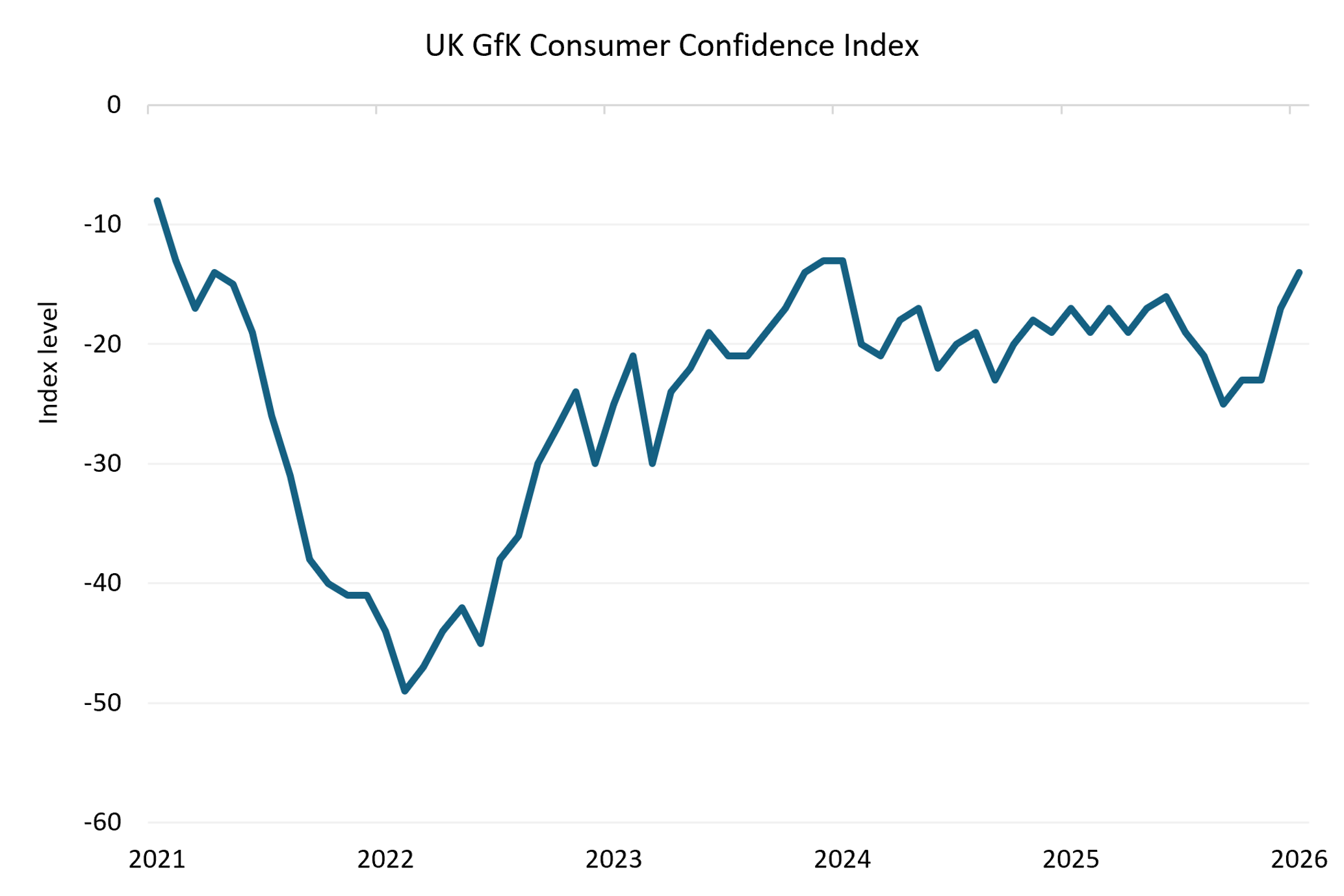
Despite this, there’s definitely a better mood in the UK at the moment, which seems to have coincided with new Prime Minister Andy Burnham having a more optimistic tone. Consumer confidence rebounded to its highest since 2024 – notably, the strongest reading under the current government. Yet retail sales slipped slightly, flattered only by a World Cup boost to food and drink. Public finances continued to show how difficult the new chancellor’s job will be ahead of October’s budget.
Employment data released last week told a similar tale of tension: payrolls fell for a second month, and vacancies hit a five-year low, yet wage growth held firm at 3.5%. That awkward combination – slack in jobs, stickiness in pay – has left markets expecting the BoE to hold interest rates at its next meeting in September.
Please continue to check our blog content for advice, planning issues and the latest investment market and economic updates from leading investment houses.
Charlotte Clarke
26/08/2026